FOLK, VIRALITY, AND CALEDONIA: NATHAN EVANS & SAINT PHNX BETWEEN SCOTLAND AND AMERICA
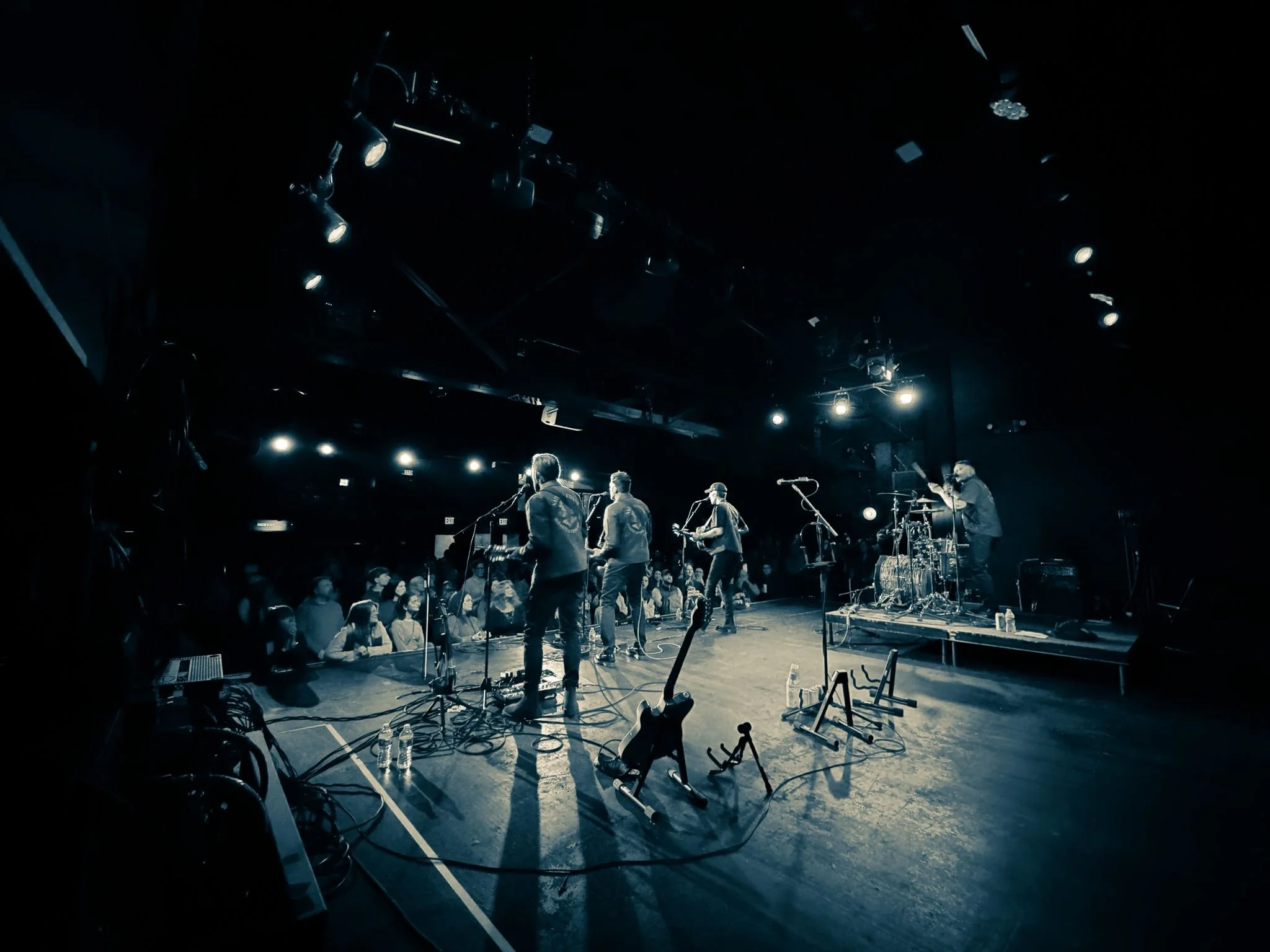
There’s something slightly disorienting about watching a room full of Angelenos sing about Scotland. At The Lodge Room in Highland Park [a historic Masonic lodge turned music venue in Northeast Los Angeles, known for its intimate acoustics and vaulted wood interior], the distance between Los Angeles and Glasgow collapsed into something almost imperceptible, as if geography itself had become secondary to circulation. I first came across Nathan Evans and Saint PHNX through an email in my inbox inviting me to their show. At the time, I didn’t realize it was their first time performing in the United States. There was something quietly loaded about that—arriving in America at a moment when the country feels increasingly closed off, less welcoming to outsiders. I wondered whether they would feel that distance, or if, somehow, they would feel at home.
What unfolded instead felt like the opposite. The room didn’t just respond, it embraced. At one point, children were brought on stage, singing along, fully immersed, as if participating in something that would stay with them for years. It felt like a formative moment unfolding in real time. The entire space moved together, the floor almost vibrating with recognition, every word already known. What struck me most was that the music seemed to exist there before the artists did.
Much of that recognition traces back to the resurgence of sea shanties, maritime work songs historically sung aboard merchant ships in the 18th and 19th centuries to coordinate physical labor like hauling ropes or raising sails. These weren’t just songs; they were tools, built on call-and-response structures that synchronized bodies in motion. Many emerged from transatlantic routes linking Scotland, Ireland, England, and the Caribbean, absorbing influences along the way. Songs like “Drunken Sailor” and “Leave Her, Johnny” became part of a shared seafaring repertoire, while “Wellerman”, the song that propelled Nathan Evans into global visibility, traces back to early 19th-century New Zealand whaling routes tied to the Weller brothers, Scottish traders supplying ships. What’s remarkable is not just their survival, but their return: these songs, once tied to physical labor and isolation at sea, now circulate through digital platforms, detached from their original function but still carrying a sense of collective rhythm and memory.
There’s something almost mythic in that return. In Scottish folklore, figures like the selkie, creatures that move between sea and land, shifting forms depending on where they are, echo this same sense of transformation. The music operates similarly: rooted in one place, reshaped in another, never fully belonging to either.
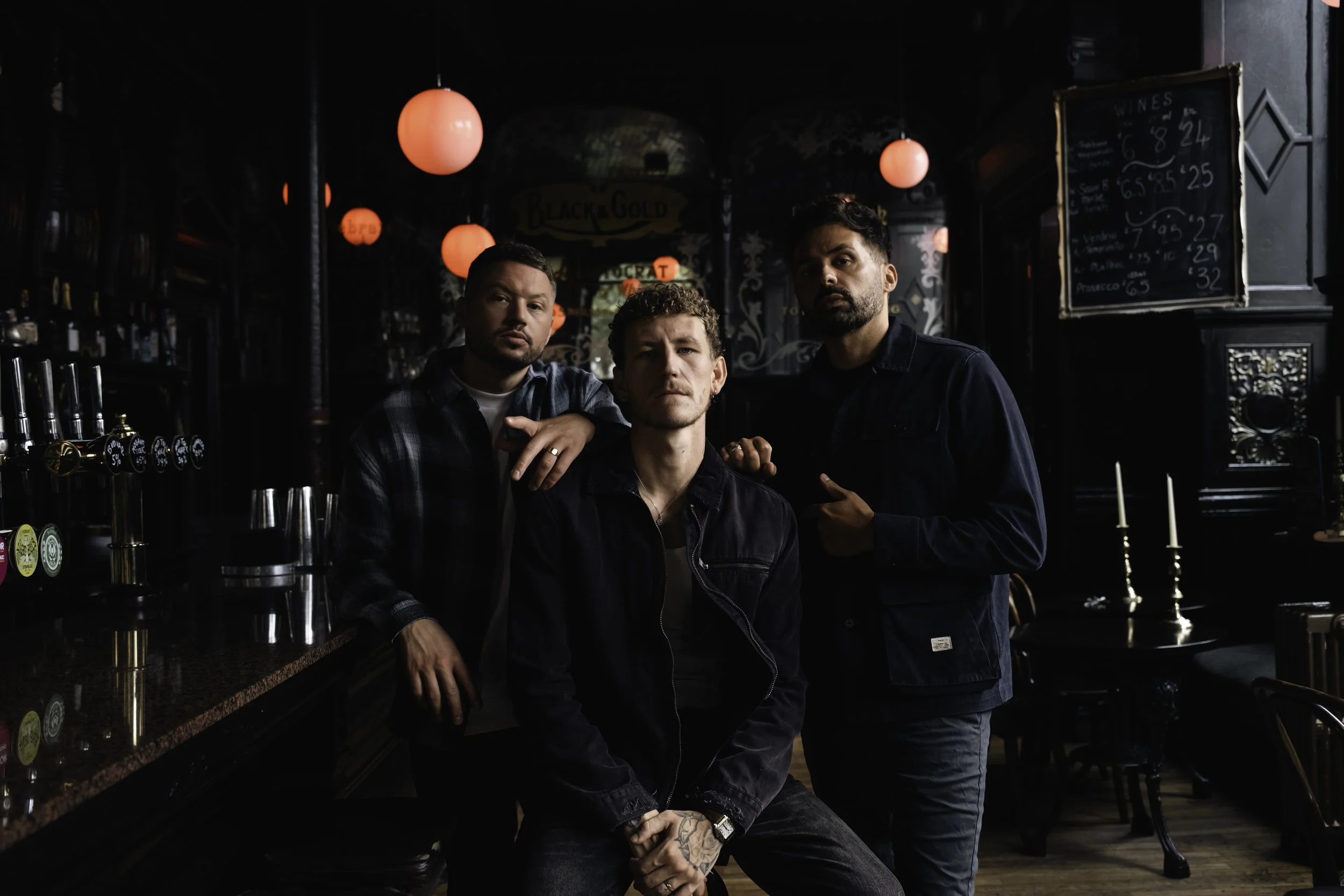
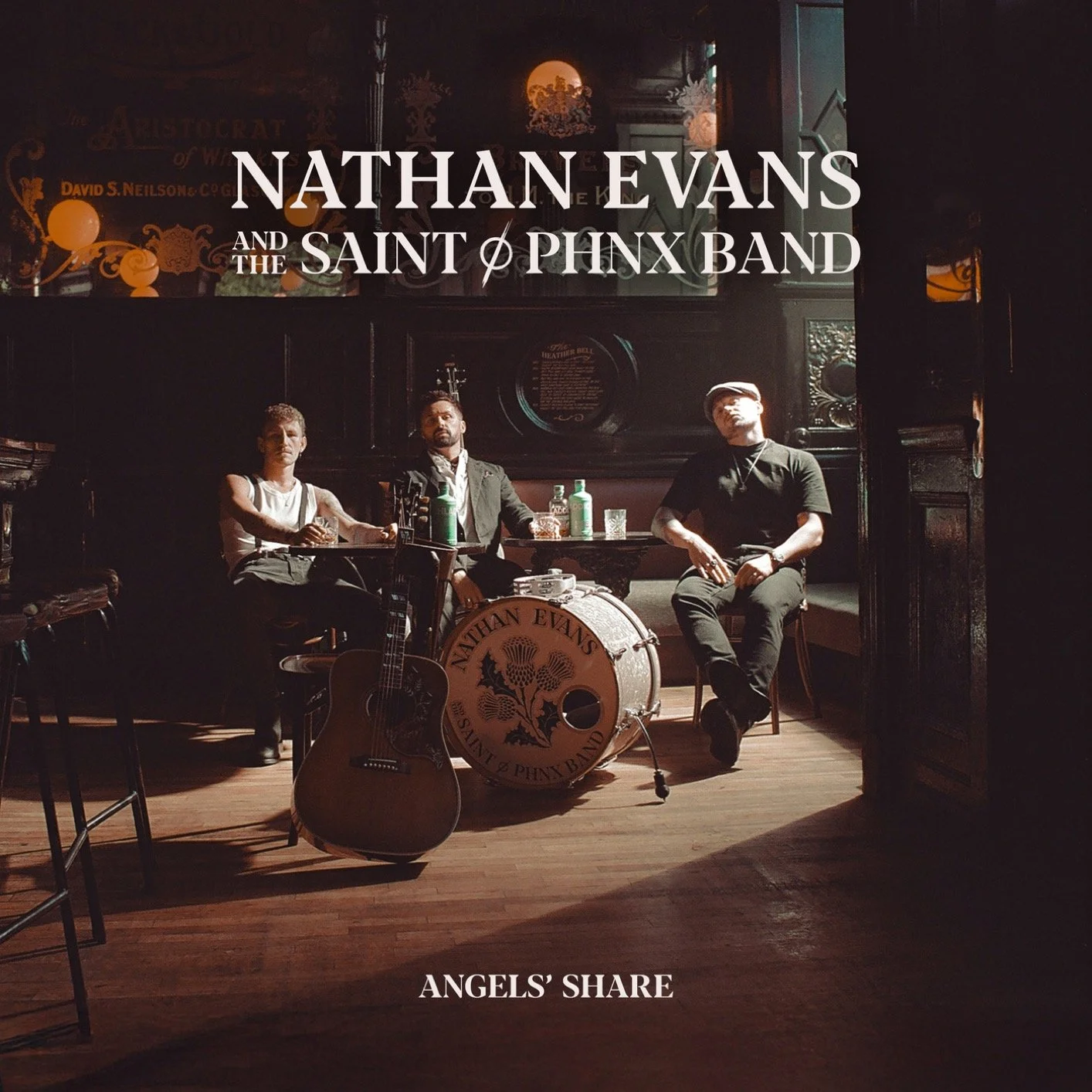
Alongside Evans, Saint PHNX, the Glasgow-based duo of Alan Brydon and Stevie Lennon, bring a different but complementary lineage, grounded in contemporary indie and rock songwriting. Together, the three have formed a cohesive unit that feels less like a collaboration and more like a convergence. There’s a precedent for this kind of alignment, something akin to the intuitive cohesion of Alison Krauss & Union Station or the early formation of Chris Stapleton and The SteelDrivers, where distinct voices resolve into a singular emotional register. Here, that register moves between folk memory and modern production, between something inherited and something accelerated.
I found myself returning to “Caledonia,” a song whose title I initially recognized only as a street name from Northern California, before realizing its deeper meaning as a poetic term for Scotland. That moment of recognition, of misunderstanding, then clarity, mirrored the larger experience of the performance itself. These songs carry place within them, but they don’t remain fixed to it. They travel, they shift, they become reinterpreted. In tracks like “Heather on the Hill,” that sense of place becomes more intimate, suggesting that “home” is not just a location, but a condition that can be shared, even temporarily, among strangers.
The trio is based in Glasgow, a city with a deeply influential musical history spanning genres, from the atmospheric pop of Cocteau Twins to the sharp-edged indie of Franz Ferdinand to the expansive songwriting of Simple Minds. It’s a place where tradition and experimentation coexist, where local identity consistently translates into global resonance. When I spoke with them, I was in Beverly Hills, and they were back in Scotland: a split geography that, in a way, mirrors the dynamic their music embodies.
What also became clear is that all three are fathers. There’s something quietly powerful about that—three young men, grounded not just in music but in family, navigating careers that have accelerated rapidly while remaining anchored in responsibility. In Scotland, fatherhood often carries a cultural weight tied to provision, humility, and emotional restraint, but here it felt open, present, and integrated into their work. That presence comes through in the music: a sense of care, of honesty, of wanting to build something that lasts beyond the moment.
What I witnessed at The Lodge Room wasn’t just a successful show. It was a convergence, traditional forms meeting contemporary platforms, local identity becoming global language, personal histories unfolding into shared experience. The result wasn’t spectacle, but recognition. Not just of the artists, but of the feeling the music carried, something familiar, even if you couldn’t immediately place where it came from.
Interview
AMADOUR:
I saw your show at The Lodge Room in Highland Park [a historic Masonic lodge turned music venue in Northeast Los Angeles, known for its intimate acoustics and vaulted wood interior]—completely packed, everyone jumping, singing. It felt less like a concert and more like a shared release. What struck me most was how immediate it felt—like the music had already lived there before you arrived. What did America feel like stepping into that for the first time?
NATHAN EVANS:
Like a shock. I’d never been before, and suddenly it’s sold-out rooms, people singing every word back to you. You spend years building something quietly, and then you land somewhere you’ve never even set foot in, and it already exists there. That was the moment for me.
ALAN BRYDON:
It’s the energy. America just feels different. Everyone’s fully there for the show—no hesitation, no holding back. And then you see people turning up in kilts, tartan shirts, making their own merch, it’s surreal, especially coming from Scotland and seeing that reflected back at you in a completely different country.
STEVIE LENNON:
We didn’t know what to expect. In the UK, you kind of know the reaction, same with Europe. But America, we had no idea. So, walking into sold-out rooms across thirteen shows, with people singing everything back, was overwhelming in the best way.
AMADOUR:
Touring always reveals habits, sometimes more than the music does. What did you find yourselves eating?
ALAN BRYDON:
Everything. That’s the honest answer.
STEVIE LENNON:
There’s a place in Denver—Fuzzy’s Tacos [a casual Tex-Mex chain originally founded in Texas, known for Baja-style tacos]. I’m not exaggerating, it changed something in me.
NATHAN EVANS:
He wasn’t even into tacos before. Now it’s a personality trait.
AMADOUR:
Your work feels deeply tied to place, almost mythologizing it. I was listening to “Caledonia,” and for me, coming from California, it hit in a strange way, because Caledonia is also a street where I’m from [Caledonia Street in Sausalito, a small waterfront town just north of San Francisco]. Then I realized it’s a poetic name for Scotland [“Caledonia” is a Latin term used by the Romans to refer to Scotland]. There’s something happening there—this layering of geography and memory. What are the places that feel most formative to you?
STEVIE LENNON:
There’s an island off the west coast, Islay [a small island in the Inner Hebrides of Scotland, internationally known for its peated single malt Scotch whisky, particularly distilleries like Laphroaig and Ardbeg]. It’s known for whisky, but it’s more than that. It’s the landscape, the atmosphere—you go there, and it feels like something shifts. We wrote a song about it. People think it’s about a girl, but it’s really about the place.
ALAN BRYDON:
Milarrochy Bay [a scenic location on the eastern shore of Loch Lomond, part of Loch Lomond & The Trossachs National Park], it’s one of those places where you just stop and take it in. We’ve been there filming and writing, it stays with you.
STEVIE LENNON:
And Glasgow. Airdrie. Home. That’s where everything starts. If we weren’t from there, the songs wouldn’t exist the way they do.
AMADOUR:
There’s also a theatricality in songs like “The Wedding,” it almost leans into narrative performance, exaggerated and slightly chaotic. Where does that come from?
ALAN BRYDON:
Scottish weddings. Something always happens—something ridiculous, something unforgettable, and that becomes the story everyone tells after. We wanted to capture that feeling.
STEVIE LENNON:
It’s folk tradition too. Storytelling. That’s where everything comes from for us.
AMADOUR:
You reference songs like “Take Me Home, Country Roads” [John Denver, 1971, widely considered one of the most globally recognized American folk songs], which feel almost detached from their origin at this point; they belong everywhere. What American songs carry that same weight in Scotland?
ALAN BRYDON:
“Country Roads,” definitely. Our dad used to play it when we were kids. It just connects everywhere.
NATHAN EVANS:
“Wagon Wheel” [originally written by Bob Dylan and later completed by Old Crow Medicine Show, 2004]. Doesn’t matter where you are, that one always lands.
AMADOUR:
Alan, I’m curious about your playing—what drummers shaped how you think about rhythm?
ALAN BRYDON:
Matt Helders [Arctic Monkeys], that’s the main one. Taylor Hawkins [Foo Fighters], Ronnie Vannucci [The Killers], but Helders is the one I always come back to.
AMADOUR:
Stevie, when you first started working with Nathan, what shifted for you?
STEVIE LENNON:
His voice. Straight away. You hear it on something you’ve written, and suddenly the whole thing lifts. It changes how you hear your own work. And stepping back from vocals—it felt freeing.
AMADOUR:
Nathan, your trajectory feels almost discontinuous—bedroom to stadiums. What was your reality just before everything changed?
NATHAN EVANS:
My bedroom. That’s it. I played one show—forty people. Then I started posting on TikTok, and within a year I was playing to forty thousand people at Stade de Suisse [home stadium of BSC Young Boys in Bern, Switzerland, capacity approx. 31,000–40,000, depending on configuration]. There wasn’t time to process it. It just happened.
AMADOUR:
It almost sounds like you didn’t choose it—it chose you. When something goes viral, what does that actually feel like in real time?
NATHAN EVANS:
The first time—chaos. Now we understand it more, but at the beginning, there was no structure. Just numbers climbing, everything shifting. You don’t even have time to think—you just try to keep up.
ALAN BRYDON:
It’s instant feedback. You see it happening, and you push it further.
AMADOUR:
There’s also a recurring emotional core in your work—family, fatherhood. It doesn’t feel secondary. How has that changed the way you approach music?
NATHAN EVANS:
It makes you honest. People can tell when something’s real.
STEVIE LENNON:
It makes you more emotional, more aware. That feeds directly into songwriting.
ALAN BRYDON:
You realize you’re not the only one feeling these things. That’s where connection happens.
AMADOUR:
Final question—what’s the song on this album that stays with you the most?
NATHAN EVANS:
“Blood and Bone.” It’s about connection. It just stays with me.
STEVIE LENNON:
“Angel’s Share” [a term in whisky-making referring to the portion that evaporates during aging, often poetically described as a “gift” to the angels]. It’s about loss—people we’ve lost but still feel present. Playing it live makes it even stronger.
ALAN BRYDON:
Same. We wrote it with someone who had just lost his dad. It came from a real place.
AMADOUR:
And the place you still want to play?
STEVIE LENNON:
Red Rocks [Red Rocks Amphitheater, Colorado, a natural rock formation venue known for its acoustics and iconic performances].
ALAN BRYDON:
Glastonbury. And Ibrox in Glasgow [Ibrox Stadium, Glasgow, home of Rangers F.C.].
NATHAN EVANS:
Coachella is mine!
AMADOUR:
I’ll see you there.