AN INTERVIEW WITH TORI WRÅNES ON REPRESENTING NORWAY AT THE NORDIC PAVILION OF THE 61ST VENICE BIENNALE: HOW RING-MARKED BIRDS, SINGING ZIPPERS, AND METAMORPHOSIS COALESCE INTO LIVING ARCHITECTURE

Tori Wrånes, Human Lace, Nordic Countries Pavilion at the 61st International Art Exhibition - La Biennale di Venezia. Photo: Kansallisgalleria | Finnish National Gallery / Peter Ern.
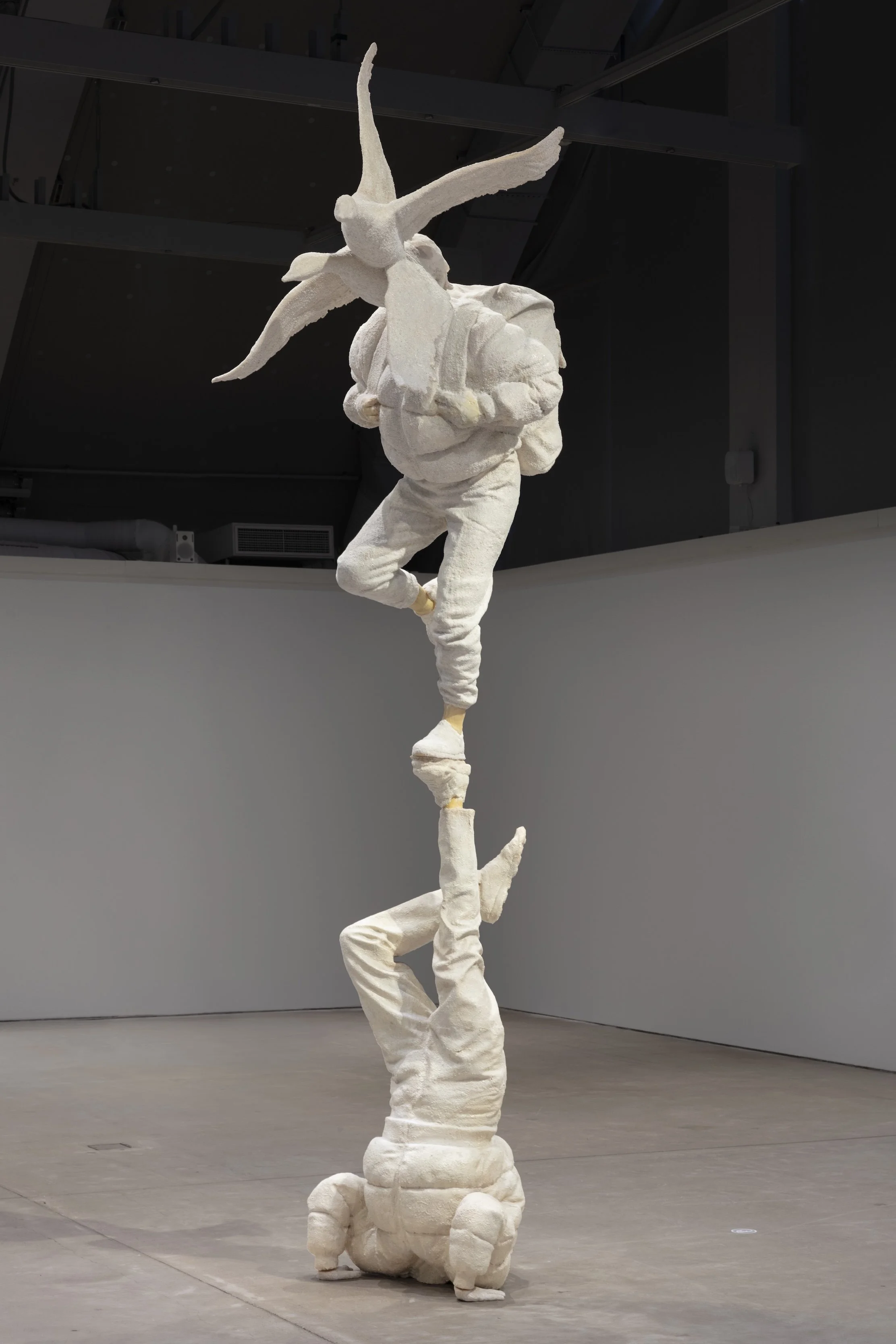
Norwegian artist Tori Wrånes represents Norway at the 61st Venice Biennale with How Many Angels Can Dance on the Head of a Pin?, a collaborative exhibition curated by Anna Mustonen at the Nordic Countries Pavilion alongside Klara Kristalova and Benjamin Orlow. At the center of Wrånes's presentation is Human Lace (2026), a monumental sculptural installation of interwoven, headless bodies whose elongated limbs, oversized leather boots, birds, and shoelace-like forms weave through the pavilion's architecture before extending beyond it, transforming the building itself into part of the work. It is a remarkably fitting dialogue with one of the Biennale's most celebrated architectural settings.
Since opening in 1962, Sverre Fehn's Nordic Countries Pavilion has stood as one of the defining works of postwar Nordic modernism, embodying a tradition distinguished by restrained material palettes, exceptional craftsmanship, abundant natural light, and a profound sensitivity to landscape and human experience while anticipating many of the principles later associated with Critical Regionalism, an architectural approach that grounds modern architecture within the climate, materials, and cultural identity of a particular place. Fehn won the commission through an invited competition against Swedish architect Klas Anshelm and Finnish architect Reima Pietilä after proposing not a conventional exhibition hall, but what the jury described as "a covered part of the Biennale park"—a building where architecture, landscape, and exhibition could exist as one continuous environment. Through monolithic white concrete, expansive panes of glass, warm red oak, and natural slate, Fehn quietly dissolves the boundary between gallery and garden as trees rise directly through the structure and filtered Venetian light continually reshapes the interior. More than six decades later, that architectural openness finds an extraordinary counterpart in Wrånes's practice, where sculpture, performance, sound, and the body continually dissolve fixed boundaries in favor of transformation.
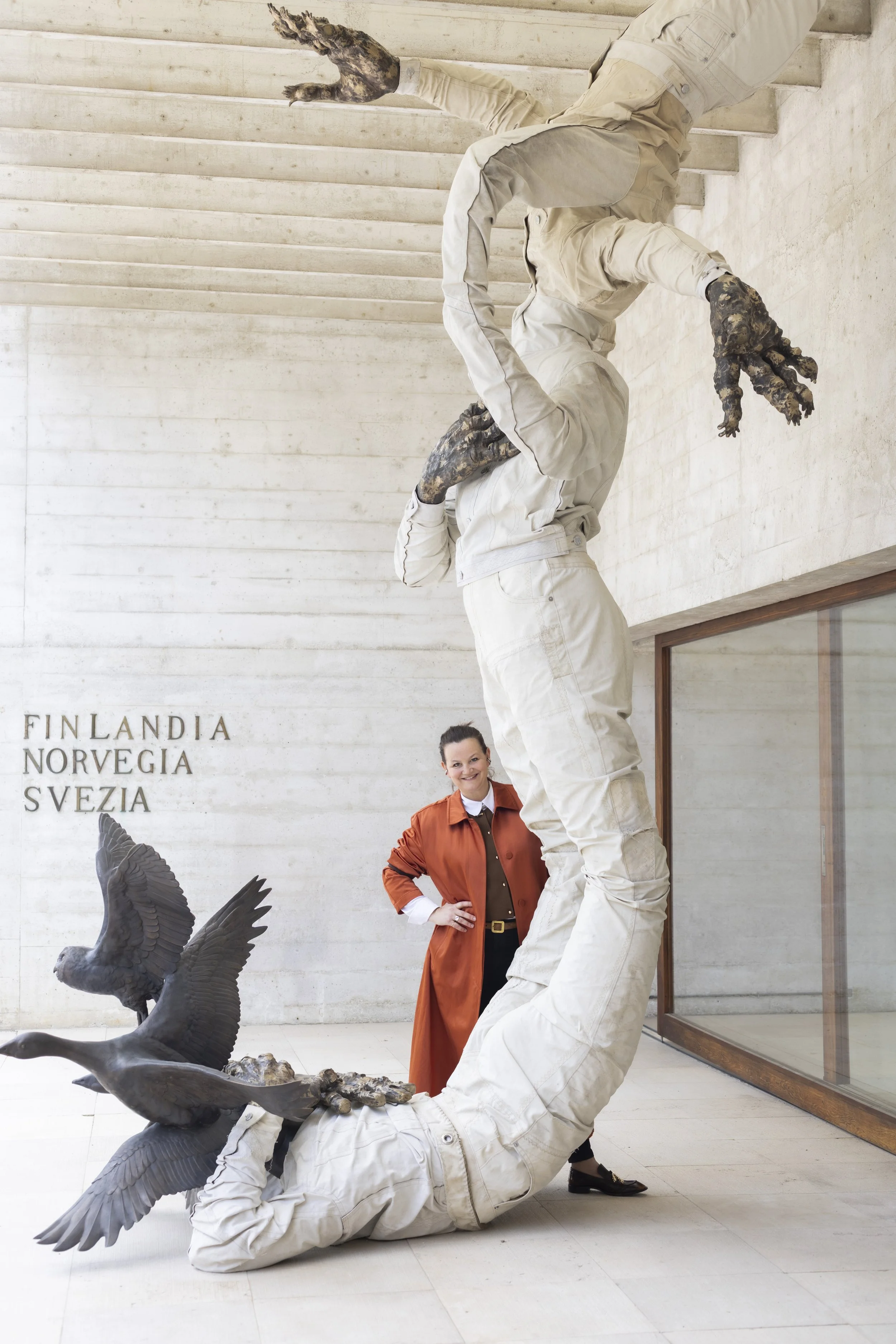
Tori Wrånes outside the Nordic Countries Pavilion, Photo: Kansallisgalleria | Finnish National Gallery / Pirje Mykkänen.

Tori Wrånes, Human Lace, Nordic Countries Pavilion at the 61st International Art Exhibition - La Biennale di Venezia. Photo: Kansallisgalleria | Finnish National Gallery / Pirje Mykkänen.
The Venice Biennale serves as a site of decolonial reckoning, shifting empires, and what is often described as the “Olympics” of contemporary art. I have attended every edition since 2017, and while it remains truly impossible to fully see or digest, participating in its rhythm is an extraordinary privilege. I intend to return later this summer. Even before arriving in Venice this year, I found myself anticipating Tori Wrånes's exhibition as one of the Biennale's most compelling presentations. Few contemporary artists possess her remarkable ability to weave folklore, sculpture, performance, architecture, and sound into immersive worlds that feel simultaneously ancient, humorous, and speculative. My curiosity, however, is also deeply personal.
I first met Wrånes in Los Angeles during the “troll” performance accompanying her 2022 exhibition Mussel Tears at Nazarian / Curcio Gallery on La Brea Avenue near Melrose Avenue. Over the years, our relationship has quietly unfolded through mutual collaborators, occasional text messages, and the steady exchange of Instagram updates between Los Angeles and Oslo. Wrånes' practice dissolves the boundaries between sculpture, performance, architecture, and sound, treating each medium not as a fixed artistic discipline but as an extension of the body itself. She is an exceptional world-builder whose sensitivity to skin textures, overlooked garments, leather boots, birds, found materials, and improbable combinations transforms ordinary objects into uncanny living forms. Encountering her work feels like standing before a prize-vending machine as a child: after inserting a handful of quarters, an opaque, brightly colored capsule tumbles forward, and the anticipation becomes inseparable from the gift itself. Wonder resides not only in what emerges, but in the possibility of what might.
By collaborating with musicians, performers, and local communities, Wrånes challenges the enduring myth of the solitary artistic genius and instead cultivates a practice grounded in collective presence and shared authorship. Her work exists somewhere between the liberated movement of Isadora Duncan, the mythic metamorphoses of Ovid, and the alchemical touch of King Midas. Ship sails become skin, bronze becomes flesh, and glass acquires an almost unsettling vitality. The sails themselves carry histories of movement and migration, evoking distant voyages across seas, fjords, and Arctic passages before arriving within the gallery as sculptural bodies. They suggest adventure while quietly preserving the memory of every place they have traversed. In this sense, Wrånes' sculptures become vessels of continual becoming—embodying transness, transition, transformation, and the porous boundaries between human and nonhuman life.
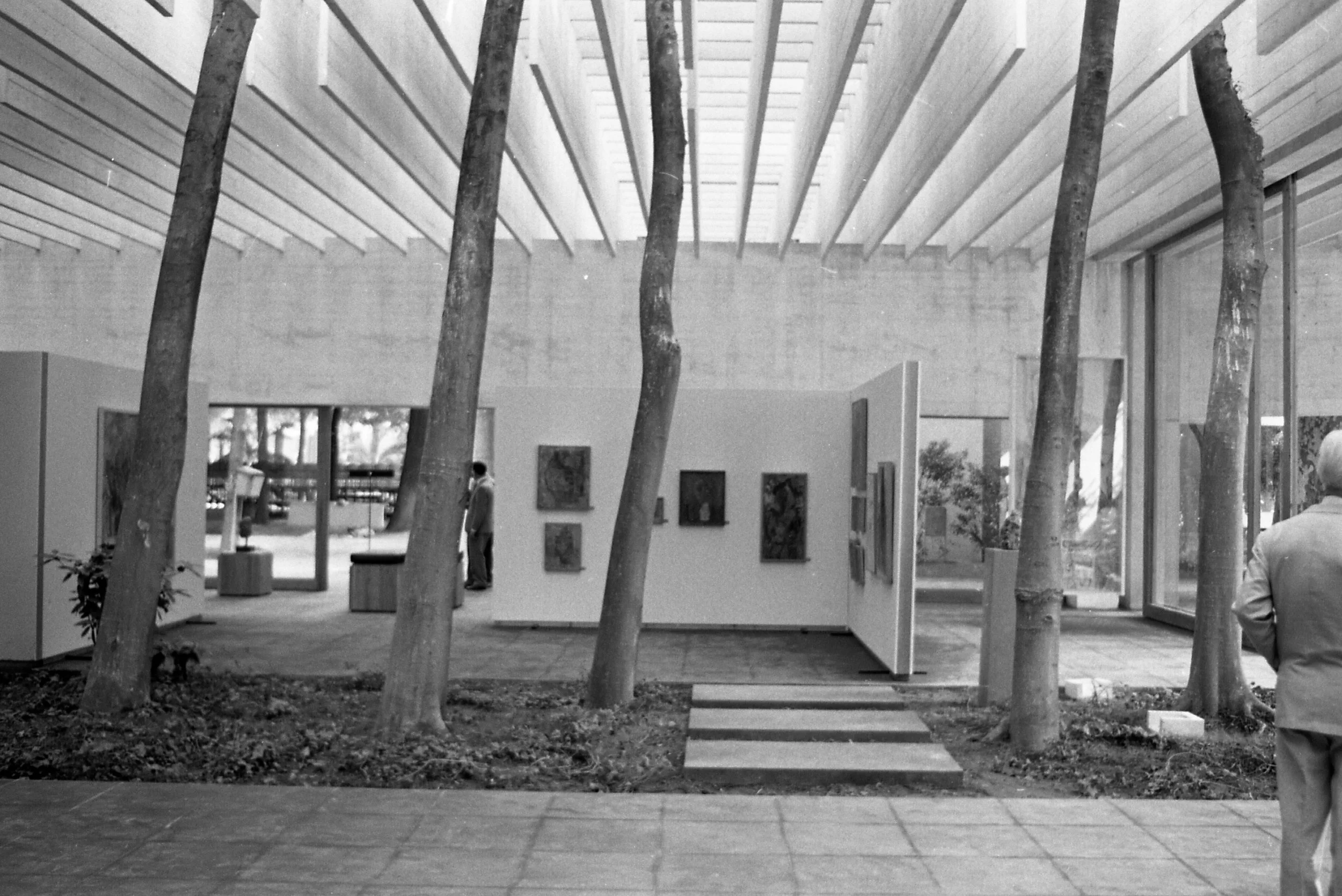
The inaugural exhibition in the newly completed Nordic Pavilion, designed by architect Sverre Fehn, at the 1962 Venice Biennale brought together seven artists representing the three collaborating Nordic nations: Finland: Ahti Lavonen, Kain Tapper, and Esko Tirronen; Norway: Rolf Nesch and Knut Rumohr; and Sweden: Siri Derkert and Per Olof Ulltvedt. Paolo Monti, Servizio fotografico (Venezia, 1962), 1962. Courtesy of the Fondo Paolo Monti, Biblioteca Europea di Informazione e Cultura, Milan. Public Domain.
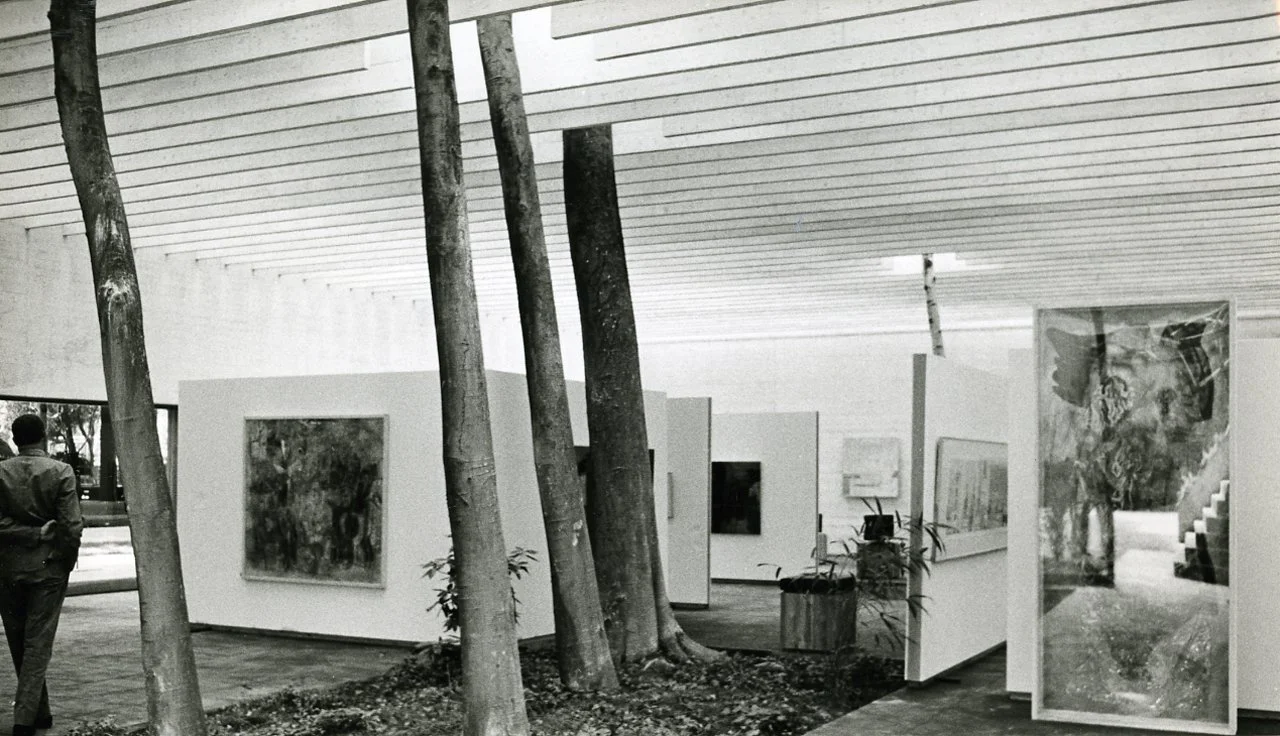
Paolo Monti, Servizio fotografico (Venezia, 1962), 1962. Courtesy of the Fondo Paolo Monti, Biblioteca Europea di Informazione e Cultura, Milan. Public Domain.
The art world is remarkably small, and its networks often unfold through unexpected acts of proximity. It was perhaps inevitable that Wrånes and I would quickly discover shared connections through Bogotá. In 2021, I spent much of the year preparing a Fulbright proposal centered on a collaborative oral history and photographic project documenting the lives of transgender women in Bogotá's Santa Fé neighborhood. Although the project ultimately did not materialize, the research brought me into close dialogue with La Red Comunitaria Trans, whose work remains central to the survival, visibility, and advocacy of countless trans Colombians. Their generosity profoundly shaped my understanding of collaborative artistic practice, care, and the extraordinary diversity of lived experience within the community. Through that process, I also became acquainted with Colombian-Norwegian artist and curator Olga Robayo, founder of El Parche Residency, whose interdisciplinary practice intersects with many of the same questions surrounding performance, community, and social engagement that animate Wrånes' work.
The culmination of Wrånes' work in Colombia is Flute Warriors (2017), a collaborative performance developed in partnership with La Red Comunitaria Trans that premiered at Kuir Bog Fest. Bringing together members of the organization through music, movement, handcrafted periwinkle alien helmets, flesh-like flutes, oversized humanoid ears, and improvised ritual, the project rejects documentary distance in favor of collective participation. Rather than positioning the community as passive subjects to be represented, Wrånes embraces curiosity, play, and mutual exchange, inviting participants to become co-authors of the work so that their voices, gestures, and lived experiences shape the performance from within.
Flute Warriors also resonates with Cecilia Vicuña's work. Both artists construct deeply immersive, multisensory environments in which sound, textiles, sculpture, and spatial installation converge to challenge conventional modes of spectatorship. If Vicuña's Brain Forest Quipu transformed the monumental architecture of Tate Modern's Turbine Hall into a fragile memorial to ecological devastation and Indigenous memory, Wrånes mobilizes Nordic folklore, operatic vocalization, bodily distortion, and surreal theatricality to probe the instability of human anatomy and identity. Their material vocabularies differ dramatically, yet both insist that knowledge is first experienced through the body before it is articulated through language.
I am also reminded of fellow Norwegian artist and architect Joar Nango's transformation of the Nordic Countries Pavilion for the 2023 Venice Architecture Biennale, Girjegumpi: The Sámi Architecture Library. Both artists reject the separation of artwork, body, and audience. Nango's long-standing collaborations with circumpolar Indigenous communities demonstrate how architecture can emerge through reciprocal relationships with land, craft traditions, and collective knowledge, while Wrånes similarly understands performance as a collaborative practice that centers participants' voices, fosters self-determination, and embraces allyship. In doing so, both challenge paternalistic models in which dominant institutions or individuals presume to determine what is best for historically marginalized communities.
Wrånes' practice is also inseparable from her base in Oslo. Over the years, I have developed a deep affection for the city through repeated visits, collaborations, and friendships. My orchestral collaborator and arranger, Alan G. Frausto, resides there alongside close friends working across contemporary art and music, making Oslo feel less like a destination and more like an extension of my own creative geography. Despite its relatively modest scale, the city possesses an extraordinary cultural density where contemporary art, experimental music, architecture, forests, and the Oslofjord exist in continual dialogue. Walking through Vigeland Park or Ekebergparken Sculpture Park—particularly encountering Pipilotti Rist's Nordic Hiplights (2020–2022), with its illuminated undergarments suspended like fairy lanterns among the trees—one senses the same slippage between folklore, landscape, humor, and fantasy that animates Wrånes' work. Oslo possesses a quiet enchantment, and Wrånes feels inseparable from that atmosphere, as though the city's forests, waterways, and lingering twilight have found another life through her sculptures and performances.
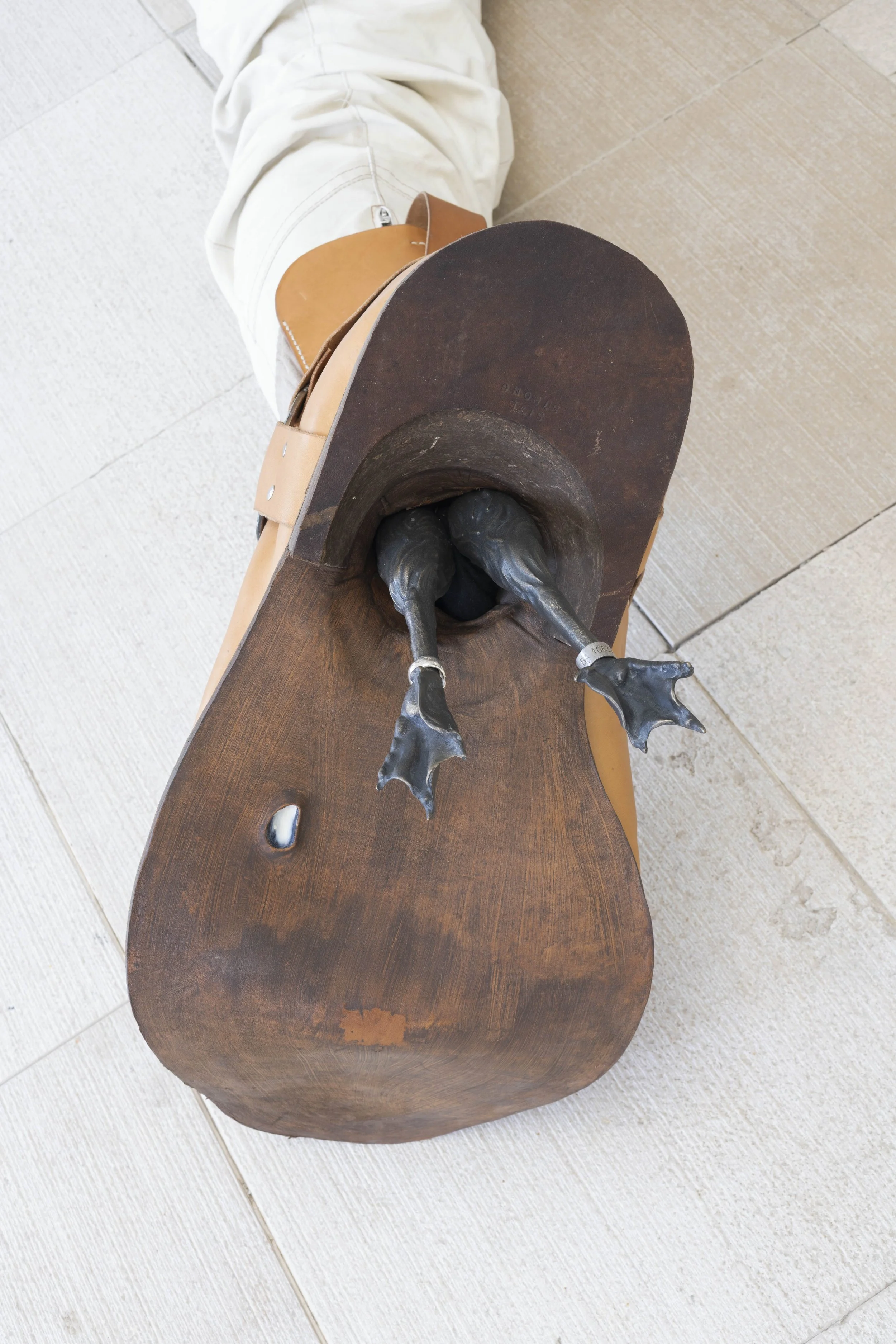
Tori Wrånes, detail of a shoe created by Soh Tokunaga for Tori Wrånes, incorporating a bird band from a dead cormorant found in Randesund and a silver ring crafted by Lise Schønberg. Nordic Countries Pavilion, 61st International Art Exhibition – La Biennale di Venezia. Photo: Kansallisgalleria | Finnish National Gallery / Pirje Mykkänen.
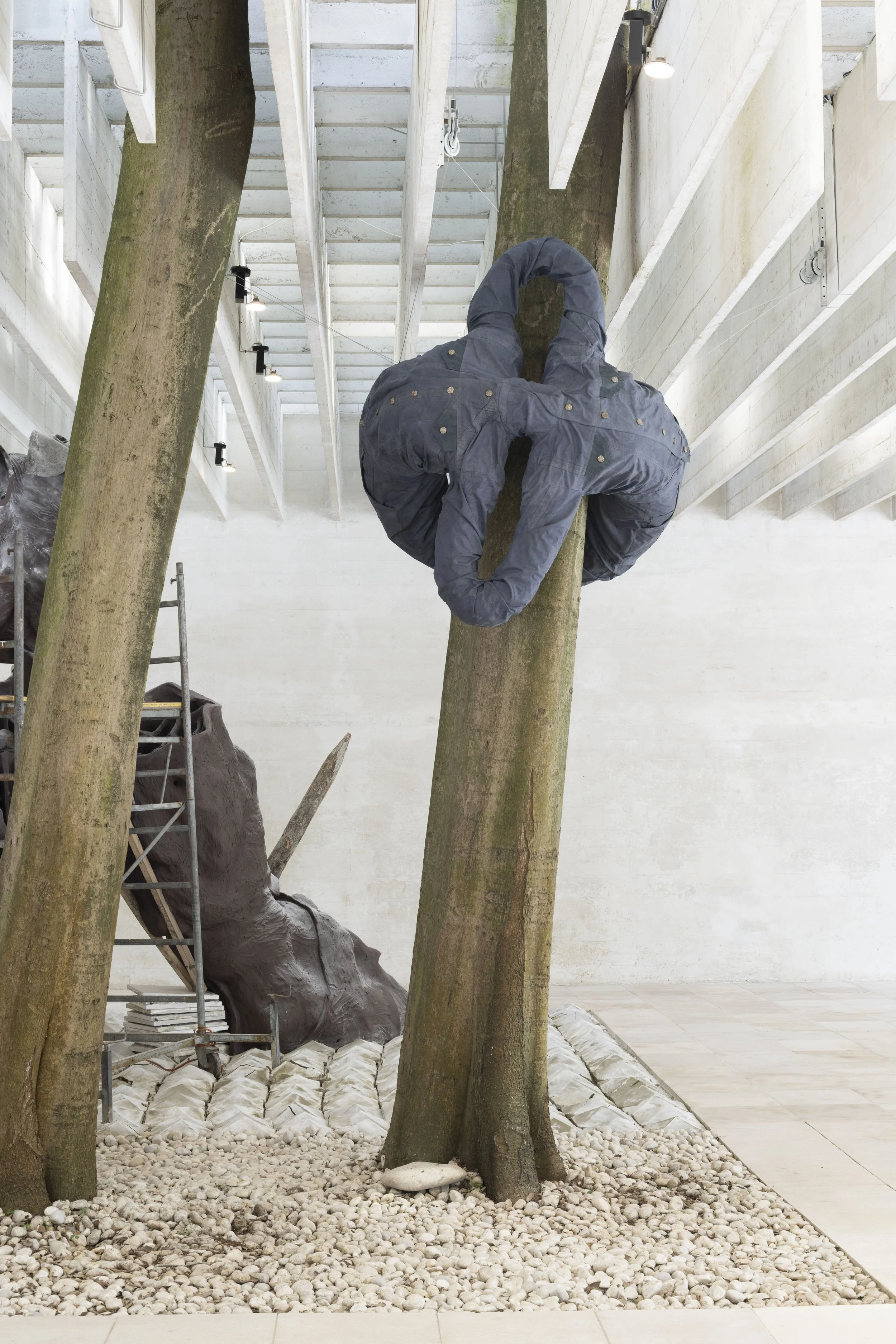
Tori Wrånes, Erotich Poetry by the architecture, nature and me, Nordic Countries Pavilion at the 61st International Art Exhibition - La Biennale di Venezia. Photo: Kansallisgalleria | Finnish National Gallery / Pirje Mykkänen.

Tori Wrånes, Human Lace, Nordic Countries Pavilion at the 61st International Art Exhibition - La Biennale di Venezia. Glass drops produced in collaboration with Berengo at Murano in Venice. Photo: Kansallisgalleria | Finnish National Gallery / Pirje Mykkänen.
In preparing for this conversation, I found my thoughts returning to familiar landscapes. As I write this from the Getty Research Institute in Los Angeles, my mind drifts hundreds of miles north to the Cross Peak Trail in Caughlin Ranch, Reno—a place I have returned to for years to walk, write, reflect, and listen. On a recent visit, I paused beside Alum Creek to watch a Great Egret move deliberately through the water while Mountain Bluebirds darted overhead between Fremont cottonwoods and quaking aspens. I found myself wondering whether these birds were descendants of those I had encountered years before, considering how generations quietly inherit landscapes and how landscapes, in turn, accumulate memory through repeated return.
That thought lingered as I began my conversation with Wrånes. Birds, migration, architecture, collaboration, folklore, and transformation surfaced again and again, revealing an artistic practice less concerned with fixed identities than with the continual metamorphosis of bodies, places, and communities. It is perhaps unsurprising. Wrånes grew up with knowledge of avian species as part of everyday life through her father, an ornithologist, and their presence continues to echo throughout her imagination. Ring-marked birds, carefully identified through small bands attached to their legs, embody one way of understanding the world: classification, observation, and scientific certainty. Wrånes' work moves in the opposite direction. Her sculptures and performances resist stable categories, dissolving distinctions between human and animal, object and body, architecture and organism. Yet paradoxically, by refusing rigid identification, her work arrives at something more universal. Rather than asking who or what something is, she asks what it might become.
That openness feels increasingly rare. Wrånes constructs worlds in which transformation is neither metaphor nor spectacle but a lived condition, spaces where imagination, play, vulnerability, and collective authorship coexist. As I left our conversation, I found myself humming Madonna's recent song I Feel So Free, particularly its refrain, "I feel so free," and its meditation, "I can be whoever I wanna be, create a new persona." Unexpectedly, it echoed Wrånes' own fascination with metamorphosis, not as disguise but as a continual process of experimentation and becoming. Her work suggests that identity is not something to be pinned down like a specimen, but something continually invented. New characters emerge beneath the glow of a dark nightclub before stepping into the light of day transformed. Like Human Lace, which stretches beyond the walls of the Nordic Countries Pavilion to transform the building itself into part of the artwork, Wrånes' practice proposes that identity is never fully contained by the structures that seek to define it. Instead, it spills outward through hollow skylights, oversized boots and stockings, tear-shaped mussels, and bodies woven into one another, inviting us to imagine another life shaped by reinvention, wonder, and freedom.
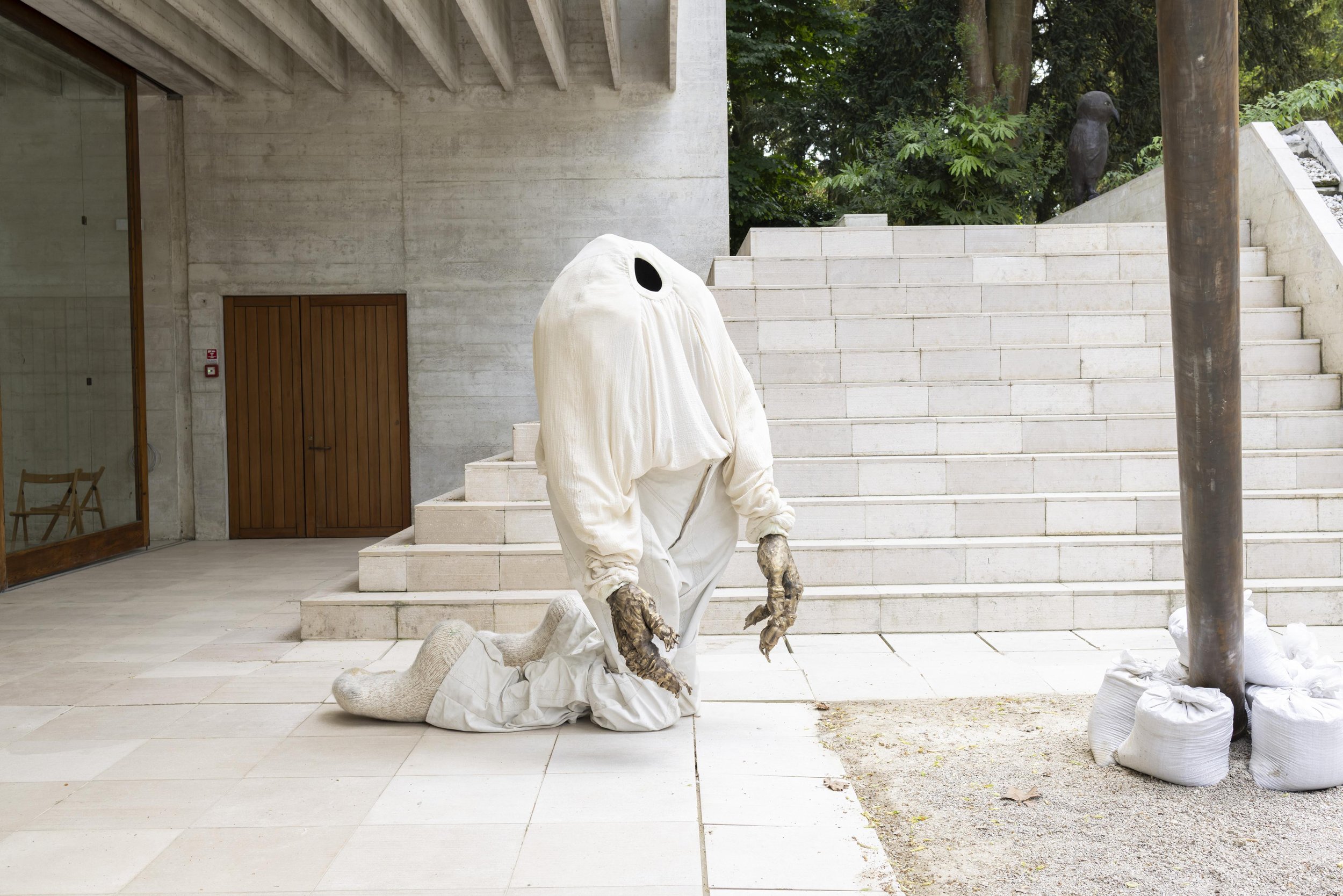
Tori Wrånes’ performance in In Minor Key, The Zippers Mess, The Nordic Countries Pavilion at the 61st International Art Exhibition – La Biennale di Venezia. Photo: Finnish National Gallery / Pirje Mykkänen. [Wrånes homage to Koyo Kouoh title of the main exhibition. A headless giant similar to the giants in the human lace; just the performance piece shows one lonely giant. That’s sung through its zipper. In an intense and heartwarming minor key. Wrånes talks about the zipper as a border. That keeps something out or lets something in.]
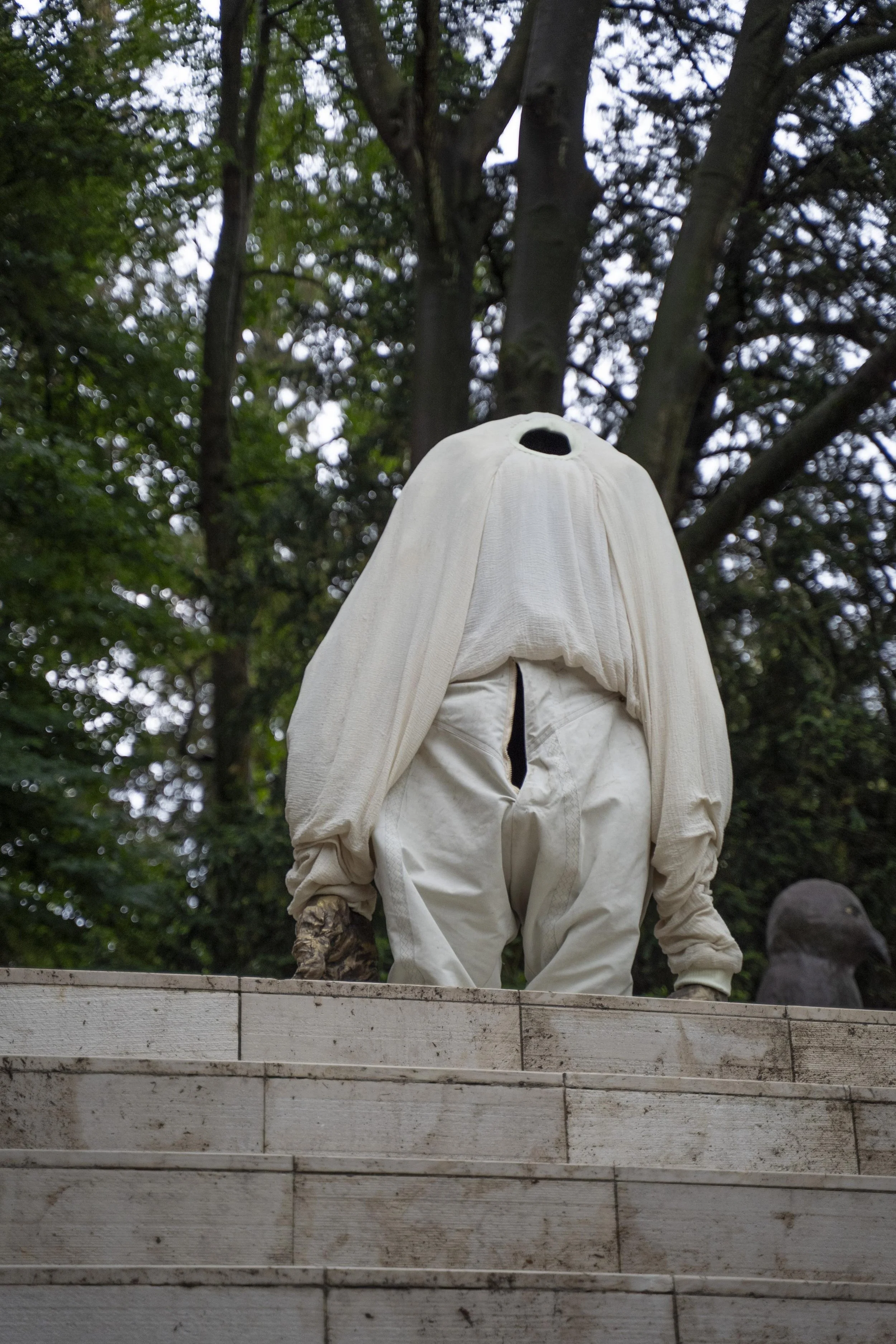
Tori Wrånes’ performance in In Minor Key, The Zippers Mess, The Nordic Countries Pavilion at the 61st International Art Exhibition – La Biennale di Venezia. Photo: Finnish National Gallery / Pirje Mykkänen. [Wrånes homage to Koyo Kouoh title of the main exhibition. A headless giant similar to the giants in the human lace; just the performance piece shows one lonely giant. That’s sung through its zipper. In an intense and heartwarming minor key. Wrånes talks about the zipper as a border. That keeps something out or lets something in.]
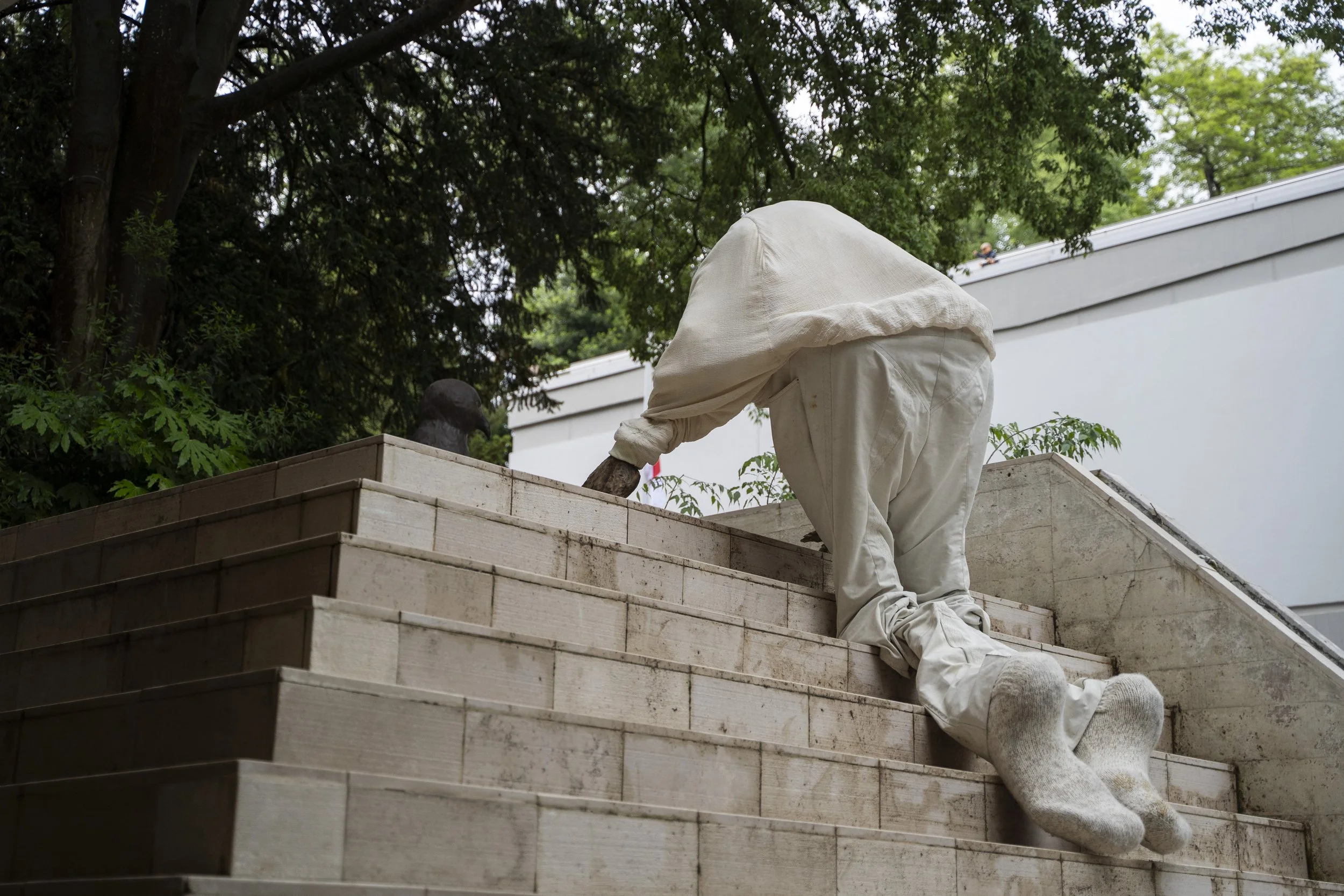
Tori Wrånes’ performance in In Minor Key, The Zippers Mess, The Nordic Countries Pavilion at the 61st International Art Exhibition – La Biennale di Venezia. Photo: Finnish National Gallery / Pirje Mykkänen. [Wrånes homage to Koyo Kouoh title of the main exhibition. A headless giant similar to the giants in the human lace; just the performance piece shows one lonely giant. That’s sung through its zipper. In an intense and heartwarming minor key. Wrånes talks about the zipper as a border. That keeps something out or lets something in.]
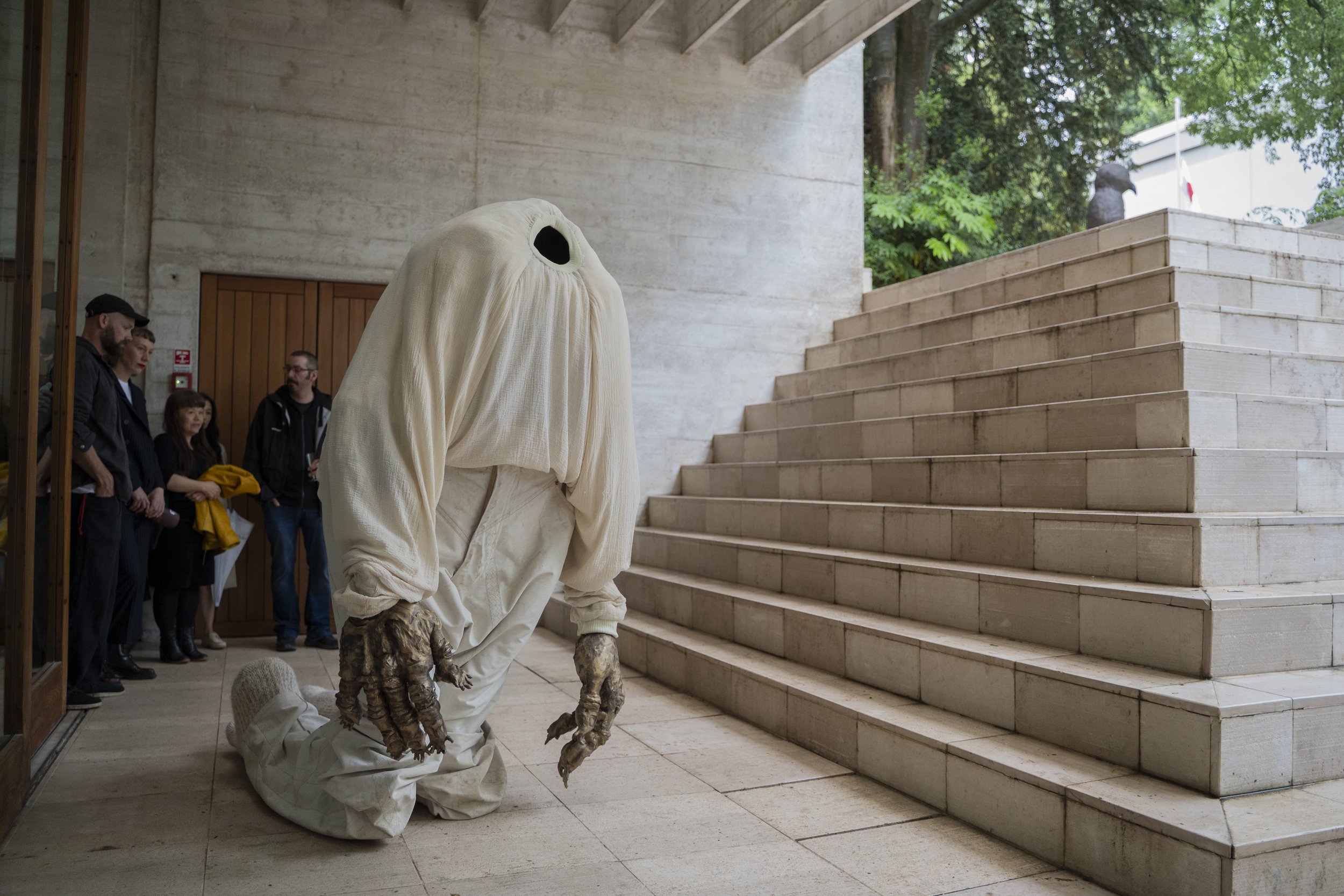
Tori Wrånes’ performance in In Minor Key, The Zippers Mess, The Nordic Countries Pavilion at the 61st International Art Exhibition – La Biennale di Venezia. Photo: Finnish National Gallery / Pirje Mykkänen. [Wrånes homage to Koyo Kouoh title of the main exhibition. A headless giant similar to the giants in the human lace; just the performance piece shows one lonely giant. That’s sung through its zipper. In an intense and heartwarming minor key. Wrånes talks about the zipper as a border. That keeps something out or lets something in.] Image from a rehearsal for In Minor Key, The Zippers Mess, with the (according to Wrånes) amazing crew from Kilden Theatre, Kristiansand, Norway, who was co-producing the performance together with the National Museum of Finland KIASMA.
INTERVIEW:
AMADOUR: First of all, congratulations, Tori. You’re representing Norway at the 61st Venice Biennale through How Many Angels Can Dance on the Head of a Pin?, a collaborative exhibition at the Nordic Countries Pavilion alongside Klara Kristalova and Benjamin Orlow. Venice is such a unique context to encounter work, and representing your country there feels incredibly significant. I wanted to start simply: what has this experience felt like for you?
TORI WRÅNES: Thank you. I hesitate because I still do not fully comprehend the experience. It is an enormous honor; many artists and curators create remarkable work, and being invited into that dialogue is meaningful. At the same time, entering the Venice Biennale made me immediately aware of questions of inclusion and exclusion. The entire exhibition is structured through national pavilions, so architecture itself becomes a way of organizing identity. Some countries have permanent buildings, others participate temporarily, and some are absent altogether. Even before seeing the work, that structure already communicates something political. This year, especially, conversations about pavilions such as Russia and Israel became inseparable from the exhibition experience, while many countries across Africa, parts of Asia, and elsewhere remain structurally underrepresented. At the other end, Koyo Kouoh is the first African woman to curate the Venice Biennale ever, and it is such an honor to work under her vision. It felt important to take part also because my work stands for the opposite of Putin, Trump, and Netanyahu. Maybe it seems unusual to begin here instead of with excitement, but Venice made me think as much about absence as presence. It made me think about who is missing and what it means to participate in a structure that can feel both generous and uneven. I think I return to this because so much of my own work is about moving beyond categories and fixed identities, while the Biennale, in some ways, still asks people to enter through them.
AMADOUR: I actually think that’s a beautiful place to begin because what strikes me is that your answer isn’t really about achievement at all, it’s about awareness. Instead of treating Venice as a destination, you’re immediately speaking about the structure itself and the people who remain outside of it. That feels connected to your work because so much of your practice seems to move toward spaces that resist fixed definitions.
TORI WRÅNES: Exactly. I think all of my work, in different ways, tries to move outside of categories. I think a lot about how quickly identities become containers. Then suddenly you enter one of the largest art events in the world and realize how much of the structure depends on classification: this artist belongs here, this pavilion means this, this nation represents this. I don’t think that’s necessarily intentional, but it becomes visible. You begin to notice how representation can become a kind of enclosure. And maybe that’s why I felt such a strong reaction to the space. I’m always searching for forms that remain open — bodies that become something else, voices that transform, figures that cannot be immediately named.
AMADOUR: Returning to the Nordic Countries Pavilion itself, I was interested in how this exhibition first began to take shape. The pavilion is organized by Anna Mustonen, curator at the Finnish Museum of Contemporary Art (Kiasma), and I know that her curatorial framework also draws on architect Sverre Fehn’s pavilion architecture and ideas about Nordic mythology. I was curious about what that process looked like behind the scenes because from the outside, these invitations can seem almost mythical. How did you first come into contact with the project, and what did it actually feel like once it became real?
TORI WRÅNES: The reality was surprisingly ordinary at first. I received an email from Anna asking if I was interested in a meeting regarding the Nordic Countries Pavilion, and I misunderstood what was happening. I thought we were meeting to discuss possibilities or ideas. I imagined a longer process: conversations with different artists, some deliberation, an uncertain future where something might or might not happen. Then, during the conversation, I asked, “Wait — is this actually an invitation?” And she said yes!
AMADOUR: That’s sublime, what a feeling!
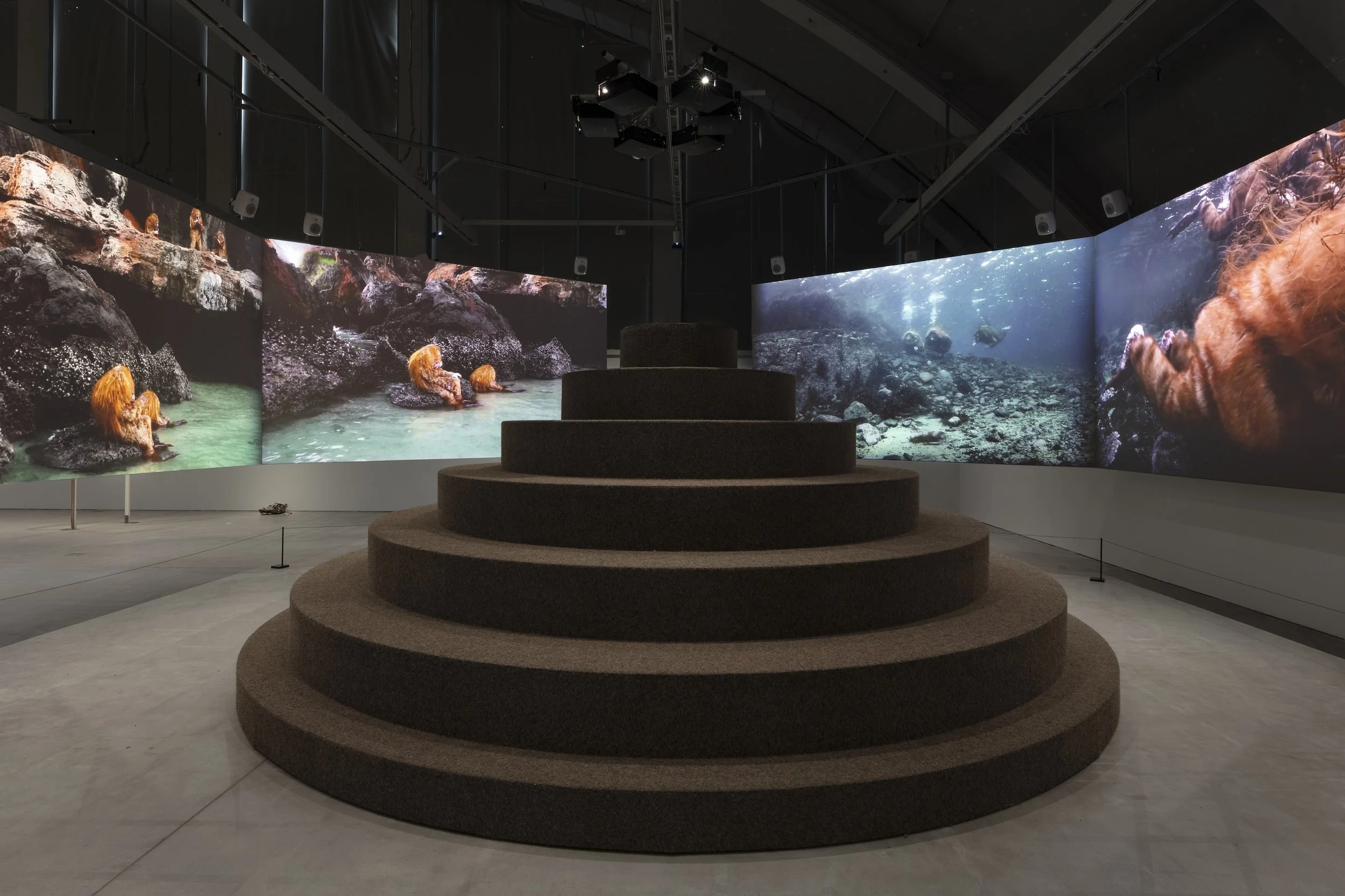
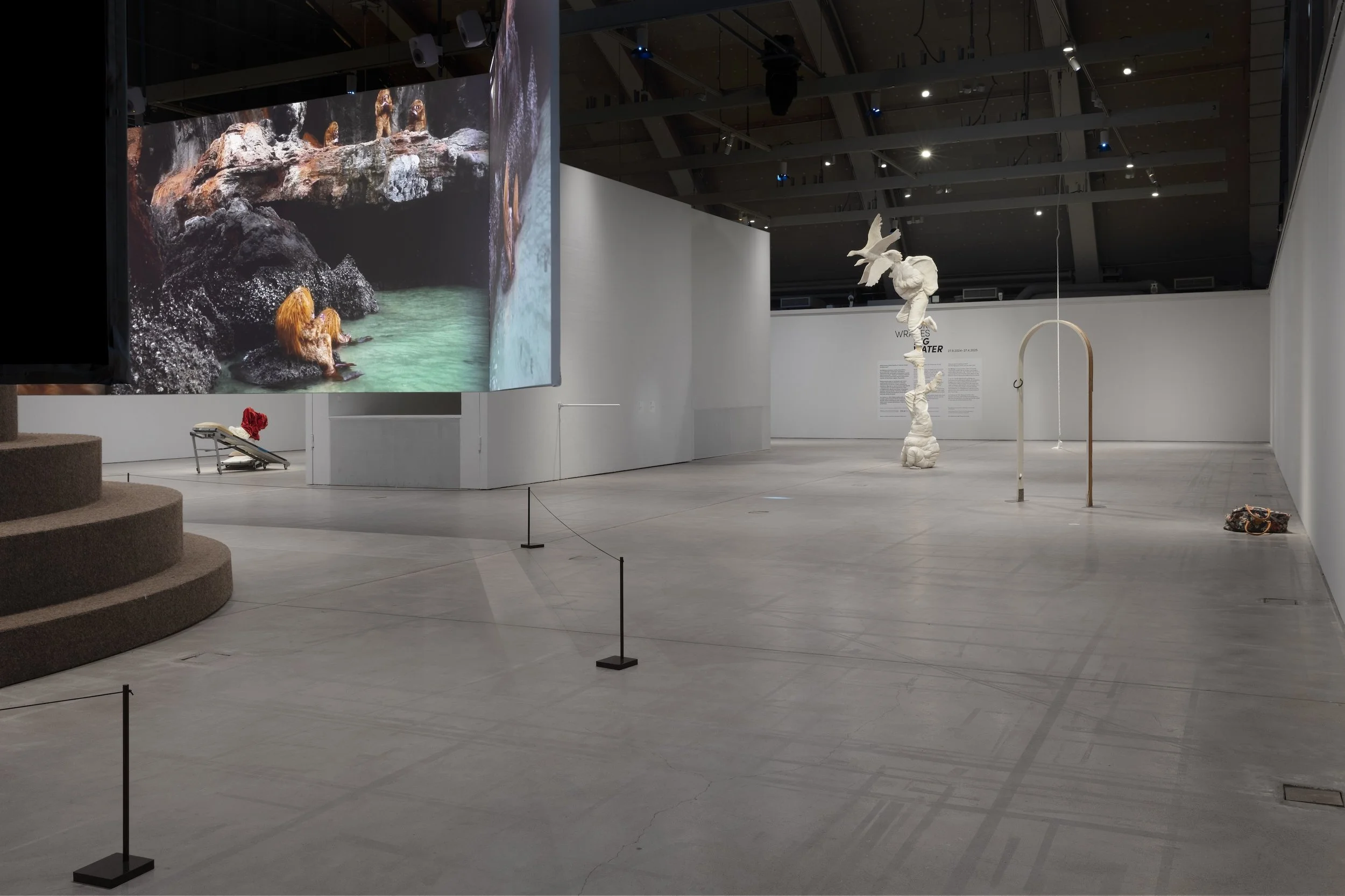
TORI WRÅNES: It felt absurd. I had recently shown work in Finland [BIG WATER (2022) is a large-scale six-channel sound and video installation depicting fur-covered hybrid creatures moving between Thailand’s coastline and Arctic Norway; presented in the great arched hall of HAM (Helsinki Art Museum and curated by Milja Liimatainen]. Anna had seen it, and said she trusted me, which felt great. What remained with me was not only the scale of the invitation but also the realization that I was not entering the project alone. We were three artists who had never met, which I found exciting. As I tried to understand what it meant to exhibit in Venice, I was also forming new relationships with colleagues whose practices I respected but whose approaches I did not yet know. This immediately shifted the project from an individual statement to a relational one. Large-scale exhibitions are often imagined as highly controlled or singular in vision, but my experience began with openness. There was listening, exchange, trust, and a willingness to engage in a process without predetermined outcomes. This was meaningful because my work often seeks spaces where meaning emerges through encounter rather than imposition. Entering such a prominent context in contemporary art at the Venice Biennale and beginning with relation rather than certainty felt significant.
AMADOUR: I am curious what your first encounter with the pavilion felt like and whether there was an immediate intuition of what you wanted to make there, or whether the building itself had to teach you first?
TORI WRÅNES: I had an immediate physical reaction to the architecture because the pavilion is incredibly beautiful and raw. What Sverre Fehn created feels less like a container for art and more like an encounter between architecture and nature. Even the light behaves like another character, as the ceiling allows daylight to move through the space in a filtered, shifting way, so the atmosphere never settles. Throughout the day, the pavilion takes on different forms. There are strong linear structures, and suddenly, trees grow directly through the center of the building. That coexistence of discipline and organic growth stayed with me. When I first entered the space alone, it felt almost complete, as if it required nothing further. If I were to intervene, I would want to introduce something organic and dynamic rather than a static object. Early in the process, I became committed to creating something that moved upward and outward, passing through the ceiling and extending beyond the pavilion into the shared space outside.
AMADOUR: I wanted to move more deeply into Human Lace (2026) as both a sculpture and an installation because one of the things that struck me, seeing documentation of the work, was how physically embedded it becomes within the architecture. It moves through the rafters, descends into the space, and almost behaves less like an object than something inhabiting the pavilion. Throughout your practice, there’s a recurring relationship with the body — not necessarily the body as portraiture, but as structure, transformation, scale, or something unstable. I was curious where this work began for you. Did it emerge first through drawing, through maquettes, through material experimentation?
TORI WRÅNES: I knew quickly, once I entered the space, what kind of movement I wanted the work to have. Because we were working collectively, we had conversations and negotiated how each of us imagined occupying the pavilion. Eventually, it became clear that the area I had been considering was still feasible to develop. So, the sculpture emerged from both intuition and dialogue. For me, the human body is a compelling starting point because it is universally recognizable. However, altering its scale or proportions quickly renders it unfamiliar. Enlarging, stretching, fragmenting, or removing elements transforms the body so that it no longer functions conventionally. Yet, it retains enough familiarity for viewers to project themselves into it. That tension fascinates me. With Human Lace, I was not interested in creating figures that felt individual. I did not aim to produce characters or portraits tied to a single person or identity. Early in the process, I realized I wanted something collective, where the body represents relation rather than individuality. While working, I noticed that none of the figures had heads. People often ask why, and honestly, I do not fully know; sometimes decisions precede explanations. Later, I considered that removing the head might eliminate certain hierarchical structures. The head is typically where we locate identity, expression, and recognition. Without it, the figures cease to function as individuals and instead become movement and connection, existing between bodies rather than within a single body. The figures began to merge almost instinctively, linking together in a chain-like but softer, more supportive manner. I eventually realized that shoelaces provided the right metaphor. A shoelace, though simple, performs an essential function: it gathers, tightens, supports, and enables movement. A shoe functions only because the lace connects its separate parts; without that tension and weaving, the structure collapses.
AMADOUR: And that totally comes across as a group.
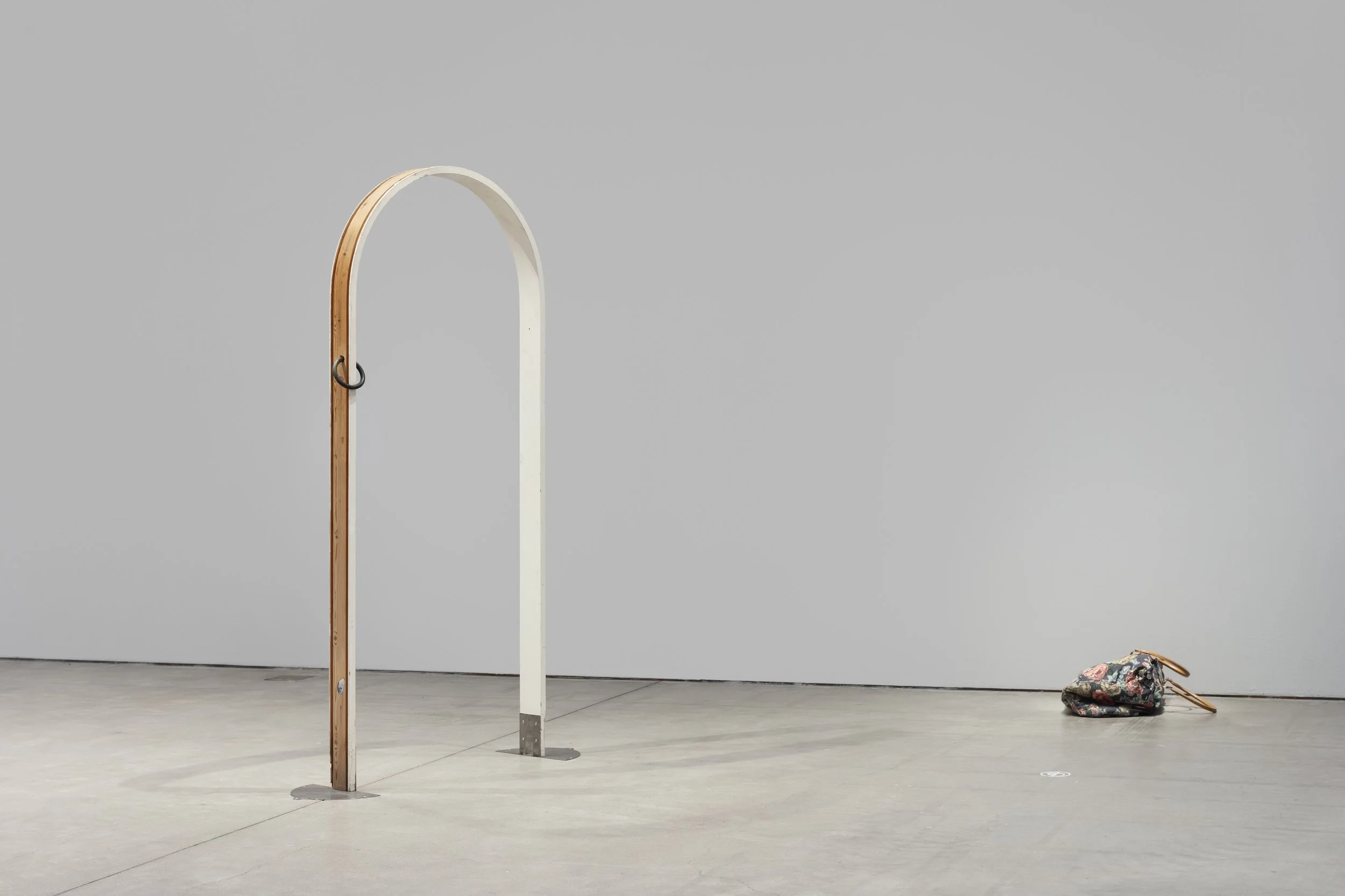
Tori Wrånes, BIG WATER. HAM Helsinki Art Museum, Helsinki, Finland, 2024. Photo: HAM / Maija Toivanen.
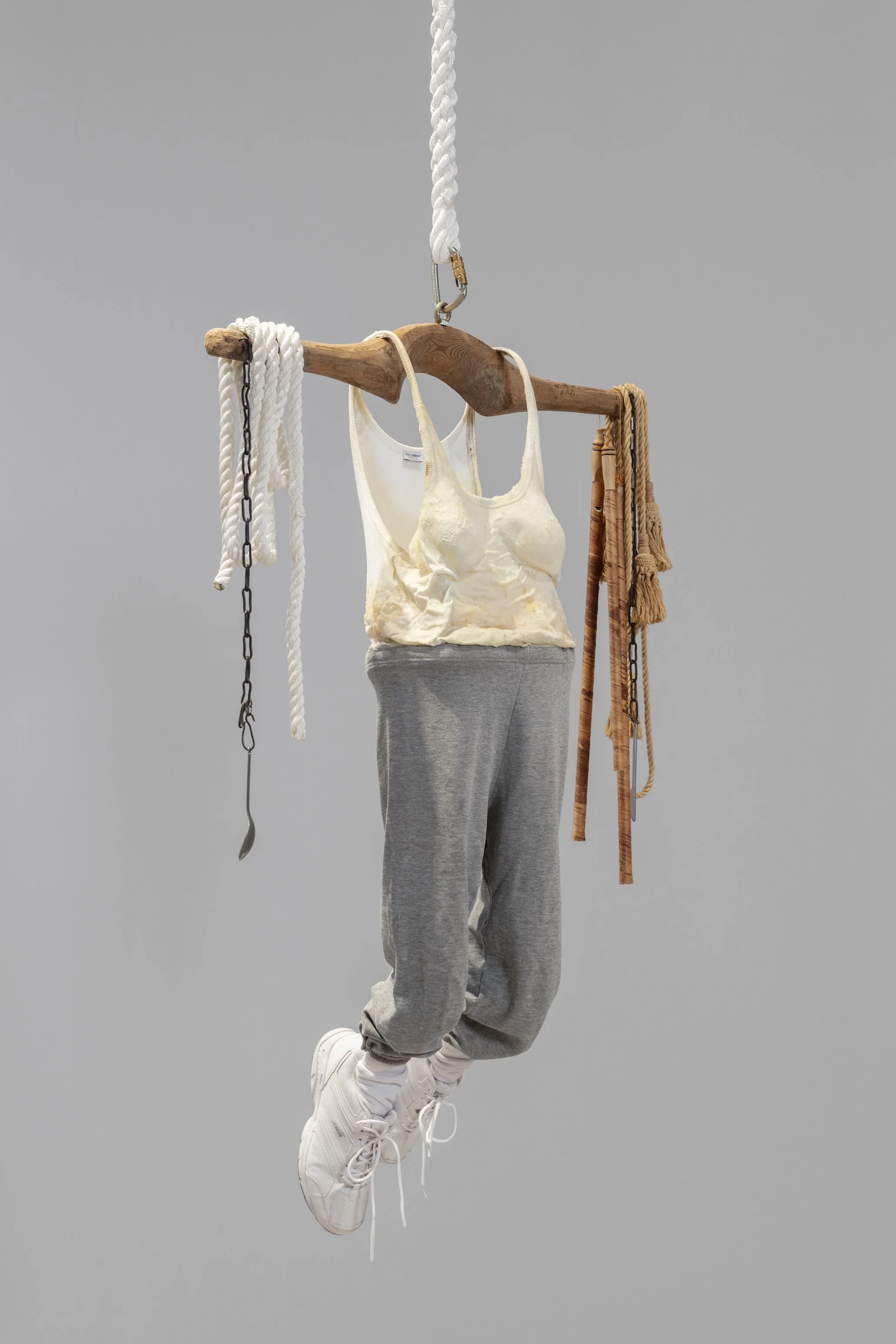
Tori Wrånes, BIG WATER. HAM Helsinki Art Museum, Helsinki, Finland, 2024. Photo: HAM / Maija Toivanen.
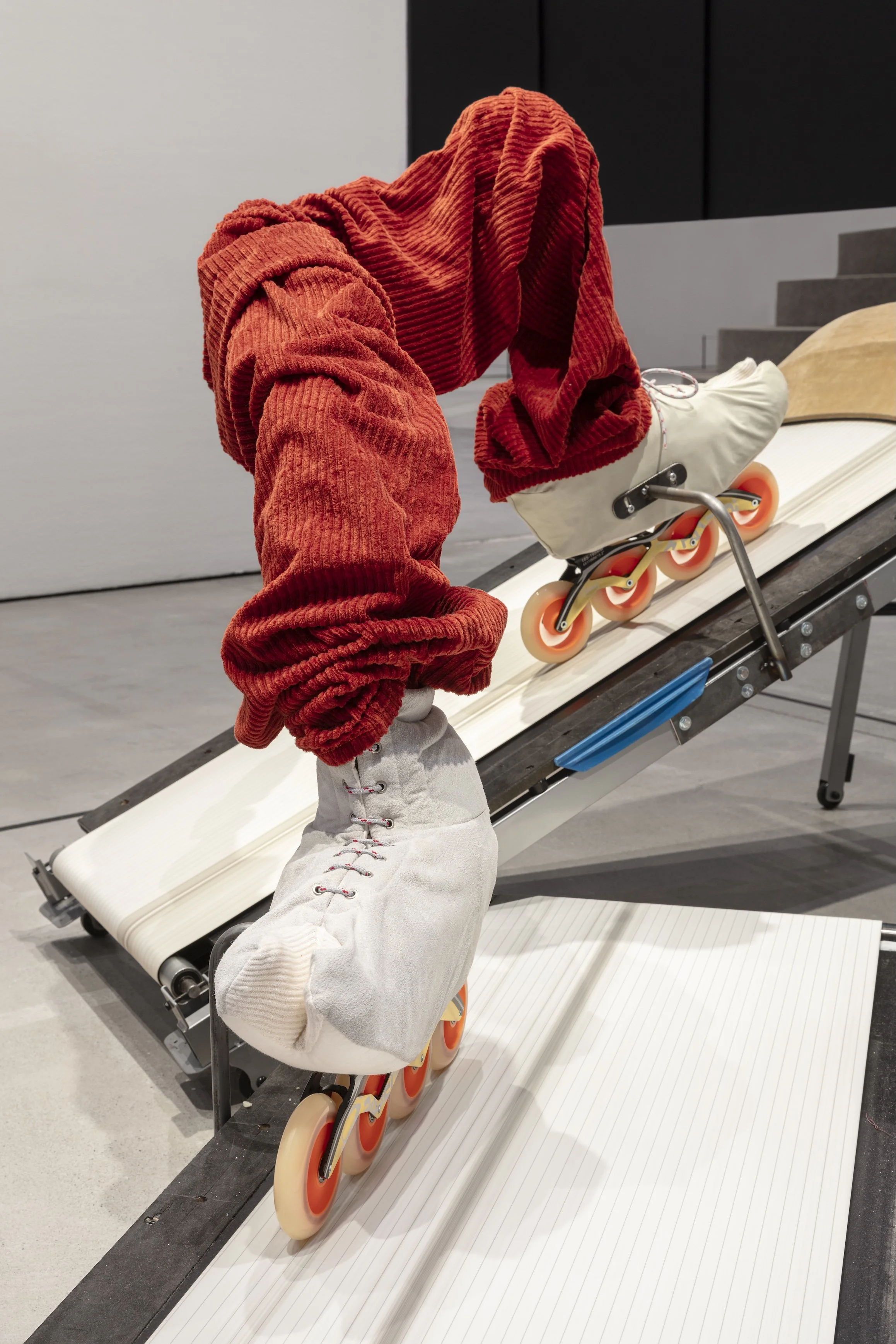
Tori Wrånes, BIG WATER. HAM Helsinki Art Museum, Helsinki, Finland, 2024. Photo: HAM / Maija Toivanen.
Tori Wrånes, BIG WATER. HAM Helsinki Art Museum, Helsinki, Finland, 2024. Photo: HAM / Maija Toivanen.
Tori Wrånes, BIG WATER. HAM Helsinki Art Museum, Helsinki, Finland, 2024. Photo: HAM / Maija Toivanen.
Tori Wrånes, BIG WATER. HAM Helsinki Art Museum, Helsinki, Finland, 2024. Photo: HAM / Maija Toivanen.
Tori Wrånes, BIG WATER. HAM Helsinki Art Museum, Helsinki, Finland, 2024. Photo: HAM / Maija Toivanen.
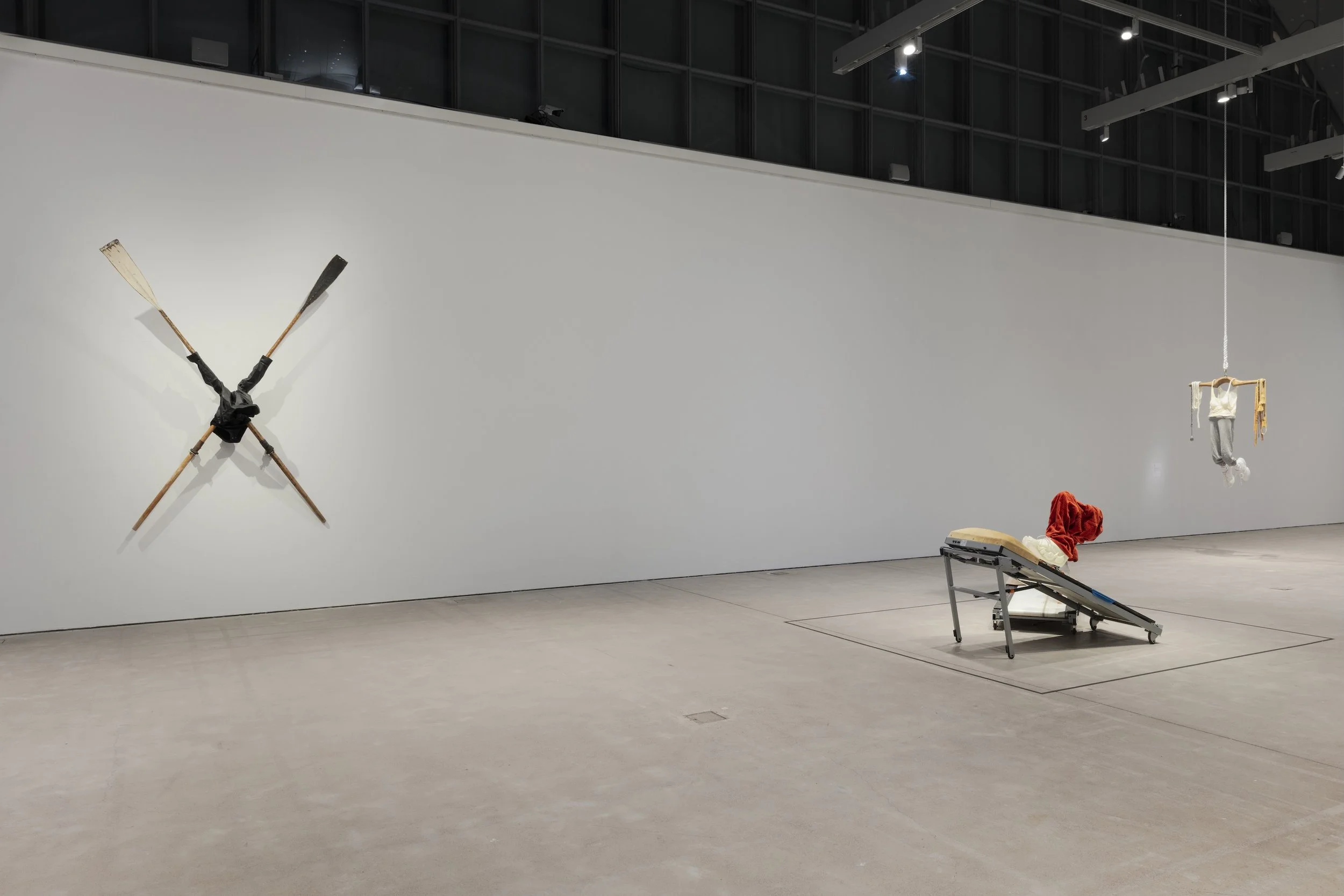
Tori Wrånes, BIG WATER. HAM Helsinki Art Museum, Helsinki, Finland, 2024. Photo: HAM / Maija Toivanen.
TORI WRÅNES: Well, I started thinking about how little of our lives are actually singular. We are always building on something that came before us: language, memory, family, politics, friendship, culture, and care. We are constantly supported by structures we didn’t make ourselves, and at the same time, we become support structures for others, whether we realize it or not. So the sculpture became a way of thinking about collaboration but also dependence, not as weakness but as a condition of being alive. Along the lace there is a big knot, which I guess is about the challenge of being connected. These giant bodies are not climbing individually. They can’t. They lean into one another. The sculpture's upward movement became essential to me. I did not want it to stop at the ceiling, as that would render it decorative or confined. Instead, I wanted it to continue outward, leaving the architecture behind. This was not about escaping the pavilion, but about suggesting that structures are never complete and identities are not closed systems. Allowing the sculpture to extend into the shared space outside felt hopeful: not as an act of escape, but as an act of expansion. The work exists for me in the space between the individual and the collective, the body and architecture, support and freedom, where connection enables movement.
AMADOUR: One thing I kept noticing throughout Human Lace is the presence of footwear — the boots, the lacing itself, the way these fragmented feet seem to carry the sculpture physically through the pavilion. I also noticed this recurring relationship in your work to boots more generally and to these moments where clothing or accessories stop behaving like functional objects and become almost architectural or symbolic forms.
TORI WRÅNES: For Human Lace, my friend and shoemaker Soh Tokunaga assisted in constructing the shoes, bringing expertise in traditional leather techniques. I often wear boots myself, so there may be an autobiographical element to this attraction. In my sculptures, however, boots cease to be clothing and instead become vessels or environments.
AMADOUR: Yes, I feel like I always see you wearing boots! I also noticed this crossing between the body and something avian: wings appearing, movement appearing.
TORI WRÅNES: [laughs] Yes, birds move through the sculpture, a motif that interested me early on because I did not want the bodies to feel complete or sealed off. The birds enter through the shoe, travel upward through the figures, and exit again. One enters at the foot, moves through the leg and body, exits at the crutch, and continues outward. I was drawn to this trajectory because it suggests the body is not an endpoint but a passage. The sculpture does not contain; it allows motion. Birds naturally represent this condition, as they do not recognize borders, migrate freely, and exist in a state of transition. I started to envision humanity in this way, not as isolated individuals, but as generations adjusting structures over time to keep moving forward.
AMADOUR: And does this relate to your family in terms of place, childhood, or lineage, as a multigenerational inquiry?
TORI WRÅNES: That’s actually interesting because I don’t know that much beyond knowing that my family comes from the south of Norway and that it goes back many generations, but I grew up very close to the sea [Wrånes was born in Kristiansand, Norway, a historic port city on the Skagerrak strait whose surrounding granite skerries, shifting tides, and ferry routes, straddle the both the North Sea and southern Norwegian forests.] I grew up fishing, walking in forests, and being outside all the time, not really in a city environment at all, and I think those experiences probably shaped me more than I realized at the time. Even thinking about the birds inside the sculpture now, I can see how much of that world has stayed with me. One of the birds moving through the work wears a ring on its foot because my father is an ornithologist [a person who studies or is an expert on birds], and when I was a child, I used to go with him while he worked. I was his assistant in a way. We would go into the forest or out toward the water and help catch, measure, and ring-mark birds before releasing them again [bird ringing (or banding) is the practice of placing a small identification ring on a bird’s leg to track migration, movement, lifespan, and patterns of behavior across time and geography.] I would hand him the tools, watch him work, and later hear about where birds had traveled, whether they had returned, how populations changed over time, and how movement itself could become a kind of knowledge. I think I didn’t understand then how beautiful that idea actually was.
AMADOUR: I love how that moment with your father shaped this thought process.
TORI WRÅNES: For this sculpture, I wanted to carry something from that memory into the work, so my father gave me a bird ring that he had found from a dead seabird near where I grew up. The bird had already died, and the ring remained, and there was something about that object that stayed with me because it felt like evidence of movement continuing even after life had ended. I brought that ring into the sculpture and placed it onto one of the birds. Then a friend of mine, a jewelry maker, created another silver ring for the opposite foot. I liked the idea that one ring came directly from life and observation, and the other was remade through care and craft. One belonged to something that had existed, and one became something newly made. And somehow, together, they started to feel like the living and the dead moving side by side, ancestors and futures existing simultaneously within the same body.
AMADOUR: I wanted to ask about another work in relation to Human Lace because seeing the figure extend beyond the pavilion made me think back to some of your earlier performances. I kept returning, in particular, to In Minor Keys, the zipper’s mass (2026), and especially to the image of the singing zipper. Formally, the works feel very different, but I was struck by how both seem to resist fixed identity. Rather than feeling tied to age, gender, or realism, they feel closer to states of becoming. I was curious whether you see those works as connected at all, or if they represent different ways of thinking through transformation.
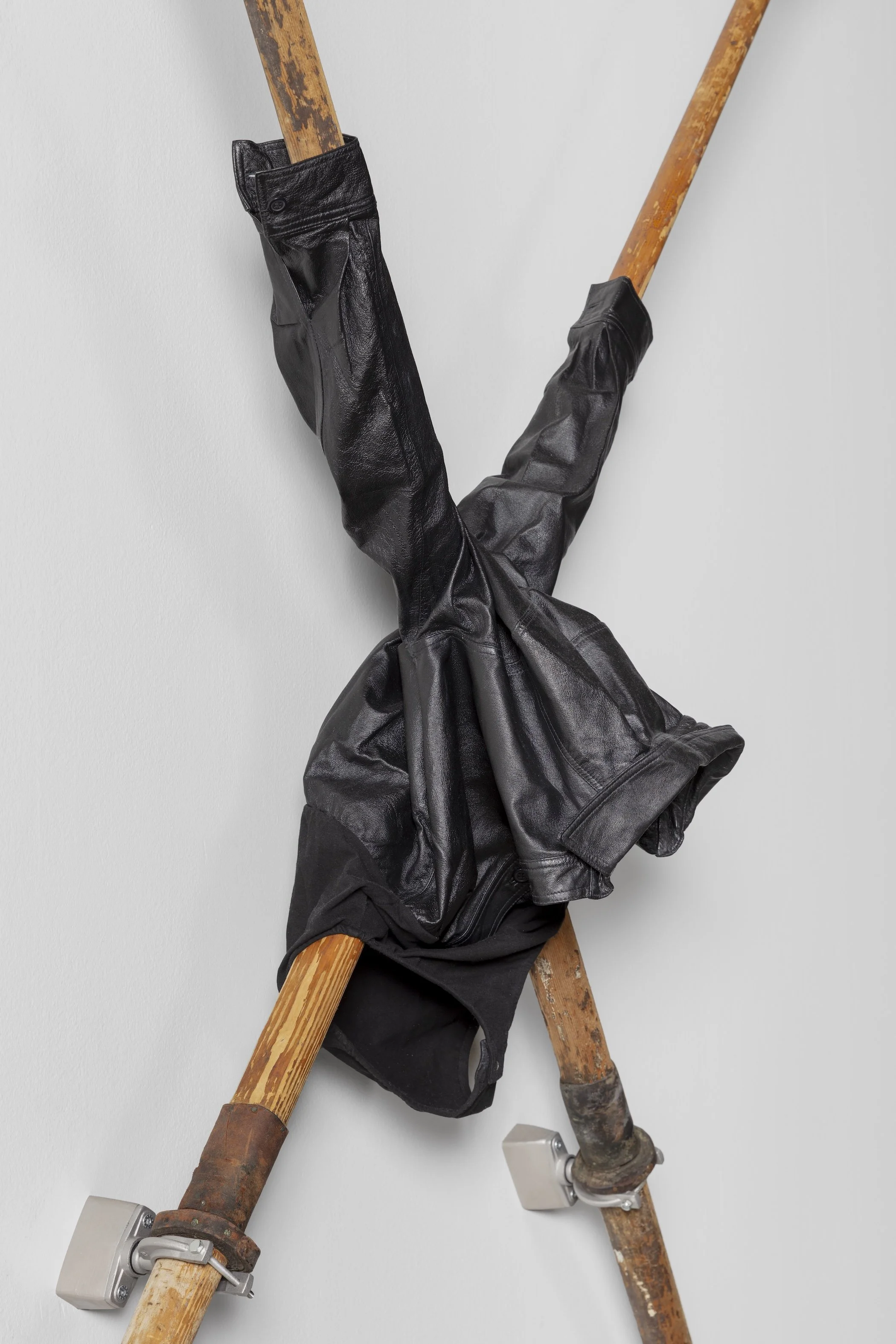
TORI WRÅNES: I really like that you connected those works because for me they are one piece; the collective in the sculpture Human Lace is a scenography for the lonely giant in the performance. In Human Lace, the figures become collective and grow into one another, while in In Minor Keys, the zipper’s mass there is something more solitary: a lone creature singing through an opening rather than from a complete body. But what connects them for me is that neither work is interested in fixed identity. I do not want the figures to be immediately recognizable as male or female, young or old, human or nonhuman. I am interested in forms that exist before those categories arrive or after they dissolve. Even in the details of the work, I think about this. The textiles, made from sail fabric, the buttons, cast from aluminum and bronze, combine symbols that expand beyond familiar gender systems. I sometimes call them gender adventure logos because identity often gets treated as something finished when to me it feels more like movement. We inherit structures that tell us who we are before we have time to discover anything ourselves, and I am interested in loosening those structures. I keep returning to sails because they’re so brutally and beautifully patinated by wind and time, with the main goal of moving forward. They move by receiving wind. I think people can be like that, too. I am not interested in fantasy as escape or in inventing another world. I am interested in creating figures that allow us to imagine other ways of existing within this one, and maybe leave feeling slightly less fixed than when we arrived.

Tori Wrånes, Moon Bag, 2025. Presented in Festspill Exhibition, curated by Silja Leifsdottir, Bergen Kunsthall, Bergen, Norway. Photo: Thor Brødreskift.

Tori Wrånes, Moon Bag, 2025. Presented in Festspill Exhibition, Bergen Kunsthall, Bergen, Norway. Photo: Thor Brødreskift.
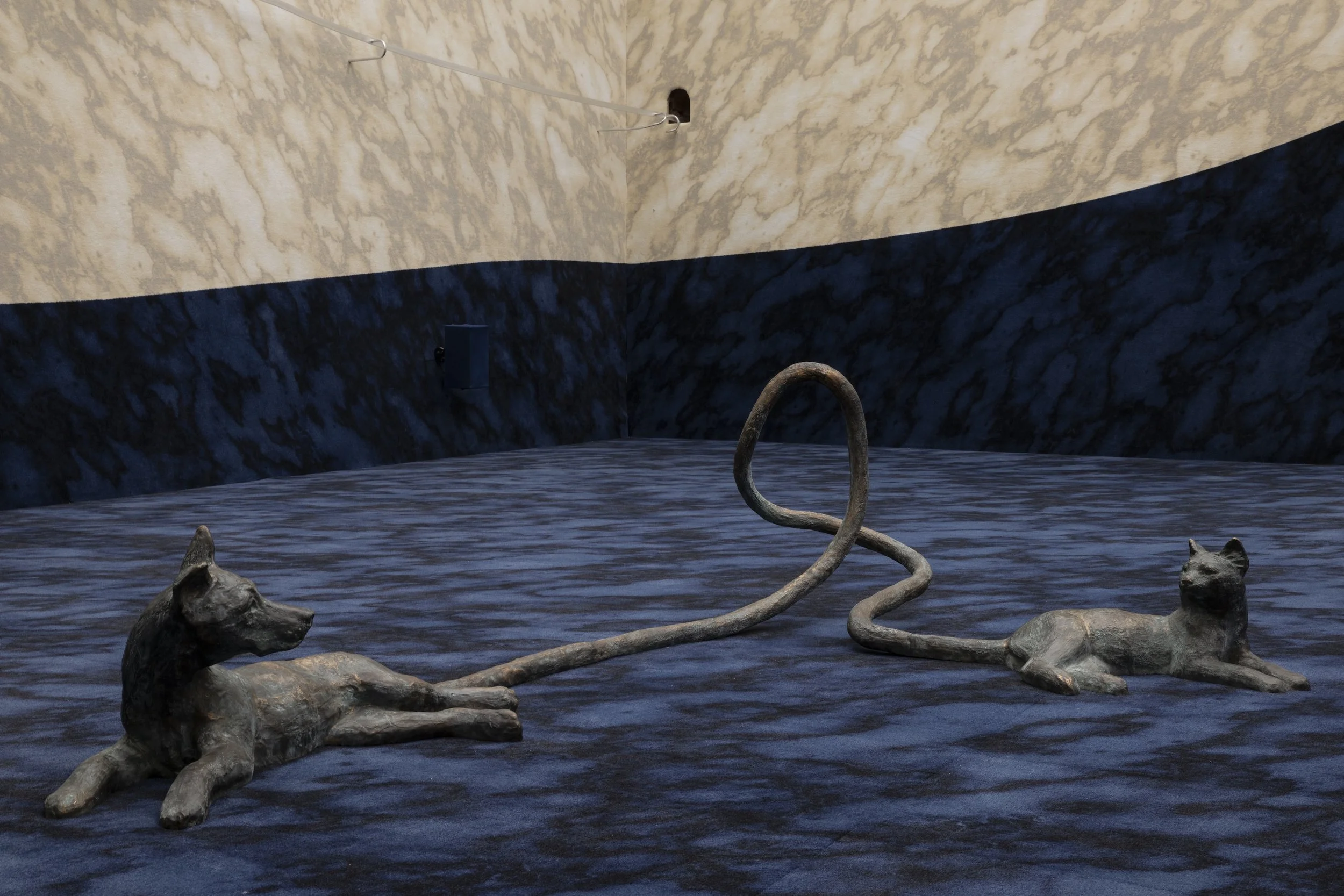
Tori Wrånes, Moon Bag, 2025. Presented in Festspill Exhibition, Bergen Kunsthall, Bergen, Norway. Photo: Thor Brødreskift.
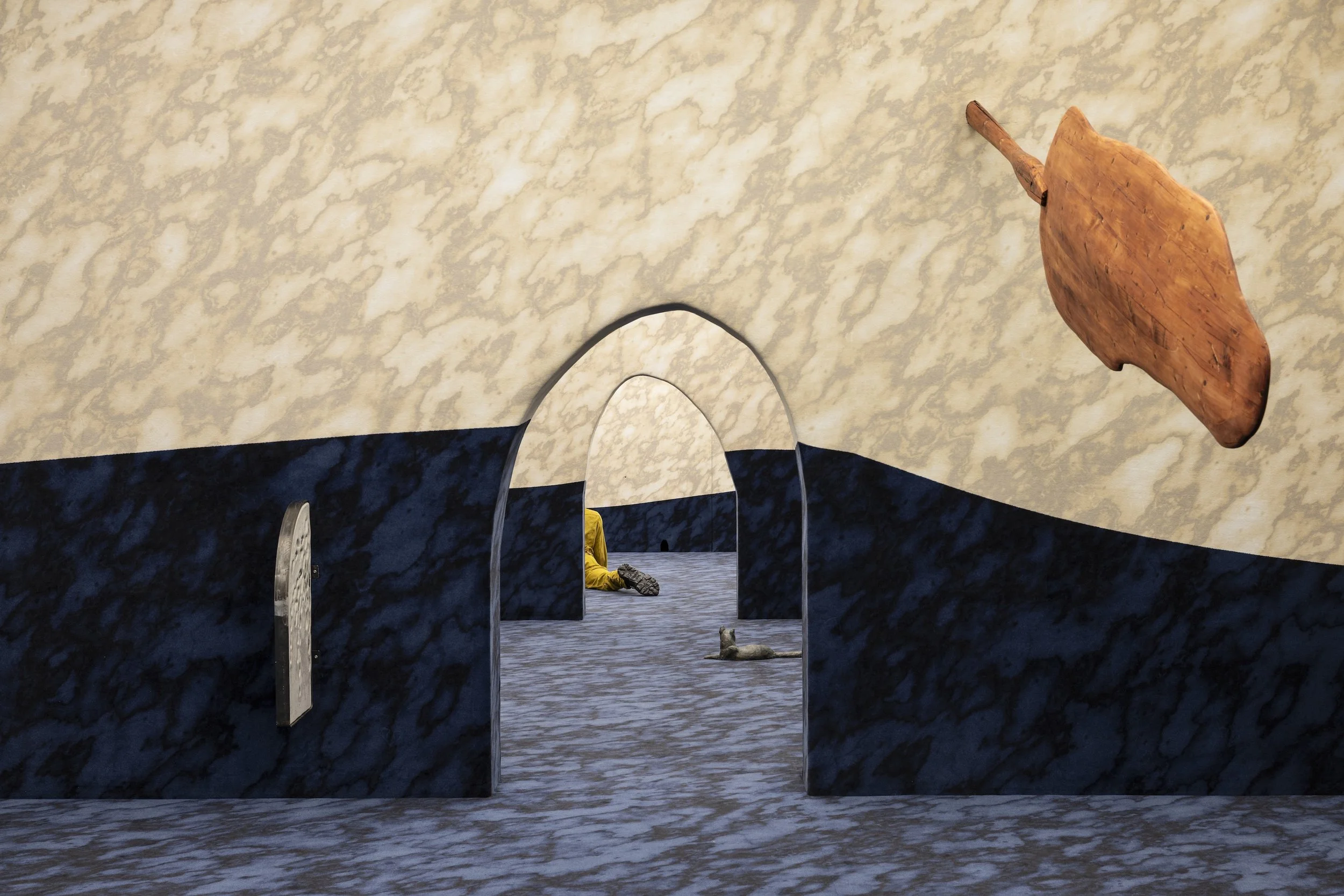
Tori Wrånes, Moon Bag, 2025. Presented in Festspill Exhibition, Bergen Kunsthall, Bergen, Norway. Photo: Thor Brødreskift.
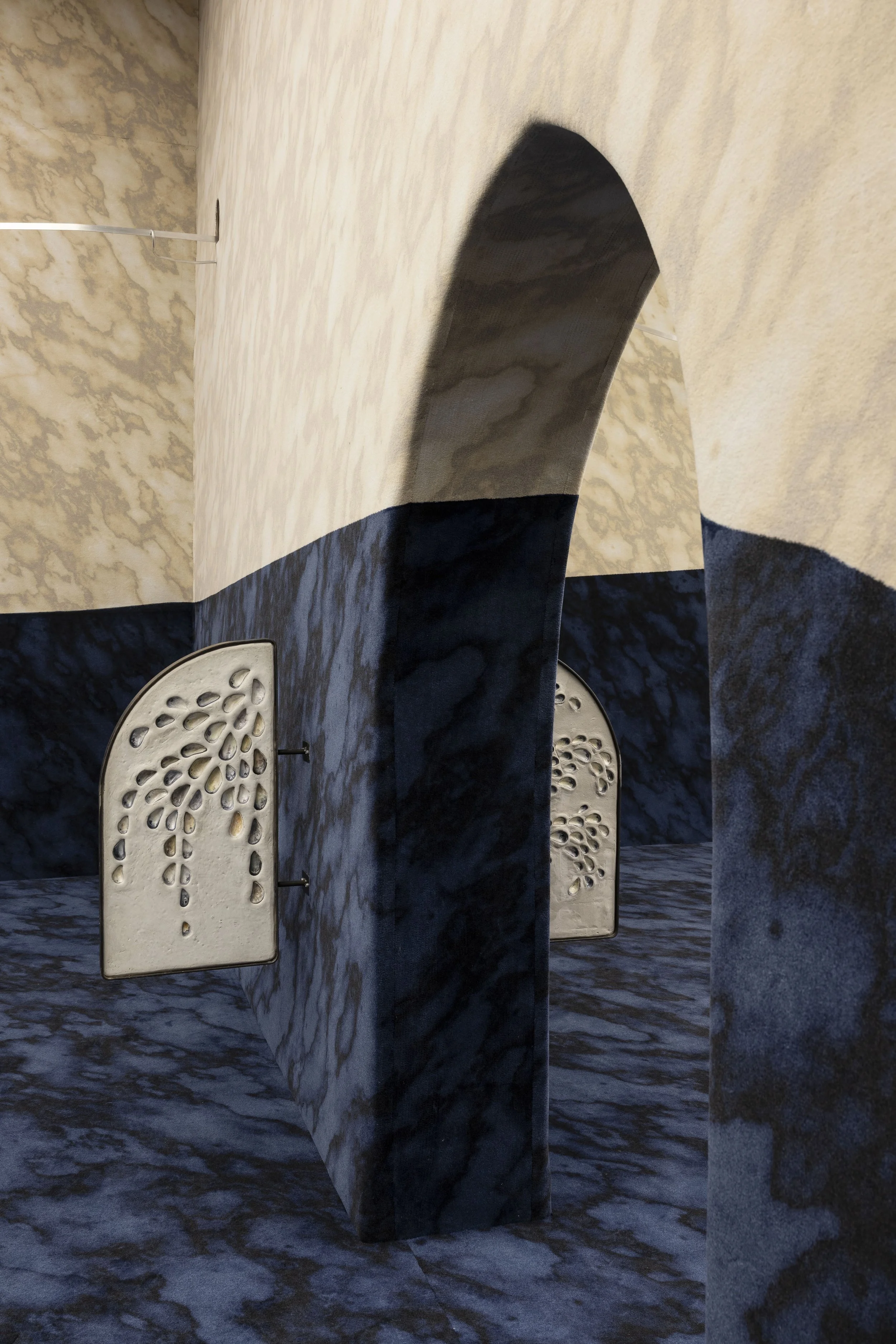
Tori Wrånes, Moon Bag, 2025. Presented in Festspill Exhibition, Bergen Kunsthall, Bergen, Norway. Photo: Thor Brødreskift.
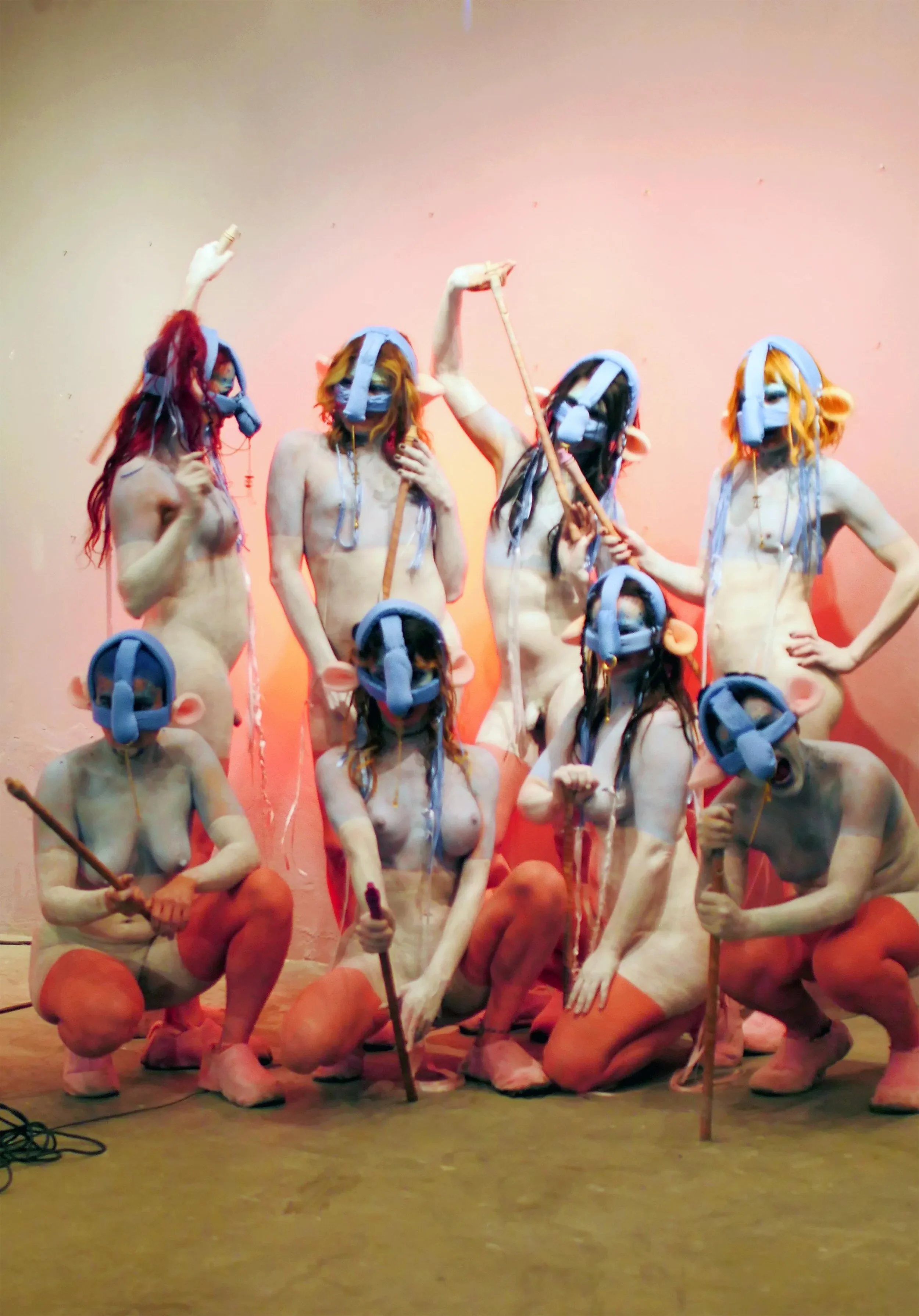
Tori Wrånes in collaboration with the Colombia-based transgender activist and community organization Red Comunitaria Trans, Flute Warriors, KuirBog Festival, Bogotá, Colombia. Photo: Sebastián Contreras. Created in collaboration with the Colombia-based transgender activist and community organization Red Comunitaria Trans. Acquired by Sørlandets Kunstmuseum.
AMADOUR: I also wanted to move toward Colombia because I think there is another thread running through your work that feels important to me and maybe is not always immediately visible when people encounter it through a European context. We share a connection there, for me through family, with my mother being from Bogotá and Boyacá, and for you through your collaboration with our mutual friends at La Red Comunitaria Trans and especially through your relationship with Olga Robayo at El Parche Residency, who is also a mutual friend. I was thinking about this because your work is often situated within Nordic mythology or traditions of performance and sculpture, but I have never experienced it as especially fixed to place. To me, the work feels site-responsive rather than site-bound. Whether I imagine these figures in Norway, Los Angeles, Bogotá, or somewhere else entirely, they seem to retain a certain openness rather than becoming illustrations of location. I was curious whether Colombia still feels present in your thinking, and whether working with La Red changed the way you think about participation, collaboration, and what an artwork can hold. I also wanted to stay with that collaboration because one work in particular remained with me: Flute Warriors (2017) [a collaborative performance by Tori Wrånes and La Red Comunitaria Trans in Bogotá, developed through collective performance, costume, sound, and embodied participation, exploring transformation, visibility, community, and alternative forms of being together.]
TORI WRÅNES: That project has stayed with me very strongly, and I would really like to return because the performance we created together became one of those experiences that quietly changes your practice long after it ends. What was meaningful to me was not arriving with an idea and realizing it. Of course, I bring something of myself, a material, an instrument, a gesture, a place to begin, but it is not mine; it is ours. What happened there extended far beyond making an artwork. It changed how I thought about being a person. I learned so much simply from being present and seeing the strength, humor, complexity, tenderness, and intelligence people carried within conditions that were difficult and unequal. We learned from each other; it was about respect and earning trust. And when we trusted each other, it felt like we could do anything in the world, and that is the true power of a collective. It felt like an existential runner's high. Art became a way of gathering, of becoming visible to one another, and of holding complexity. I think I also learned something about being comfortable in yourself — being proud, being in your body, allowing yourself to exist without apologizing. It feels bigger than one project, but that experience continues to return in my work. Maybe that is also why my work no longer feels fixed to a single place.
AMADOUR: And where does the flute come into play?
TORI WRÅNES: In this case, I brought a Norwegian folk instrument, a willow flute, because it felt close to me and I wanted to begin somewhere personal without deciding where that beginning would lead. We all looked at the instrument, and someone said, “This is the most trans instrument ever,” and everyone started laughing because once that idea entered the room, it transformed how we saw it. It’s a long wooden body with three holes running through it, and immediately it stopped being folklore and became something else. That was one of my favorite moments because nobody planned it. The meaning emerged together. We started thinking about the flute as a tool for gathering, for speaking, for surviving, and eventually, almost as a weapon, but not a weapon in a violent sense. More like something that gives people force. Because I think art does that. If people are pushed into struggle, culture becomes one of the things that brings us together despite being different. I remember thinking during that project that, as a trans person in Colombia, there are moments where simply existing becomes a kind of resistance, and that reality shaped the work deeply. We began talking about how sometimes people are pushed into arenas they never asked to enter — forced to explain themselves, defend themselves, justify themselves — and there was this image we kept returning to: being placed in a ring like a bullfight. Not because you want conflict, but because the world creates it around you. We even introduced rings into the masks as part of the performance because we kept thinking about that condition of being brought into visibility and confrontation against your will. But what stayed with me most wasn’t struggle; it was the confidence, the love and trust, the power and energy in the fight; it was dignity.
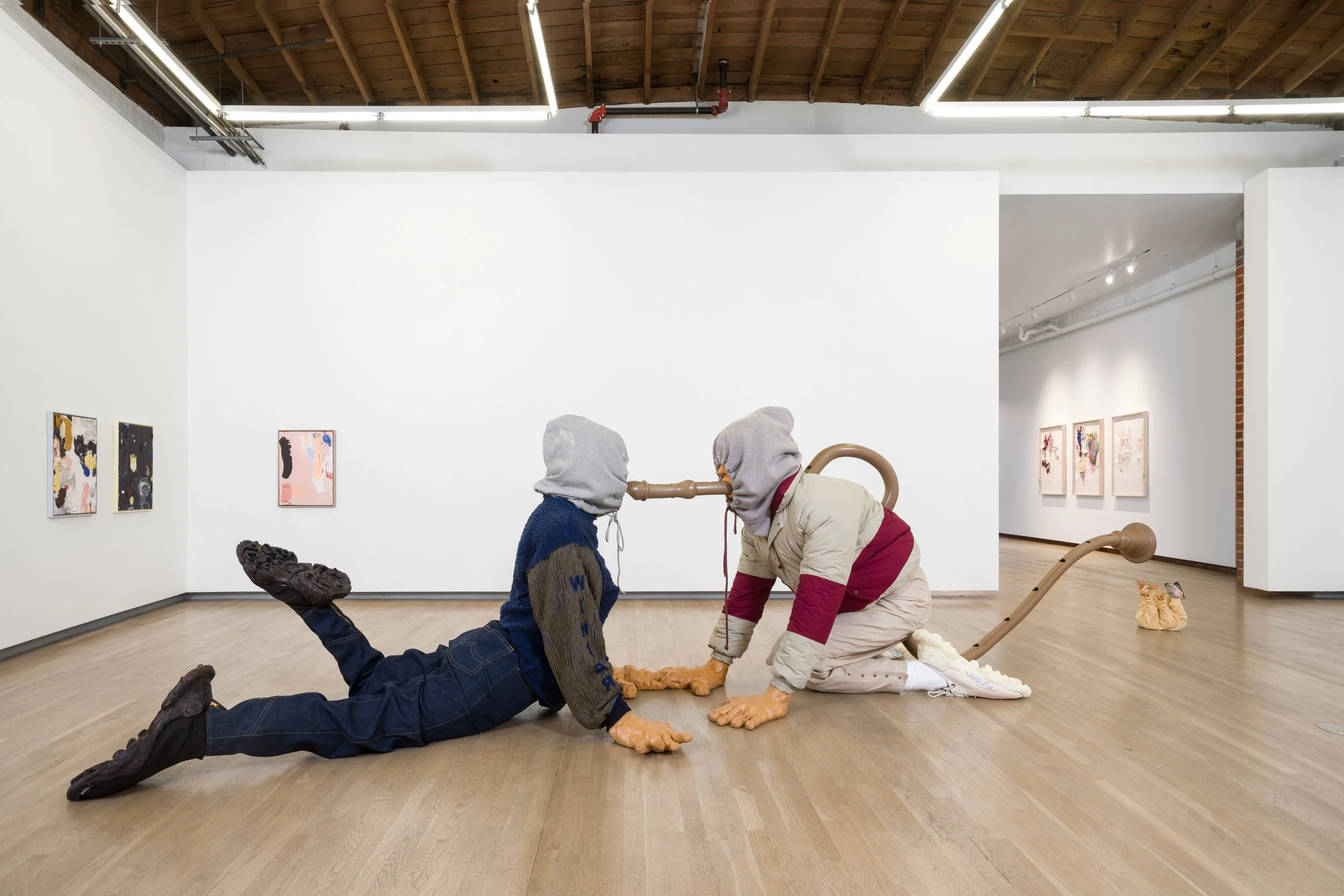
Tori Wrånes, Mothers and Child, 2022. Lucite, photocured acrylic, epoxy, resin, urethane foam, PVC, Bondo, birch, acrylic paint, concrete, steel fasteners, shoes, and textiles, 53 × 256 × 54 in. Courtesy of the artist and Shulamit Nazarian, Los Angeles. Photo: Ed Mumford.
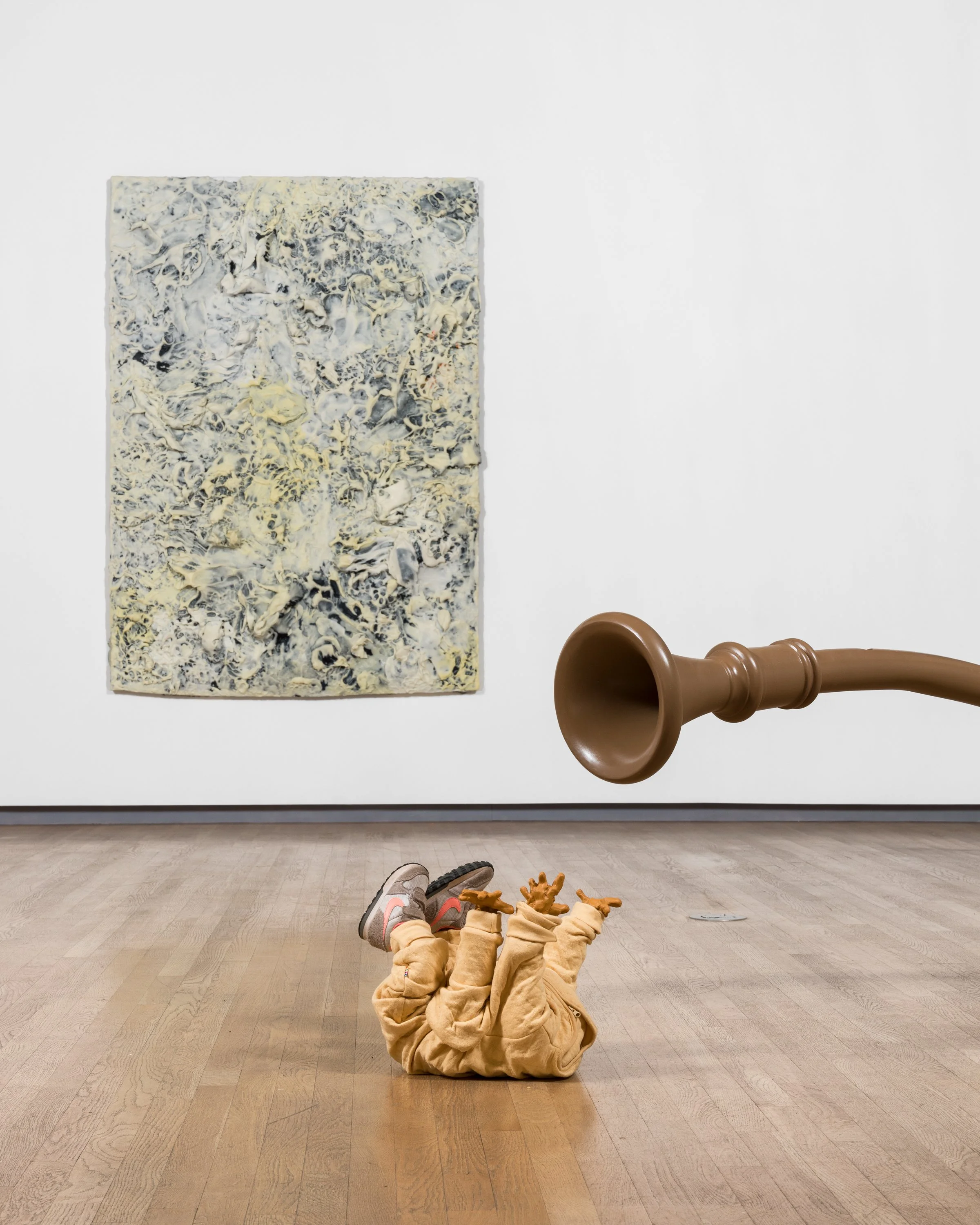
Tori Wrånes, Handmade Acoustics, 2018 (left), and Mothers and Child, 2022 (right). Handmade Acoustics: silicone, pigment, and textile on panel, 80 × 57 × 5 in.; Mothers and Child: Lucite, photocured acrylic, epoxy, resin, urethane foam, PVC, Bondo, birch, acrylic paint, concrete, steel fasteners, shoes, and textiles, 53 × 256 × 54 in. Courtesy of the artist and Nazarian / Curcio, Los Angeles. Photo: Ed Mumford.
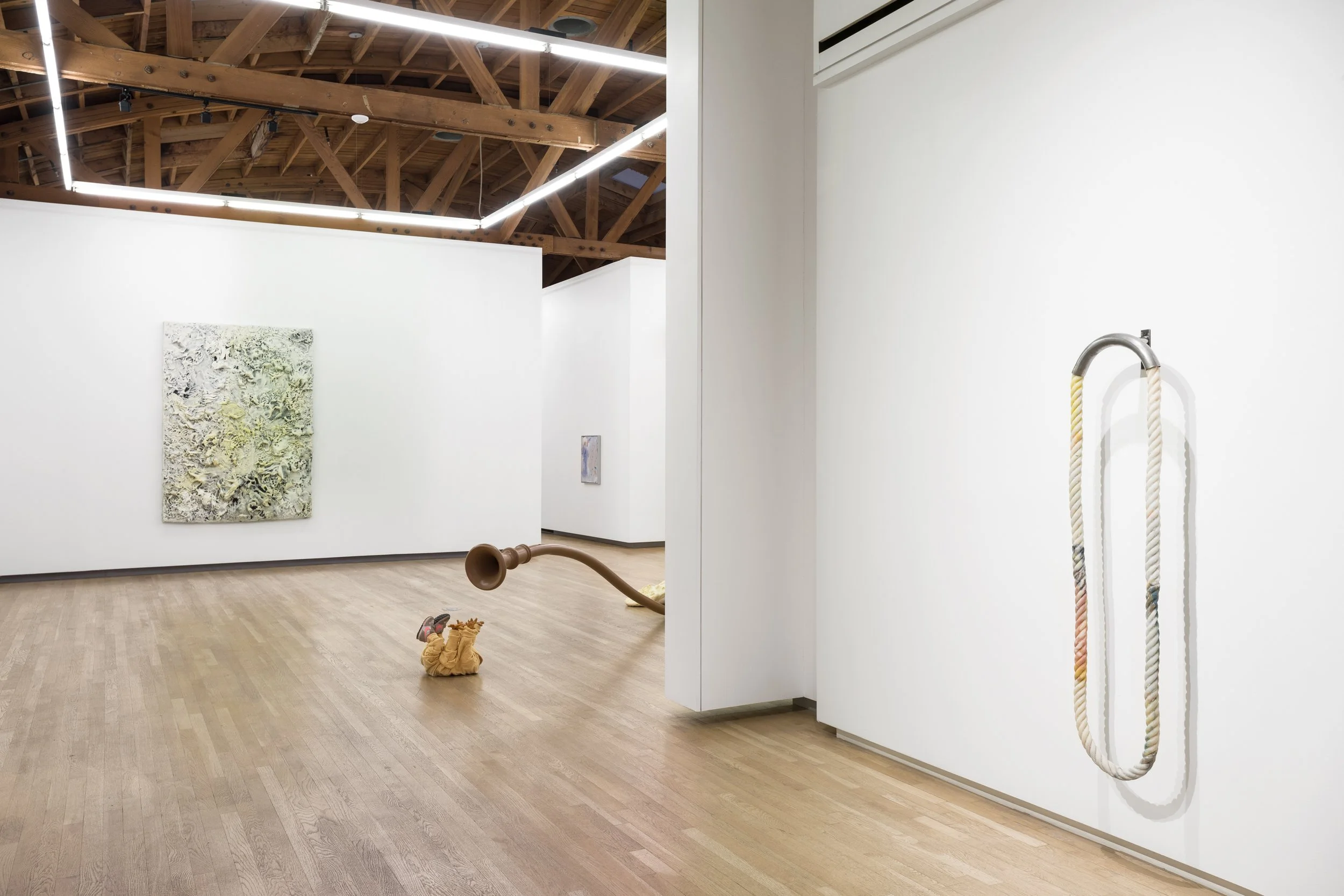
Tori Wrånes, Handmade Acoustics, 2018 (left), and Mothers and Child, 2022 (right). Handmade Acoustics: silicone, pigment, and textile on panel, 80 × 57 × 5 in.; Mothers and Child: Lucite, photocured acrylic, epoxy, resin, urethane foam, PVC, Bondo, birch, acrylic paint, concrete, steel fasteners, shoes, and textiles, 53 × 256 × 54 in.; Hoolahoop for Velvet Hips, 2017. Rope, silicone, color pigments, brass. 52 x 12 x 6.5 in. Courtesy of the artist and Nazarian / Curcio, Los Angeles. Photo: Ed Mumford.
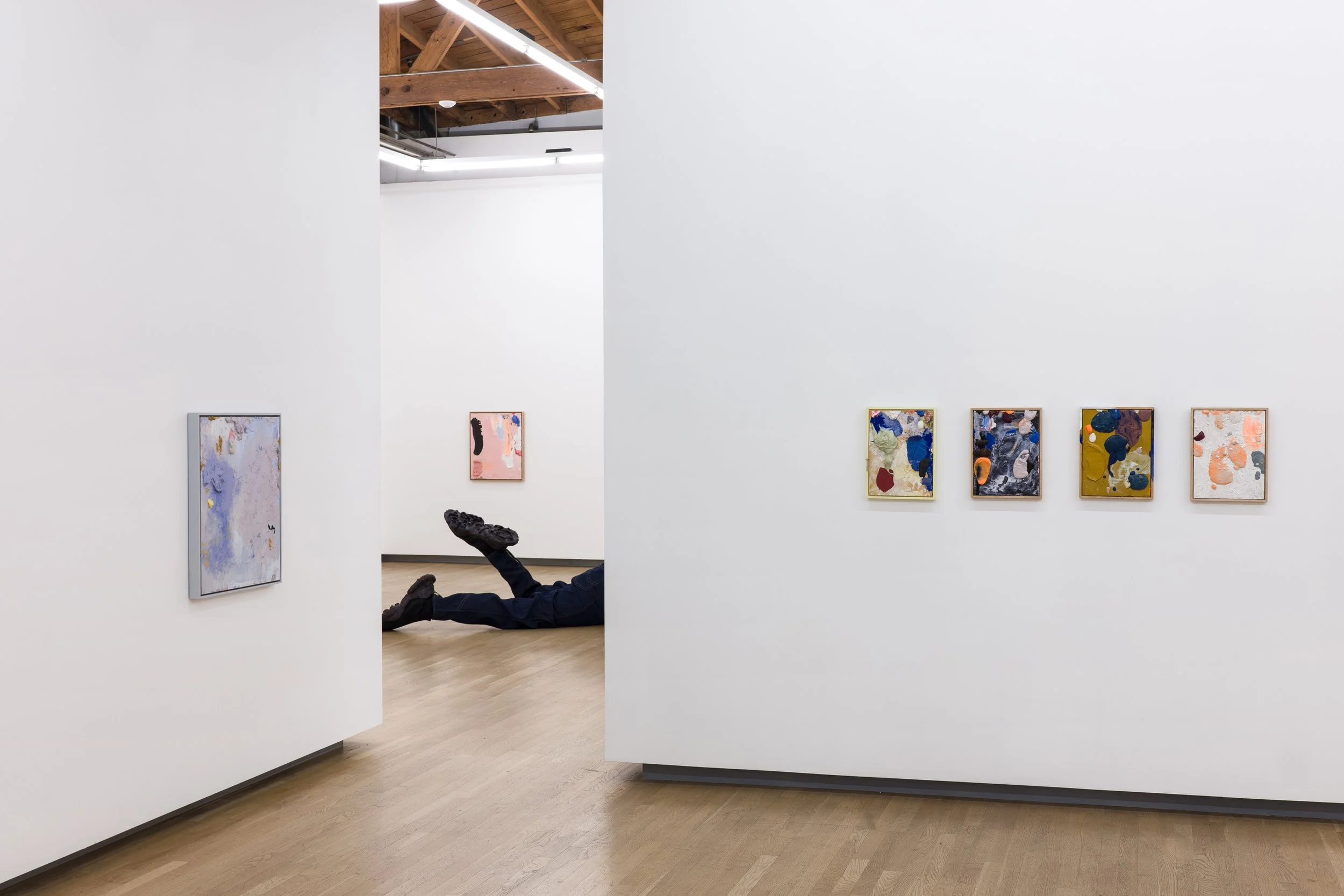
Tori Wrånes, Singing Painting, 2016. [series] Silicone, acrylic, and foam on panel, framed: 25 × 21 × 2.5 in. Courtesy of the artist and Nazarian / Curcio, Los Angeles. Photo: Ed Mumford.
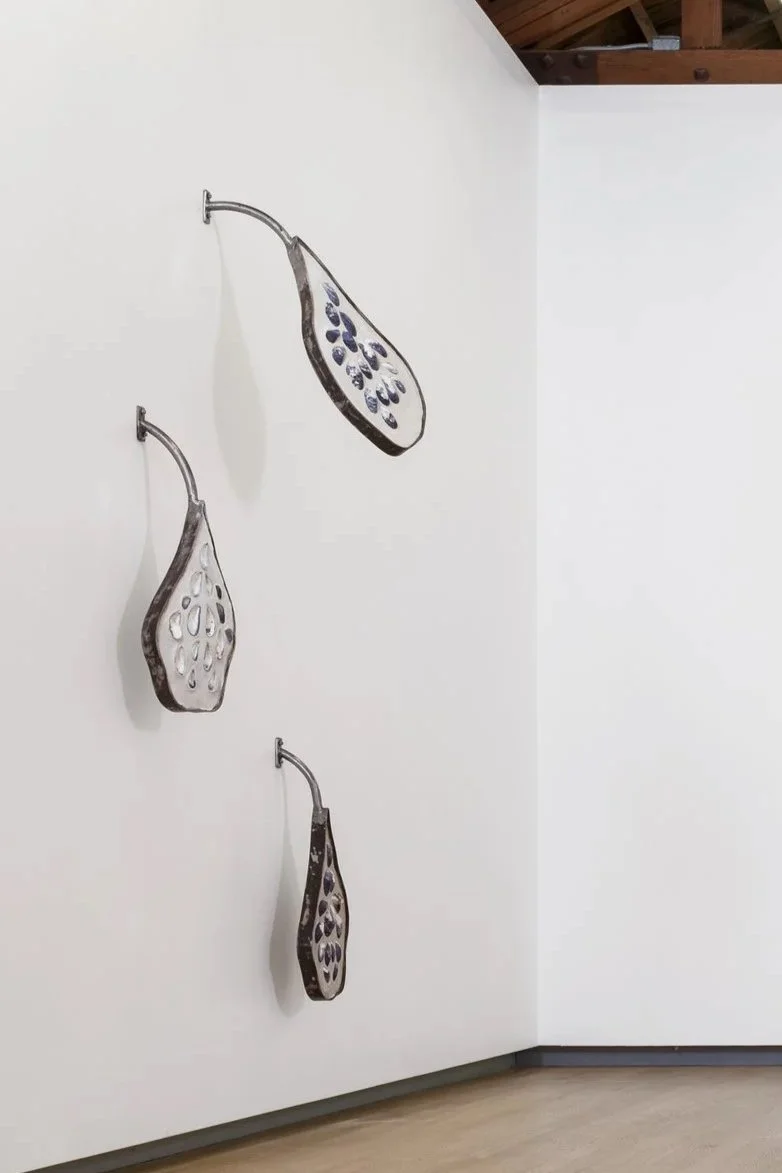
Tori Wrånes, Mussel Tears, 2021. Steel, concrete, and mussels, 31 × 4.5 × 15 in. Courtesy of the artist and Nazarian / Curcio, Los Angeles. Photo: Ed Mumford.
AMADOUR: Let’s move to Los Angeles because we first met there during your exhibition Mussel Tears at Nazarian / Curcio in 2022, and I remember seeing your performance and feeling like I was encountering many of the same ideas through voice rather than sculpture. I kept thinking in particular about ECHO FACE (2018), where through prosthetics, costume, and altered vocal registers you transformed into a figure that felt multiplied rather than singular. Looking back at it now, I realized I do not experience that work as separate from your recent practice. Across different forms, your figures seem to resist fixed identity and remain open to transformation. I was also thinking about the way people often connect trolls and Nordic mythology to your work, but looking at it now, those figures feel less like folklore and more like a broader way of thinking through becoming. I was curious how you look back at ECHO FACE today and whether those earlier figures still remain present in the work you are making now.
TORI WRÅNES: That’s true, actually, and I like that you connected those works because I do think those ideas are still there. Even if the forms keep changing. In ECHO FACE, I had multiple eyes, multiple microphones, multiple vocal registers: one voice pitched upward and another downward, and the figure became this doubled presence. At the time, I wasn’t thinking about it analytically, but looking back, I can see that I was already interested in what happens when identity stops being a single, stable thing and instead becomes layered or expanded. Maybe that’s why these works still feel connected to me now. In Venice, there’s something moving through architecture and leaving the building; in ECHO FACE, there's something multiplying inside the body, but both are trying to loosen the edges and create forms that aren’t fully settled. And the troll is funny because I feel like it never completely leaves. I don’t consciously work with trolls anymore, but I also think the troll follows me everywhere. It’s such a powerful figure because it exists outside ordinary systems of beauty, logic, and belonging. Traditionally, the troll comes out at night, avoids exposure, exists somewhere between fear, fantasy, and nature; I think there’s something deeply human in that. We all carry parts of ourselves that remain hidden or difficult to present publicly. We all have versions of ourselves that don’t quite fit the image we’re expected to show. I think that’s probably why I connected with trolls originally, but over time, I became less interested in the troll as folklore and more in what it represented. The troll became less of a character and more of a condition; a way of thinking about hidden forms of being and the parts of ourselves that remain unresolved. And maybe my relationship to that figure has changed because I don’t think I want to protect the troll from the light anymore. I think I want the troll to enter the light. I sometimes imagine the troll exploding in the sun and becoming human, not becoming normal, but becoming visible. Because I’m interested in the full spectrum of being human, including contradiction, uncertainty, fantasy, discomfort, softness, and all the things that don’t fit easily into language. That’s why the figures become creatures, bodies, fantasy forms, presences that don’t belong to established categories and therefore can create their own rules. And in a strange way, maybe that is a form of drag — not drag queen or drag king, but something broader where transformation itself becomes the language. A body becoming something else to reveal something truer.
AMADOUR: The title itself contains this anomolaus shift: the mussel as both a living system and an emotional register, tears as both bodily and environmental. There’s this sensitivity to things that carry quiet forms of labor or change over time. I was curious if that relationship to mussels, scale, and these quieter forms of transformation found their way into the Venice installation as well.
TORI WRÅNES: They did, and I’m happy you noticed because there are mussels in the Venice work too, but they’re easy to miss. I’ve always loved the contradiction where something physically small can completely transform an environment, and mussels feel like that to me. They do enormous work cleansing water and creating conditions for other life while remaining almost invisible. Now they’re starting to return in parts of the Oslo fjord, and people support this by placing more shells and helping rebuild habitats so they can grow. I find that moving because it reminds me that change doesn’t always announce itself. Sometimes things repair quietly. Inside Human Lace, underneath the shoes, where your weight would press downward and crush something beneath you, there are mussels. One shoe reveals the shell's exterior, so it almost looks like the shoe is crying, with tears gathering beneath the body. The other shows the inside of the shell, and inside that shell, a tiny pearl begins to form. I became attached to that image because pearls form in response to irritation. A grain enters, and instead of rejecting it, the mussel slowly transforms it. It creates something new around disturbance. There’s something beautiful in that process because it isn’t dramatic or heroic. It’s slow, protective, and patient. The pearl became a way of honoring that. It also became a quiet homage to Koyo Kouoh [Koyo Kouoh (1967–2025) was a Cameroonian-Swiss curator, writer, and institution builder known for centering African and diasporic perspectives in contemporary art. She founded RAW Material Company in Dakar, served as Executive Director and Chief Curator of Zeitz MOCAA in Cape Town, and became the first African woman appointed to curate the Venice Biennale (2026)], and her title for the Biennale, In Minor Keys, because I kept thinking about how much of life is carried by things we barely notice: small repairs, acts of care, organisms, movement that eventually change everything around them. And ofcourse it is about the contrast between the very small and the very big, and everything that exists in between.
AMADOUR: As a final question, I wanted to return to performance more broadly because one thing I admire about your practice is that performance never feels secondary to the sculptures or installations. It doesn’t feel illustrative. Who are you looking at right now, whether there are artists, performers, musicians, or even forms outside of art that are making you excited?
TORI WRÅNES: I am happy you say that; I believe everything I do comes from a performative place. If it is having the space breathe or a moving bag or the audience being moved, there are artists I’m excited by. I really love Holly Herndon; she has such a great brain for composition and vocalizing, and the way they move between performance and installation. Sandra Mujinga’s work feels incredibly alive to me. Sissel Endresen, too, especially the way she works with voice and this non-verbal language that feels both ancient and futuristic at the same time [known for extended vocal techniques, improvisation, and non-verbal vocal expression. Her practice often treats the voice as material rather than language.] But honestly, I think I’m increasingly inspired by things outside of art. I think nature is performing at its best all the time. Light changing in a room. Birds migrating. Water moving. Wind is changing direction. Seasons arriving. Nothing repeats exactly, and I guess I love these uncontrolled moments where anything can happen.
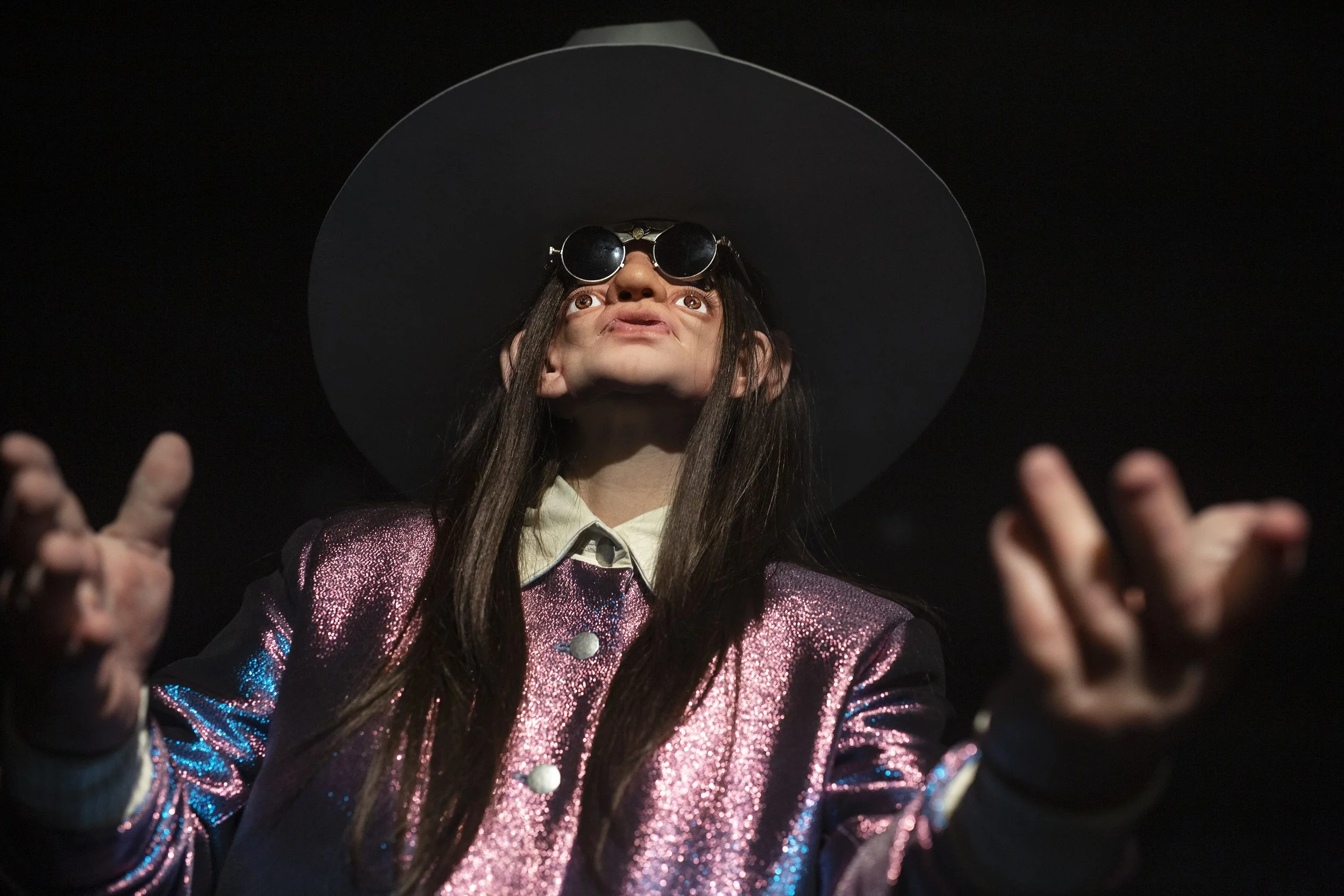
Concert at Vega Scene, København, and Nazarian/Curzio Gallery, Los Angeles. Photo: Frida Gregers.
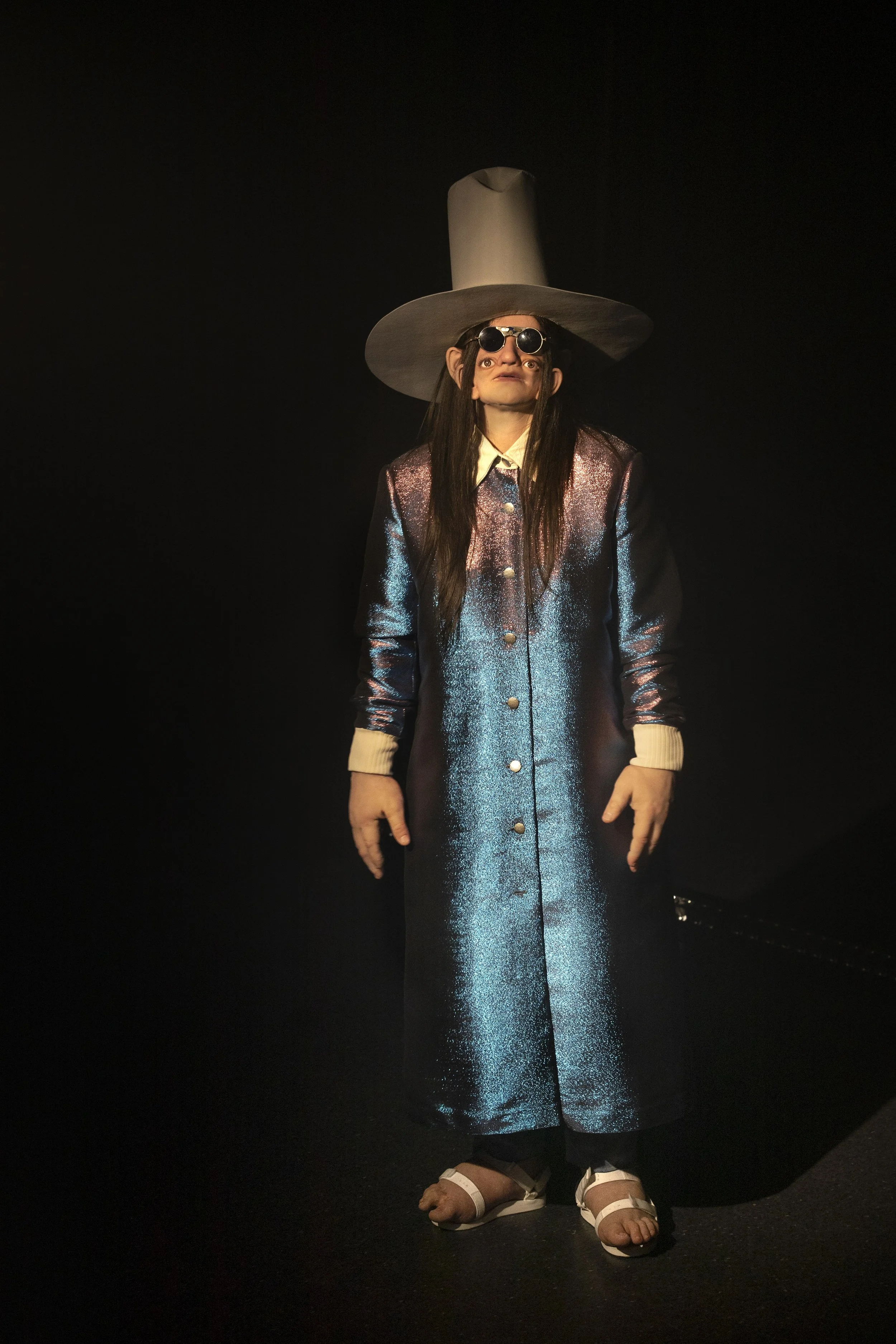
Concert at Vega Scene, København, and Nazarian/Curzio Gallery, Los Angeles. Photo: Frida Gregers.