AN INTERVIEW WITH BEATRICE FAVARETTO: DESIRE, SEXUALITY, VULNERABILITY, AND THE BODY
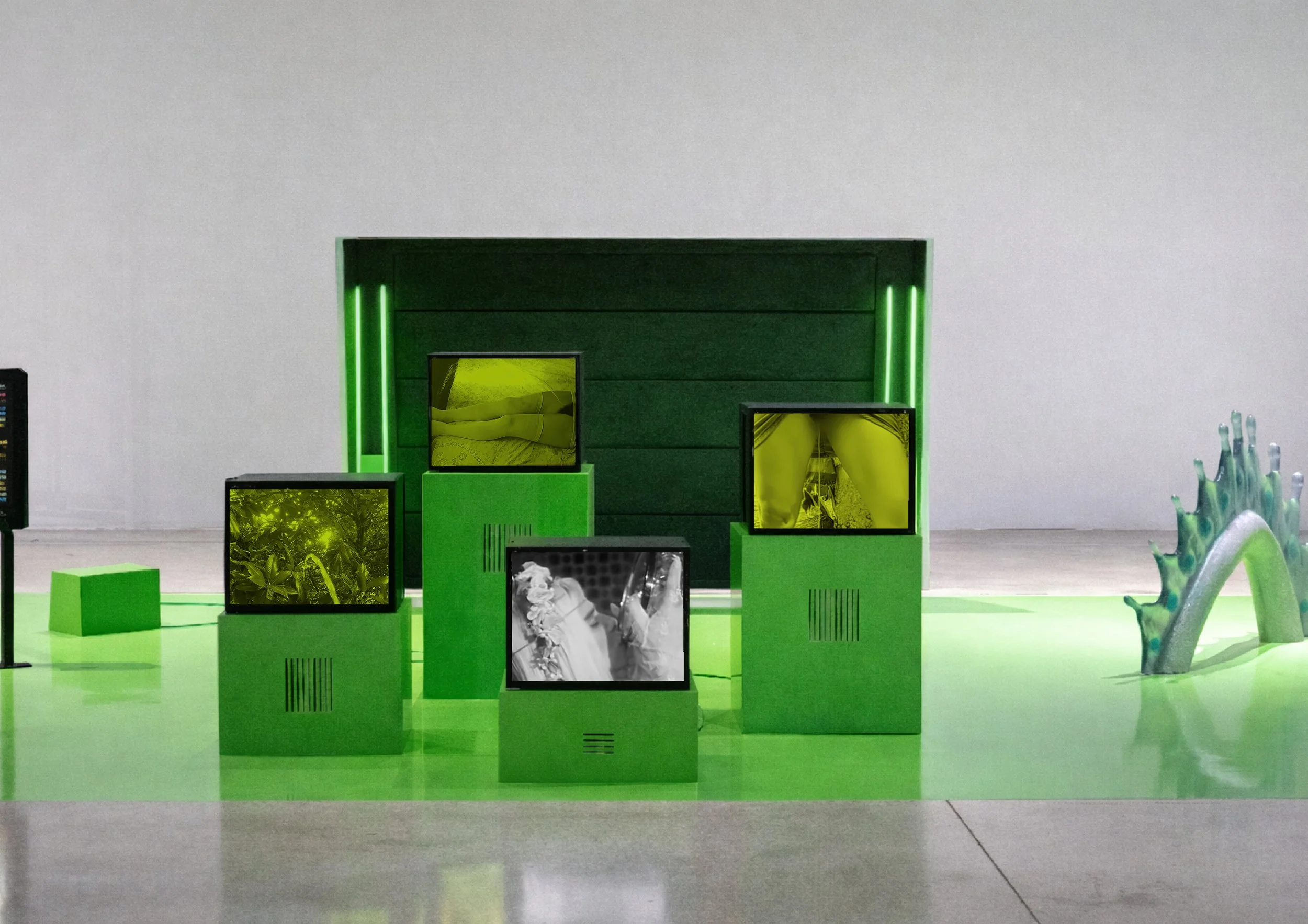
Piss Fountain, 2025. 4-channel video, 12 min. 30 sec. loop (in progress). Produced at the Antonio Ratti Foundation, Como, during the LOW REALISM ArtLab curated by Ed Atkins, Lorenzo Benedetti, and Annie Ratti. Courtesy of the artist.
Beatrice Favaretto is an Italian artist whose practice moves across video, performance, installation, sculpture, and collaborative research to examine the body as a site of sexuality, desire, vulnerability, and self-determination. Born in Venice and based in Treviso, Favaretto approaches sexuality not as provocation for its own sake, but as a way of understanding how we relate to ourselves and to one another. She is unapologetic in her insistence that no body should have to become respectable, desirable, or easily understood before it is allowed intimacy.
I first met Beatrice Favaretto by chance in September 2025, outside Gray Area on Mission Street in San Francisco, where our mutual friend, the French artist Salomé Chatriot, was performing. Star Amerasu performed that night, too, and somewhere between the performances and the congregation of artists smoking cigarettes outside on Mission Street, Beatrice and I started talking. We hit it off immediately. There was something about her that was eager and open, funny but serious, and almost disarmingly curious. Later that week, Beatrice, Salomé, and I met again to visit SFMOMA together. I grew up partly in San Francisco, so I inevitably became the tour guide. We drove through the city to Fillmore Street, parking on Pine Street among its rows of Victorian houses, wandering without much of an agenda and eventually ending up, somehow, at Crossroads Trading. It was fun in the unremarkable way that sometimes becomes memorable later: three artists walking through a city, looking at art and clothes and buildings, talking about everything. After saying goodbye to Salomé, Beatrice and I drove north across the Golden Gate Bridge to Sausalito. We stopped at The Trident on Bridgeway, walked along the waterfront, and talked about Janis Joplin, who had been part of Sausalito's countercultural history. Beatrice was completely amused by it. Farther along Bridgeway, I showed her the Sausalito seal sculpture, and our conversation wandered from Arte Povera to contemporary Italian art, museums, Venice, and the project that had brought her to California: working alongside Annie Sprinkle and Beth Stephens.
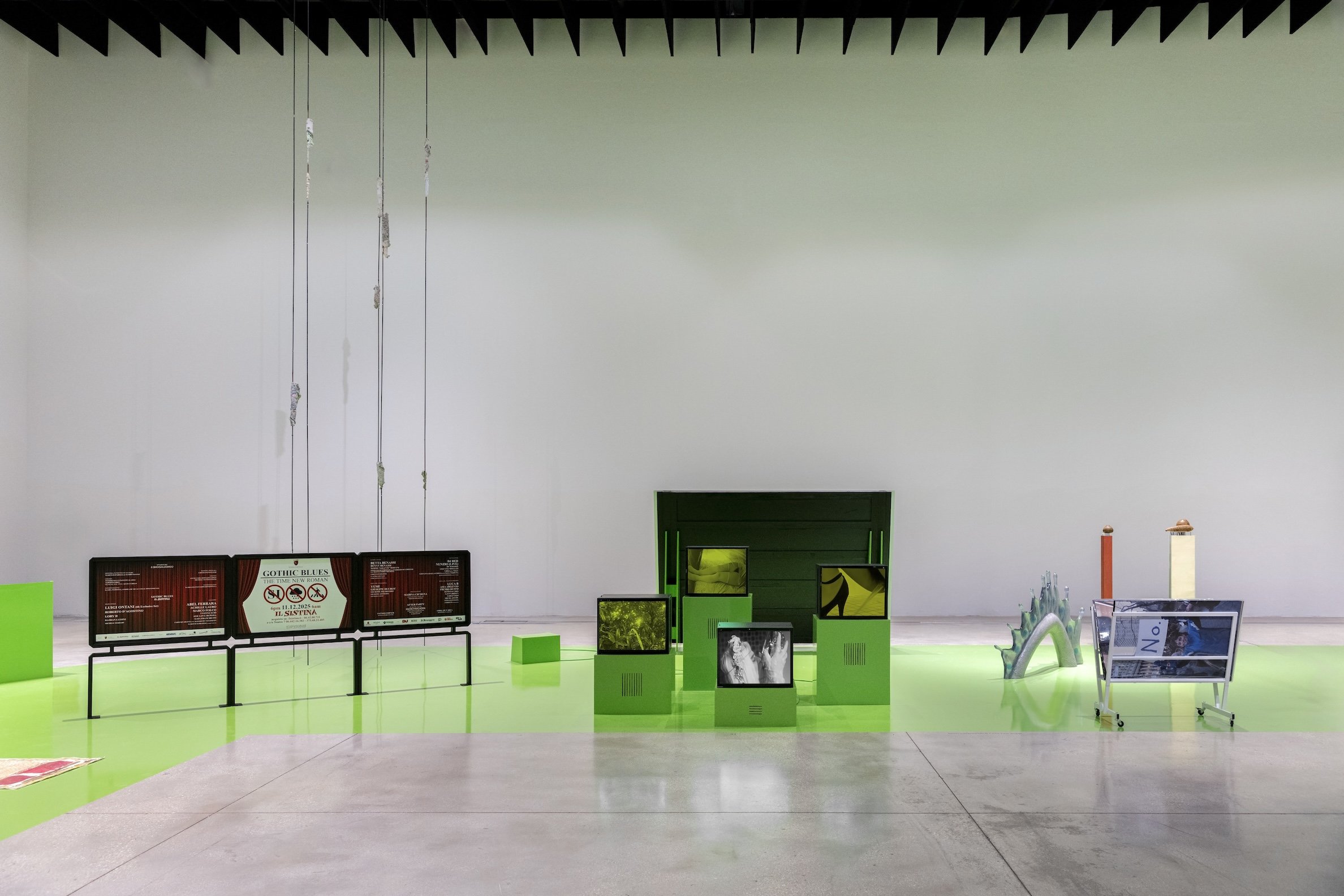
Piss Fountain, 2025. 4-channel video, 12 min. 30 sec. loop (in progress). Produced at the Antonio Ratti Foundation, Como, during the LOW REALISM ArtLab curated by Ed Atkins, Lorenzo Benedetti, and Annie Ratti. Courtesy of the artist.
That autumn, Sprinkle and Stephens presented Bazoombas in Love at Cushion Works in San Francisco, an expansive exhibition looking across their decades of sex-positive, feminist, and ecosexual work. Beatrice became involved with the project and its community of collaborators. It made immediate sense to me. Favaretto's work shares with Sprinkle and Stephens a conviction that sexuality can be considered publicly without becoming pornography, spectacle, confession, or shame. For Favaretto, the body is not something that has to be defended before it can be examined. It simply exists, carrying desire, disability, fantasy, embarrassment, loneliness, pleasure, and memory with it.
Beatrice and I also bonded over Italy, and especially Venice. My own experience of Venice has long been entangled with the Venice Biennale: the pilgrimage of exhibitions, national pavilions, palazzi, conversations, openings, dinners, boats, and the strange temporary art world that materializes around the lagoon. For Beatrice and Salomé, that relationship is different and considerably more intimate. Both were among the twelve artists selected for the inaugural Biennale College Arte in 2021, developed in conjunction with the 59th Venice Biennale. Beatrice was born in Venice. Her father, Oriano Favaretto, is an artist; she remembers being dragged through museums as a child and hating it, only to later recognize how much of that visual education had lodged itself inside her. In our interview, she remembers entering the Academy of Fine Arts in Venice and smelling oil paint. She knew she was in the right place. What interests me most about Favaretto's work, however, is that sexuality is almost entirely untaboo within it.
I don't mean that her work isn't provocative. It is. People urinate. Bodies appear naked. Pornography becomes source material. Desire is spoken aloud. Disabled bodies become sexual bodies. A young woman examines the image she has constructed of herself. But Favaretto doesn't seem particularly interested in shock, horror, or even erotic excitement as an end in itself. Instead, she looks toward the psychological architecture beneath sexuality: acceptance, permission, self-determination, vulnerability, bodily freedom, and the enormous difficulty of allowing oneself to be seen. Her works become something closer to armatures for that vulnerability.
In Hold Me While I'm Naked, Favaretto began collecting fantasies and erotic writing anonymously, eventually reading the texts aloud through an online radio project. Anonymity alters the transaction. Without knowing whose fantasy we are hearing, the easy mechanisms of judgment begin to disappear. The fantasy detaches itself from the social identity of its author and enters a collective space. One person's private imagination can suddenly pass through somebody else's body. Favaretto describes the project almost as an exercise in learning a language for sexuality that pornography had failed to provide her. The point isn't to make the fantasy more explicit. It is to make it speakable.
Piss Fountain (2025) pushes this private bodily language into public space. Favaretto collects videos of friends and participants urinating and arranges the moving images across cathode-ray televisions, building them into a sculptural fountain that changes with each installation. The absurdity is obvious, and it is funny, but the work's humor makes its censorship particularly revealing. When the piece was censored in Italy, Favaretto's response was not simply that her artwork had been rejected. She began to understand the censorship collectively: "What? Do they censor our bodies?" That distinction matters.
These works enter galleries and public institutions not as blasphemies thrown against social order but as interventions into the supposedly neutral space of spectatorship. Favaretto forces an audience into a confrontation not simply with somebody else's body, but with its own lived experience of having one. What exactly makes the sight of a bodily function offensive? When does looking become voyeurism? Why does one body appear permissible and another inappropriate? Who has been granted the right to desire, and who is expected to remain outside of sexuality altogether? There is a history behind these questions.

The Pornographer, 2021. Single-channel video, 12 min. 45 sec. loop. In dialogue with Emy Fem. Produced by Lo schermo dell’arte. Courtesy of the artist.

The Pornographer, 2021. Single-channel video, 12 min. 45 sec. loop. In dialogue with Emy Fem. Produced by Lo schermo dell’arte. Courtesy of the artist.
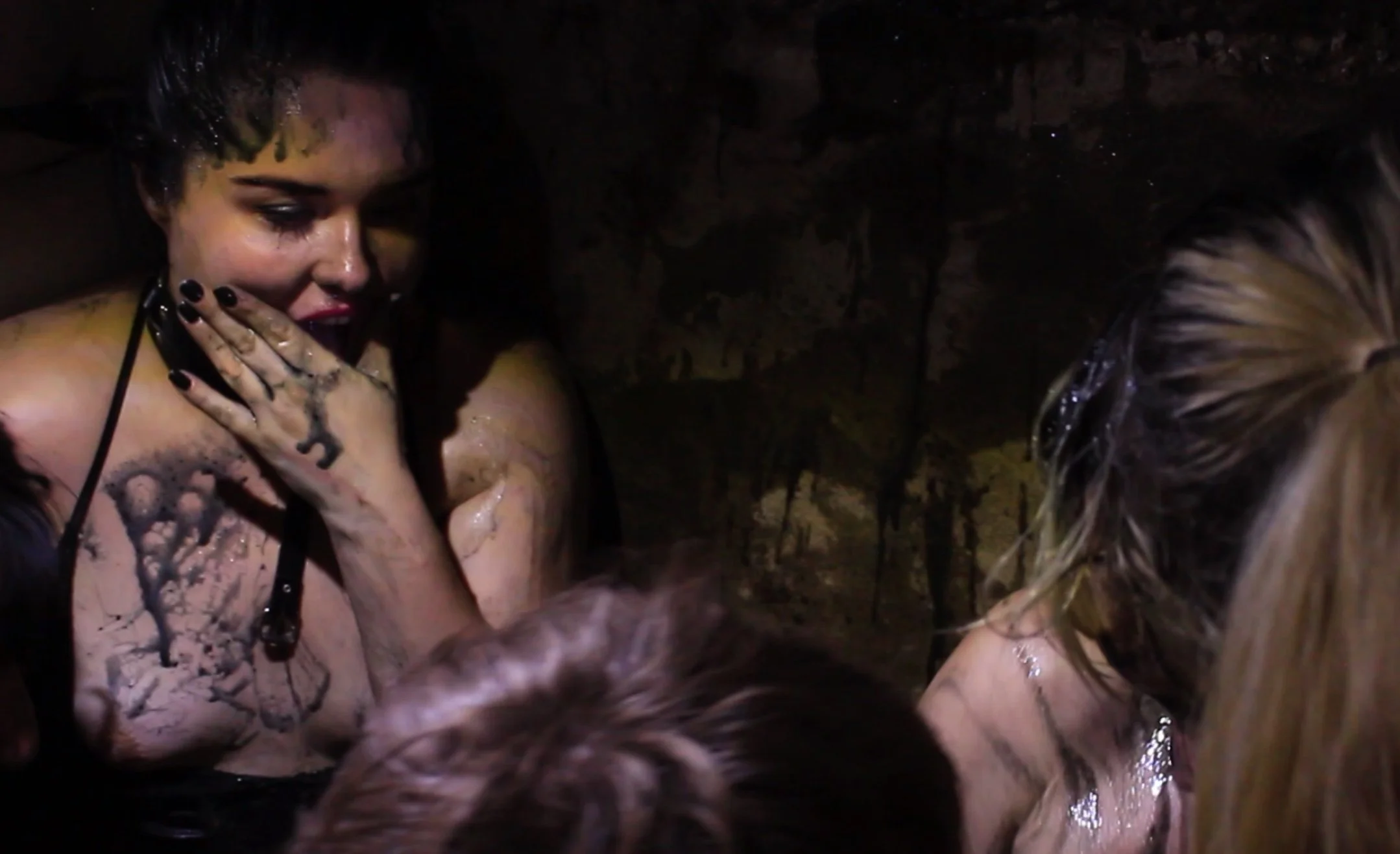
The Pornographer, 2021. Single-channel video, 12 min. 45 sec. loop. In dialogue with Emy Fem. Produced by Lo schermo dell’arte. Courtesy of the artist.
I think about Bruce Conner, whose films and assemblages repeatedly collided sexuality with the violent machinery of American visual culture. Conner understood that the erotic image did not exist innocently outside mass media, consumerism, war, advertising, and death. I think, too, about Martha Rosler, whose photomontages and videos dismantled the visual codes through which domesticity, femininity, consumer desire, and political violence had been normalized. And inevitably I think of Carolee Schneemann.
I saw Carolee Schneemann: Body Politics at the Barbican in London during Frieze week in October 2022 with my mentor RoseLee Goldberg and her husband, Dakota Jackson, who had known Schneemann within the New York milieu from which so much of this history emerged. Walking through more than two hundred works and archival materials spanning six decades, I was struck again by the audacity with which Schneemann insisted that her own body could be not merely the object depicted in art but its author, material, instrument, and intellectual site.
In Eye Body: 36 Transformative Actions for Camera (1963), Schneemann merged her body into an environment of paint, grease, chalk, plastic and constructed objects. In Meat Joy (1964), bodies collided ecstatically with raw fish, paint, paper and one another. Fuses (1964–67) transformed sex between Schneemann and her partner into a film whose surface she manipulated physically, refusing the clean voyeuristic grammar of conventional pornography. And in Interior Scroll(1975), the female body became both the site and literal source of language.
Favaretto belongs to a younger generation and is doing something distinctly her own, but I see her embracing this lineage of artists who refuse to separate the representation of a body from the experience of inhabiting one. That distinction becomes particularly important in Multiple Maniacs (2023), made through Favaretto's relationship with disability activist Max Ulivieri. Rather than positioning disability outside sexuality, Favaretto enters into a sustained relationship of proximity, care and observation. The work asks what happens when a body that society may understand principally through limitation is instead allowed fantasy, character, aggression, humor and sexual autonomy. The body does not need to become conventionally desirable before it can desire. That, to me, is a radical form of permission.
In Miss Italia (2021), made with Ludovica Bertucci, Favaretto approaches another kind of construction. Bertucci had developed Miss Italia as a doll-like persona, changing through wigs, characters, gestures and sounds. Favaretto initially thought they were going to make a work about sexuality. Instead, as they began taking the persona apart, the project moved beneath sexuality itself. What remained were the structures that produce it: family, culture, self-image, the gaze of other people, sadness, fragility, confidence, shame, moments of feeling beautiful and moments of feeling completely disconnected from one's own body. Sexuality, in other words, wasn't the conclusion. It was the doorway.
Even Until the End (2021), in which Favaretto's own teenage car burns in flames, begins to look bodily through this lens. The car actually caught fire one night while her friends were nearby. Rather than treating the accident merely as an event, Favaretto turned it into a kind of funeral. In the burning vehicle she recognized something of herself: how a machine becomes a surrogate body; destruction becomes self-portraiture. This is why I hesitate to describe Favaretto simply as an artist "working with sexuality." The phrase is too small. Sexuality is one of the conceptual worlds through which she is asking a much larger question: What does it mean to live inside a body and allow that body to belong to you?
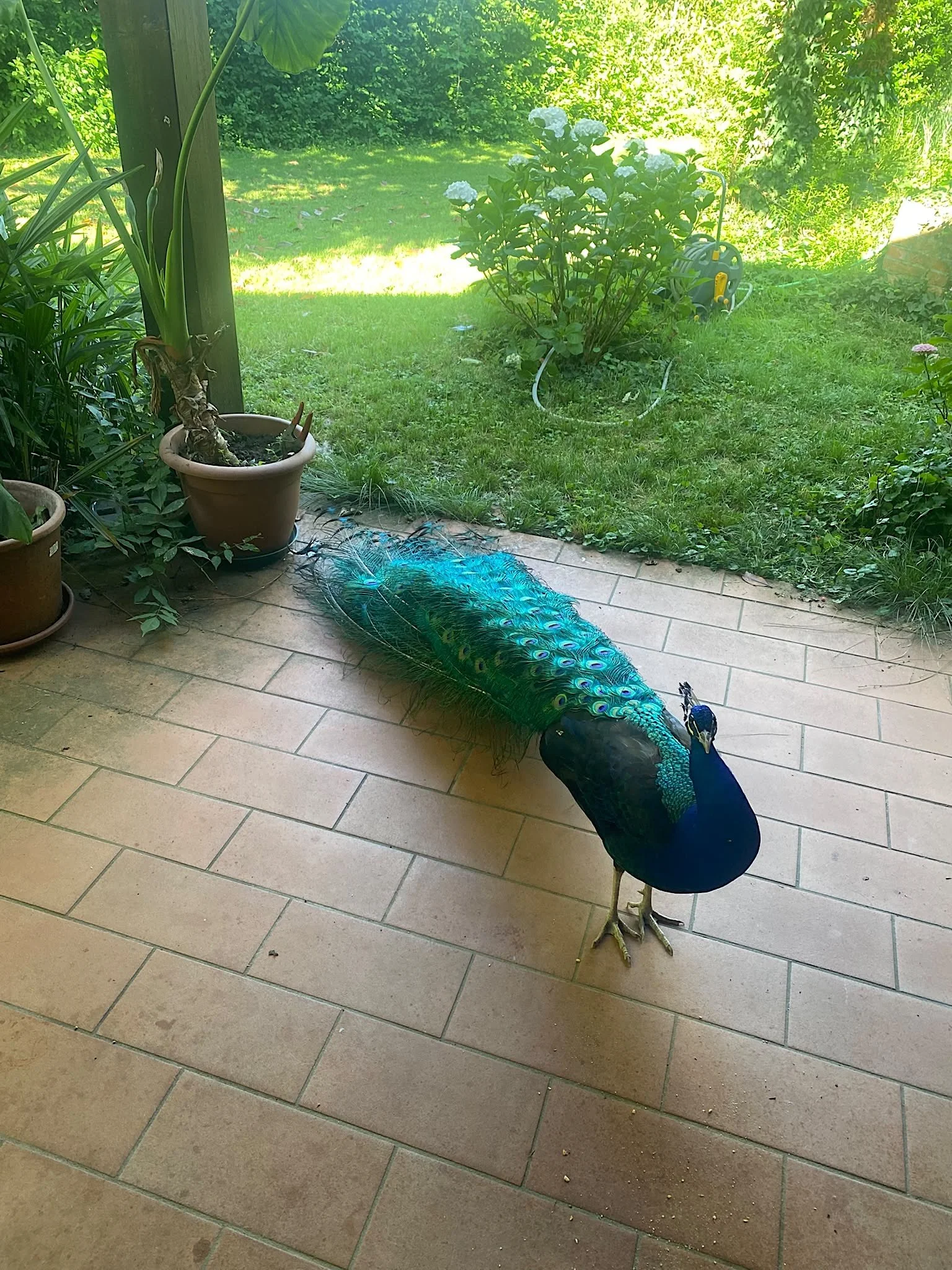
Pierre the Peacock at home in Treviso. Courtesy of the artist.
Artists have approached pornography itself through appropriation, critique and mass-media circulation—from Conner's collision of erotic imagery with violence to Richard Prince's extraction and reframing of images from popular culture. Favaretto's relationship to this history feels different to me. Pornography enters her practice less as imagery to be reproduced than as a visual language to be dismantled. She is interested in what pornography leaves out: the psychology around desire, the negotiation between bodies, the permission to say what one wants, the body that doesn't conform to the erotic ideal, the woman trying to determine which version of herself actually belongs to her. There is something feminist in that insistence on self-determination, but there is also something deeply human.
Favaretto is brilliant, brave, eager and hungry, and that hunger shows in the work. She doesn't seem interested in arriving at a fixed visual vocabulary and repeating it. Her videos, installations, carpets, performances and collaborations behave more like an expanding conceptual world. One work leads to another person, another body, another problem, another question. She describes the videos themselves as "invitations," and I think that word may be the key to understanding the entire practice. She invites another person into the work, and eventually the audience is implicated too.
Sexuality is relatively new territory for Who Is Seen to address so directly. Perhaps that is partly why I wanted to make space for this conversation. Favaretto's practice gives sexuality dignity without sanitizing it. She allows it to remain awkward, funny, bodily, vulnerable, psychological, explicit, contradictory and sometimes impossible to explain. There is no demand that the body become respectable before we look at it. And then there is Pierre, her dear pet peacock.
When I called Beatrice for this interview, she was home in Treviso with her animals and her peacock. Pierre had simply flown into her yard about two years earlier and decided to stay. There is something almost suspiciously perfect about that image: Beatrice Favaretto living in the Venetian countryside with a peacock who chose her garden, making installations about pornography, fantasy, disability, urine, desire and bodily freedom, some of them eventually entering old Italian churches and institutions that may or may not know exactly what to do with them. I like imagining Pierre wandering around outside while she works. A guardian, perhaps. Inside, Favaretto continues building a world in which the body does not have to ask permission to exist.
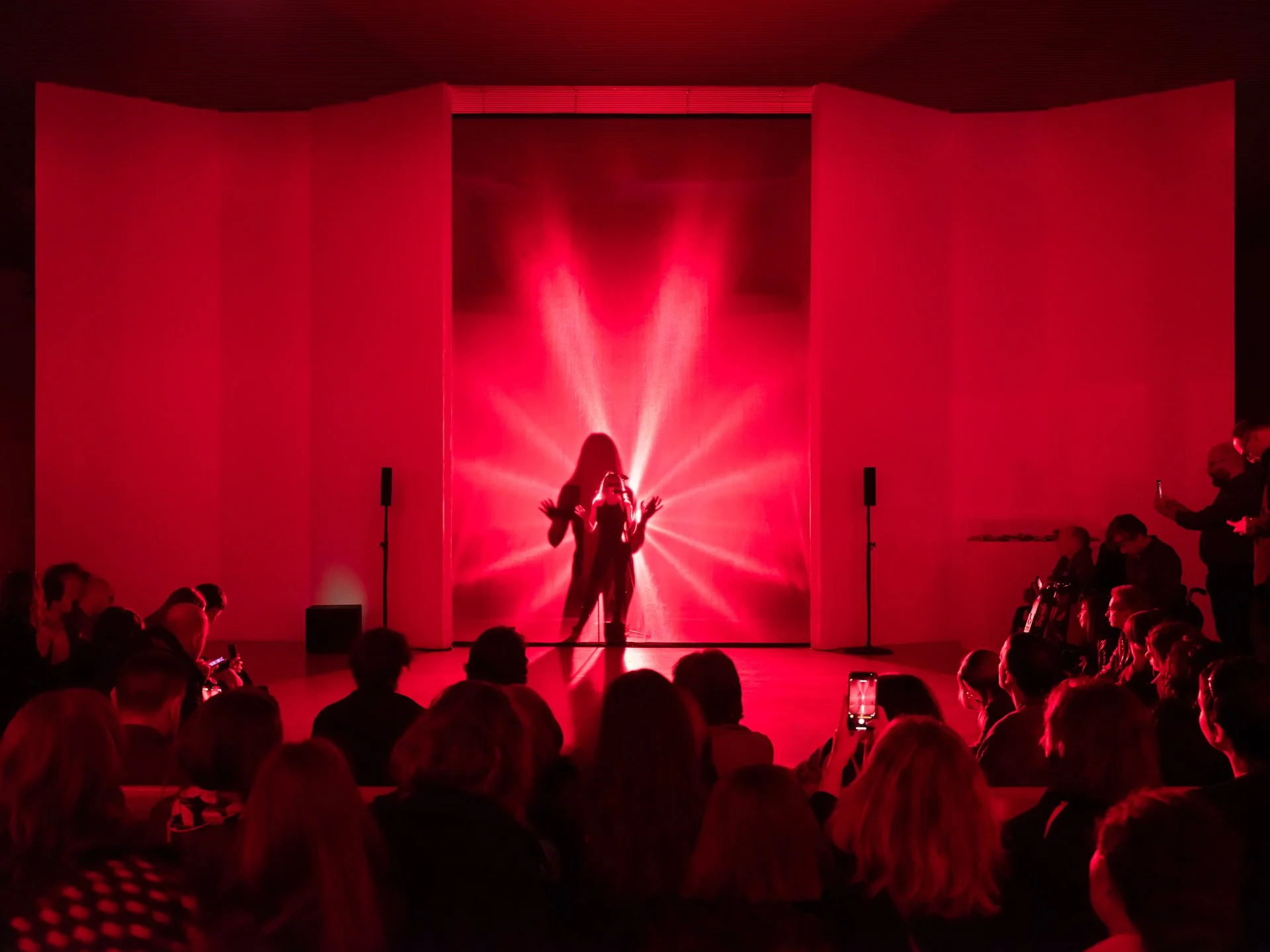
Hold Me While I’m Naked, 2020–2025 (in progress). Performance, 30 min. Special guest: MIELE. Courtesy of the artist.
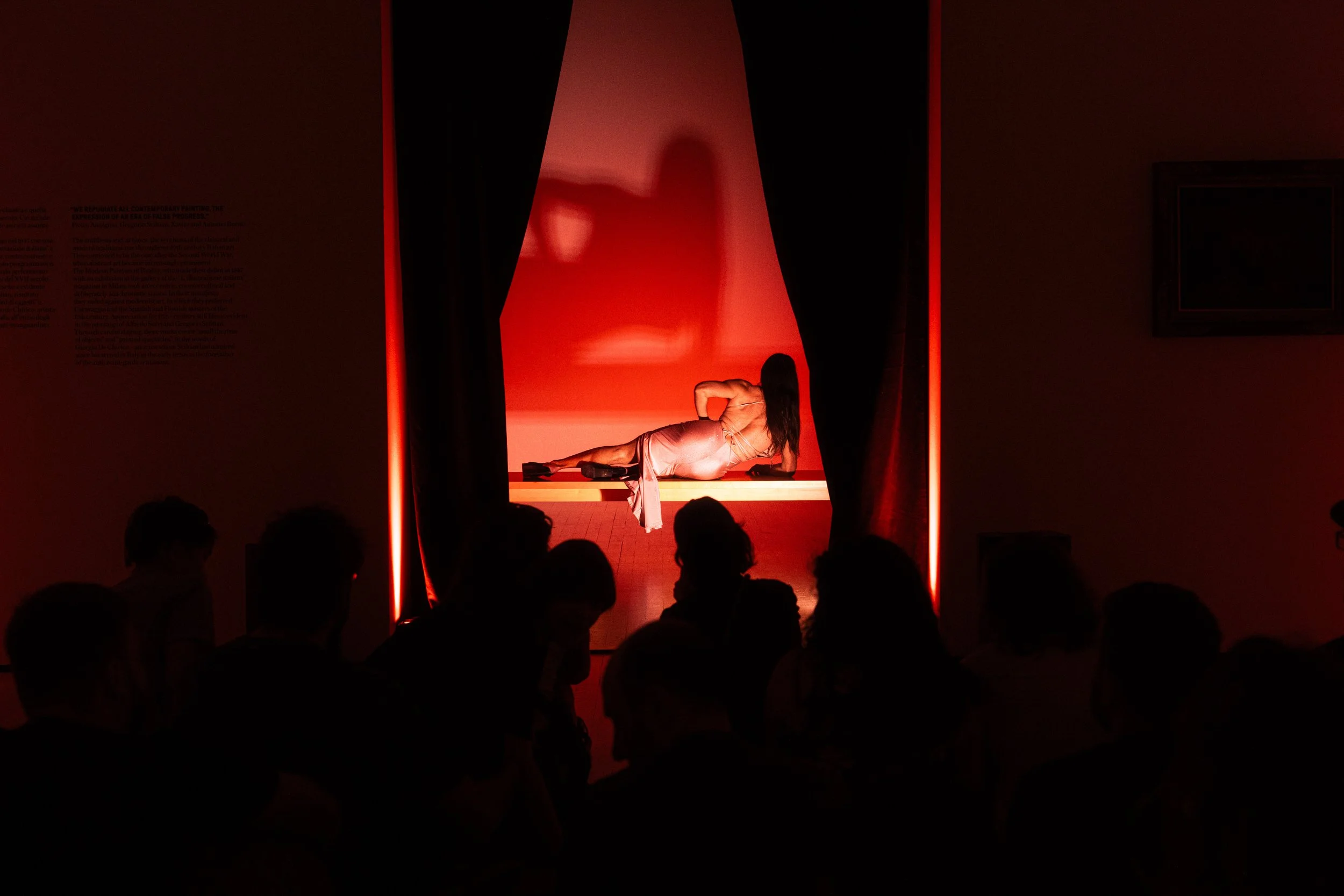
Hold Me While I’m Naked, 2020–2025 (in progress). Performance, 30 min. Special guest: MIELE. Courtesy of the artist.
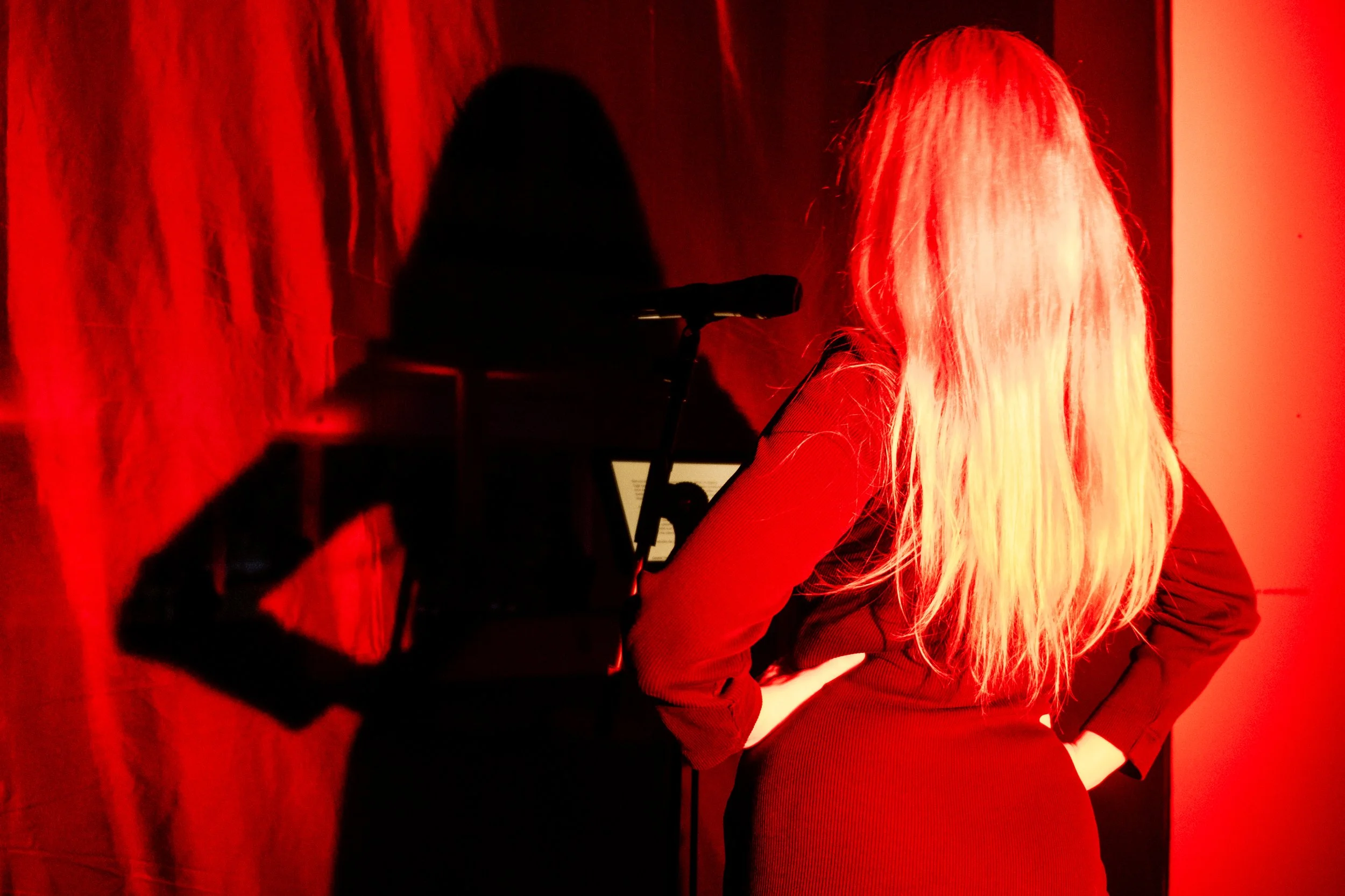
Hold Me While I’m Naked, 2020–2025 (in progress). Performance, 30 min. Special guest: MIELE. Courtesy of the artist.
INTERVIEW:
AMADOUR: Hi, Beatrice. Thank you so much for your time for this interview. I am so excited to be with you today and to speak about your practice. Why don’t we start by saying where you are right now?
BEATRICE FAVARETTO: Where I am?
AMADOUR: Yeah. Where are you in the world?
BEATRICE FAVARETTO: I’m in Treviso now, which is in the countryside of Venice, and I am in my house with all my animals, my peacock, and I’m waiting to start, in September, my new life.
AMADOUR: Wait, you have a peacock?
BEATRICE FAVARETTO: Yes, I have a peacock. His name is Pierre.
AMADOUR: That’s so cute.
BEATRICE FAVARETTO: He arrived here like two years ago by himself, flying. So he just decided that he wanted to live here.
AMADOUR: That’s amazing. I’ve never met somebody who owns a peacock. Well, I also love that we met by chance in San Francisco through Salomé Chariot, our mutual friend.
BEATRICE FAVARETTO: Yeah, that was fantastic. It was really beautiful, actually. Do you remember? We went to The Trident, and we went to Janis Joplin's bar.
AMADOUR: Yeah, in Sausalito. That was so cute.
BEATRICE FAVARETTO: Really cute. It’s unbelievable. I still remember the table with the chair by the sea overlooking San Francisco and that feeling of, I don’t know, kind of a ghost.
AMADOUR: Exactly. So why don’t you tell me about your project in San Francisco? How did it go? What was your experience? We haven’t really had an update.
BEATRICE FAVARETTO: The project was amazing. I had an amazing time there. I spent two months and, for me, it was like—I don’t know—to be reborn somehow. I told you I was with Annie Sprinkle and Beth Stephens, two artists who have been collaborating for 20 years. When I decided to get there, at first it was because I was in love with Annie Sprinkle’s practice. She was a porn star and then became an artist, and she translated all that she learned in the porn world into her practice. She became a sex educator, a sex-positive woman, and she started doing performances. I really fell in love with her practice and with the way she used sexuality as a political way to create community and to normalize every part of ourselves, every shape of our personality, and every shape of sexuality too. When I arrived in San Francisco, I was like, okay, what will happen? And then, I don’t know, it was a big shock. It was a stunning experience for me to collaborate with them, to be with them, to create a show with them, and to see that the community was real, that they were building this amazing community of people. They were really generous to me as an artist and as human beings. So I found another family there. It was really interesting to experience not only their practice, but to think a lot about my practice, about the way I use the body, about the way I think about sexuality, and about the way I imagine my future. This experience makes me really emotional because even today I was thinking about it. Last year, at this moment, I was taking the flight to San Francisco.
AMADOUR: Oh, really?
BEATRICE FAVARETTO: Yeah. I was super happy. And I was thinking today that I'd love to take another flight to go there now.
AMADOUR: Let’s talk about your themes because I feel like they’re very, very dense while also being very playful. Within your work, you play with all these different types of performances and layers. I was wondering if we could talk about Hold Me While I’m Naked, an erotic experiment about sharing sexuality and desire and collecting fantasies and erotic stories of all kinds. How did that project come about?
BEATRICE FAVARETTO: Basically, this project is an in-progress one. When I started to work on sexuality, to think about how we represent sexuality, what sexuality is for us, and in which way we relate to it, I started to deconstruct the medium, starting from pornography. I started to analyze the images: how we shoot bodies with the camera, how we record sounds, and what the sounds do to us. I really liked the language, too. There is a really specific language that culturally we use to speak about sexuality, and it is really related to pornography. When I started studying the language, I thought it wasn't appropriate for me. Not because it was vulgar, but just because it didn’t represent all the shapes of the feelings that I was feeling in that moment. So I started to imagine the way that I could speak about my fantasies with my own language. It was kind of hard to do it because, of course, I had to write it and focus on it. I’d never done it before. Then I started to study a lot of erotic texts and erotic figures who were in Italy in the '70s, developing a language around sexuality, especially inside television. From that moment, I started to understand that trying to figure out my own language to speak about sexuality was really helpful for me to understand what my limits were around sexuality and what my real taboos were.
AMADOUR: That makes a lot of sense, especially in the 1970s; it was also pre-AIDS pandemic, and arguably more sexually liberated in some contexts. And I think looking into the 1970s in Italy gives a lens of investigation that expands your analysis by getting to the root of the subject matter, rather than making it just about the 2020s experience with the internet and now AI.
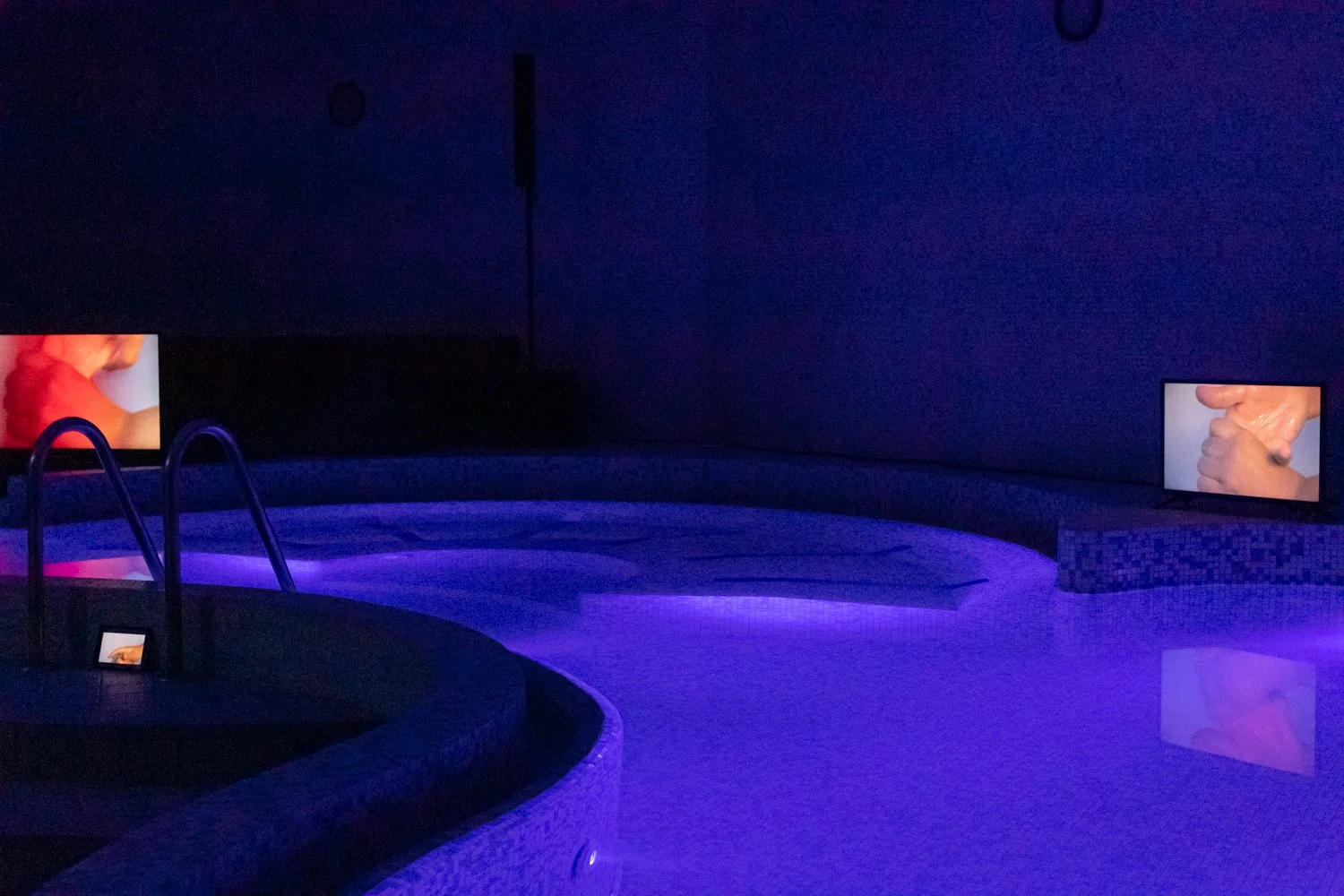
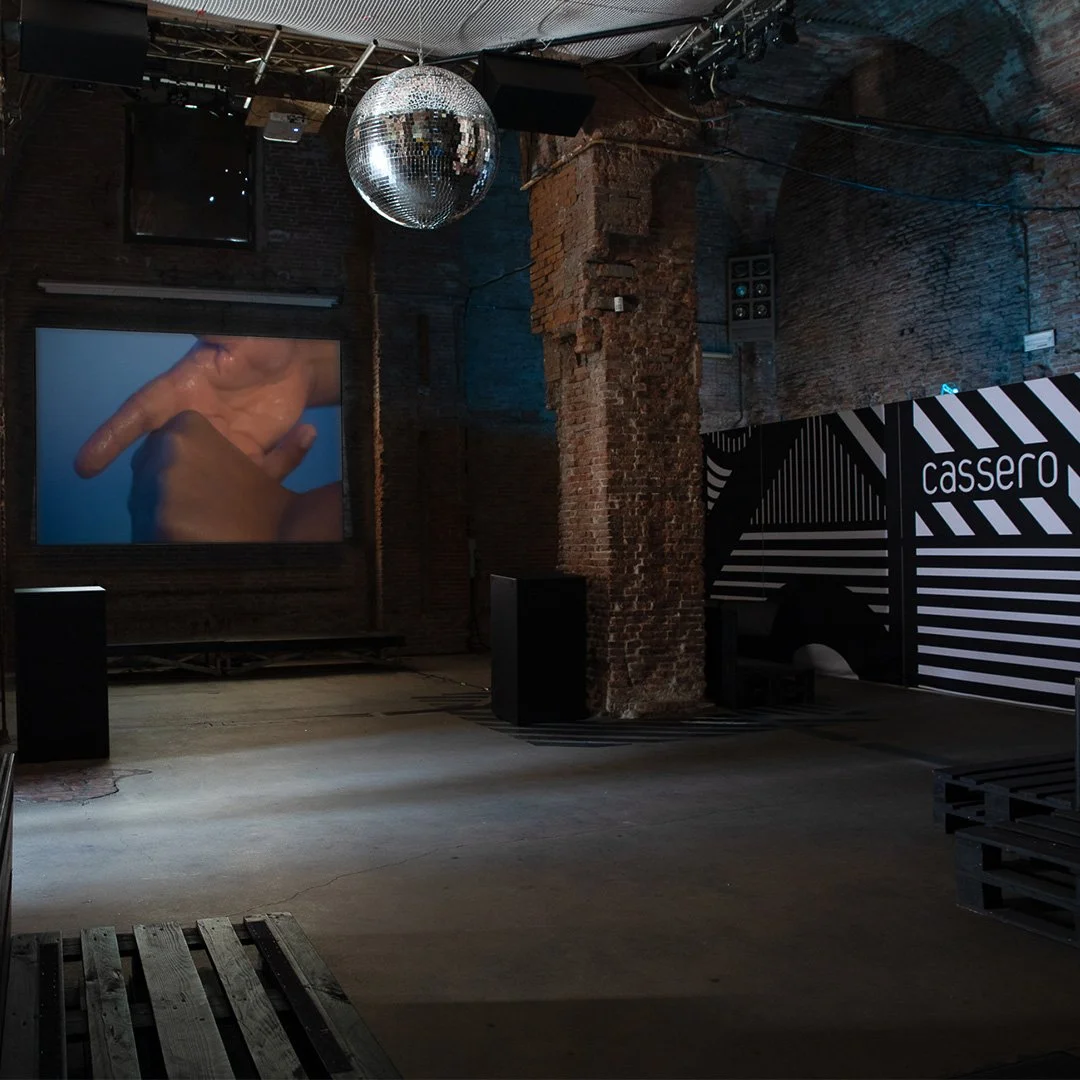
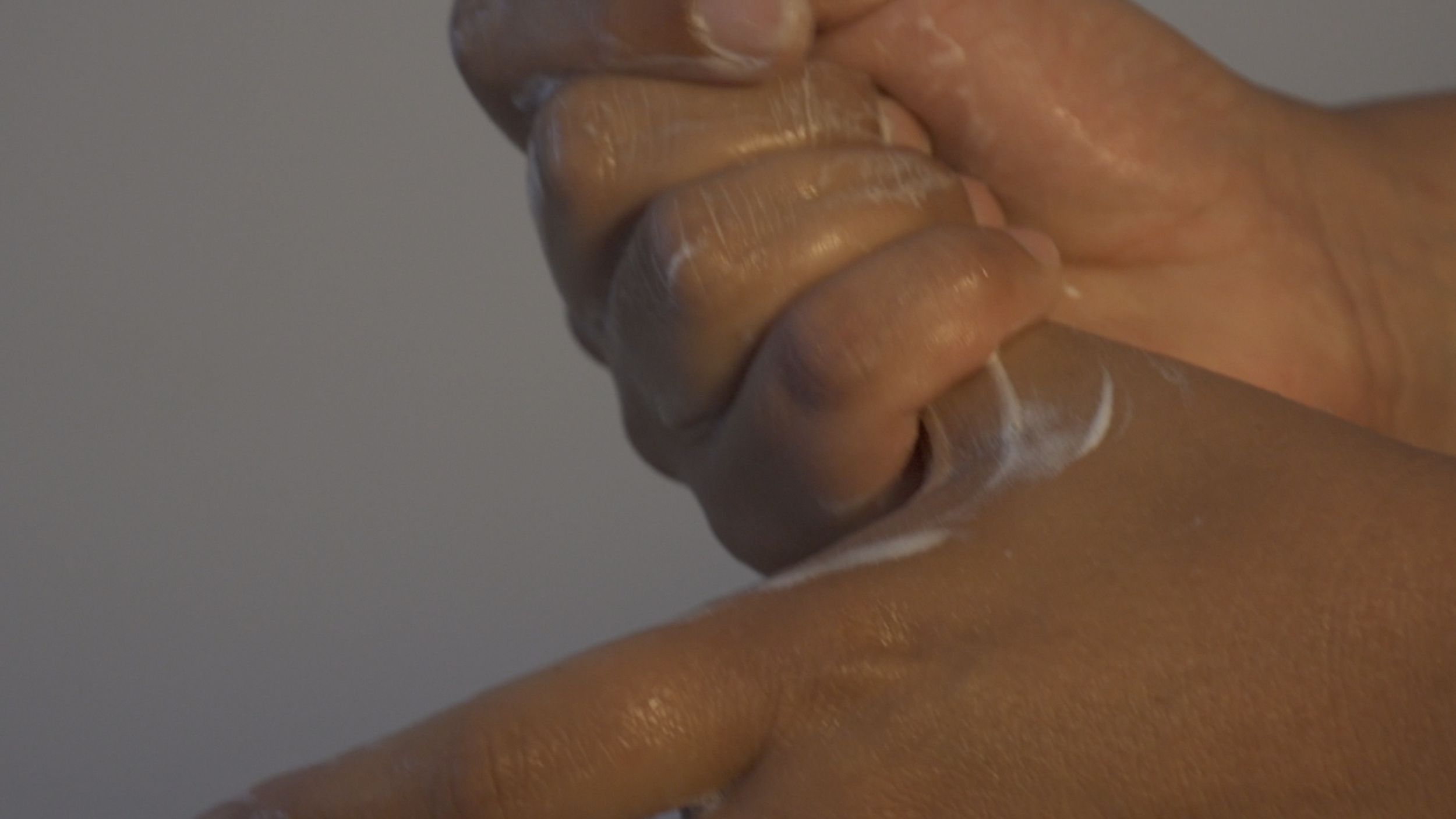
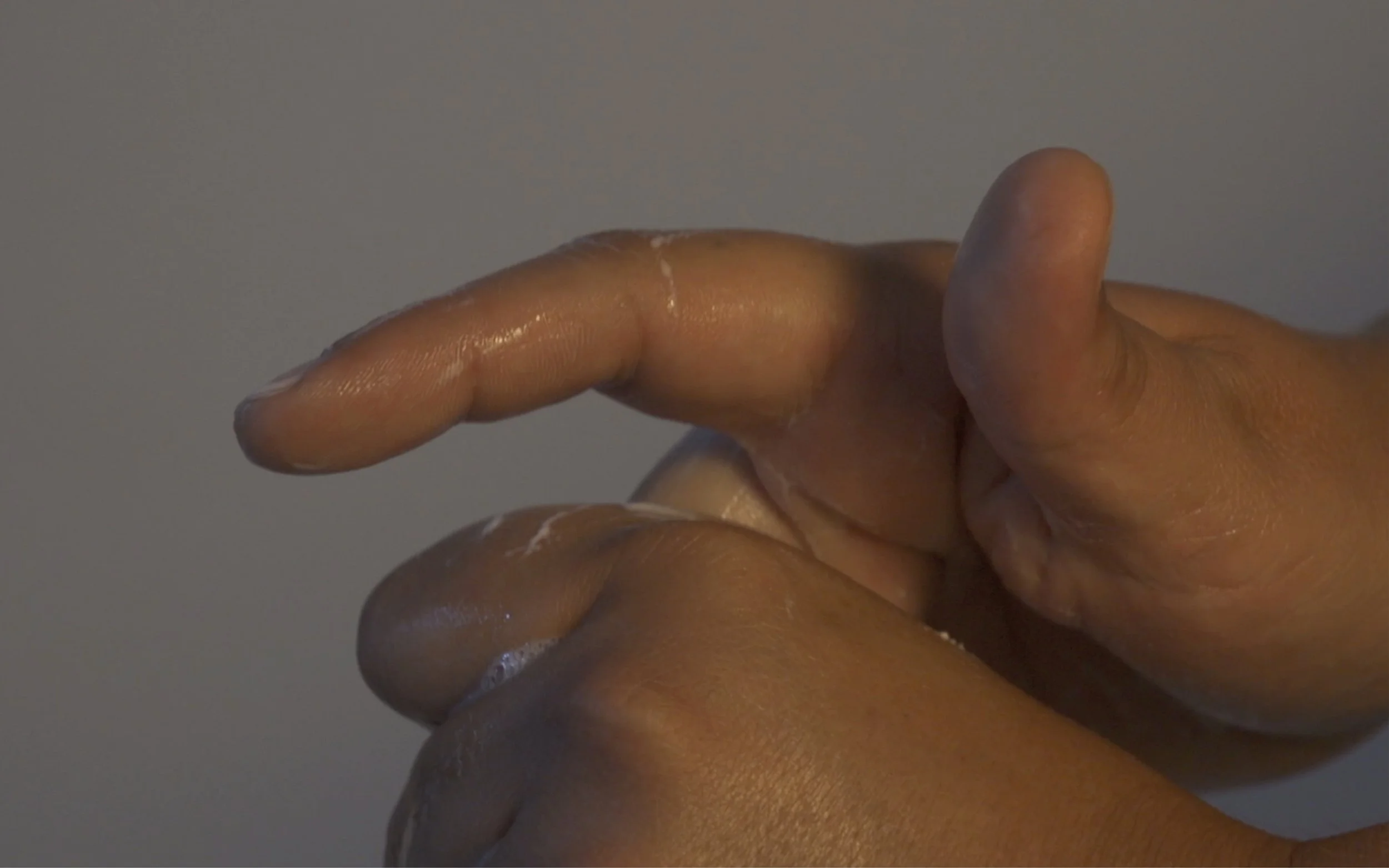
Liquid Sounds, 2020. HD video, 4 min. 35 sec., stereo sound. Courtesy of the artist.
Liquid Sounds, 2020. HD video, 4 min. 35 sec., stereo sound. Courtesy of the artist.
Liquid Sounds, 2020. HD video, 4 min. 35 sec., stereo sound. Courtesy of the artist.
Liquid Sounds, 2020. HD video, 4 min. 35 sec., stereo sound. Courtesy of the artist.
BEATRICE FAVARETTO: In this way, I was more able to speak about my intimacy with other people because I knew how to normalize it, how to speak about it, and I was less afraid of it. Then I could really flow inside my imagination. So around 2020, during COVID, I started collecting, anonymously, all these texts from my friends—my closest friends first, then others—and reading them on an online radio at night. That experience was amazing because you couldn’t see, but you could imagine a lot. Sexuality was really floating into our minds. The imagination became more real. And we could steal other people’s fantasies because we didn’t know who that person was. We couldn't judge people. We were completely unable to do anything except be open to what was arriving through the fantasy. To me, it was really important. Of course, it’s a practice for yourself, but it’s also a practice of listening to other people’s fantasies without knowing who they are. You can really understand how many personalities, how many shapes we have inside ourselves. We can develop our imagination properly and collectively too, of course.
AMADOUR: You’ve shown your work in Bologna, Treviso, Florence, Berlin, in so many amazing places. In 2021 you were also selected as one of only twelve international artists for the historic first edition of the Biennale College Arte, and that’s how you met Salomé. Who are some of your biggest influences when you’re looking at art historically?
BEATRICE FAVARETTO: My biggest influence is John Waters.
AMADOUR: You know, I met him.
BEATRICE FAVARETTO: No way!
AMADOUR: I met him backstage at a Patti Smith concert at the Walt Disney Concert Hall earlier this year in Los Angeles.
BEATRICE FAVARETTO: No way! Oh my God. I really need to meet him.
AMADOUR: My friend Caroline Minnis invited me to the concert, and I was a little nervous to say hi to him, and I wasn’t, because you know me, I’m kind of crazy. I went up to him and said, “I love your mustache,” because it’s like a pencil drawing. Caroline was like, “Don’t be fake. You don’t even know all his films.” And I was like, I don’t care. I know he’s iconic and I respect him. I want to say hi. We ended up having a lovely little conversation all three of us.
BEATRICE FAVARETTO: Good job, babe. Oh my God, I love him. Basically, I fell in love with him when I first saw Pink Flamingos. I fell in love with the movie because, for me, it is like reality—the real reality without any filters. I loved all the characters because every character is, I don’t know, a kind of stereotype of society. And I like the irony: the idea of not taking everything so seriously. I like the sexuality that wasn't present, but was present because everything was free to do in the films. There is a freedom in his films: of languages, images, dialogues, bodies, everything, that I’m just stunned by. Actually, I love all these kinds of artists. I love John Waters like Caravaggio, because Caravaggio, too, used light to show the reality of bodies and emotions, even the deeper and more desperate ones. I like all the artists who really go deep inside the human being, with the most real and desperate forms we can see, because that desperation is also irony. It’s also reality, and it’s also, for me, extreme beauty.
AMADOUR: I love that. When I look at your work, too, I think about Shirin Neshat. I see you both in communication in my mind, not the same premise, but aesthetically in the presentation. But also this lineage of Laurie Anderson or Nam June Paik. We went to see the Yoko Ono exhibition at The Broad yesterday, too, with Luke Harvis, and I can relate to the improvisational aspect of her instruction pieces and the subversive nude portraits she took with John Lennon, Bed-In for Peace (1969).
BEATRICE FAVARETTO: I think that my aesthetic is classic at the end. I really would love to be closer to John Waters, but at the end, when I watch bodies, I love them so much. I cannot stop aestheticizing them. Because I find them like a kind of goddess or, I don’t know, theaters from the sky.
AMADOUR: I love it. I’m looking at this piece on your website, Piss Fountain (2025), a visual research project exploring urine as an intimate, political and liberating gesture. I love the way you presented it with the sculpture and televisions, and the subject matter is a bit fierce. How did the piece form for you?
BEATRICE FAVARETTO: The piece is different every time. Normally it is inside televisions, cathode-ray televisions. They recreate a kind of idea of sculptural fountains, and every time they are at different levels. In every show, I add another channel that is made for the exhibition. So this one is also a collective work because I collect videos of my friends and people who want to be part of the content peeing. Then I reconstruct them and make them move around inside these televisions that are growing, growing, growing. I’m experimenting a lot with this work because it relates to the space being used for the presentation, for the show. Looking at the space, I try to create this fountain as best as I can and make it more majestic. Last time they censored me, and it was difficult. But I understood that even censorship is sometimes part of my work. When you work with bodies, it’s a sensitive topic.
AMADOUR: For sure.
BEATRICE FAVARETTO: Especially in this moment. When they censored this work, it was wild to me because I really understood that it was a collective one. I was super angry because I was like: “What? Do they censor our bodies?” I really felt that kind of collectiveness that I’m searching for in this work. Sexuality, for me, is a way that we relate to other people, with the body of the other. You cannot work on sexuality by yourself. You always have to be connected. That’s also why I work with someone else most of the time. That’s the base of the relationship.
AMADOUR: I have to say, I love your practice. I love how courageous, bold, and daring you are, especially with this subject matter. It can’t be easy, but it must be so fulfilling because it’s a life experience of every single human being on Earth. We all have to deal with this, and it’s something that’s very misunderstood, repressed, and usually quietly hidden behind closed doors. I also love that you bring community together through the project. I’m wondering: how are you thinking about these different videos? Are they an archive? Are they single projects? Are they independent projects gathered together? Are they like a collage?
BEATRICE FAVARETTO: I think they are like a process. I perceive all my videos as invitations. An invitation to discover something else, an invitation to prove something else through other people’s skin, through other people’s bodies, to create this dialogue with the other in any way possible, even with this crazy intimacy. To me, they are pieces of the same process, one piece that is just evolving like in life. You grow, you grow, you grow every day. You change. For me, my videos are this way because I always meet new people. I always work with different identities, different bodies, and it really enriches me. I perceive them as chapters, but chapters is not even true. It’s more like a huge process because no work is ever finished for me. I have the main one, but then in every exhibition I can try to show more. I add new pieces, new pieces of the same video, because what happens behind the video, in the process of creating the video, has so much humanity in it that sometimes even the moving image is not enough. So I always try to share my experience with the spectator in the most open way possible, because I think we need to share. We need to be as open as possible.
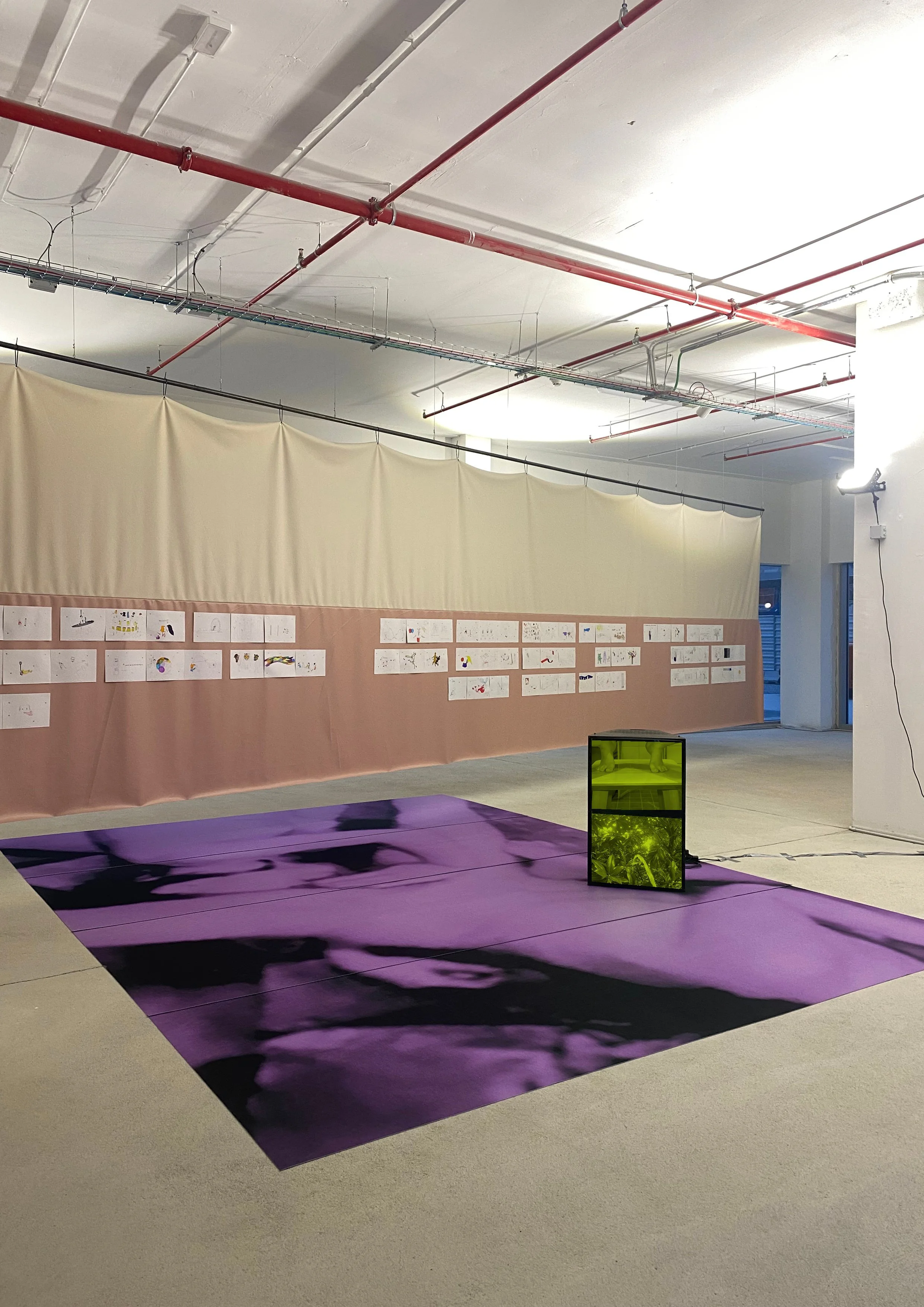
Der Traum, 2019–2026. Series of erotic objects, tapestries, and carpets. Courtesy of the artist.
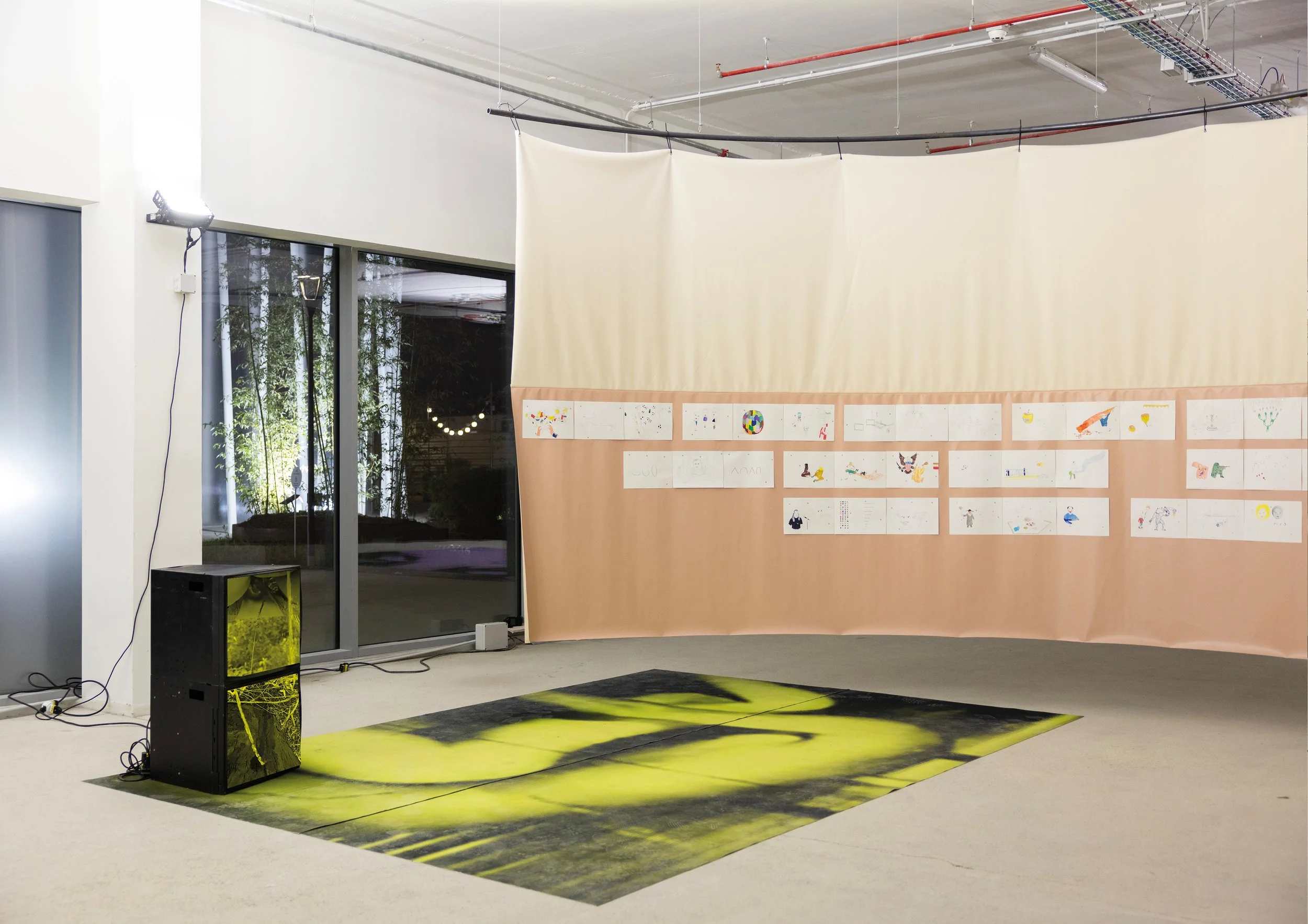
Der Traum, 2019–2026. Series of erotic objects, tapestries, and carpets. Courtesy of the artist.
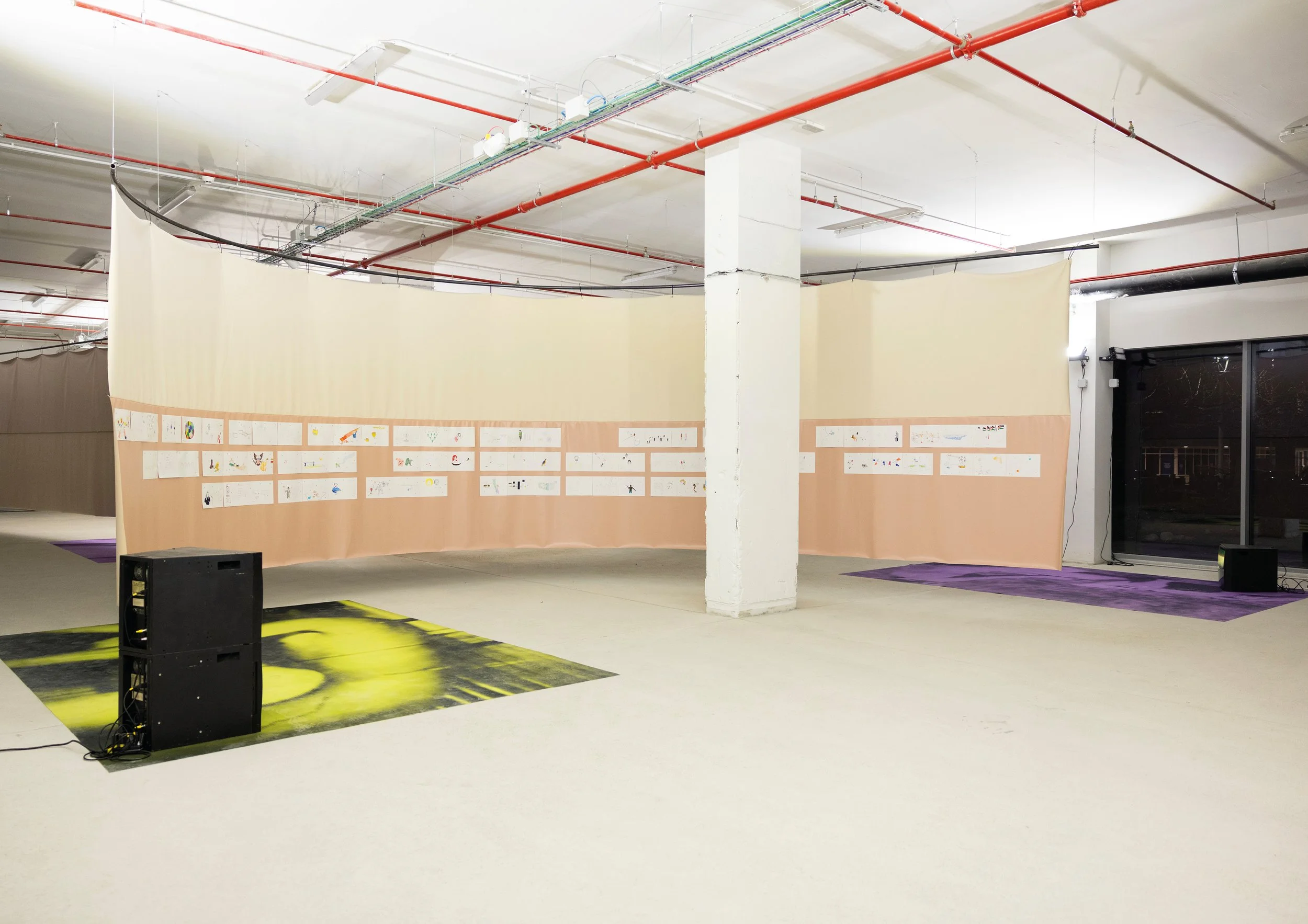
Der Traum, 2019–2026. Series of erotic objects, tapestries, and carpets. Courtesy of the artist.
AMADOUR: I’m so curious about your background and everything. You grew up in Venice, right? Can you tell me some of your formative experiences with art? Do you remember an artist you first saw when you were younger, or a favorite museum? I’m fascinated that you grew up there because it’s such a magical place to me.
BEATRICE FAVARETTO: My father was an artist. I mean, he’s an artist too.
AMADOUR: Wait, what’s his name?
BEATRICE FAVARETTO: Oriano Favaretto. He did the academy and was always painting. I was really fascinated by the fact that he was painting. Since I was young, he was obliging me to go to museums. And I hated that, actually. But I think something got sucked inside me. I started to do my first work when I was in high school. I was really fascinated by African masks, actually—no Italian stuff. I’m sure this place somehow really affected me in different ways. I have a really open family full of crazy people who scream as Italians normally do. They have no filter. So for sure, family really affected me.
AMADOUR: Was there any specific institution you would visit?
BEATRICE FAVARETTO: I think the Academy of Fine Arts was really the place.
AMADOUR: In Milan?
BEATRICE FAVARETTO: In Venice. I did that in Venice. To me, the first time I entered was magical. There was the oil painting smell. I felt I was in the right place. But somehow I was always really affected by the places I was living. The colors—not any situation in particular, I would say. Probably all the museums that my father took me to somehow gave me this path.
AMADOUR: Going back to San Francisco, was this your first time in the United States? I can’t remember.
BEATRICE FAVARETTO: No. When I was 22, I did a coast-to-coast in the U.S., and I loved it.
AMADOUR: You drove across the whole country?
BEATRICE FAVARETTO: Yes. And I did Couchsurfing. I stayed with several random people. I slept in the car, in national parks, washed myself in the rivers. I loved it. Really, I loved it. I remember San Francisco. I was staying in Bernal Heights. There was this really hippie old man who gave us his car to go to Yosemite for a week. It was ridiculous.
AMADOUR: What was the top place that was so weird that you were like, where am I?
BEATRICE FAVARETTO: Las Vegas.
AMADOUR: Really?
BEATRICE FAVARETTO: Las Vegas to me was a nightmare. I was shocked. It goes against everything I like. I love the real, real, real reality, and Las Vegas is the fake best. There is the fake sky, the fake gondolas, the fake swimming pool. So after the second day that I was partying, I started to cry. I was like: I want to go.
AMADOUR: It’s traumatic to see the Venetian Resort in Las Vegas for a real Venetian.
BEATRICE FAVARETTO: It was traumatic to me. Pretty traumatic.
AMADOUR: And that’s my state, you know. Nevada. [Laughs]
BEATRICE FAVARETTO: But it’s different because I loved Los Angeles. I’ve been to Los Angeles, Venice Beach. I love Venice Beach. When I was in Los Angeles, I was at this Iranian journalist's house. He was so hot. Oh my God. He left us his house while he was not there, and he had a Jacuzzi on the rooftop.
AMADOUR: Okay! [Laughs]
BEATRICE FAVARETTO: We were at his house. But I *********, so I felt guilty. My bad, this is out of the interview.
AMADOUR: I’d love to include it, but I won’t. Okay, let’s go through a couple more things. Tell me about Liquid Sounds (2020).
BEATRICE FAVARETTO:Liquid Sounds was my first work about pornography. As I told you before, it was the moment when I was like: Okay, pornography is the main visual culture that we have when we start our sexual path. It’s the first thing you watch. So I was like: I want to know more about that. How does it work? How was it? What’s behind it? I met by chance this porn sound artist who was living in Berlin. So I decided to go to Berlin to record her.
AMADOUR: What’s her name?
BEATRICE FAVARETTO: Manuela Pinina. I fell in love with her because she was this amazing, beautiful woman with these huge hands. Then she put all this soap and Vaseline on her hands and started to move them and squash them, producing all these sounds that really seemed to be in a porn or a sex scene. I was so fascinated by all these movements. At that point I started to understand, first, how important sound is in sexuality and how sound can really activate our imagination and our body. And that sex is not just penetration. Everything that can simulate that attraction between two bodies—or pieces of bodies, or meat—is really strongly working into our senses. From that moment, I started my path into pornography. I started to study post-porn. Then I’ve been backstage at a post-porn movie. Then I started to study cam girls, sexuality and disability, and sexuality and domination. And then I go deep and deep and deep and deep.
AMADOUR: I love it. With the disco ball and the placement and this Jacuzzi or pool you put it next to, it’s really brilliant. How about Until the End (2021)? Here you have a car, flames, and this screen that can be seen from inside and outside the building.

Until the End, 2022. HD video, 9 min. 13 sec., stereo sound. Courtesy of the artist.

Until the End, 2022. HD video, 9 min. 13 sec., stereo sound. Courtesy of the artist.

Until the End, 2022. HD video, 9 min. 13 sec., stereo sound. Courtesy of the artist.
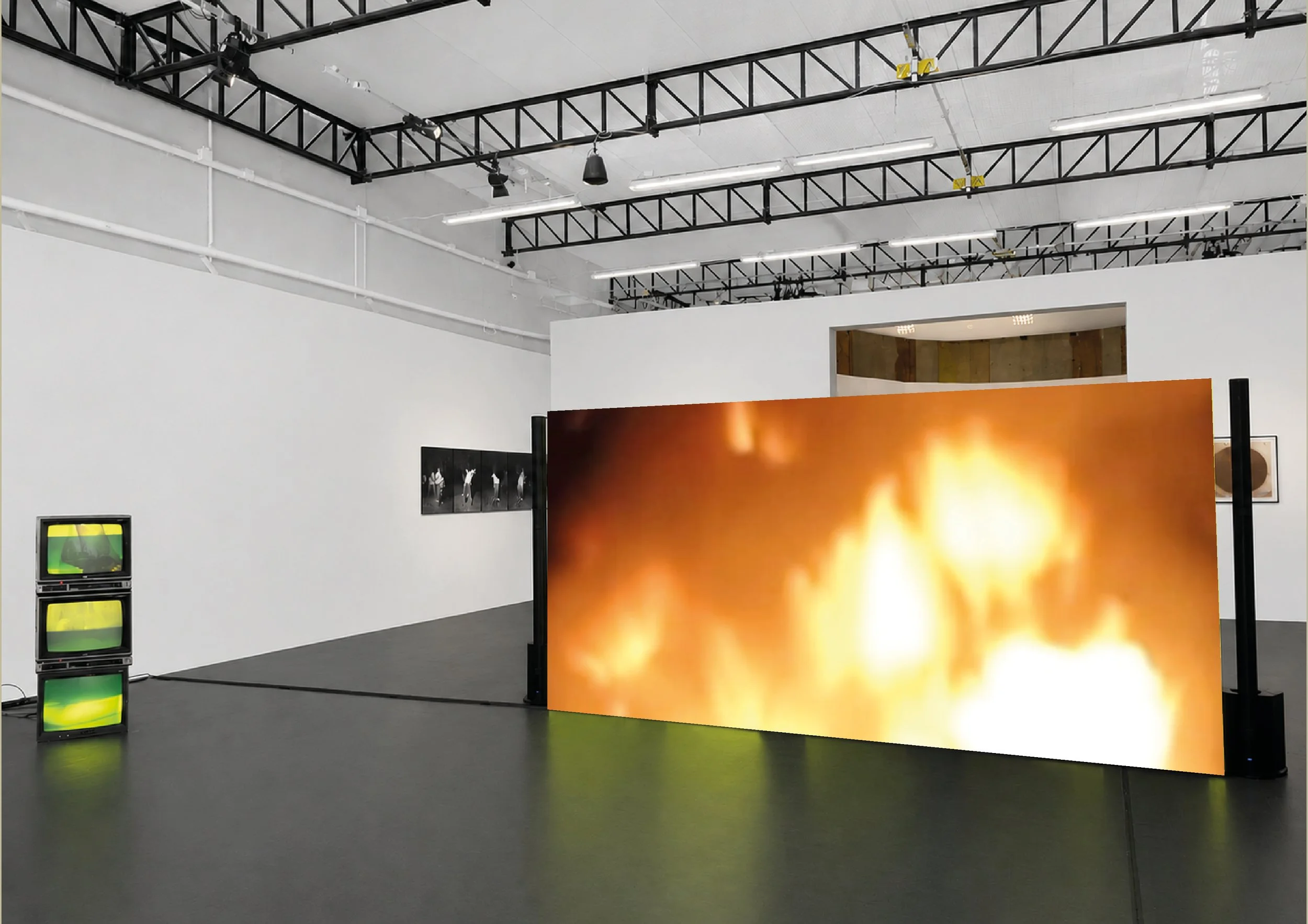
Until the End, 2022. HD video, 9 min. 13 sec., stereo sound. Courtesy of the artist.
BEATRICE FAVARETTO: I was at this exhibition in Milan, in this church, which by chance was really weird because it was the church where I did my first exam to enter the academy in Milan. After like 10 years, I was doing this exhibition there and presenting this work that you could see from inside and outside. It was supposed to be related to Piss Fountain, but they censored it, so it became Until the End. That work is really tough because that car was actually my car.
AMADOUR: What?
BEATRICE FAVARETTO: Yes. It was my teenage car. It was my mother’s first car, and I really wanted to keep it. I loved that car. But I don’t know why she decided that she wanted to die [Favaretto’s car]. She died on this weird night in front of my friends’ place, where all of my friends were inside eating. My car started to burn, and I got out, of course. The scene was really, really strong to me. I decided to create this kind of funeral because I really saw myself from the outside. And I kind of found out: It’s really a representation of what I feel and what I think most of us feel in this moment—this kind of desire to burn, shine, and be really present. At the same time, there's an external force trying to stop us and compress us. I really feel this effort: the car is burning, meanwhile this power from the outside is trying to shut it down. And I put this Céline Dion song that was my teenage-girl love song, of course, really, really slowed down. I wanted to express this sense of imposition and this sense of freedom that we try to take out, but that is really difficult to hold. To me, it’s a political way to express this frustration.
AMADOUR: I also love this exhibition you did, Der Traum (2024), with the carpets. Where did this carpet idea come from? It’s like a magical abstract nude carpet.
BEATRICE FAVARETTO: Yes, yes, yes. That’s true. I really, really love archives, and I started to watch the first porn films and study the way sexuality and the body were represented at first. I really fell in love with these bodies. At first they were represented by demons and were really oneiric. So I thought it would be really beautiful to try to take our imagination inside reality. To create that kind of object that could fit and really remake a sort of hallucination. A hallucination of what we imagine normally. Erotic fantasies. You have it out of nowhere—a gesture, an action, something—and then it is discarded. You can really see the image when you go away. The closer you get to them, the more it disappears into a kind of pixel. I really like the idea that we could have the keys of our fantasy imaginary all over our house or in unexpected places. They were working as a kind of world we can jump into whenever we wanted. And I’m working on this too.
AMADOUR: I also like it because it takes this idea of object-making beyond the video in some capacity, making it into an actual work. It’s such a unique way to make the work on the floor because it distorts the imagery. It also relates to Rudolf Stingel’s orange carpet room, Untitled (1991/1993), or Felix Gonzalez-Torres’ Untitled(Placebo) (1991), by similarly using everyday textiles to challenge traditional spatial boundaries. I want to talk about two more works: Miss Italia (2021) and Multiple Maniacs (2023), because I think both are equally important. Why don’t we go first with Multiple Maniacs?

Multiple Maniacs, 2024. Single-channel video, 7 min. 7 sec. With Maximiliano Ulivieri. Produced for Lydia Prize 2023 with the support of PAC + Il Lazzaretto Foundation, Milan, and MAMbo – Museum of Modern Art, Bologna. Courtesy of the artist.
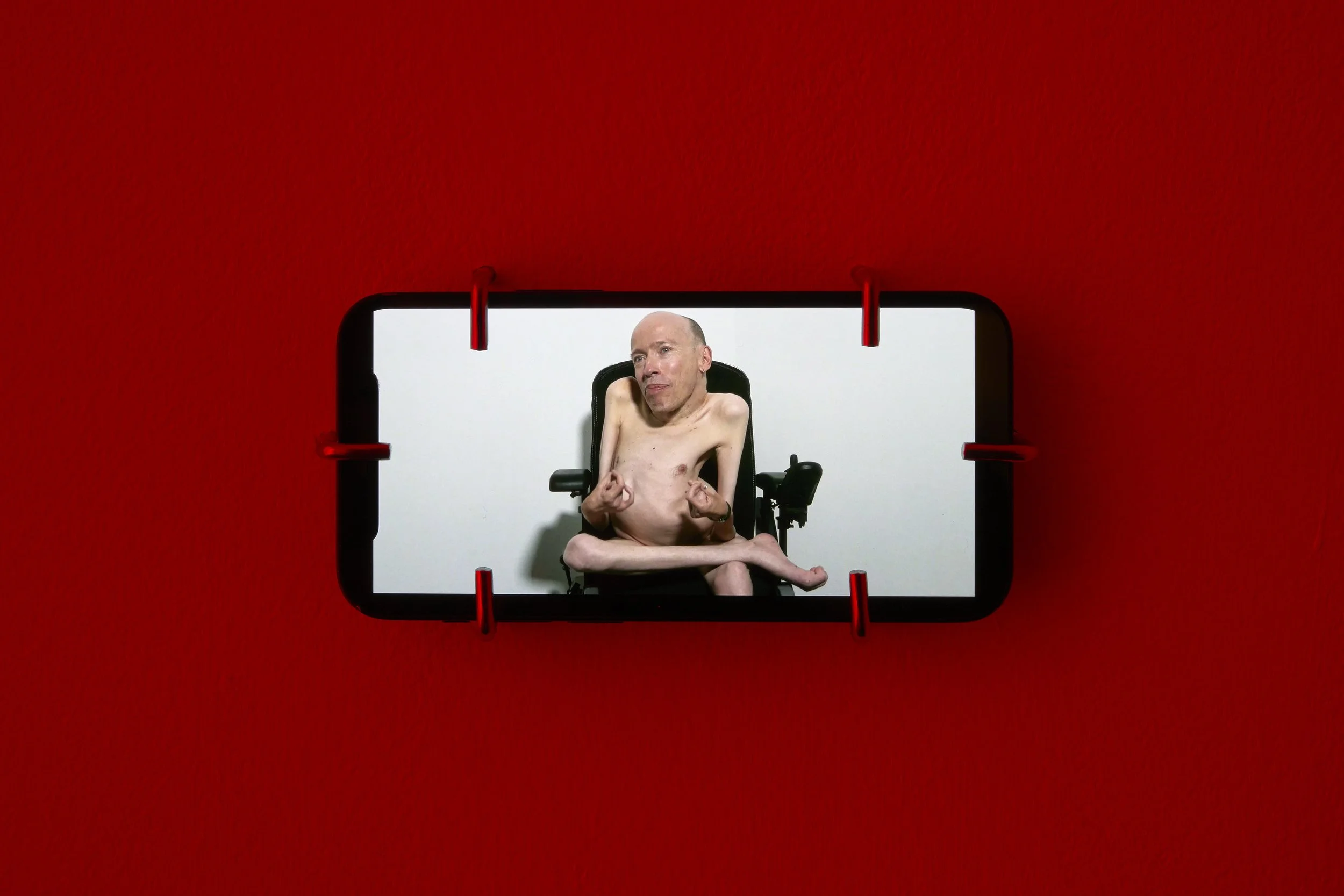
Multiple Maniacs, 2024. Single-channel video, 7 min. 7 sec. With Maximiliano Ulivieri. Produced for Lydia Prize 2023 with the support of PAC + Il Lazzaretto Foundation, Milan, and MAMbo – Museum of Modern Art, Bologna. Courtesy of the artist.
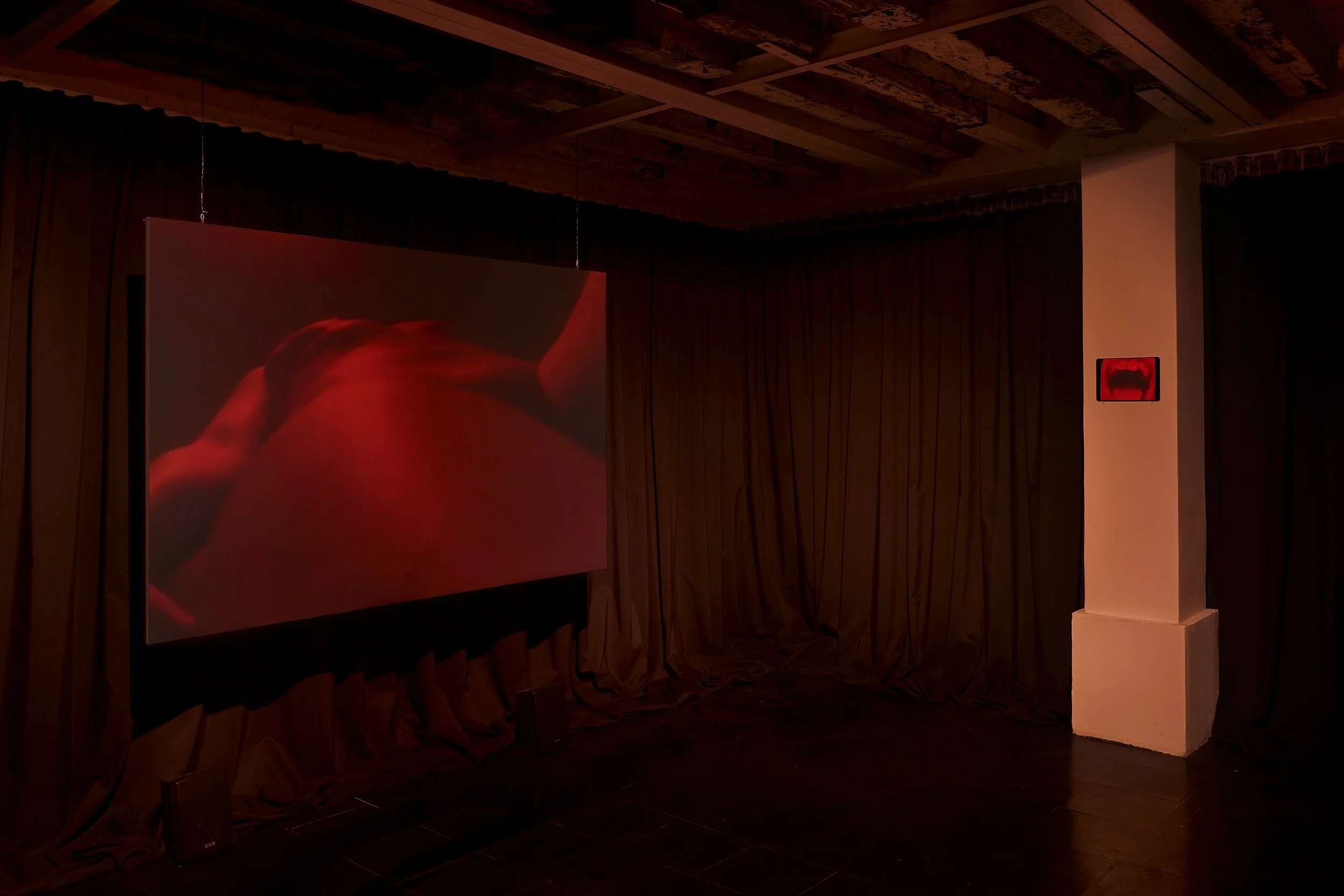
Multiple Maniacs, 2024. Single-channel video, 7 min. 7 sec. With Maximiliano Ulivieri. Produced for Lydia Prize 2023 with the support of PAC + Il Lazzaretto Foundation, Milan, and MAMbo – Museum of Modern Art, Bologna. Courtesy of the artist.
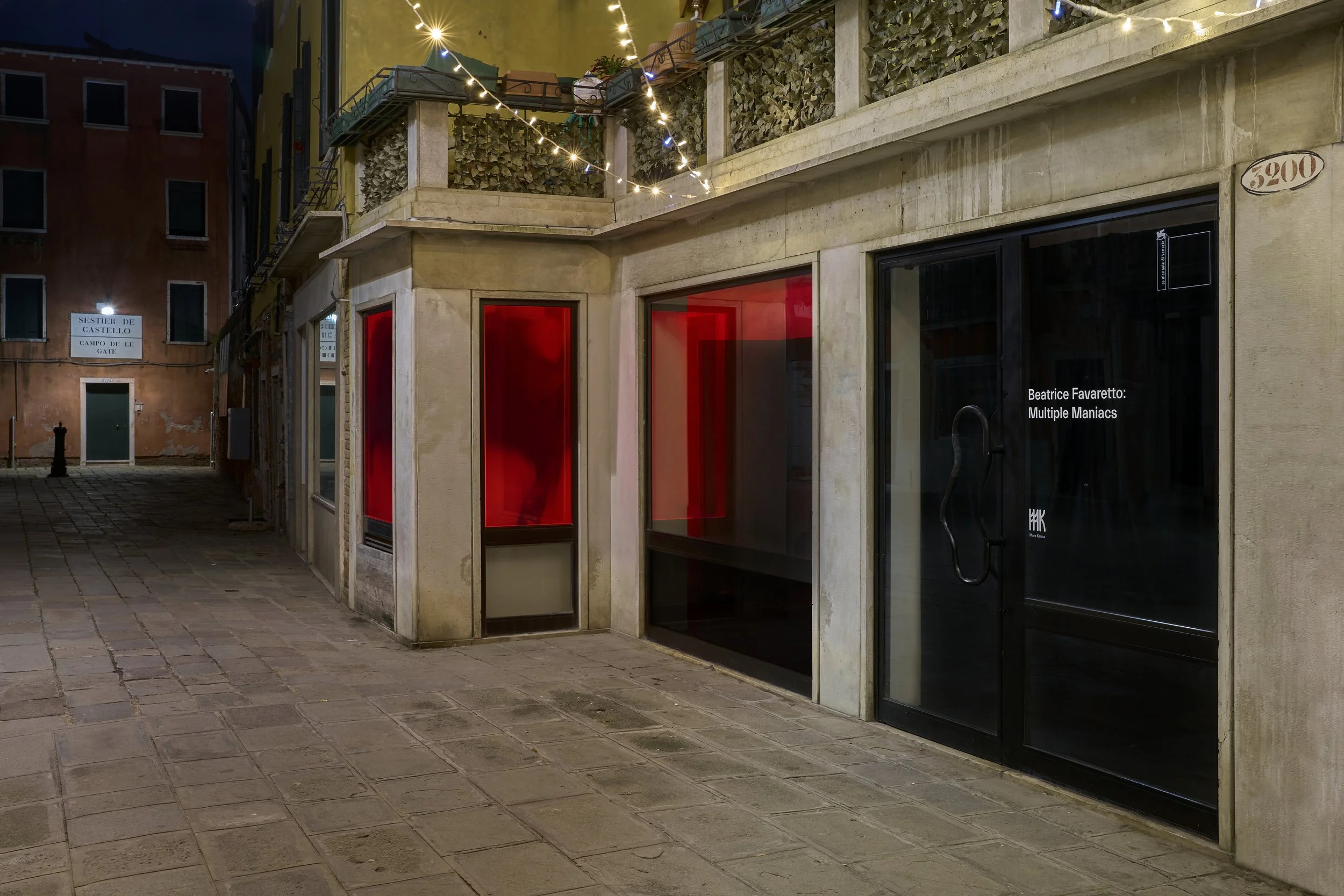
Multiple Maniacs, 2024. Single-channel video, 7 min. 7 sec. With Maximiliano Ulivieri. Produced for Lydia Prize 2023 with the support of PAC + Il Lazzaretto Foundation, Milan, and MAMbo – Museum of Modern Art, Bologna. Courtesy of the artist.
BEATRICE FAVARETTO: I started working with Max Ulivieri, who is the main subject of the work, because I had a friend whom Max trained to be a sexual operator. About 10 years ago, he founded this association called Love Giver for people with different disabilities. It basically helps people find their way to know their bodies better, their sexuality, and teaches them how to relate to others too. There are people with different kinds of disabilities, both mental and physical. Max made this the goal of his life, let’s say: to help other people do that. He trained different people to help them and their families. To me, it was really beautiful to meet him because he’s an activist, but he’s especially a great human being. He really helped me change and develop my thoughts because he believes everybody has a different disability. Some of them are invisible. Everybody needs someone else to help them know themselves and the other better. He was speaking a lot about this idea of the lonely parts of his body—the parts that were more connected with disability. The more we were speaking, the more I really felt close to him and close to this new sensibility that was teaching me about his body and about bodies in general. Of course, I had never experienced this kind of closeness with a disabled body before. His sensibility really touched me because he taught me a lot. When I work with someone, normally this weird thing happens where their body and my body become similar because, of course, I live with that body. If he needs to go to the bathroom, I take him to the bathroom. So I really lived his life for a while. It made me feel as if I was him. He called me a “second me,” an alter ego. This kind of fusion was really important because I could understand and feel what he felt. All of the Multiple Maniacs video speaks a lot about these parts of our body that we leave alone, that are there, that we can see in different ways, and that are always changing. Especially with him, his sexuality was really related to his mind. He was really working with his mind. So we have a passive body, let’s say, but a strong, tough character behind it that is speaking to you. The character he plays is a cannibal. So I portrayed the difference between what we see and what’s inside, and the different perceptions that we can have of the same body. To me, that was really, really beautiful and fascinating. Every time I work with different people, they have different ideas about their bodies. Most of the time they are activists. I don’t choose. I don’t go to a person. Normally something brings me to them. It’s really strong because we create a really deep connection with every character, with every person I work with. I get close to a person and to a theme not by speaking about sexuality and disability in a theoretical way, but by living it with a person.
AMADOUR: Yeah. It’s giving them dignity. It’s giving them autonomy.
BEATRICE FAVARETTO: Yes. Of course, it’s more difficult because every relationship is difficult. When you speak about sexuality with someone, it’s really intense. But when you do it with people who have a lot to share and have a really strong perception of that, you’re a kind of diary for them, and they become yours too. It’s really intense. Most of the time, either we fight or we cry. There is no middle ground. And the same with Miss Italia. It happened.
AMADOUR: Let’s talk about Miss Italia.
BEATRICE FAVARETTO: When I started working with Ludovica Bertucci, it was the first time I was like, “Okay, I want to find my own way to represent my own sexuality because I didn’t see any representation that really fit my idea of it.” Ludovica was 22 and already working a lot with her own body and image, so I said, “Okay, we do it together,” and she was like, “Yes, let’s do it.” We started experimenting by rewatching videos she had made when she was younger and looking at Miss Italia, this doll-like character she had created who was always changing through different wigs, personas, and sounds. At first, it was really funny, but then we started to decompose this doll and question what was underneath her. I was asking Ludovica, “Why is this doll not speaking? Why don’t you change your clothes? Where is your sexuality in this character?” I gave her new ways of filming herself, and sometimes I would film her while interviewing her. It became a process of experimentation and conversation, almost like an analysis, and it was really, really tough. Eventually, we found a way to separate Miss Italia, this character and image that Ludovica had been constructing, from the real Ludovica underneath it. That became really intense because, in the end, sexuality itself didn’t really come up in the way I had expected. Instead, we started to discover all the things underneath it—the experiences, images, relationships, and ways of seeing ourselves that construct our sexuality in the first place.
AMADOUR: It’s so intimate to share your own thoughts and explore in that way, especially considering the performance was actually a sustained interaction of both of your deepest experiences.
BEATRICE FAVARETTO: But what arrived, which was really unexpected, was that all the video really shows what’s behind sexuality. What builds the idea of sexuality. Our relationship with ourselves. Our relationship with our culture. Our family's relationship with our body. The gaze of the other. Our sadness. Our fragility. The moments of super hotness. The moments of being down. That was really beautiful to me. But you never know what happens when you start. I never know what will happen when I start a project with someone. Because it could really take you in a direction you’re not prepared for. But you hug them when they arrive, and that's where we begin.
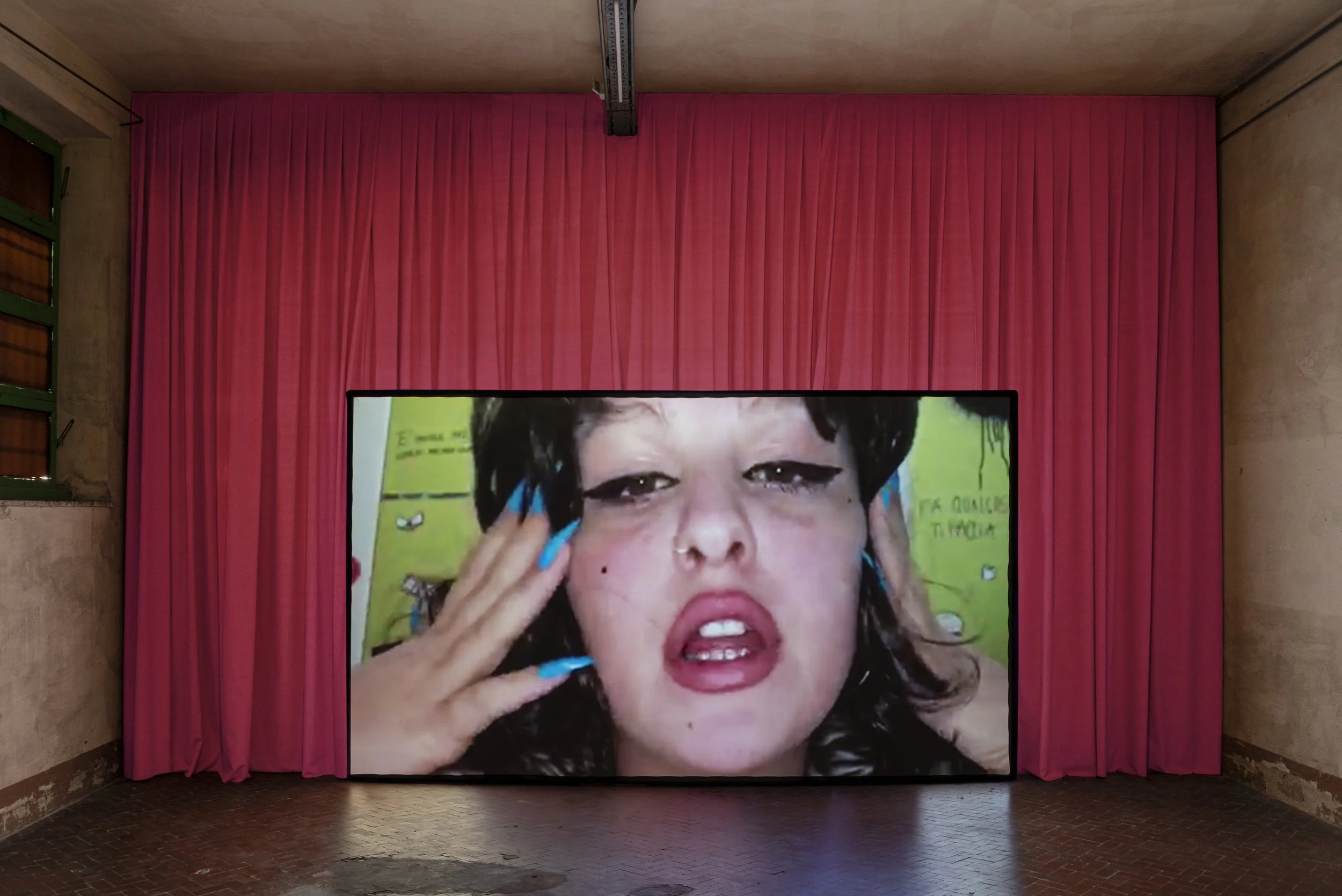
Miss Italia, 2022. Single-channel video, 18 min. 40 sec. In collaboration with Ludovica Bertucci. Produced by NAM – Not a Museum, Florence. Courtesy of the artist.

Miss Italia, 2022. Single-channel video, 18 min. 40 sec. In collaboration with Ludovica Bertucci. Produced by NAM – Not a Museum, Florence. Courtesy of the artist.

Miss Italia, 2022. Single-channel video, 18 min. 40 sec. In collaboration with Ludovica Bertucci. Produced by NAM – Not a Museum, Florence. Courtesy of the artist.
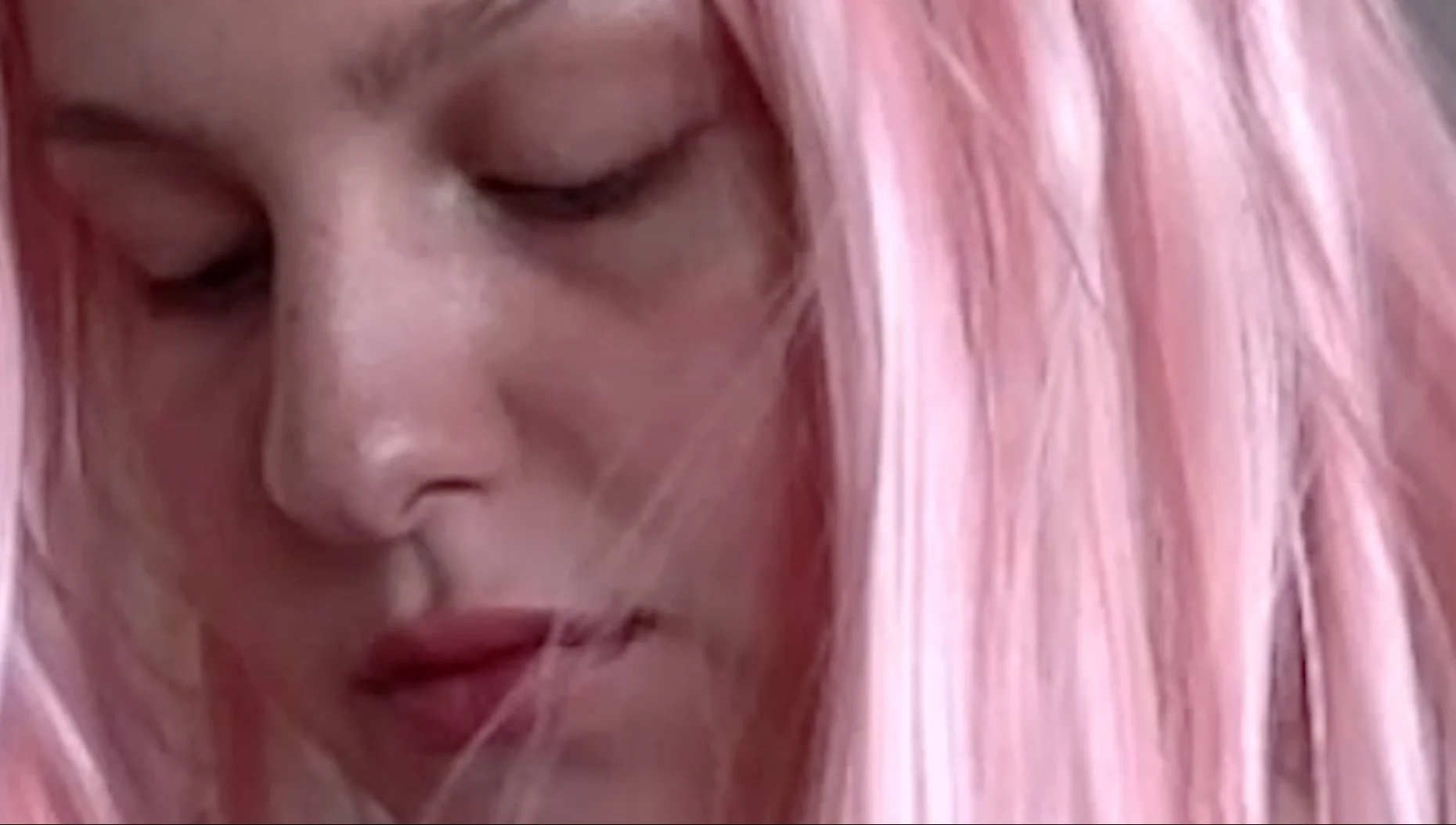
Miss Italia, 2022. Single-channel video, 18 min. 40 sec. In collaboration with Ludovica Bertucci. Produced by NAM – Not a Museum, Florence. Courtesy of the artist.

Miss Italia, 2022. Single-channel video, 18 min. 40 sec. In collaboration with Ludovica Bertucci. Produced by NAM – Not a Museum, Florence. Courtesy of the artist.
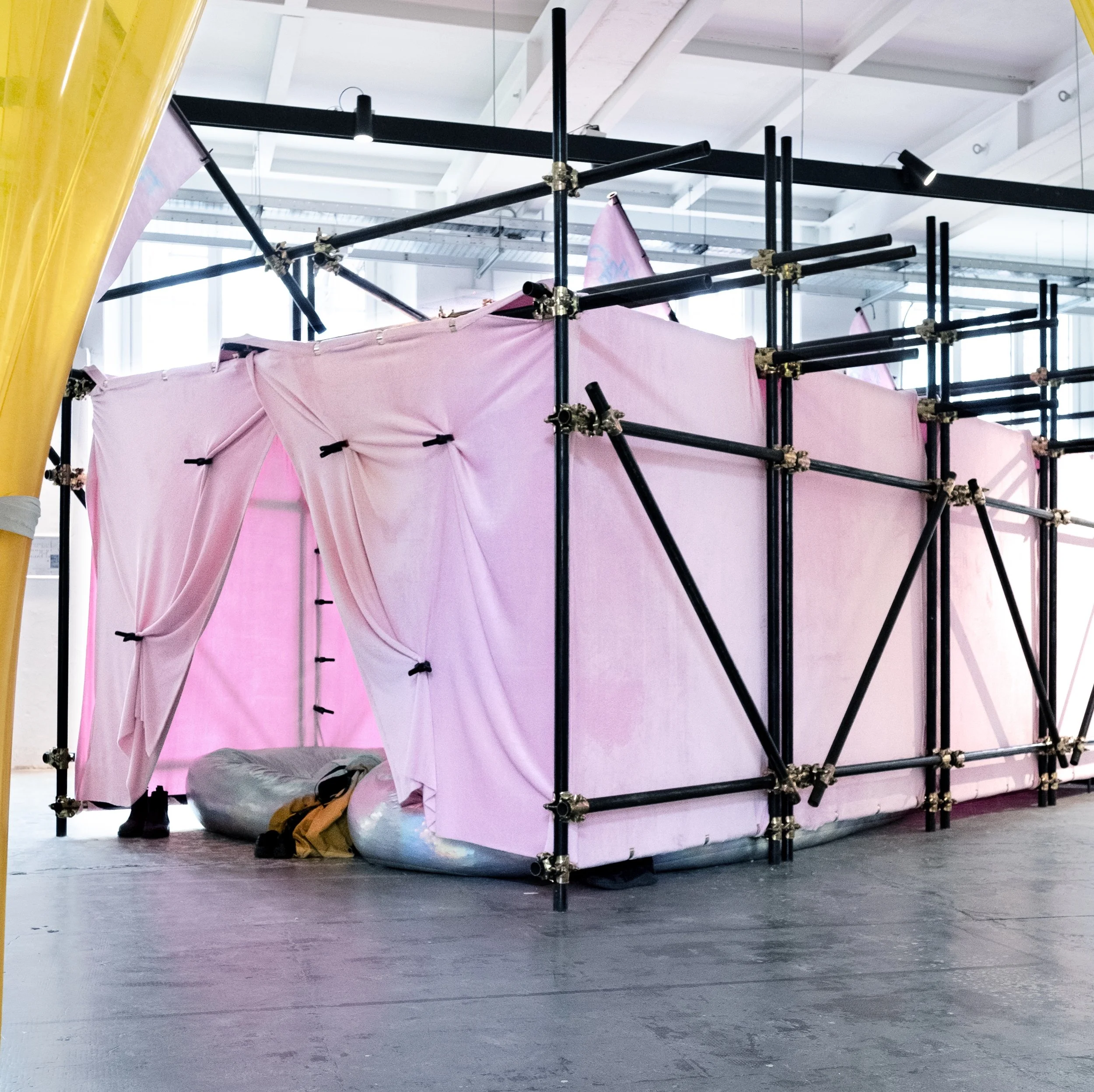
Miss Italia, 2022. Single-channel video, 18 min. 40 sec. In collaboration with Ludovica Bertucci. Produced by NAM – Not a Museum, Florence. Courtesy of the artist.
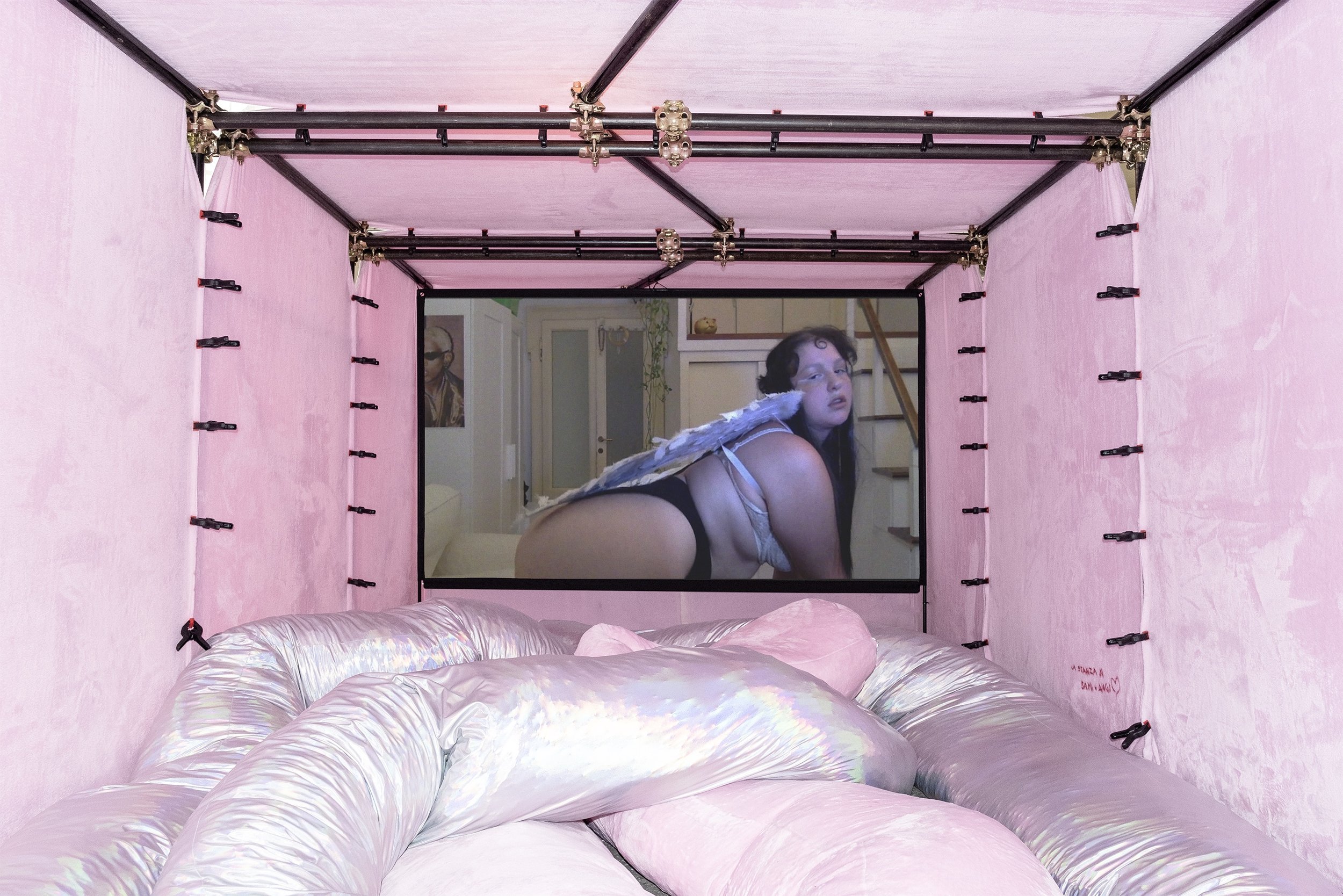
Miss Italia, 2022. Single-channel video, 18 min. 40 sec. In collaboration with Ludovica Bertucci. Produced by NAM – Not a Museum, Florence. Courtesy of the artist.