TINTIN ON HER WORLD: FKA TWIGS, “DIVA DOLL,” EUSEXUA, AND THE RADICAL VISIBILITY OF TRANS LIFE IN LONDON’S UNDERGROUND
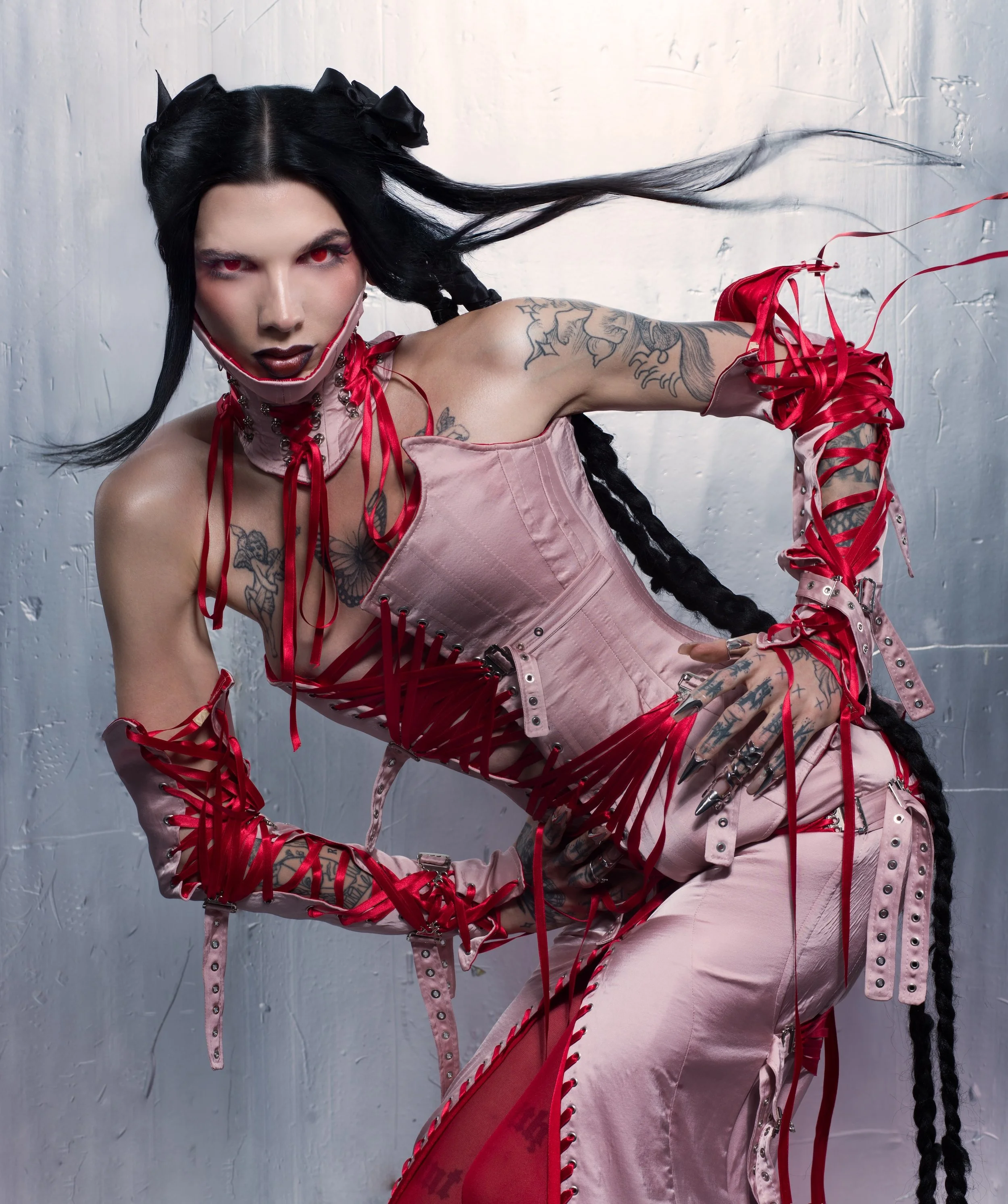
Photography by Mario Pereira. ©Tintin Freeman
In this interview, I have the privilege of sharing with you an incredibly authentic and inspiring figure. Tintin is a London-based transgender poet and musician whose work confronts the complexities of the trans experience through raw, provocative, and intimate storytelling. Drawing on her foundation in spoken word and underground performance, she fuses personal narrative with experimental sound, bold aesthetics, and a magnetic presence that moves seamlessly between intellectual rigor and nightlife euphoria.
We met at the Serpentine Gallery party in London for Lauren Halsey in 2024, Tintin, alongside her partner, Parma Ham, and I was immediately taken by their extraordinary fashion sensibilities. Together, they are a cultural force: an underground royal couple presiding over London’s queer nightlife with instinct, taste, and vision. If you spend any real time in the city’s avant-garde circles, their names inevitably surface.
LISTEN HERE
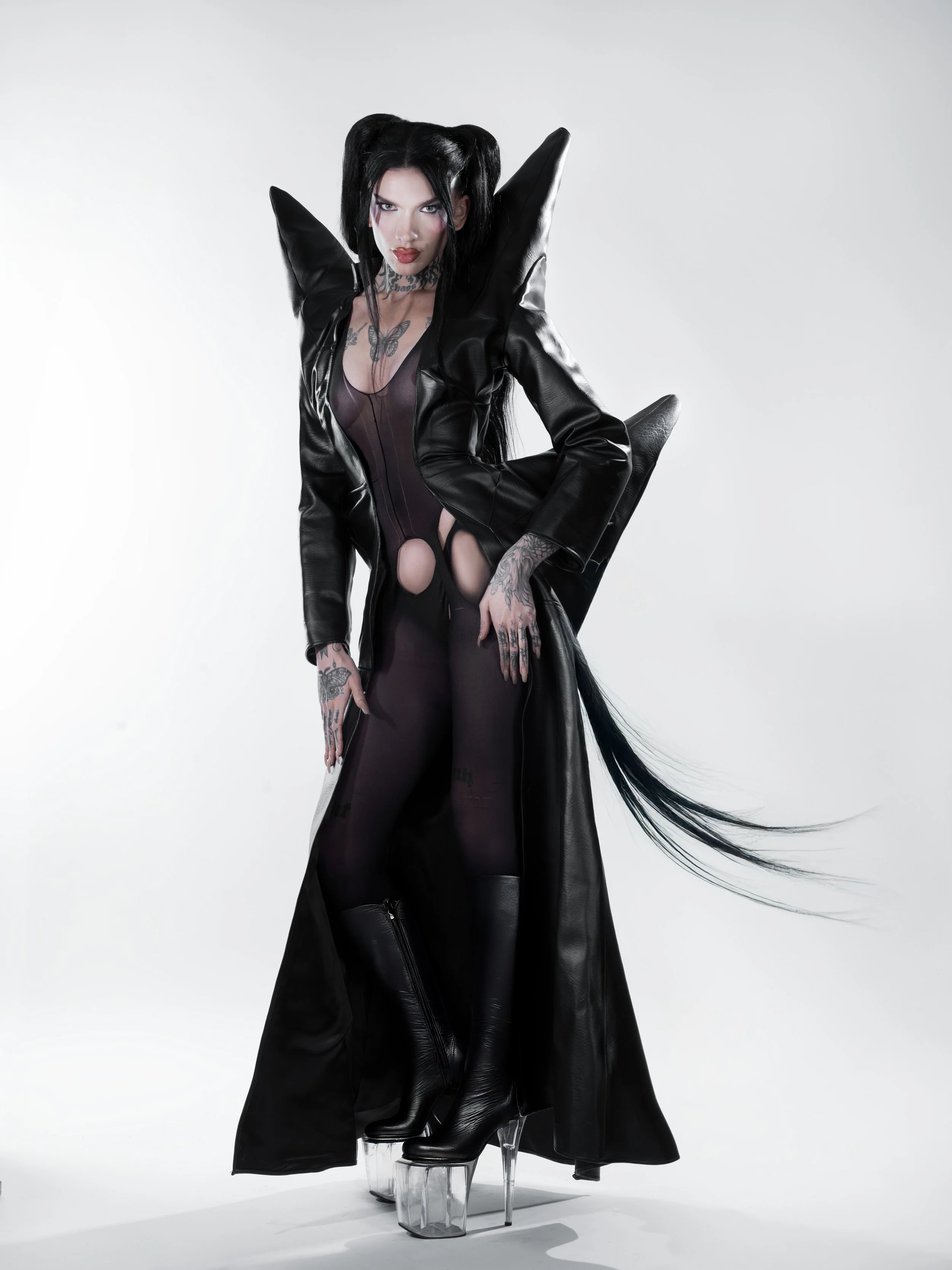
Photography by Mario Pereira. ©Tintin Freeman

Photography by Mario Pereira. ©Tintin Freeman
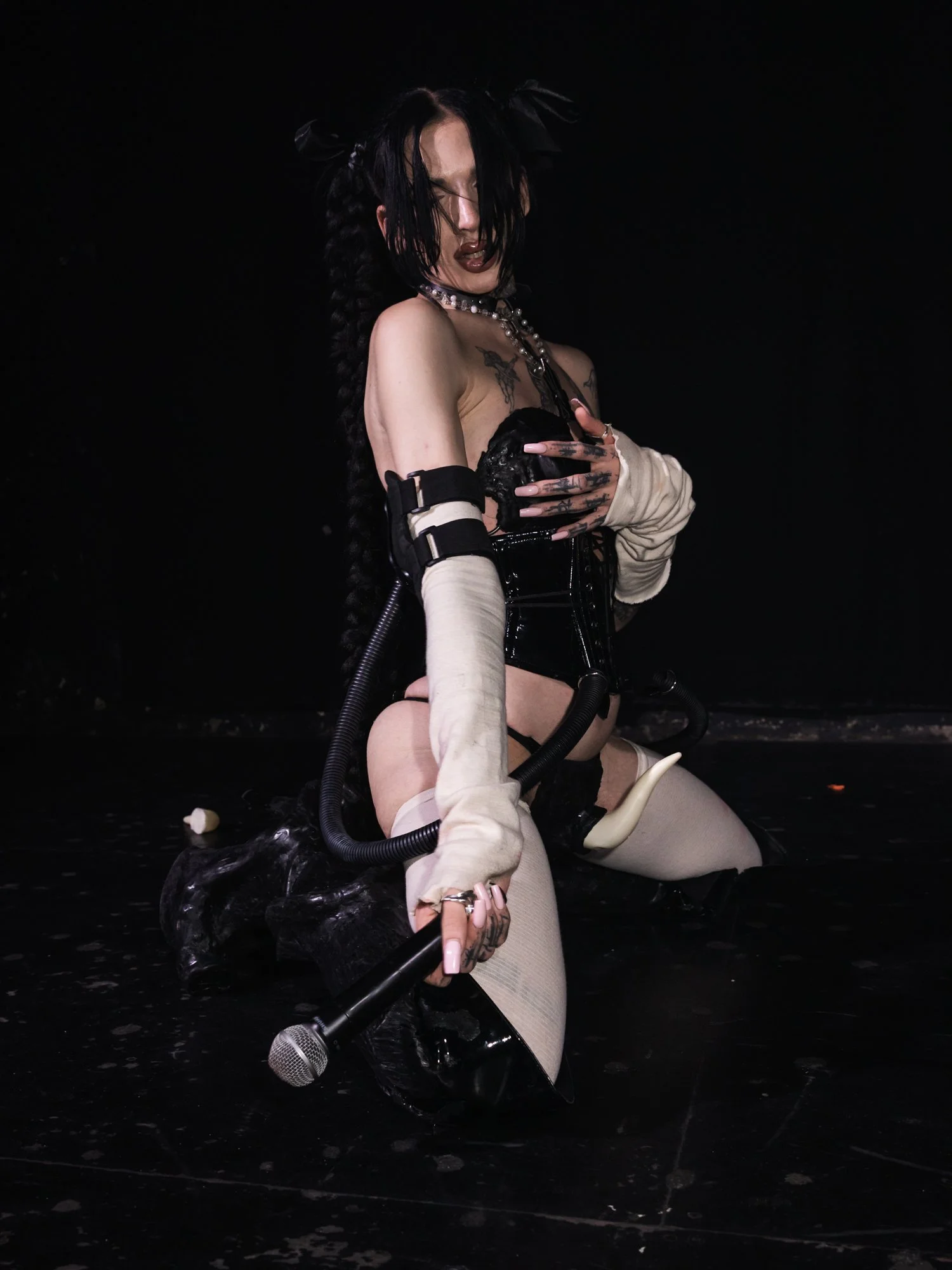
Tintin performing. ©Tintin Freeman
Tintin’s transition journey has unfolded publicly and courageously. In sharing her evolution, emotionally, hormonally, artistically, she has become a beacon for so many trans and gender-nonconforming people navigating self-realization. There is no artifice in her transparency; it is sexually free, rhythmic, and deeply embodied. She is living proof that joy, once claimed, is radical — that being unapologetically alive is itself a political act.
In 2024, she self-published She Dreams of Sweet Castration, a visceral poetry collection that established her as a bold new literary voice. That same year, she was a featured songwriter and performer on FKA twigs’ Grammy-winning album EUSEXUA, a collaboration that catalyzed the launch of her solo music career on the single “Drums of Death” by FKA twigs and Koreless. Since then, her singles — including “Diva Doll,” “Tantrum” (with TNXORDS), and “Faithless” — alongside collaborations with producers Ruiloba and Marco Caricola, have positioned her at the forefront of a new generation of trans artists reshaping electronic music from within the underground outward.
2024 single “Drums of Death,” writing and production credits include FKA twigs (lyrics, executive producer), Koreless (composition and production — originally creating the instrumental on a flight to Berlin), Tintin (lyric collaborator and background vocals), and G-Dragon and Robin L. Cho (credited composers due to a sample used in the track).
Lyrics like “I’m a doll walk the town on some messy shit / Not around, out of town, but ahead of it” and “My body looks better naked… my face is perfect, take it… chaser on my socks he can taste it” are declarations of agency — the kind of empowerment we need in a time when trans and queer people are actively defining their bodies, their narratives, and their futures on their own terms.
Tintin embodies a rare duality: cerebral yet hedonistic, theoretical yet physical, tender yet confrontational. She understands that the dance floor can be both sanctuary and stage. That identity can be both inquiry and spectacle. That nightlife can be scholarship.
And this is only the beginning. She has recently performed at the EUSEXUA Rave and SXSW London — further proof that this scene orbits around her and her circle, a group collectively spearheading a more visible yet tight-knit world of safety, creativity, and radical self-expression. Young trans people are watching. In so many places around the world where fear prevails, figures like Tintin stand as beacons of possibility.
Based in London, Tintin stands not only as one of the leading trans figures in contemporary underground culture, but as an artist whose career is just beginning to accelerate. What we are witnessing now is the early architecture of something lasting.

FKA twigs and Tintin performing together at the EUSEXUA Rave in London. Photography by @no.one.studio.london. ©Tintin Freeman
Interview
AMADOUR:
Hi Tintin. Thank you so much for this interview. Please tell me a little bit about yourself—like, where did you grow up? I know that you're from the UK, but I'd love to know about your hometown. Are you from London? If so, what part?
TINTIN:
So I'm not from London. I'm from a place called Hertfordshire, so it's like an hour up or outside of London. So it's kind of like near the outskirts but not quite. And I did not like growing up there. I think, you know, to reference my transition, I think I definitely wasn't living, you know, like my life where I wasn't really like, I didn't really feel born yet. I guess looking back, 'cause I was living in such like a small town mentality. Like, it's closer to middle class, but it's a mix of different cultures and people.
And there, I just really didn't feel seen; I didn't really fit in. Before this, I didn't know it was because I was trans, but I also needed to be in a space like London, where it was very open, very cultural. There was so much freedom in moving to London. I moved to London two years ago, and I've been in the London space for like two and a half years now.
AMADOUR:
Insane.
TINTIN:
So yeah, I basically just lived in Hertfordshire with my mom and my sister. I studied at this little private art uni called CSVPA [Cambridge School of Visual & Performing Arts] in Cambridge. Then I went to RCA [Royal College of Art] in London, but I dropped out at 22.
I had my toe in the London queer scene because I would occasionally go to queer raves—places like Inferno Repost and random queer-centric parties. That was my way of discovering and feeling more aligned. At the time, I identified as nonbinary but still felt dysphoric and depressed. I felt very heavy and didn't feel like life was for me.
As soon as I moved to London and existed there, that’s when I felt like there was a whole life out here for me. A whole realm of possibilities I hadn’t explored yet.
The person I have to thank is my partner, Parma Ham, who I’m still with and live with now in London. It’s like a dream come true. We met online—they slid into my DMs. We went to a rave together, had fun, and started dating. They were my entry point into the scene and my queer family.
Everything I do wouldn’t have been possible without them. I’ve always been a hopeless romantic and wanted to feel that kind of love beyond the conditional love of family. Meeting them changed everything.
At the same time in 2023, I started hormones. I researched online, on Reddit, and just thought maybe transitioning is what’s missing. I started DIY HRT [hormone replacement therapy] and began my medical transition. Started dating my partner and met my best friend. It opened my third eye, and I finally cracked the egg. I felt like this is where I’m meant to be.
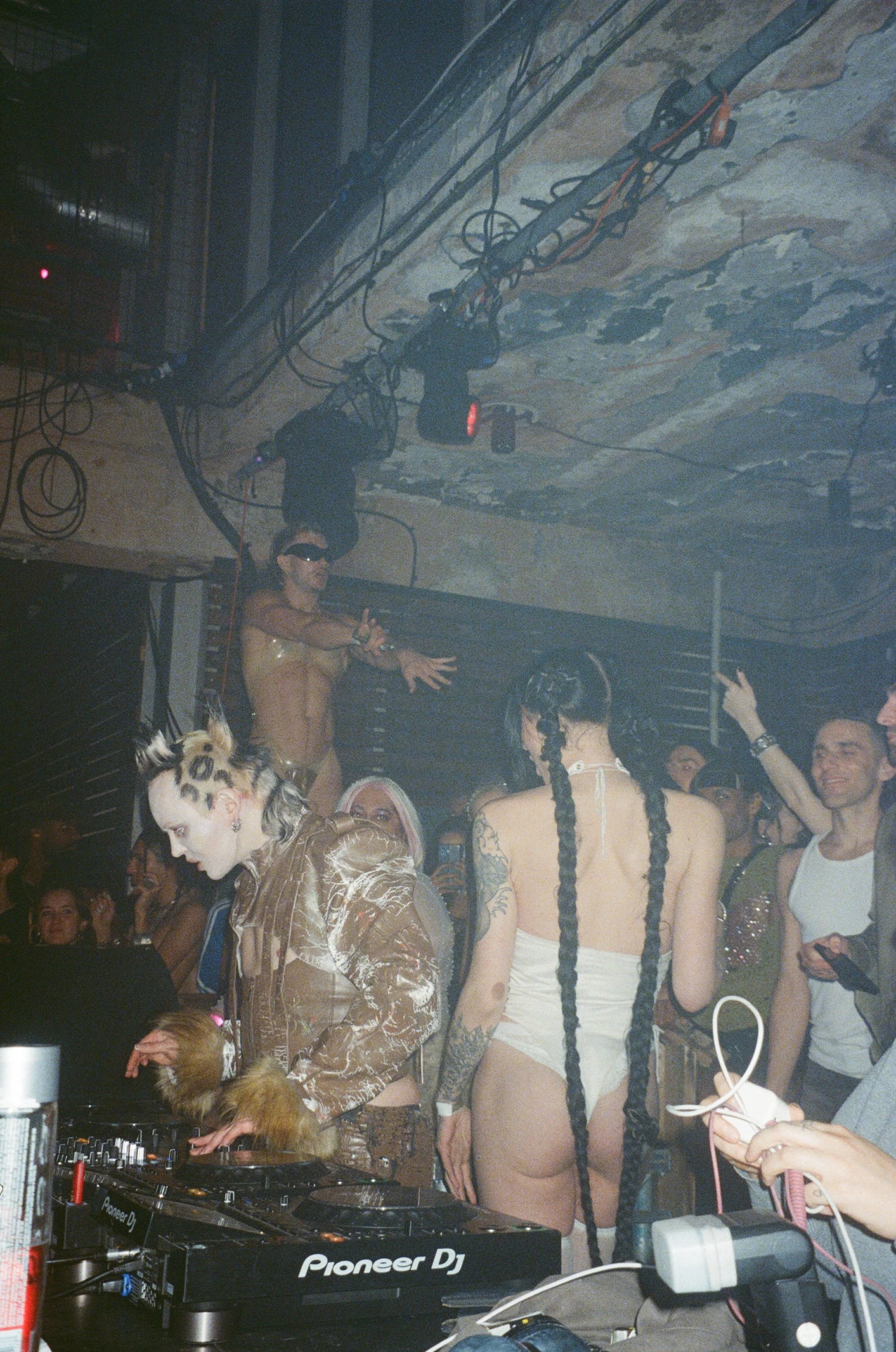
Tintin and Parma Ham performing in London. ©Tintin Freeman
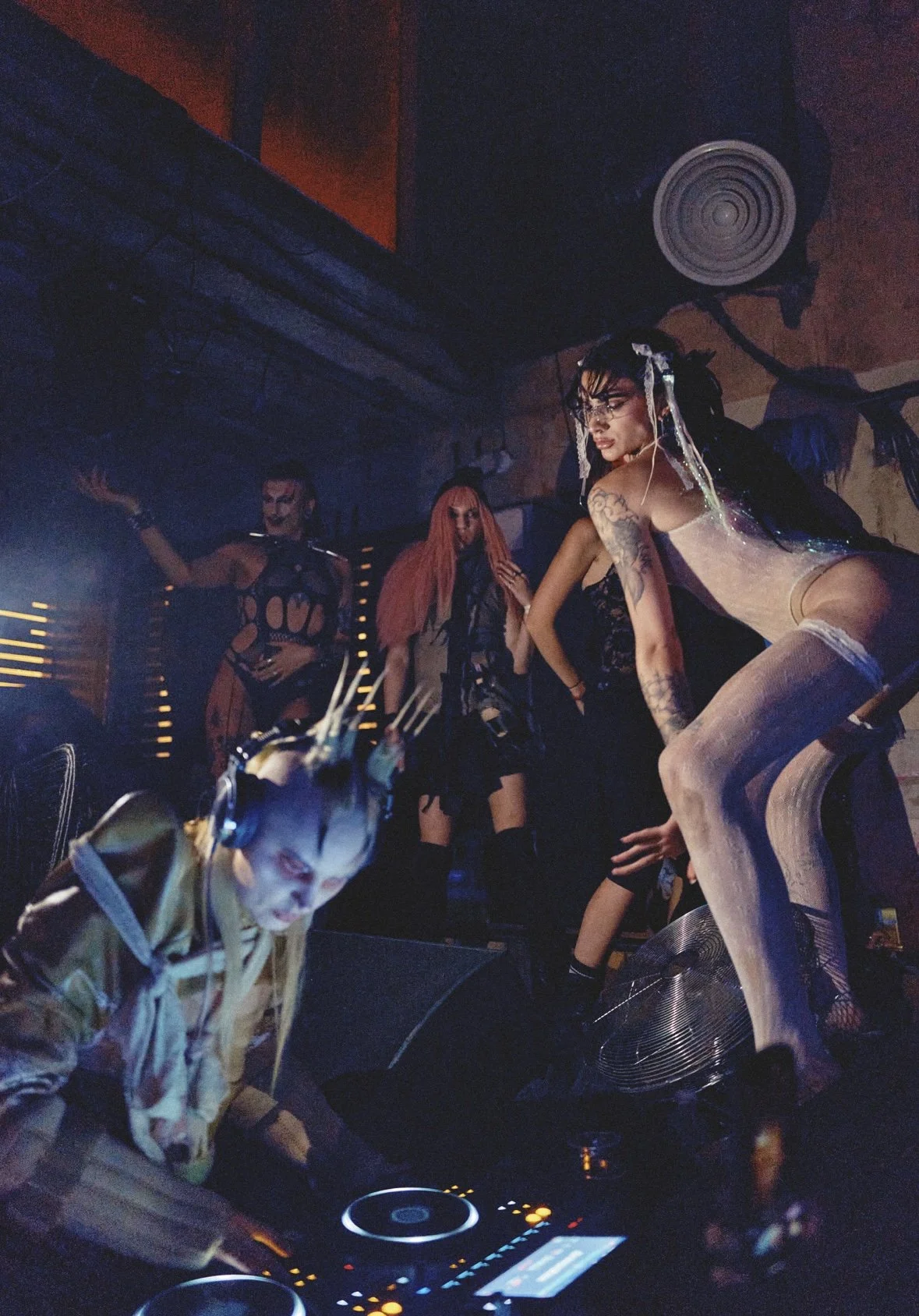
Tintin and Parma Ham performing in London. ©Tintin Freeman
AMADOUR:
I also wanted to ask you: what are the top raves or parties in London right now? And what makes the underground scene so impactful in your life?
TINTIN:
Nightlife has shifted recently. It was maybe more happening before, but it's changing.
To reference my partner in Parma Ham, they run the Wraith Club. That’s where I got my start. They collaborated with FKA twigs last year for the EUSEXUA Rave. Nightlife is a staple because you can show up as yourself. No rules, no judgment.
Inferno was the first rave I ever went to. These spaces are tight-knit and somewhat closed off, rightfully so. It’s important for queers to have that space.
Other nights like Playbody, Take a Chore, Sex II—they’re sexy, freeing, about the music. Venues like The Cause—I love Vogue so much.
These spaces help you forget the darkness of the world. Even if you’re sober, it takes you out of that. Being able to exist in those spaces is integral to growth, both as an artist and an individual.
AMADOUR:
Can we talk about “Diva Doll”? What inspired it?
TINTIN:
“Diva Doll” was born from my work with FKA twigs. In 2024, I was asked to join the EUSEXUA project. I met her earlier that year at her birthday party, and I think she was definitely inspired by my writing.
I definitely wouldn't have started music if it weren't for my writing. When I was young, I was not musically inclined. I didn't study music; I couldn't play an instrument or sing. But writing was my creative outlet, helping me tap into my feelings and emotions and what I wanted to express.
At the time, I would always post my poems on Instagram stories, honestly, for no reason. It was just my art and my outlet, and it slowly became my knack and my craft. That slowly became my thing. Twigs asked me to help write “Drums of Death” [ by FKA twigs and Koreless]. That was my first big break opportunity. It was fast-moving and exciting, and I owe so much to that moment. I performed with her on release day because my voice is on the track and I say “Diva Doll” on it.
That opportunity showed me I could make music. Music packs everything I love—writing, visuals, production, performance, fashion—into one.
“Diva Doll” is empowerment, shedding skin, transness, survival. It’s hard, sexy, chaotic, electronic. I want to make cool club music. I’m inspired by my peers, like Arca and SOPHIE, and by the queer rave scene. I want to build my own legacy.
BTS of “Drums of Death” by FKA twigs and Koreless. Tintin's office cameo. ©Tintin Freeman
BTS of “Drums of Death” by FKA twigs and Koreless. Tintin's office cameo. ©Tintin Freeman
AMADOUR:
Unmistakably, you're on a Grammy-winning album [won her first-ever Grammy Award for Best Dance/Electronic Album for EUSEXUA at the 68th Annual Grammy Awards in 2026]. I drive frequently between San Francisco, Reno, and LA, and I have it on repeat. But you all don’t really drive in London, right? [laughs] Your look in the music video was insane, by the way. I love your glasses, the hair, the power. Where did that come from? I’m obsessed!
TINTIN:
Yeah we listen to music when we ride on the Tube. [laughs] In “Drums of Death,” I’m in it with white makeup and long hair. It was definitely me figuring myself out. I wasn’t quite sure yet. I was still learning about myself and how I wanted to look and become. Because I was still new to my transition — I’m only two and a half years on hormones — your body changes all the time. Emotional, hormonal, everything. I’m 26, and I feel like there’s a lot to learn.
The EUSEXUA video was about shedding skin and becoming. Everyone was in business suits—office- siren core—and then we stripped to sexy outfits underneath.
My braids became iconic. My mom braided long black braids into my hair because I wanted long hair. Twigs’ hairstylist added rhinestones and ribbons, making it sculptural. It became part of my identity. The glasses were very office-siren-diva. I love it.
AMADOUR:
What was playing SXSW London [South by Southwest] like?
TINTIN:
That was my first solo performance of my own music. My name was on a lineup for the first time. It was sold out, and I felt effortless, not nervous. It made me excited to keep going. I had eight or nine performances that year. It felt like I earned my place.
AMADOUR:
Let’s talk about “Faithless”. What is it about?
TINTIN:
Faithless is about my relationship with nightlife. I wrote it last spring when I was in Morocco. I was navigating morals—right from wrong. I was partying every weekend while hating my day job. It felt like Hannah Montana—iconic at night, miserable by day.
There’s merit in nightlife, but I tipped it too far. I was neglecting the things that were kind of more important and the things I should have prioritized, like, you know, a future, a job, my partner, or maybe like sober friendships. I want a bright future, sobriety, health, and stability. The song is about navigating that moral compass while still being hot, sexy, free, and trans.
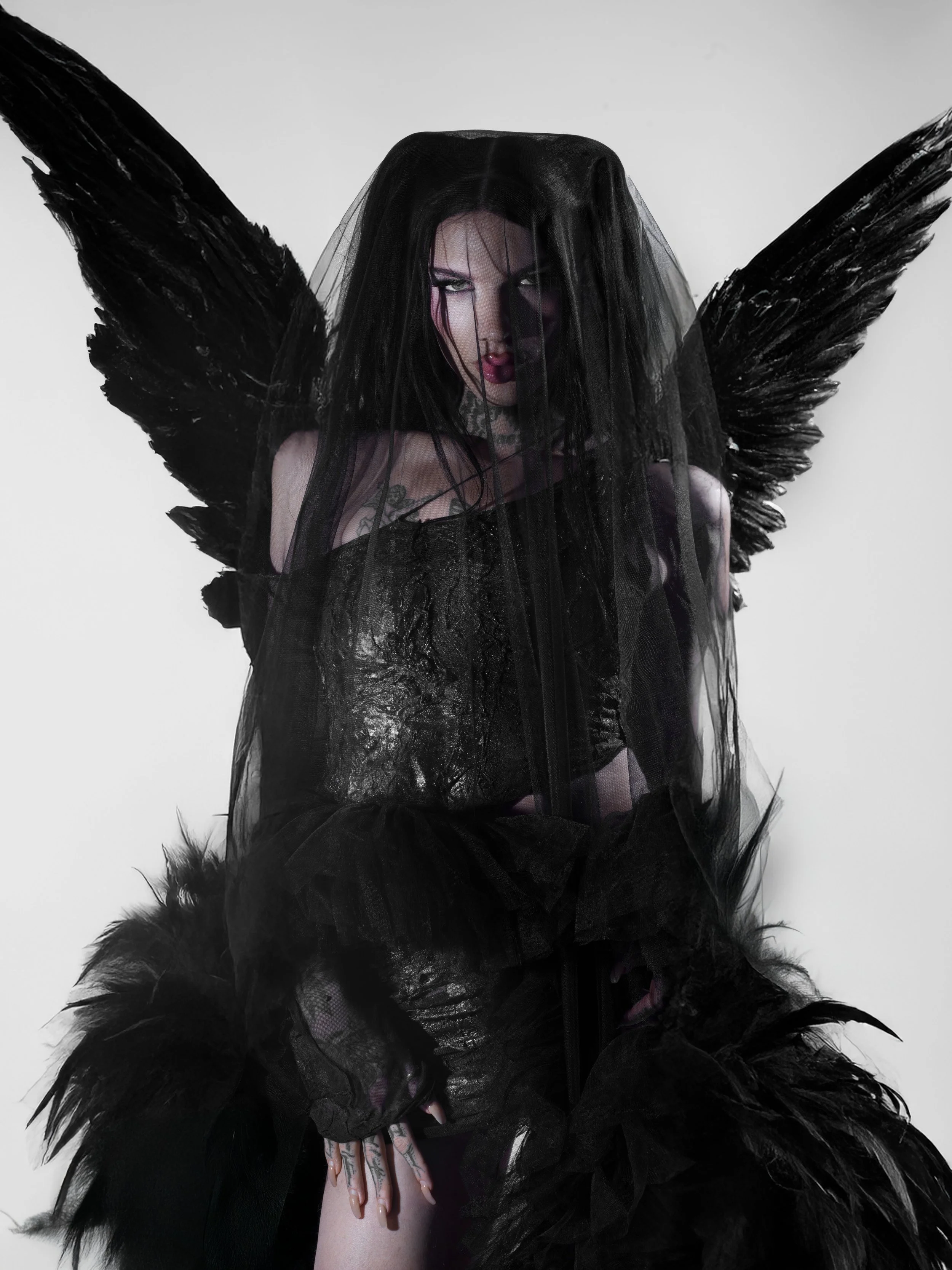
Photography by Mario Pereira. ©Tintin Freeman
AMADOUR:
Can we talk about your poetry collection, She Dreams of Sweet Castration?
TINTIN:
I started writing seriously in 2021. I kind of picked up a pen and started writing. And then when I was on a family holiday in Greece that year, that's when I was like, I started to kind of build this kind of world around my writing. It came from lived experience. A lot of my poetry is graphic, grotesque, sexual—it was a way to express pain and shock people.
You know, I'm constantly oversharing on my Instagram story. I'm constantly talking about my life, my personal life, and my story through that and audience building. It goes beyond poetry now. It goes into narrative, talking about myself, what I've been through, and why I fall in love with life and living. What spurs me on and inspires me is my lived experience: how I’ve gone from writing out of pain and hurt to writing now because I’m so happy, and I want to share that fulfillment, joy, and lust for life.
AMADOUR:
What would you say to someone queer or transitioning who just moved to London?
TINTIN:
Put yourself out there. Even at a talk I did recently at the RCA in London, someone said they had just moved to London, were studying there, but felt alone. I told them to reach out. I sent them four different flyers for events to meet people. It doesn’t even have to be within the party — it can just be a starting point for community building. Outside of partying, if you’re looking for opportunity or belonging beyond professional practice, meeting people is essential.
AMADOUR:
That’s leadership. As a final question, what inspires you in your off-time?
TINTIN:
Oh, I love that. Ham and I go for walks constantly. We love romantic, cute walks around London. Honestly, anything with nature. I love museums and galleries. That’s the perfect place to get inspired, just being out and about with your thoughts. London is a dream come true to live in. I love being in the cityscape. I’ve always loved the V&A [Victoria and Albert Museum] and art galleries, and I'm constantly looking out for new exhibitions. That’s what I like to do.
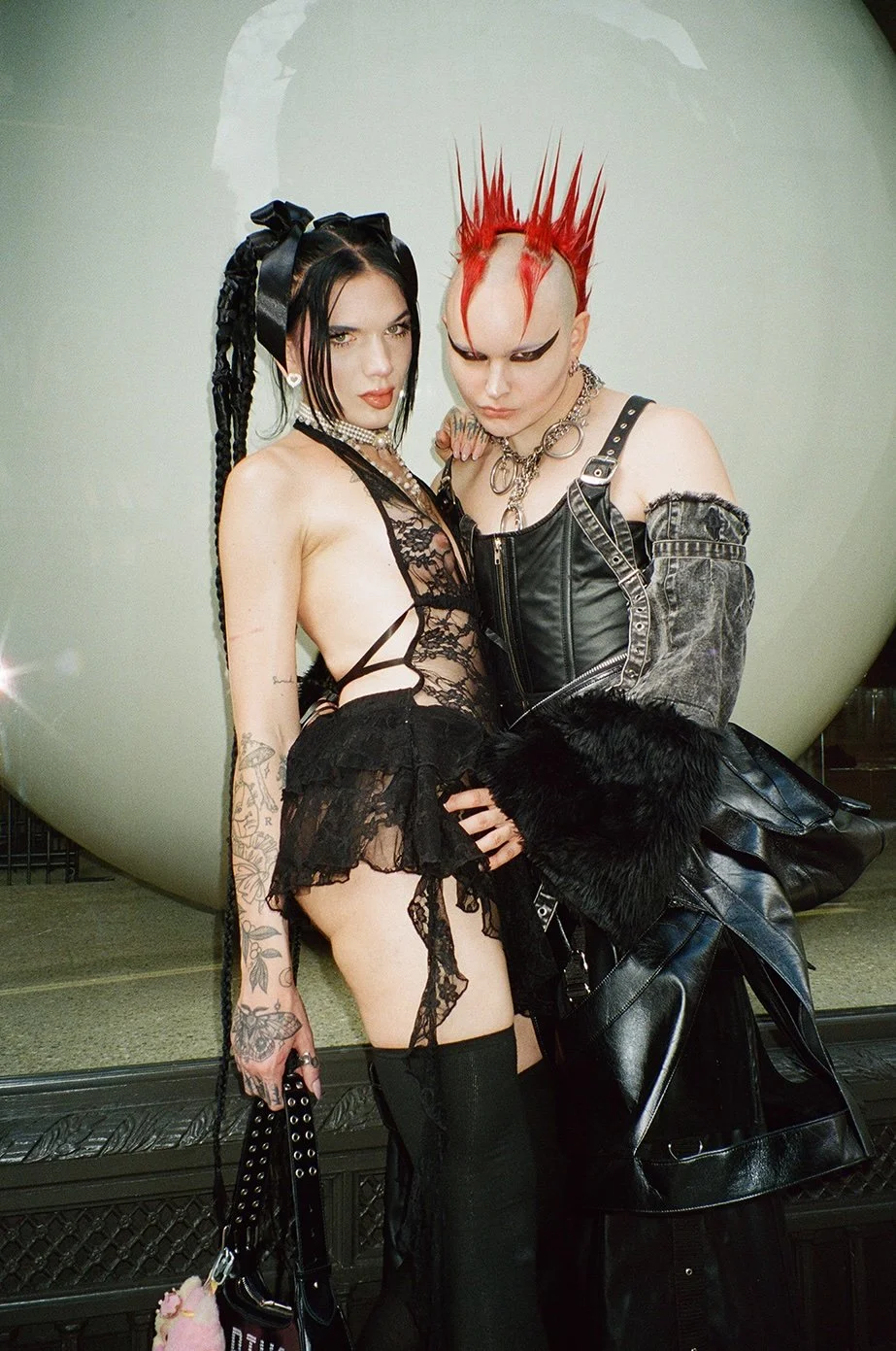
Tintin and Parma Ham in London. ©Tintin Freeman