UNA SZEEMANN AND HENRY VINCENT ON HARALD SZEEMANN, MONTE VERITÀ, JASON RHOADES, AND WHY THE ARTIST MUST REMAIN AT THE CENTER

documenta 5 press conference in 1972. Harald Szeeman in the center. Photography by Balthasar Burkhard.
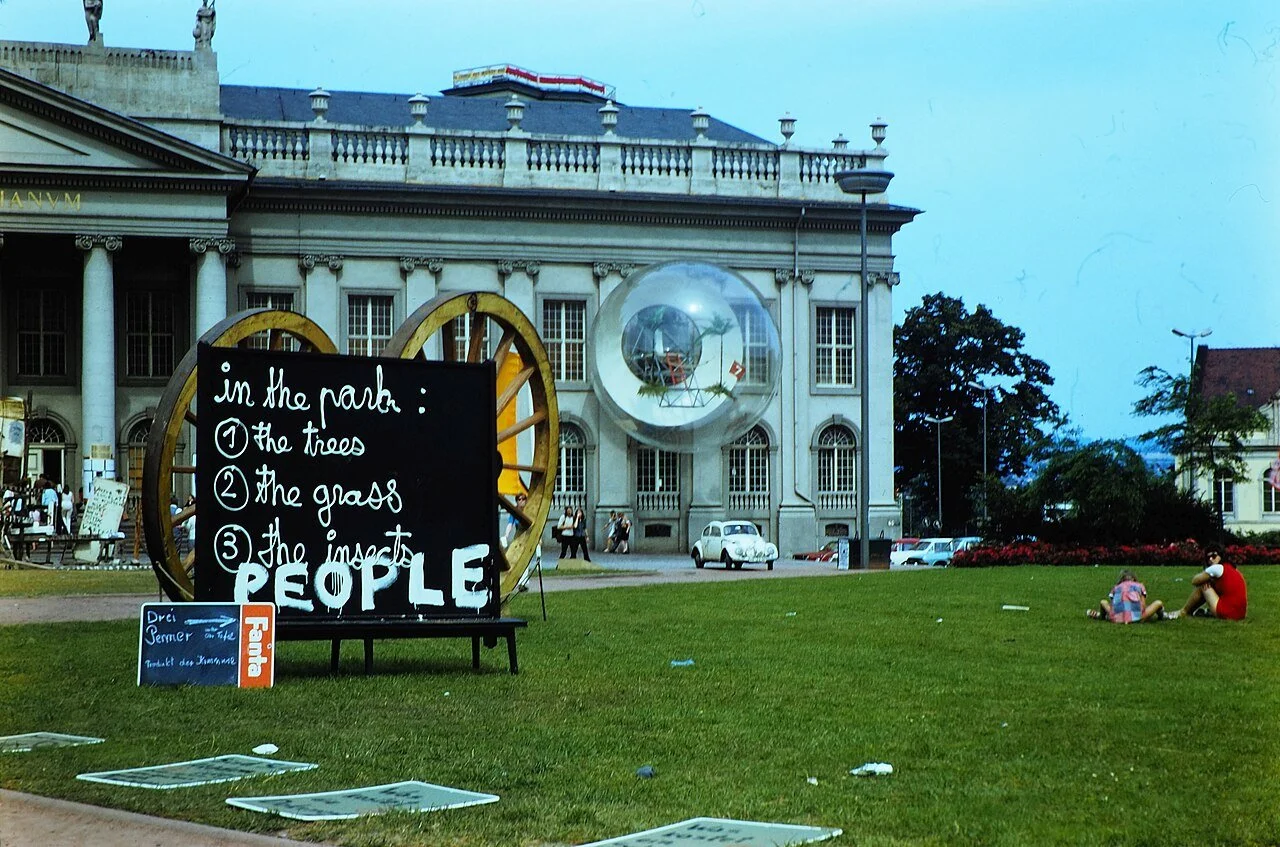
Documenta 5, Fridericianum mit Oase 7. Photo by JeLuF / Wikimedia Commons, CC BY-SA 4.0.
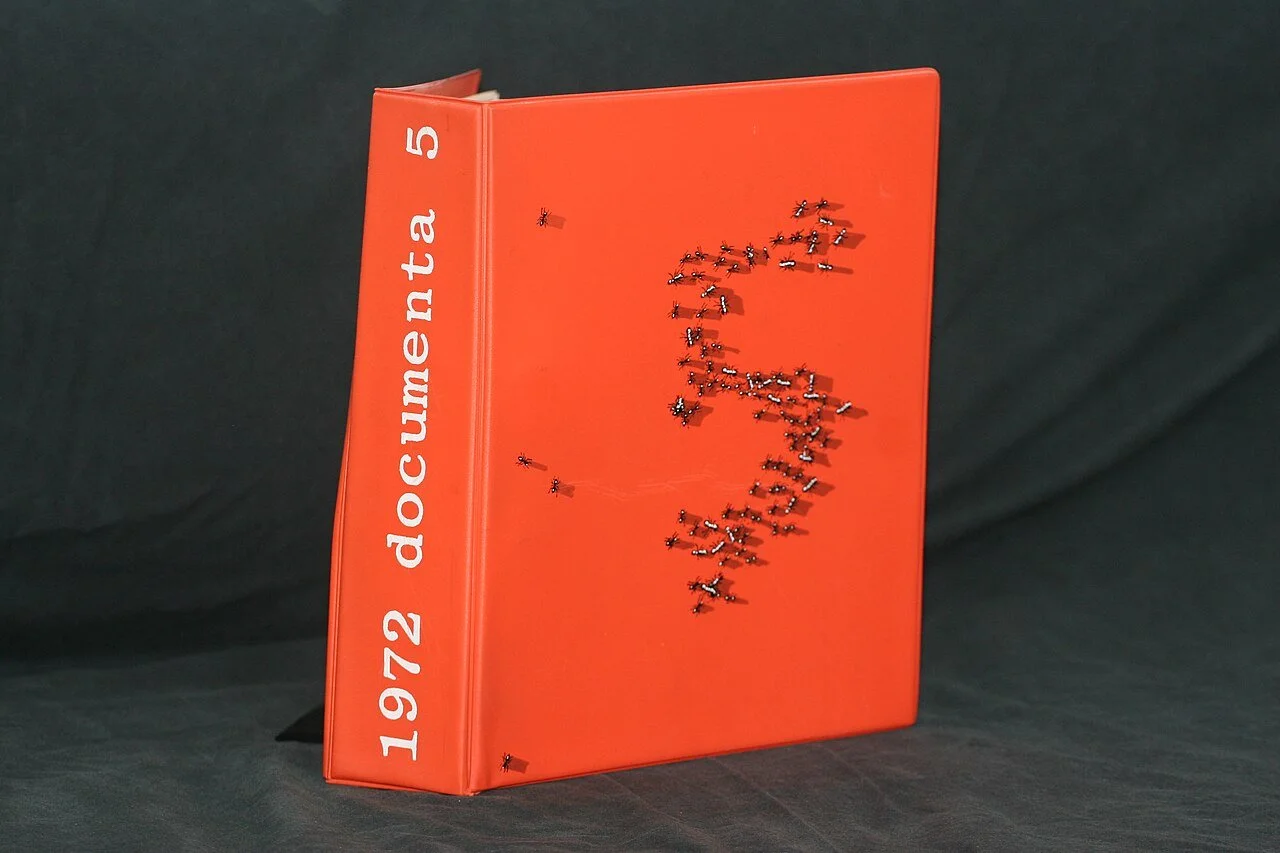
Katalog documenta 5, 1972. Cover art by Ed Ruscha. Photo by Delorian / Wikimedia Commons, CC BY-SA 4.0.
At the Marciano Art Foundation in Los Angeles, Pretenzione Intenzione: Objects of Beauty and Bewilderment from the Archive of Harald Szeemann arrives not as a nostalgic footnote to a canonical curator, but as part of a larger and increasingly visible return to Harald Szeemann’s significance for contemporary art. The exhibition, a project by artist Una Szeemann, is presented at the Marciano Art Foundation by director Hanneke Skerath with independent curator and writer Douglas Fogle. In Los Angeles, it is on view from February 21 through April 11, 2026.
That return matters. Harald Szeemann was not merely an influential curator; he was one of the foundational figures through whom the modern curator was invented. Through exhibitions such as Live in Your Head: When Attitudes Become Form at Kunsthalle Bern in 1969 and documenta 5 in Kassel in 1972, he helped define the independent curator as we understand the role today, expanded exhibition-making into a medium of authorship, and transformed the large-scale international exhibition into a site of thought, atmosphere, and worldview.
If these conditions now feel familiar, it is because Harald Szeemann helped make them so. Yet what feels especially urgent in reconsidering his legacy today is not simply his historical influence, but his insistence that the artist remain at the center. His exhibitions were not built around market compliance or the now-familiar pressures of trend, speculation, branding, and commercial legibility. He was drawn instead to intensity: to artists whose work emerged from necessity, psychic structure, obsession, mythology, personal cosmology, and genuine inquiry. In an era when so much art is made with one eye on the market and another on visibility, his example feels newly clarifying. He reminds us that exhibitions can still be led by artists rather than by systems, and that curatorial vision, at its best, is not the management of culture but a way of giving artists the fullest possible space in which to think.
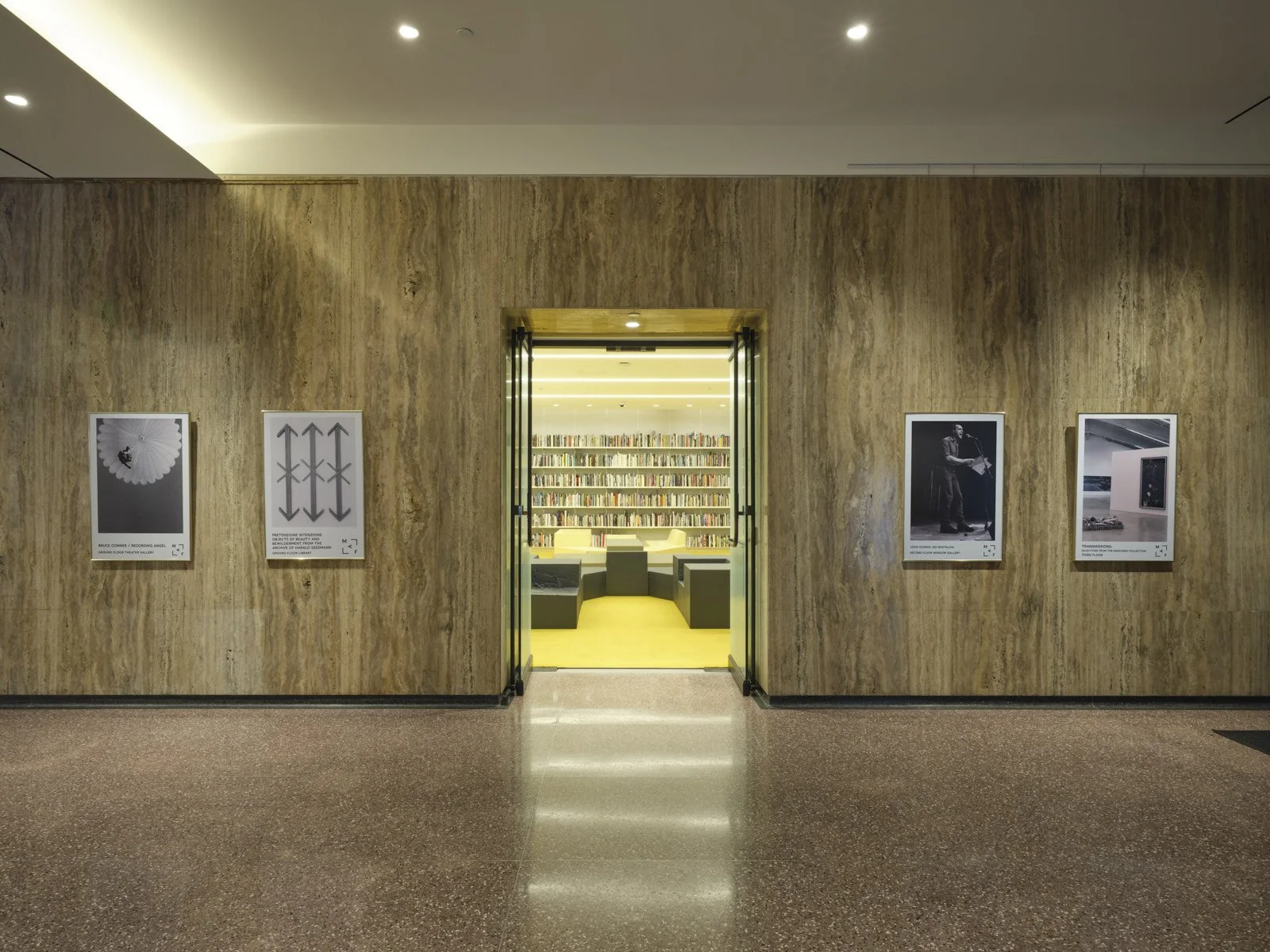
Installation view of Pretenzione Intenzione: Objects of Beauty and Bewilderment from the Archive of Harald Szeemann at Marciano Art Foundation, Los Angeles, February 21 to April 11, 2026. Photo by Heather Rasmussen, courtesy of Marciano Art Foundation.
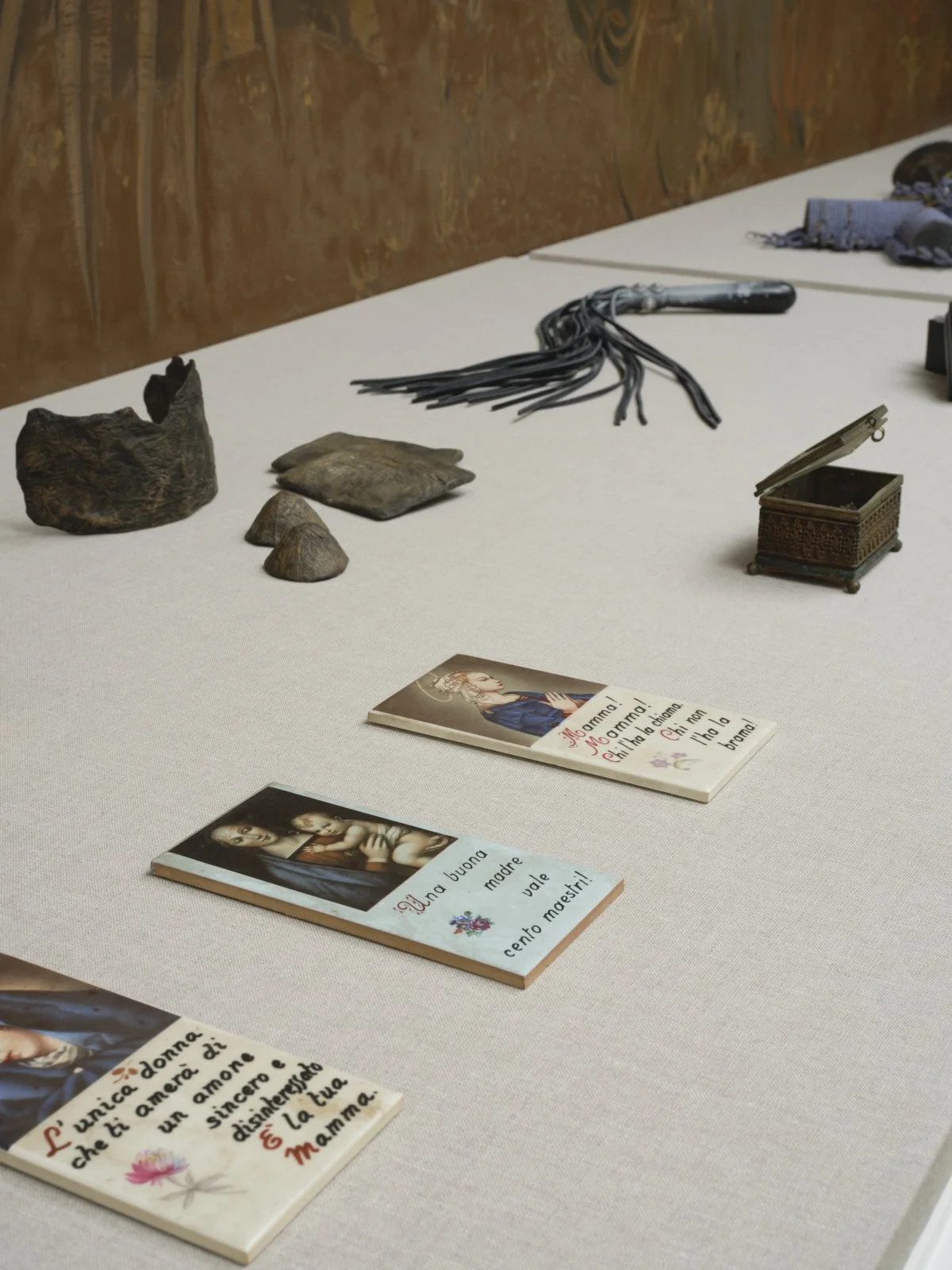
Installation view of Pretenzione Intenzione: Objects of Beauty and Bewilderment from the Archive of Harald Szeemann at Marciano Art Foundation, Los Angeles, February 21 to April 11, 2026. Photo by Heather Rasmussen, courtesy of Marciano Art Foundation.
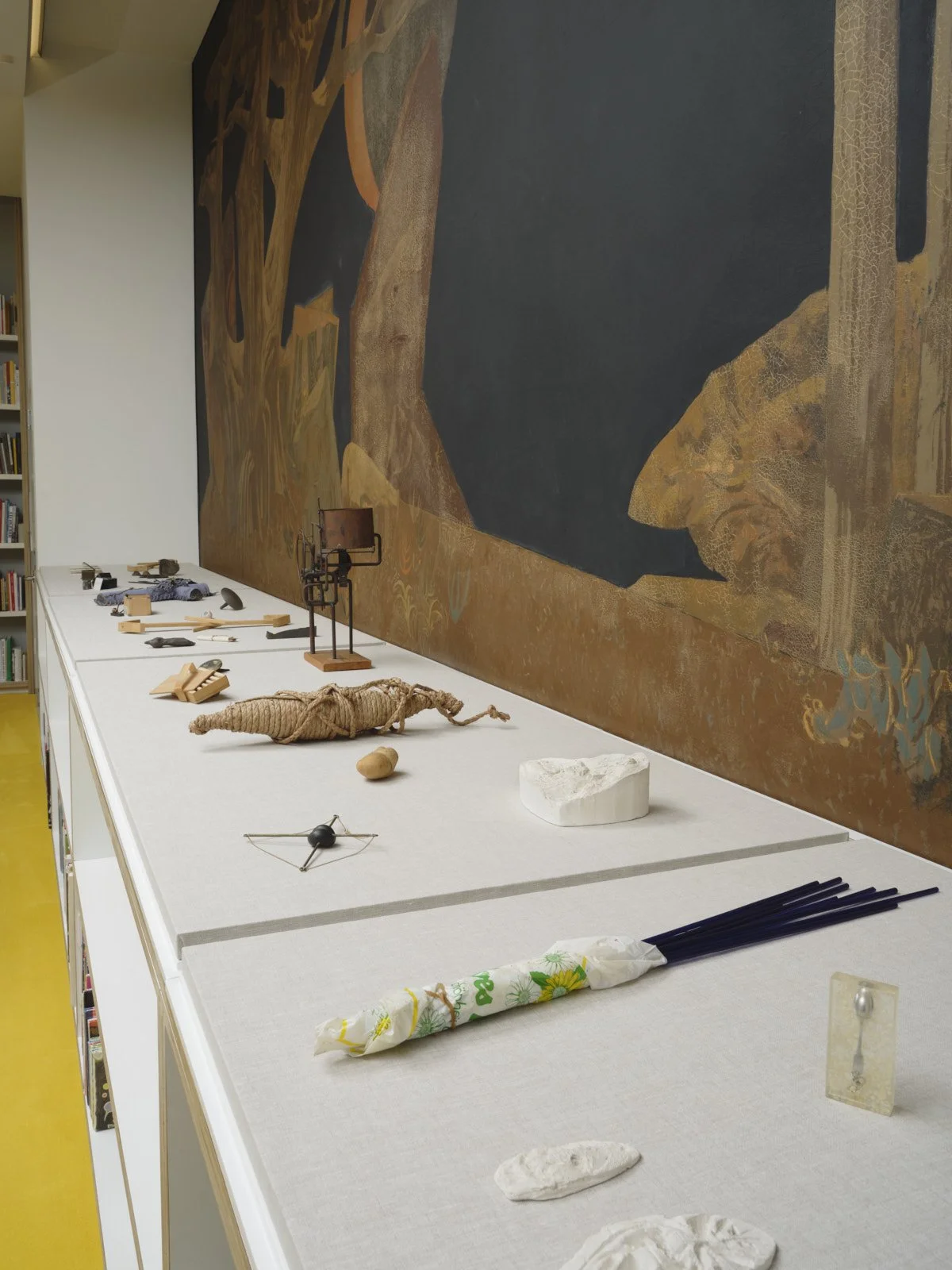
Installation view of Pretenzione Intenzione: Objects of Beauty and Bewilderment from the Archive of Harald Szeemann at Marciano Art Foundation, Los Angeles, February 21 to April 11, 2026. Photo by Heather Rasmussen, courtesy of Marciano Art Foundation.
That question — what happens when artists cease to be the center, and what becomes possible when they are restored there — is what makes this exhibition feel so alive now. When I met Una Szeemann at the Los Angeles presentation, it was immediately evident that this was not a memorial exercise, but an active artistic proposition in its own right, one that extends concerns central to her own practice: aura, symbolism, psychic projection, myth, unconscious process, and the unstable life of objects.
That distinction matters. Una is not merely the inheritor of a legendary archive, but an artist with a distinct body of work of her own, one that has moved across installation, film, photography, sculpture, and psychologically charged arrangements of matter. Over the years, her work has appeared in institutions and exhibitions including Kunsthalle Winterthur, Kunstverein Hamburg, Kunsthalle Wien, Kunsthaus Zürich, MAN Museo d’Arte Provincia di Nuoro, MASI Lugano, Manifesta 11, the Busan Biennale, the Lyon Biennale, and the Venice Biennale. What feels most important here, though, is the consistency of her artistic language: a sustained engagement with aura, myth, unconscious projection, and the symbolic charge of objects. Her 2003 film Montewood Hollyverità remains especially telling in this regard, fusing Monte Verità’s utopian legacy with Hollywood fantasy, performance, and a distinctly Los Angeles cosmology. History, fiction, desire, and esoteric atmosphere collapse into one delirious Swiss-Californian dreamworld. Seen in that light, Pretenzione Intenzione is not simply an act of filial preservation. It is continuous with Una Szeemann’s own artistic language.
It is also worth remembering that Harald Szeemann’s archive is not a minor family inheritance, but one of the great curatorial archives of the twentieth century. Long housed in the Fabbrica Rosa in Maggia, and later acquired by the Getty Research Institute, it records not only exhibitions, correspondence, and intellectual networks, but an entire way of thinking through constellations, obsessions, images, and objects. What Una does here is not to neutralize that archive into institutional history, but to reactivate it as a charged field: unstable, symbolic, open, and alive.
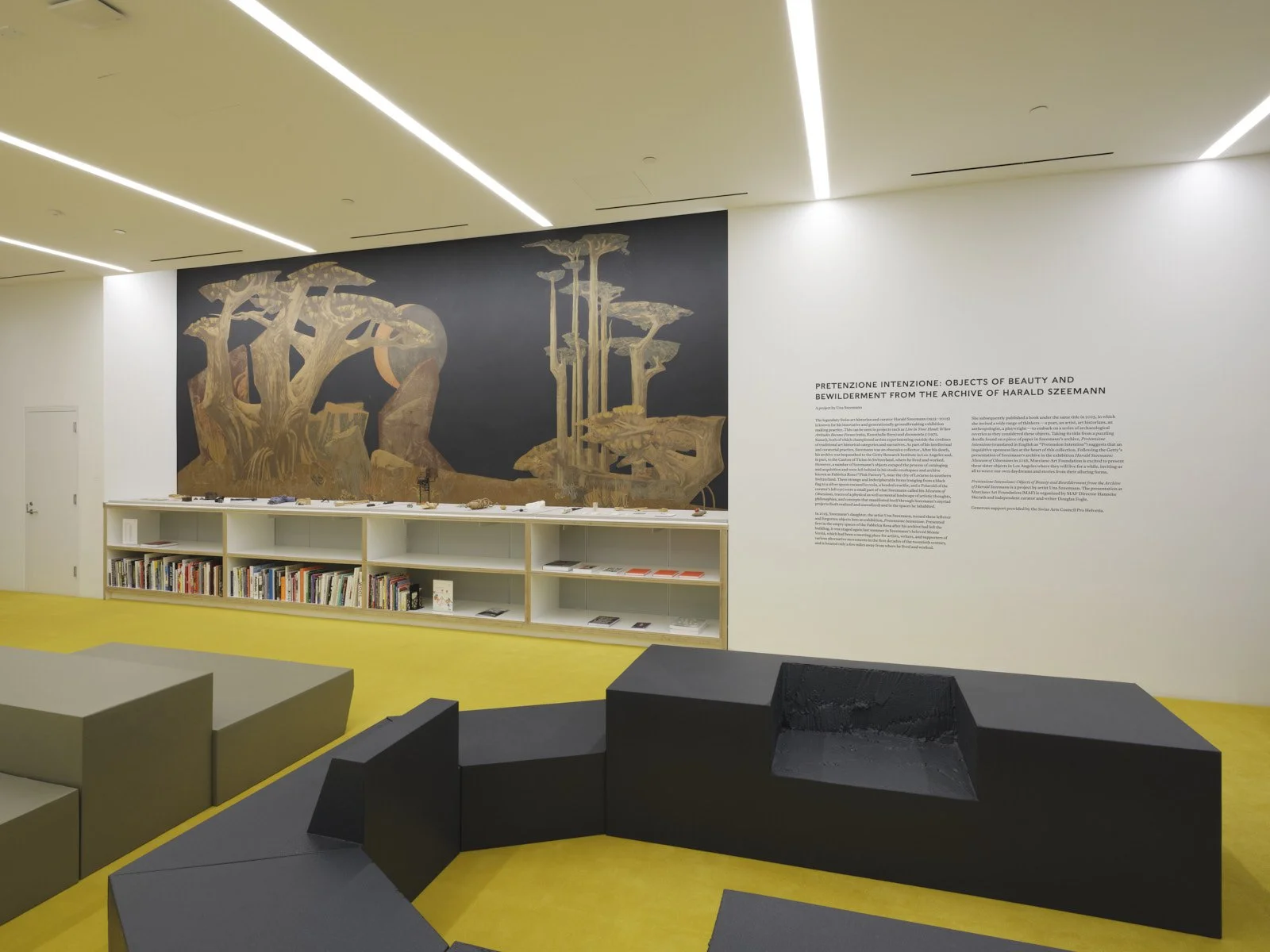
Installation view of Pretenzione Intenzione: Objects of Beauty and Bewilderment from the Archive of Harald Szeemann at Marciano Art Foundation, Los Angeles, February 21 to April 11, 2026. Photo by Heather Rasmussen, courtesy of Marciano Art Foundation.
Henry Vincent’s presence in this conversation is equally essential. He is not here as an outside commentator, but as an artist whose life intersects with Harald Szeemann’s legacy through lived experience: exhibitions, friendships, collaborations, and a moment in the art world when community still often preceded branding. Henry introduced me to Una, which felt especially apt given their long history and the overlapping worlds they have inhabited around Harald Szeemann, Los Angeles, and a wider transatlantic art community. They share decades of friendships, collaborations, and stories, including the atmosphere surrounding the Venice Biennale, Vincent’s inclusion in Harald Szeemann’s 2004 Seville Biennial, and Una Szeemann’s Montewood Hollyverità, which gathered artists, performers, and a distinctly Los Angeles-inflected cosmology around the utopian afterlives of Monte Verità.
Vincent is also crucial to understanding Jason Rhoades’s late-1990s project world because he helps bring into focus the collaborative, performative, and labor-driven structure through which that work was actually made. This was the moment of The Snowball, Jason Rhoades and Peter Bonde’s project for the Danish Pavilion at the 48th Venice Biennale in 1999, curated by Marianne Øckenholt and Jérôme Sans; of Perfect World, the vast installation Rhoades created for the Deichtorhallen in Hamburg that same year; and, in Los Angeles, of LIFE/BOAT at the MAK Center’s Schindler House, where Vincent, Rhoades, Raymond Pettibon, and Hans Weigand worked in a deliberately unstable zone between exhibition, action, film, and social experiment. To place Vincent within this nexus is to see that he was not a peripheral figure brushing against a celebrated milieu, but one of the people who made that milieu legible from the inside.
His own Mini Speedway Grand Prix, presented at the MAK Center for Art and Architecture in Los Angeles in 1999 and curated by Peter Noever, belongs to that same cultural field, one in which artists, collaborators, performers, fabricators, curators, and friends moved across projects, spaces, and roles with unusual intensity. Vincent did not simply witness that world; he worked within it. Jason Rhoades’s creation of the trophy for Vincent’s Speedway project makes that closeness unmistakable. Seen this way, Vincent becomes essential not only to the social history surrounding Harald Szeemann and Jason Rhoades, but to a fuller understanding of how Los Angeles functioned at the turn of the millennium: as a site where major contemporary art was produced through collaboration, improvisation, conviviality, and charged interpersonal exchange rather than singular authorship alone.
This is what makes bringing Una Szeemann and Henry Vincent together so productive. Each illuminates Harald Szeemann from a different but deeply connected position: Una through the afterlife of the archive as an artist working through myth, aura, and symbolic matter; Henry through the artist-led communities, collaborations, and interpersonal worlds that Szeemann instinctively understood and championed. Together, they make visible not only Harald Szeemann’s enduring importance, but a question that feels urgent again now: what happens to art when artists are displaced by systems, and what becomes possible when they are restored to the center?
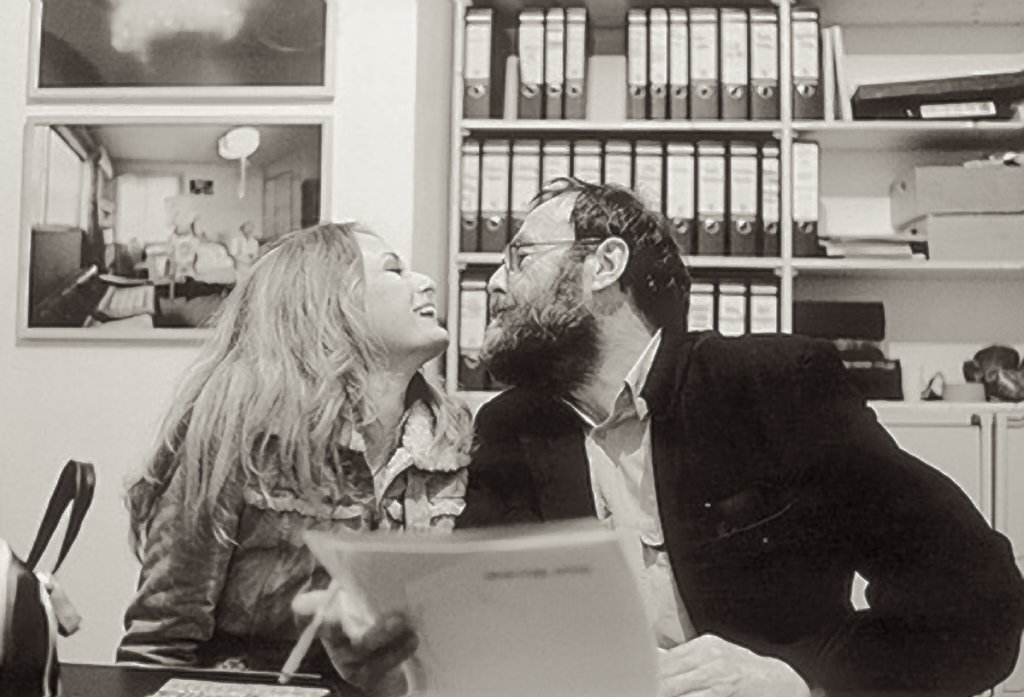
Una Szeeman and Harald Szeeman are together in his office. Courtesy of Una Szeeman.
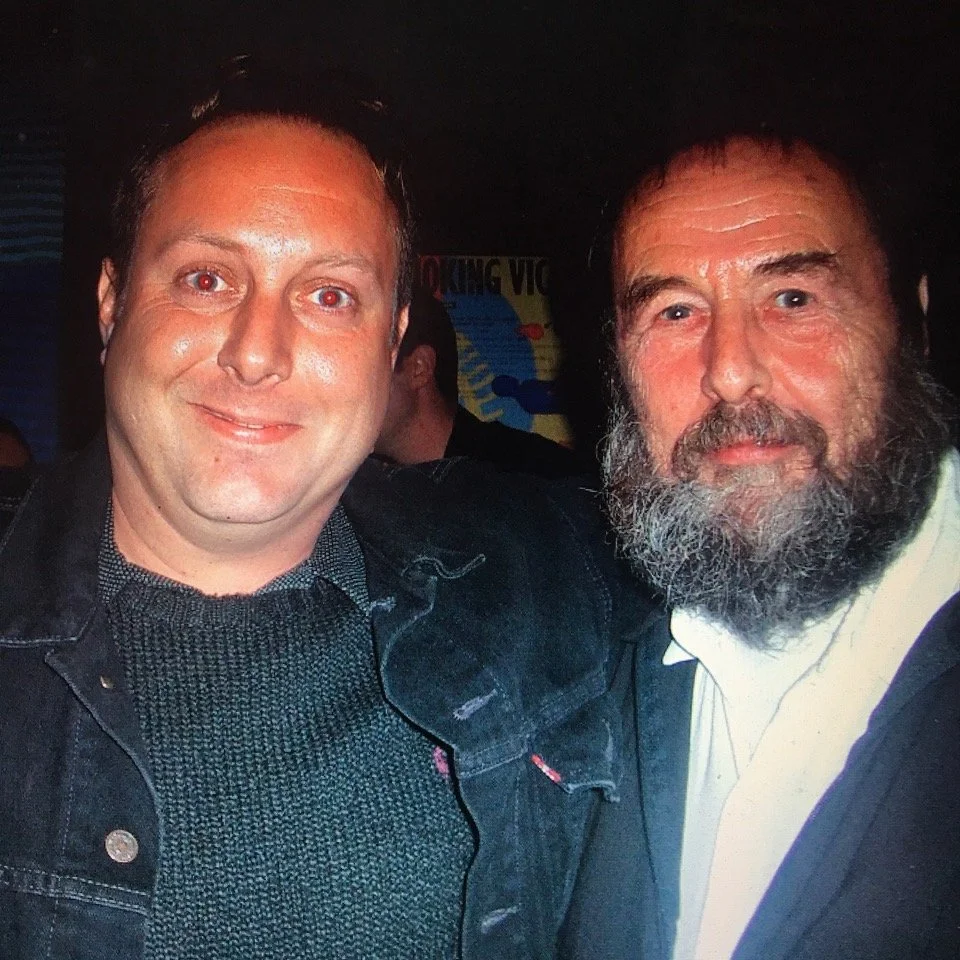
Henry Vincent and Harald Szeeman in Seville, Spain. Courtesy of Henry Vincent.
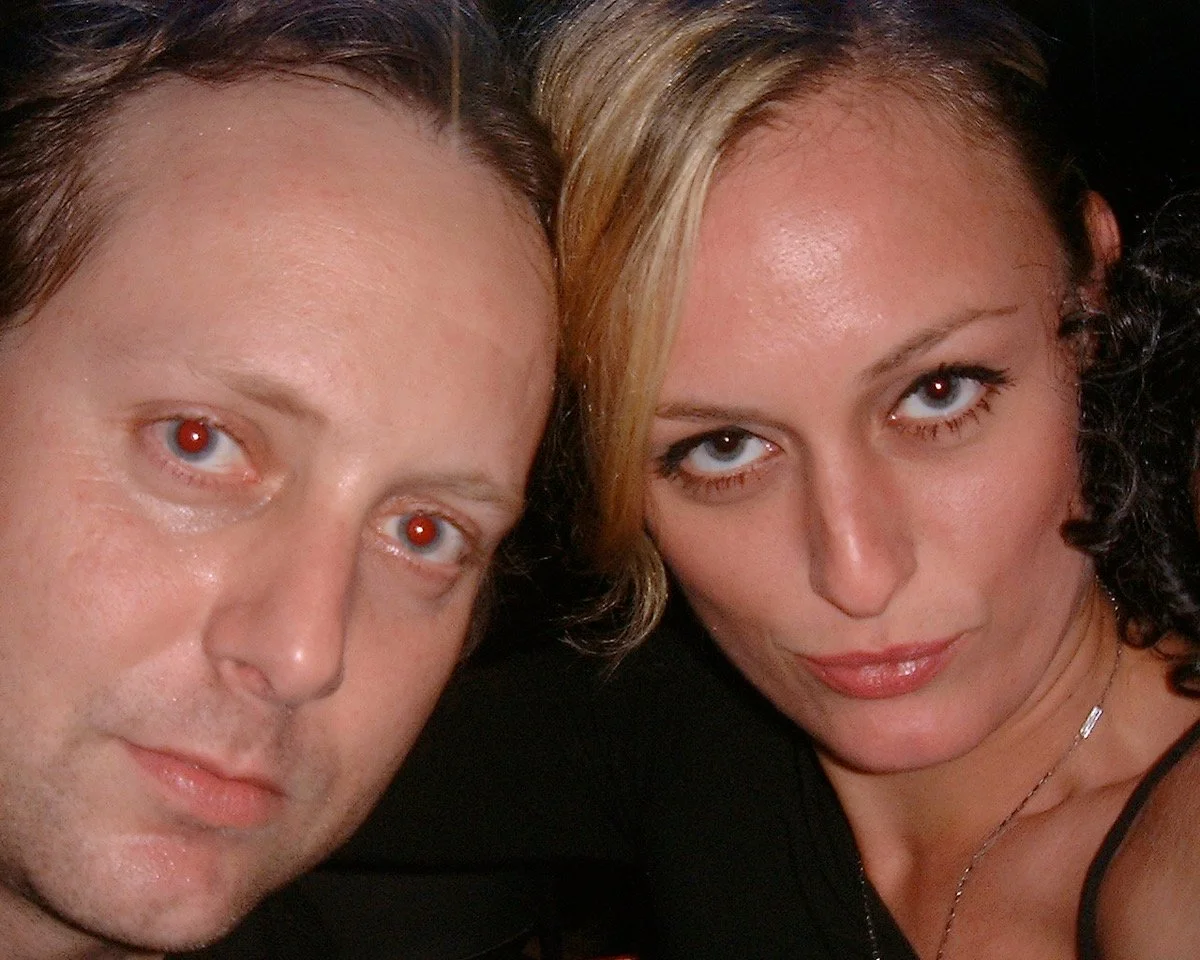
Henry Vincent and Una Szeeman together in Venice, Italy. Courtesy of Henry Vincent.
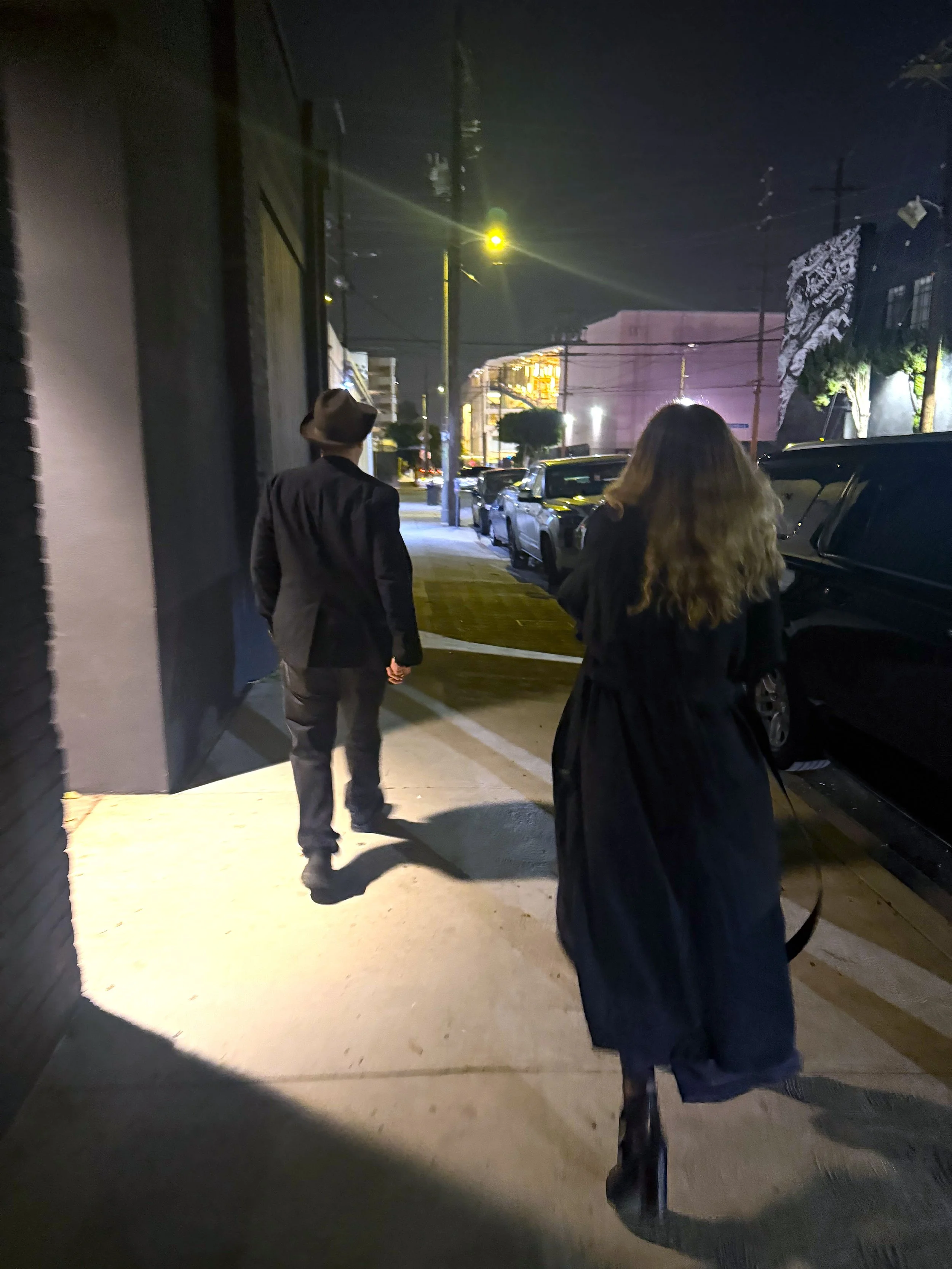
Henry Vincent and Una Szeeman walking in Los Angeles during Frieze Week 2026. Courtesy of Amadour.
“A Closer Look: Being Harald Szeeman,” As the largest single archival collection ever acquired by the Getty Research Institute, the Harald Szeemann Archive and Library is an essential and significant resource for the study of 20th century art and art history. Perhaps the most famous curator of the post-World War II era, Szeemann was an ardent advocate of modern and contemporary art, from Dada, surrealism, and futurism, to conceptualism, postminimalism, performance art, and new forms of installation and video art.
The Harald Szeemann Archive and Library contains a comprehensive record of Szeemann's correspondence with major artists, curators, and scholars from the late 1950s until his death in 2005, as well as significant collections of material from the early 20th century. It encompasses approximately 1500 linear feet of archival research files, containing letters, ephemera, prints, drawings, floor plans, date books, videotapes, and a complete photographic record documenting Szeemann's projects and the artists with whom he was associated.
Partial funding for cataloging the Harald Szeemann Papers has been provided by the National Endowment for the Humanities. Images courtesy of the Getty Research Institute, Los Angeles (2011.M.30) Copyright J. Paul Getty Trust Music by Andres Renteria, Yuk, and Azzurro from INTO INFINITY, a project of dublab + Creative Commons Video © 2013 J. Paul Getty Trust.
Interview
AMADOUR: Thank you both for joining me. I’m especially glad to bring you together for WHO IS SEEN at a moment when Pretensione Intenzione: Objects of Beauty and Bewilderment from the Archive of Harald Szeemann is on view at the Marciano Art Foundation in Los Angeles. Una, congratulations — it’s a beautifully realized exhibition.
Your father, Harald Szeemann, remains one of the defining figures in the history of exhibition-making. Since his death in 2005, his archive and legacy have only become more resonant, more public, and more essential to contemporary curatorial discourse. Earlier this year, the three of us were together in Los Angeles during Frieze week, and I remember a long and elegant conversation with collector Sybil Robson Orr and us turning to Live in Your Head: When Attitudes Become Form: Works, Concepts, Processes, Situations, Information at Kunsthalle Bern in 1969 and documenta 5 in Kassel in 1972. I wanted to begin there.
For readers who may know Harald’s name but not fully grasp the seismic importance of those exhibitions, how would you each describe them simply, before we get into how radically they shifted art history?
UNA SZEEMAN: When Attitudes Become Form is fascinating partly because so few people actually saw it, and yet it changed so much. I wasn’t born, of course, so I’m not a witness to it either. But what is extraordinary is that an exhibition experienced by relatively few people could so profoundly alter what it means to be a curator. One of the crucial things about that exhibition was that it had a sponsor — Philip Morris Europe — which, at the time, was still quite unusual for institutions. That support allowed Harald to travel throughout the United States and Europe, meeting artists whose work was less about producing discrete objects to hang on a wall and more about leaving traces, activating process, and rethinking what an artwork might be.
What happened in Bern in 1969 was groundbreaking because artists were not simply sending works to a venue. They were physically present, working together, thinking together, and testing how form could emerge through action, residue, and process. So much of what we now take for granted in contemporary art — process, temporality, gesture, site, transformation — was concentrated there in a new way. And after that exhibition, Harald became an independent curator. That role, as we understand it today, did not yet exist in any established sense. So the exhibition was revolutionary on several levels at once.
documenta 5 was equally transformative. documenta is already a major exhibition framework, but when Harald curated it, he redirected its logic. He was interested in what he called “individual mythologies” — positions animated by inner vision, psychic worlds, systems of thought, not simply by conventionally defined art objects. He included figures who did not fit neatly into the category of “artist” at all. That, too, was profound: the exhibition became a space for ways of thinking, believing, imagining, and projecting the self into the world.
AMADOUR: What’s striking to me now is how much people take certain conditions for granted: sponsorship, the mobility of curators, the idea of exhibition-making as authorship. Today, the language of curating has become so diffuse that everything is “curated.” A shoe store is curated. A closet is curated.
UNA SZEEMAN: Exactly. Now you curate shoe shops.
HENRY VINCENT: Curators are artists now, right?
AMADOUR: The word has been stretched to the point of absurdity.
HENRY VINCENT: I remember when there were decorators. People arranged fabric, furniture, interiors — they were decorators. Now they’re designers. The art world does this constantly. It takes meaningful terms and dilutes them, or inflates them, until they become a kind of mediocrity dressed up as importance.
UNA SZEEMAN: It’s airy elevation.
HENRY VINCENT: Exactly — fake elevation.

Pretenzione Intenzione (Fabbrica Rosa, 2015). Photography by Bohdan Stehlik.

Pretenzione Intenzione (Fabbrica Rosa, 2015). Photography by Bohdan Stehlik.

Pretenzione Intenzione (Fabbrica Rosa, 2015). Photography by Bohdan Stehlik.
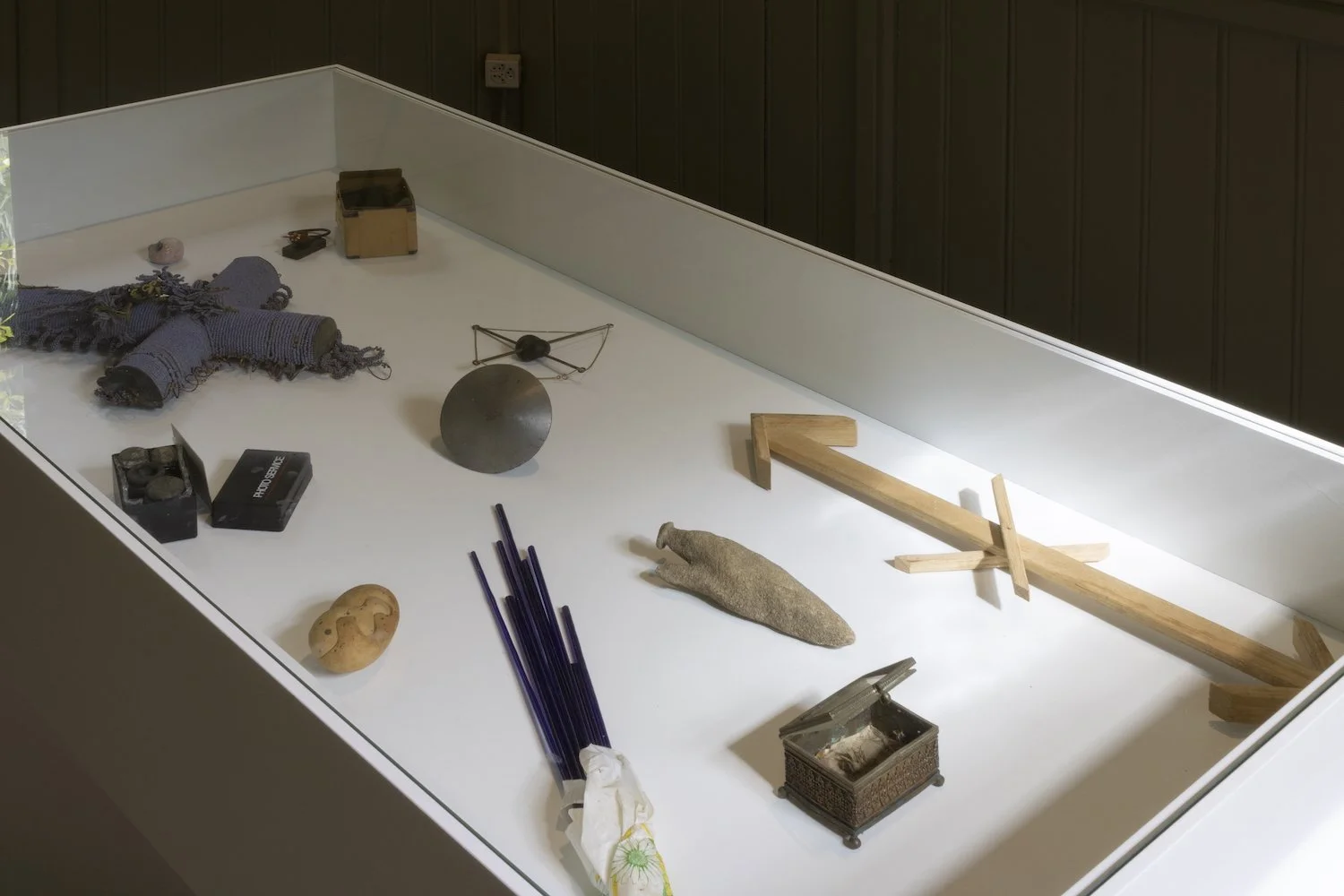
Pretenzione Intenzione (Fabbrica Rosa, 2015). Photography by Bohdan Stehlik.
AMADOUR: What I find compelling in Harald’s work is that his exhibitions never feel merely thematic. Installation itself becomes part of the argument. The exhibition becomes spatial thinking, not just a category with objects placed inside it. There is also something deeply caring in the way he staged work — almost a model of the curator as caretaker. Henry, when you first met Harald, what did you immediately understand about him?
HENRY VINCENT: I met Harald in New York, through the Spanish exhibition, El real viaje Real / The Real Royal Trip, at MOMA PS1 in 2003. He then included me in the Seville Biennial [Harald Szeemann curated the first edition of the International Biennial of Contemporary Art of Seville (BIACS) in 2004. The exhibition was titled The Joy of My Dreams(Spanish: La alegría de mis sueños). This was his last exhibition before his death in 2005]. What struck me immediately was that he was oriented toward artists first — not toward collectors, not toward museum directors, not toward whatever insulated hierarchy tends to form around the art world. He was interested in being with artists, talking with artists, understanding artists. That was unusual and honestly refreshing. So often those higher circles create an enclosed social system where the artists are almost treated like decorative extensions of somebody else’s power. Harald was the opposite. He made it clear that the artists were the center and everything else was peripheral. If there were no artists, the whole structure wouldn’t exist.
And then there was the warmth. Harald and Ingeborg were loving people. That’s not always what one associates with the art world, which can be fanatically snobbish in such a strange way. Harald had magnetism because he had conviction, but he also had humanity. For an artist, that was enormously powerful.
AMADOUR: Una, how did Harald choose artists? What was he seeking from them — or in them?
UNA SZEEMAN: Henry is right: he was profoundly human, generous, and deeply curious about what artists did. For every exhibition, he wanted to create a world — a kind of poetry in space. And to do that, he traveled. He went to artists wherever they were, no matter how remote. If there was one artist in some distant place in Canada whose work mattered to him, he would go. That level of seriousness — that willingness to physically enter the artist’s world, to see the work where it lived — is much rarer now. But for him, it was fundamental. The work itself had to remain central.
He really embodied the idea of curare — to care. He took care of artists. That care was not sentimental; it was rigorous, sustained, and relational. He worked with some artists repeatedly, but he was also always open to new positions. And something worth saying clearly is that he is often unfairly reduced in retrospect, especially in discussions about gender. There is a persistent simplification that he somehow only showed men, which is simply not accurate. By the 1999 Venice Art Biennale [La Biennale di Venezia : 48. Esposizione internazionale d'arte : dAPERTutto = APERTO over ALL = APERTO par TOUT = APERTO über ALL was curated by Harald Szeemann. He had already included more women than men, and in subsequent group exhibitions that tendency continued. His own position was always that it was not about fulfilling a numerical logic but about intensity. He was looking for intensity in the work. If more women were present, it was because that intensity was there. That was the criterion.
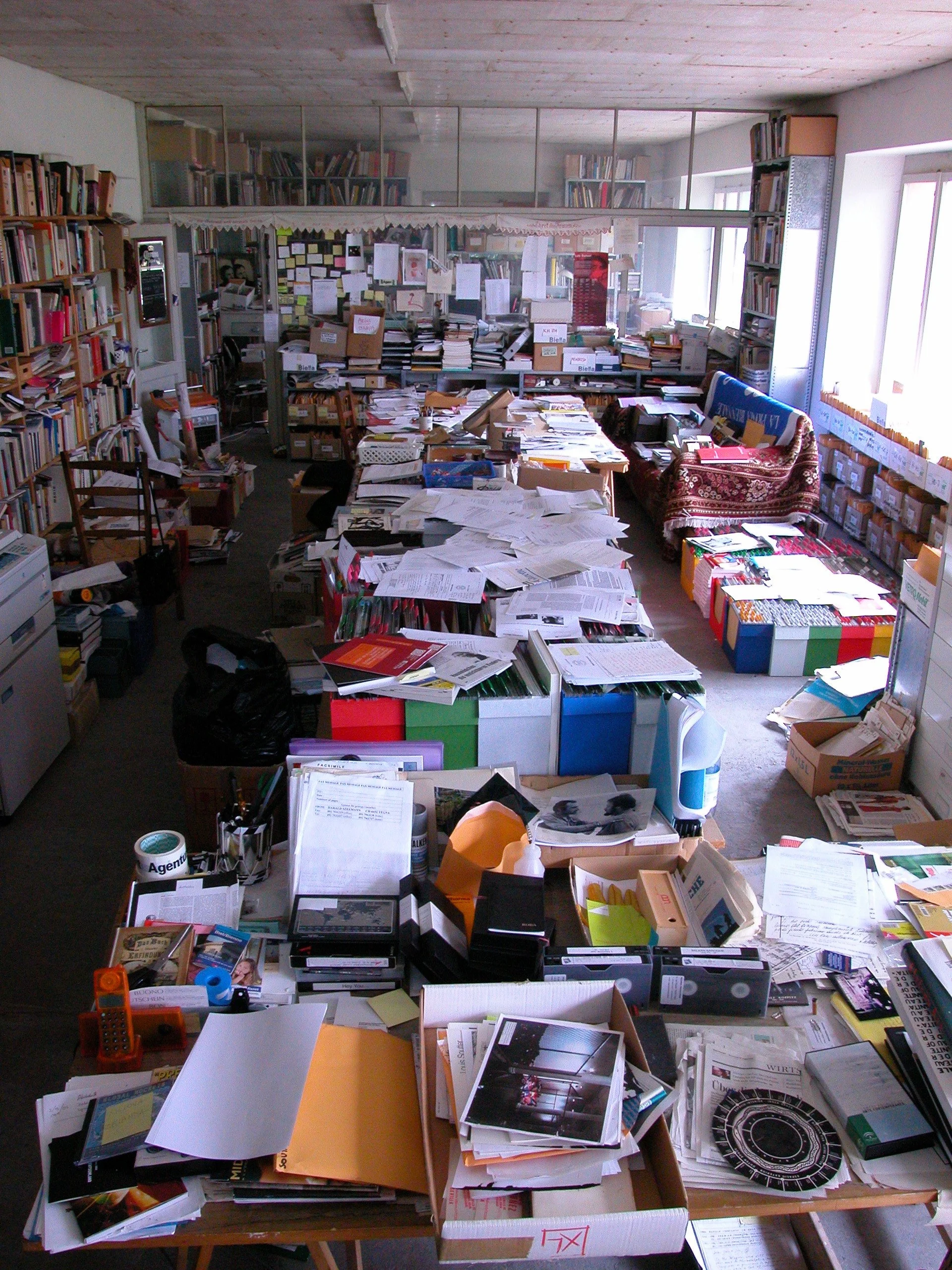
Fabbrica Rosa. Photography by Simon Chaput.
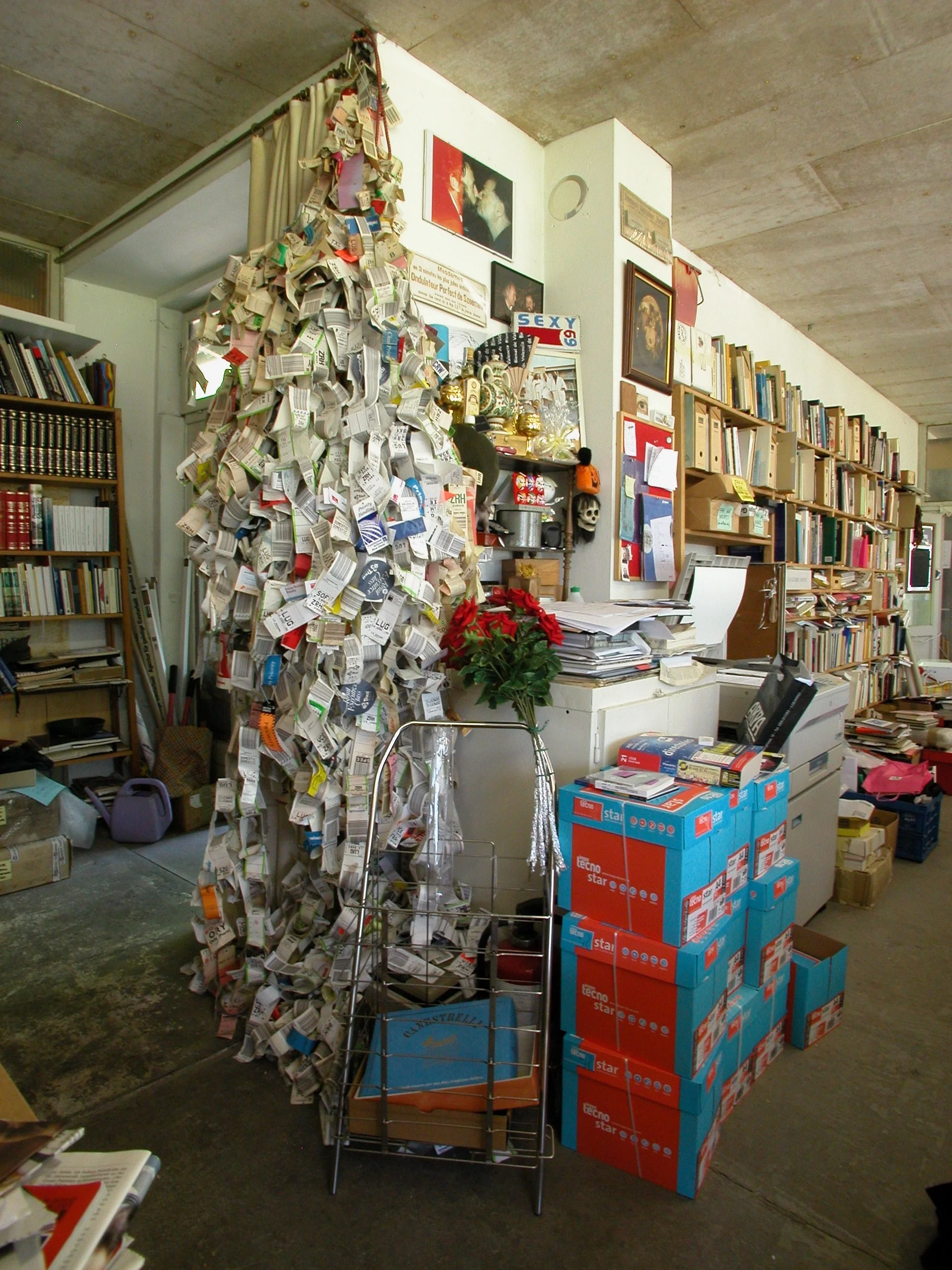
Fabbrica Rosa. Photography by Simon Chaput.
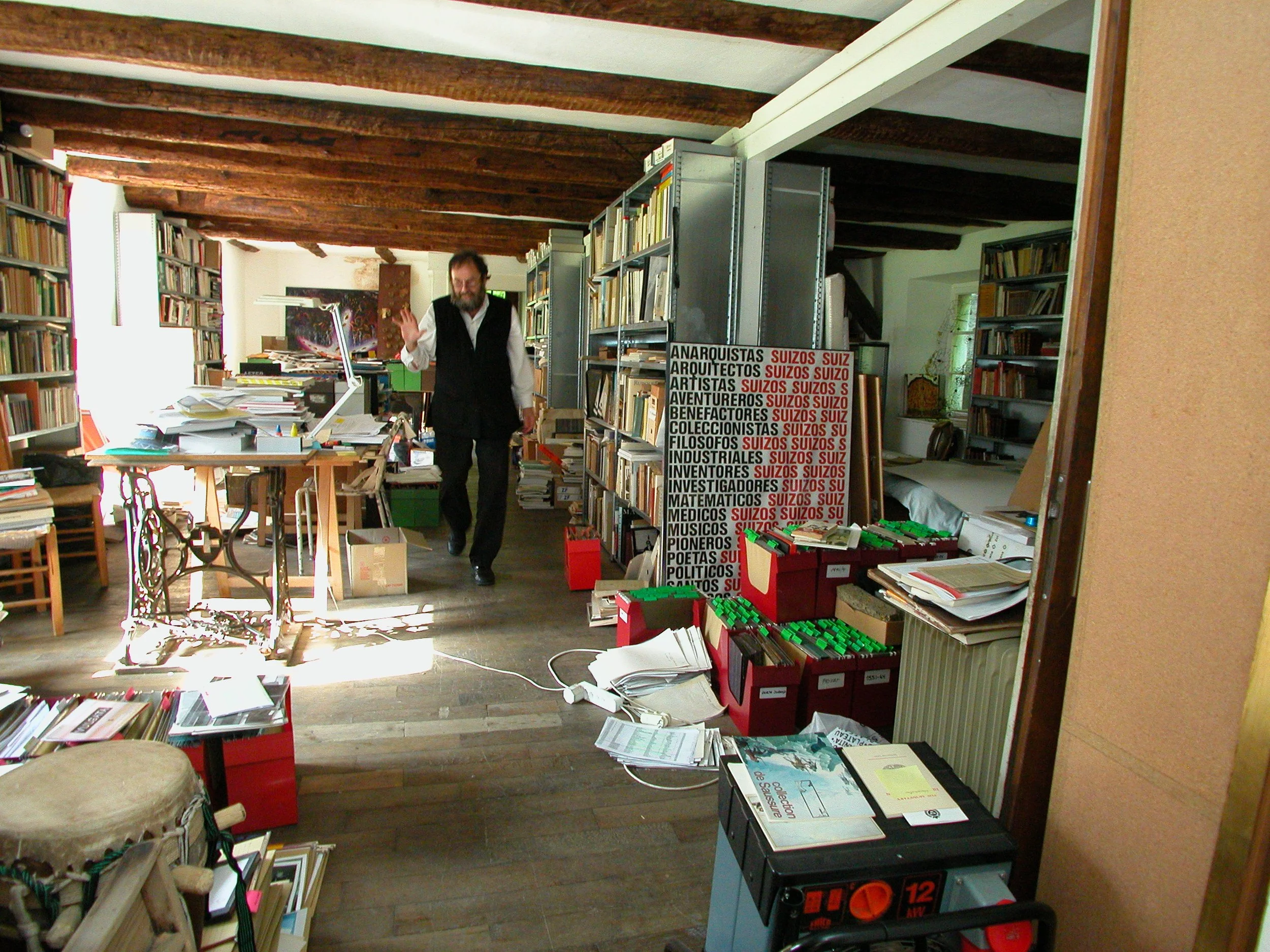
Harald Szeeman at Fabbrica Rosa. Photography by Simon Chaput.
AMADOUR: I’m interested, too, in the other side of Harald — the obsessive collector, the constructor of psychic worlds through objects. In the Marciano exhibition, one feels how much the archive is not merely archival but almost cosmological. Why these objects? Why this framing?
UNA SZEEMAN: My father described all of his exhibitions as chapters of the "Museum of Obsessions" [Founded in 1973 as a "fictive institution" after Szeemann’s intense experience with documenta 5, it represented his commitment to exploring art beyond traditional gallery constraints]. But the most physical manifestation of that idea was really his archive in Ticino, in the Fabbrica Rosa in Maggia — the so-called Pink Factory. The archive was extraordinary because he was thinking archivally from the very beginning of his career. Whenever he wrote a letter, he kept a copy. That seems simple now, in the era of email, but at the time, it was remarkable. It means that today there is an unusually complete record of his exchanges, his decisions, his thoughts, his networks.
The archive was also his “agency for spiritual guest work,” his own fictional company, and within that space, he created clusters of objects he called altars. These were groupings of artworks and found things, fragments and images, all brought together as one charged visual thought. When people came to work with him, he would show them these altars and say, in effect: This is how I make exhibitions. That is such an important key to understanding him. The exhibition was never a neutral display mechanism. It was a constellation. It was a psychic composition.
When the Getty Research Institute acquired the archive in 2011 [The Getty Research Institute (GRI) acquired Szeemann’s extensive archive, leading to the Harald Szeemann: Museum of Obsessions exhibition (2018-2019), which traveled to Bern, Düsseldorf, and Turin] and we began dismantling those clusters, we encountered many objects whose origin or function we no longer knew. That uncertainty was productive. Together with Bohdan Stehlik, Michele Robecchi, Noah Stolz, and Riccardo Lisi, we decided to make an exhibition in the empty factory as a way of saying goodbye to the space and, at the same time, allowing those traces to take on a new life. Bohdan and I selected objects that hovered between artwork and detritus, between relic and enigma. We did not want to historicize them too narrowly or pin them back down to a single meaning they may once have had for Harald. We wanted to let them remain open — speculative, unstable, alive. That, for me, is also a profoundly surrealist gesture: allowing an object to be more than one thing at once.
AMADOUR: That openness really comes through. I’ve spent time in the Getty Research Institute looking through material related to your father, and what struck me was the sheer volume — not just papers, but atmospheres. Photographs of the archive make it almost unbelievable in scale. There’s an image of James Ensor in his studio at the organ, for example, that feels intimate and uncanny at once. And in the exhibition, there are objects like that beaded cross, things that seem to carry force even when their original context remains opaque.
I also wanted to talk about Monte Verità and the film you made, Montewood Hollyverità (2003). Henry, you were in that film. What did the project feel like to you?
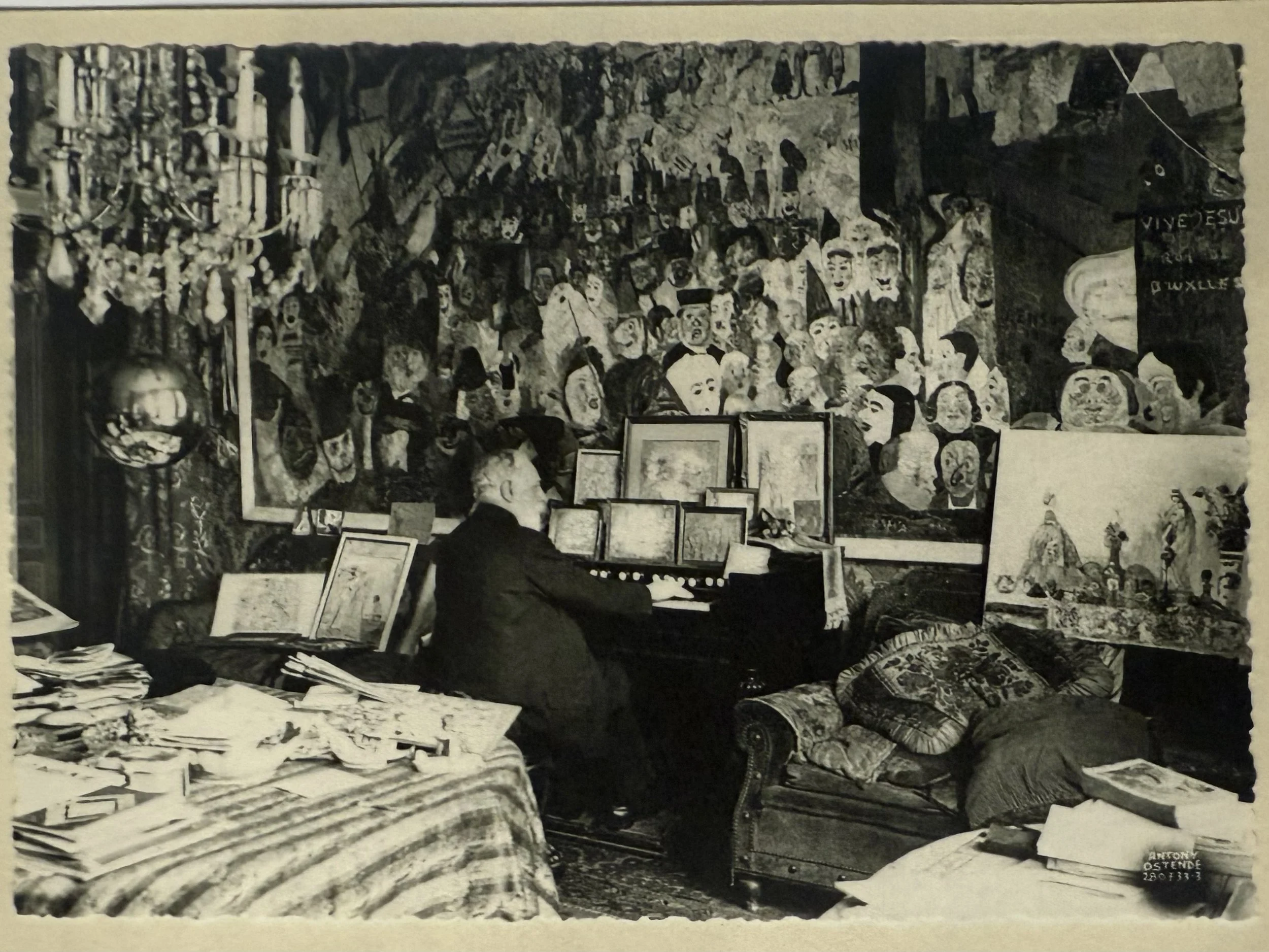
James Ensor nel suo studio di Ostenda/ In his studio in Ostende, foto di/Photography by A. d'Ypres
HENRY VINCENT: Una was in Los Angeles for the MAK Center residency, and what I felt she was doing was creating a bridge between the Monte Verità colony — that utopian early-twentieth-century experiment — and Los Angeles. It was a way of mixing that European proto-avant-garde communal energy with Hollywood, with California, with artists she knew here. It wasn’t nostalgic. It was more like a translation. And I thought that was incredibly compelling. It also reflected something of Harald’s own spirit: bringing artists together around a shared proposition and letting the work emerge through relation. I felt lucky to be part of it.
AMADOUR: Una, how did you conceive that film?
UNA SZEEMAN: Monte Verità is a deeply layered story. It brought together people from very different backgrounds who were trying to create a new way of living — intellectually, spiritually, sexually, artistically. In a sense, they were proto-hippies. The commune was founded in 1901, and so many of the ideas we associate with later Californian counterculture were already there: sun worship, vegetarianism, dance, sexual liberation, women refusing constrictive clothing, and new relations between body and mind. Those ideas still feel relevant to me.
At the time, I wanted contemporary artists to interpret those visions in their own voices. So I made Montewood Hollyverità, combining the “Mountain of Truth” with Hollywood. Most of my performers were not actors but artists, which mattered to me. I was interested in how utopia might be translated from one community into another, from one historical moment into another. Henry Vincent played Hugo Ball. Jason Rhoades played Rudolf von Laban, the great innovator of modern dance who was deeply connected to Monte Verità. Paul McCarthy played Elisar von Kupffer, that extraordinary Baltic-born philosopher and poet who envisioned paradise as a world of beauty, youth, and erotic freedom. Udo Kier played the anarchist Erich Mühsam. And the founders of Monte Verità, Ida Hofmann and Henri Oedenkoven, were played by Mr. and Mrs. Olympia [professional bodybuilders Tommi Thorvildsen and Pauliina Talus], which introduced a slight humor, even a miscasting, into the film.
At the beginning of the residency, I was also discovering Kenneth Anger in a deeper way because there were so many screenings and a retrospective atmosphere around Los Angeles at the time [In 2003, avant-garde filmmaker Kenneth Anger was active in Los Angeles, participating in a Getty Research Institute oral history series on October 30–31 and November 8, which focused on West Coast Beat film. He also received a lifetime achievement award in experimental film and was recognized by the Los Angeles Film Critics Association]. I wanted some of that aesthetic charge in the film. And I have always loved John Waters, so there was also this idea of underground Hollywood, camp, artifice, subculture, and ecstatic style entering the structure of the work.
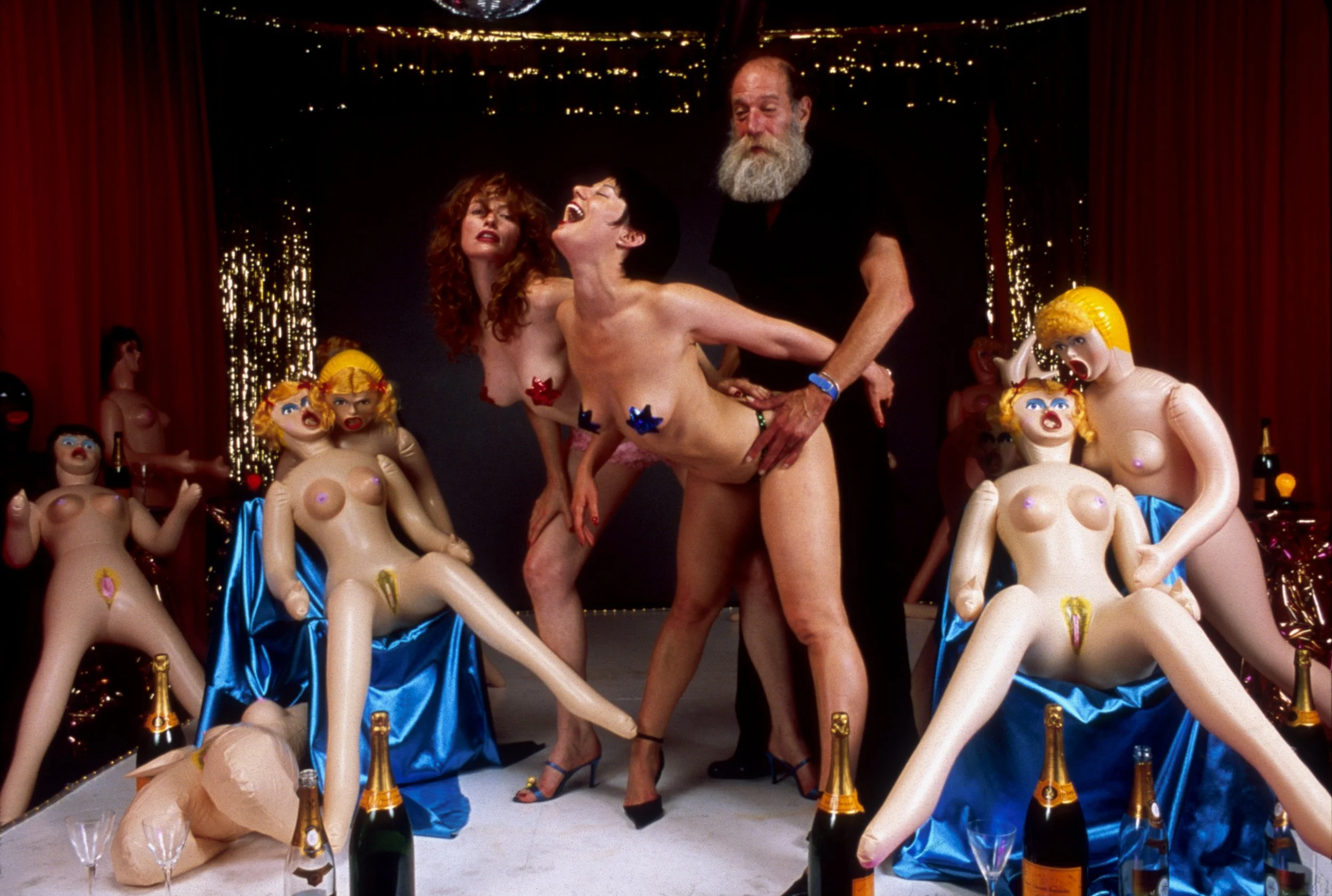
LLawrence Weiner as Baron Max von Emden with the Starlets (Kristin Ligocki and Andrea Orme) and rubber dolls. Still from MONTEWOOD HOLLYVERITA ( Video 2003). Photography by Simon Chaput. Courtesy of Una Szeeman.
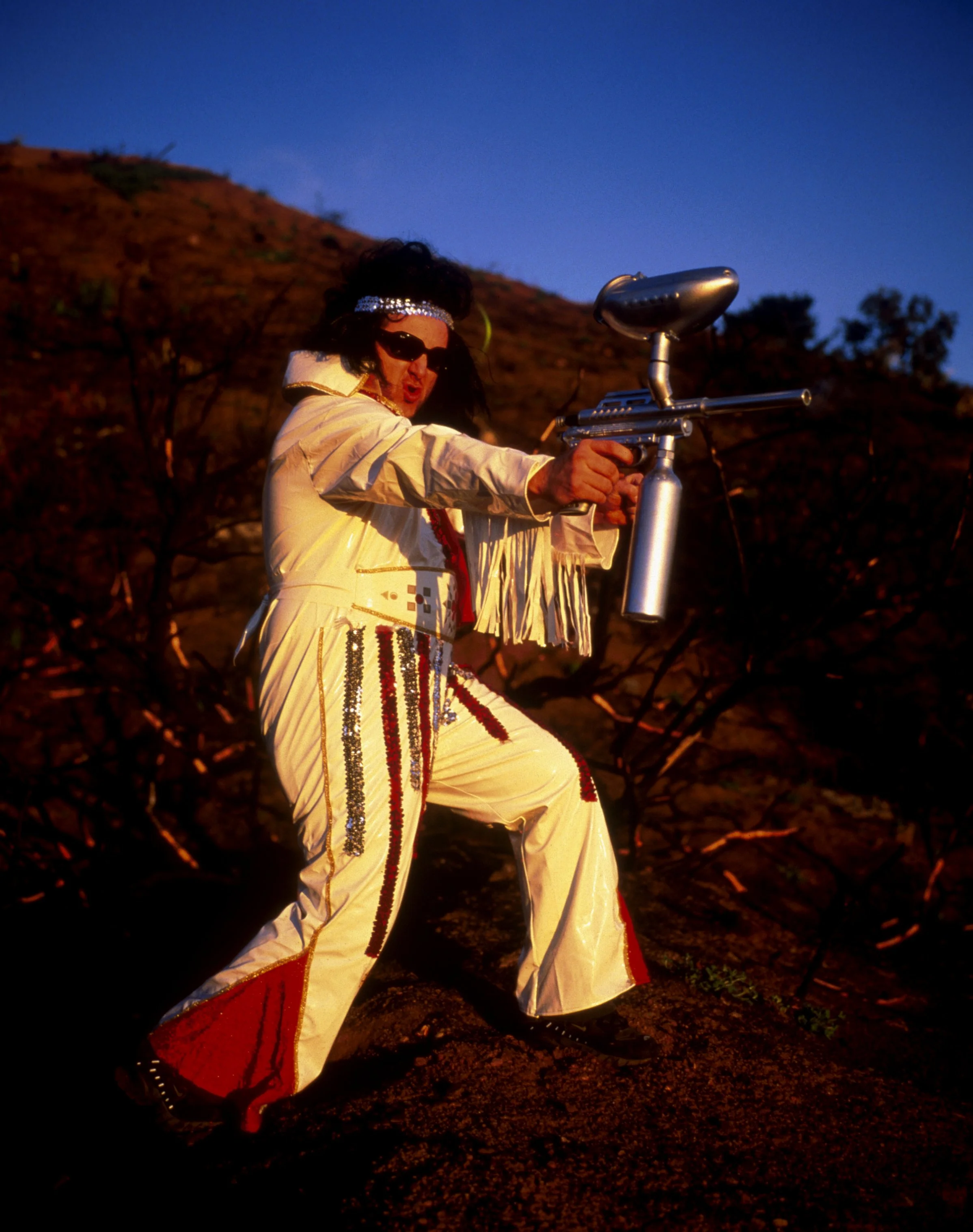
Henry Vincent as Hugo Ball. Still from MONTEWOOD HOLLYVERITA ( Video 2003). Photography by Simon Chaput. Courtesy of Una Szeeman

Mr. and Ms. Olympia (Tommi Thorvildsen and Pauliina Talus) as Henri Oedenkoven and Ida Hofmann. Still from MONTEWOOD HOLLYVERITA ( Video 2003). Photography by Simon Chaput. Courtesy of Una Szeeman
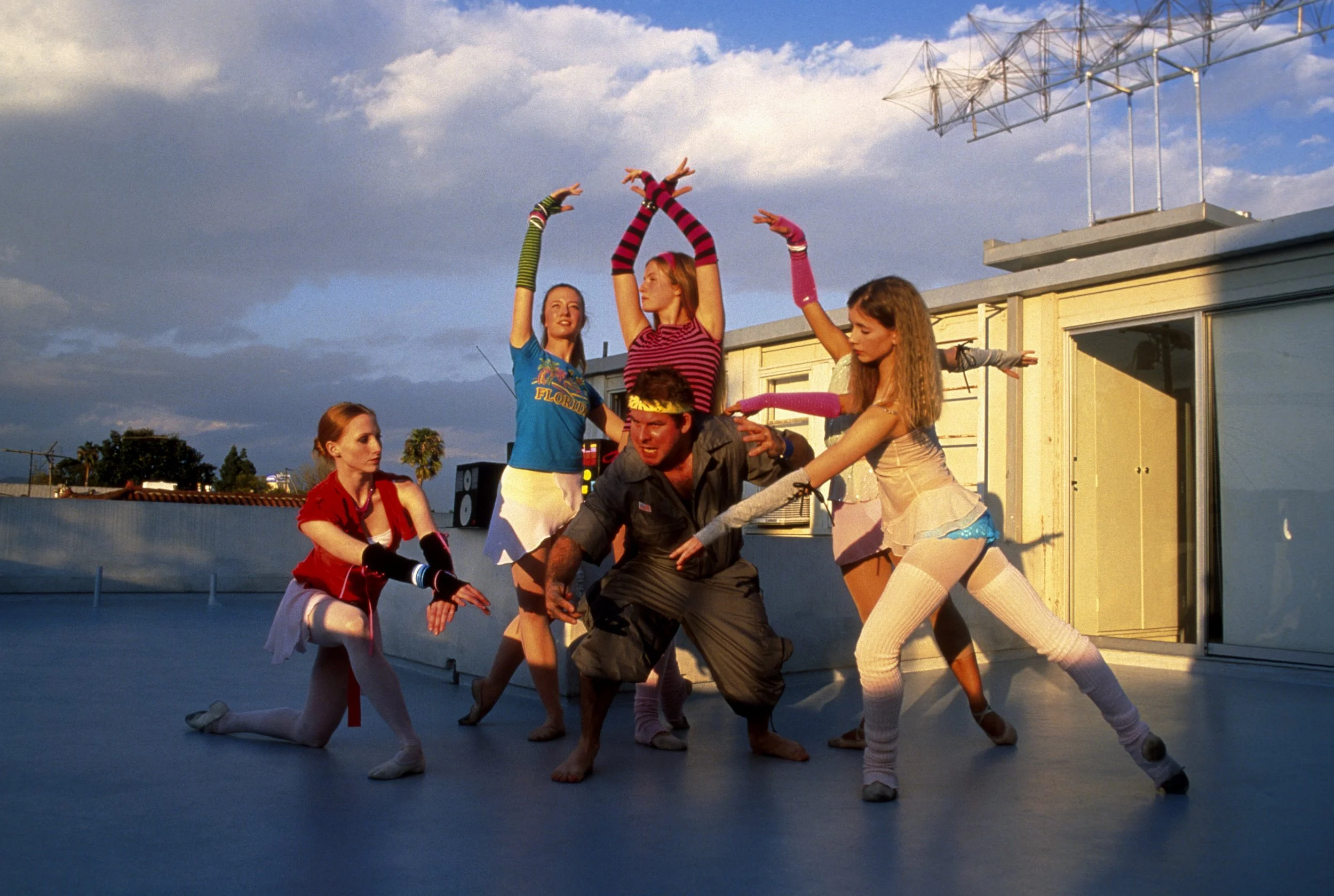
Jason Rhoades as Rudolph von Laban with ballet dancers. Still from MONTEWOOD HOLLYVERITA ( Video 2003). Photography by Simon Chaput. Courtesy of Una Szeeman
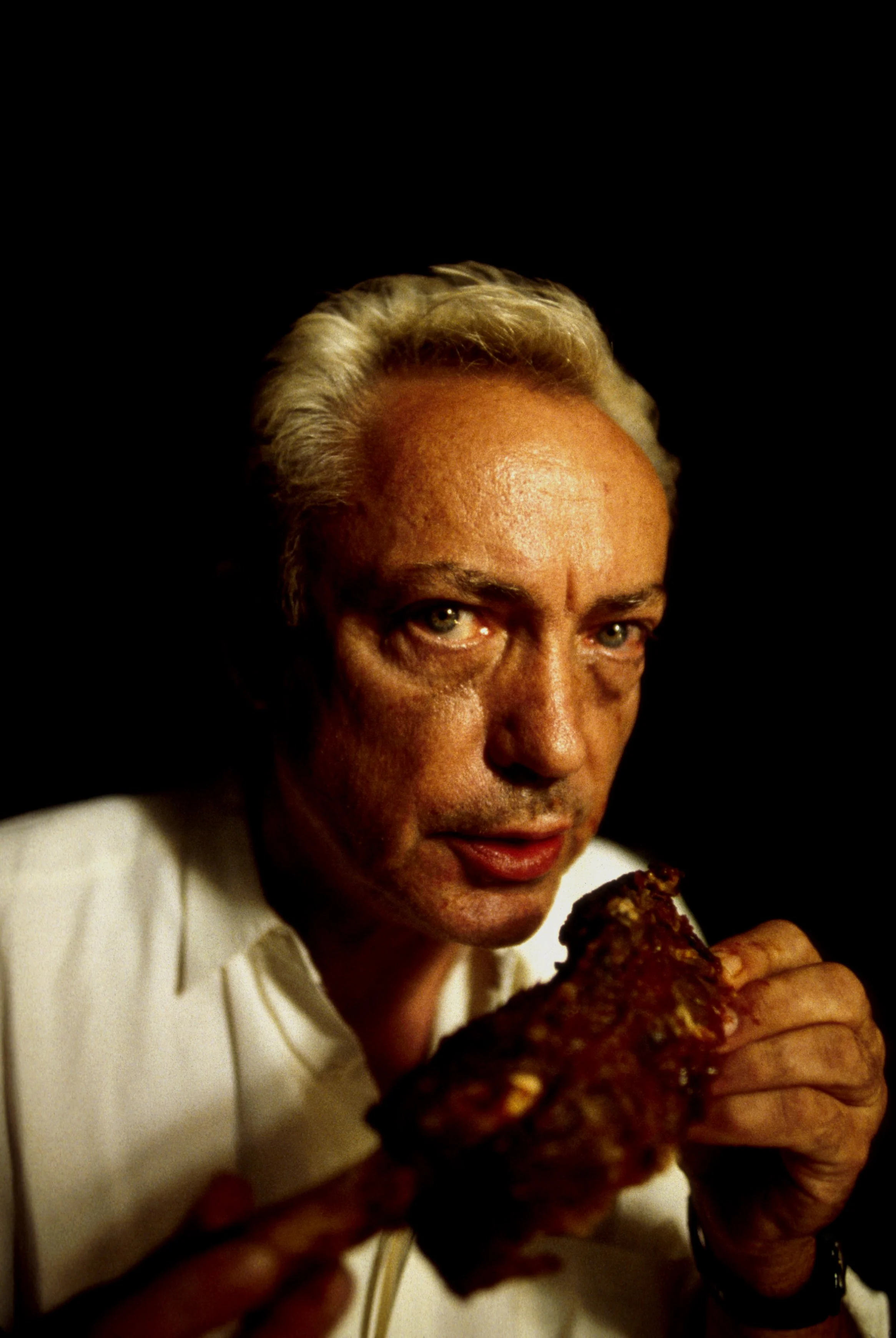
Udo Kier as Erich Mühsam. Still from MONTEWOOD HOLLYVERITA ( Video 2003). Photography by Simon Chaput. Courtesy of Una Szeeman
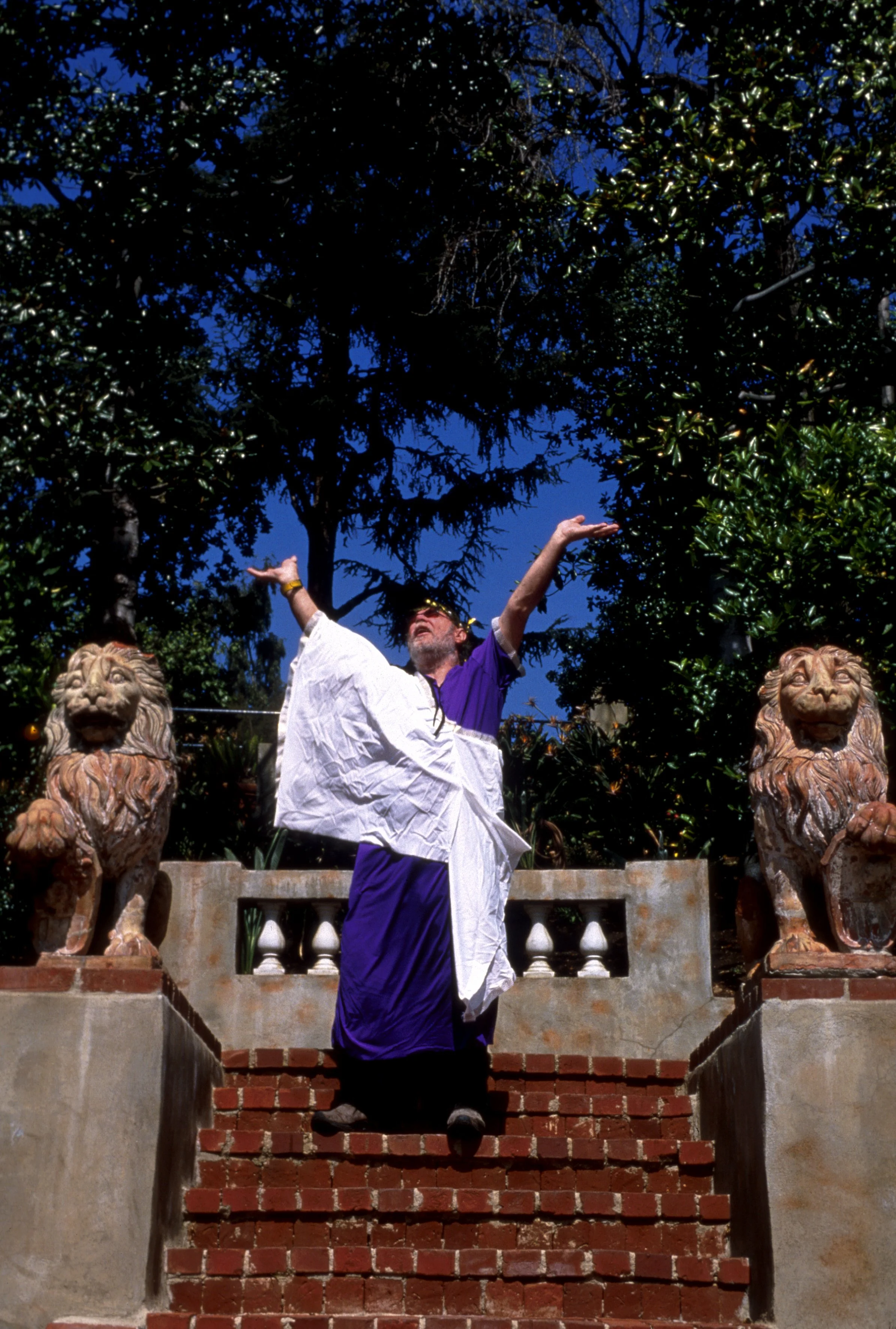
Paul McCarthy as Elisar von Kupffer. Still from MONTEWOOD HOLLYVERITA ( Video 2003). Photography by Simon Chaput. Courtesy of Una Szeeman
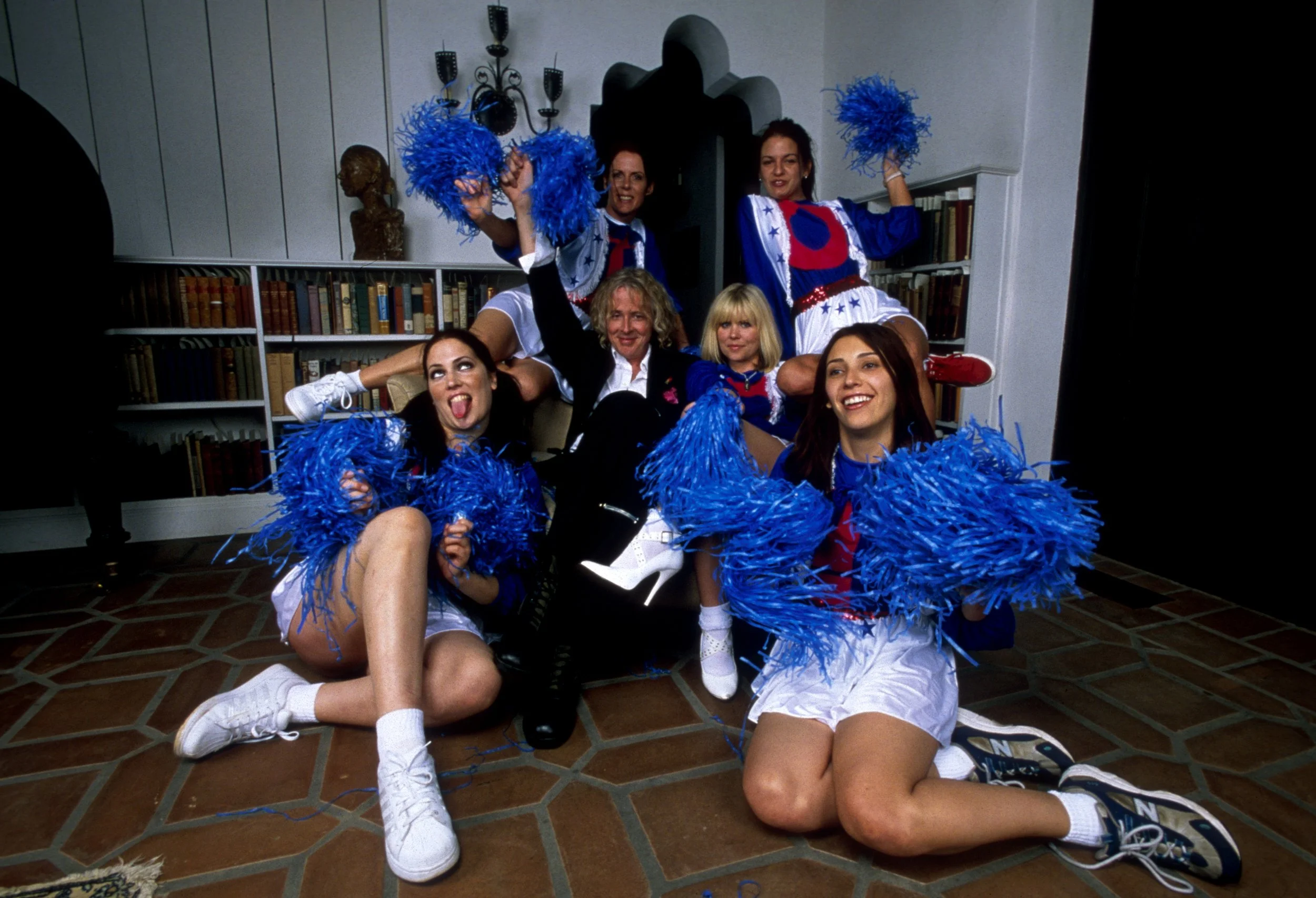
Paul Cantelon as Otto Gross with the five cheerleaders (Marina Carrero as Cheerleader '!’; Alexis Cohen as Cheerleader 'O'; Kate Porter as Cheerleader 'T'; Kerri Randles as Cheerleader 'O'; and Natalie Wilkie Cheerleader 'T’. Still from MONTEWOOD HOLLYVERITA ( Video 2003). Photography by Simon Chaput. Courtesy of Una Szeeman
HENRY VINCENT: I actually forgot to give you that Kenneth Anger jacket.
UNA SZEEMAN: Oh?
HENRY VINCENT: It says “Lucifer” on the back. Black sparkles. It was made by the foundation. My friend runs it now.
UNA SZEEMAN: Then yes, absolutely — I want it.
AMADOUR: The glitter one, obviously.
UNA SZEEMAN: Exactly.
AMADOUR: That feels very correct, somehow.
UNA SZEEMAN: Completely.
AMADOUR: Una, since you mentioned Jason Rhoades, I wanted to stay there for a moment. Henry and Jason have a significant collaborative history throughout the 90s and early 2000s, working on several projects together. What did Jason represent in that Los Angeles moment, and in your own entry into that community?
UNA SZEEMAN: Jason was extraordinarily generous. Open, curious, collaborative — and still deeply missed. He and Henry made things possible for other people. That mattered. In the film, there were artists I did not know personally, including Paul McCarthy and Lawrence Weiner. Through them, doors opened. But more than that, Jason embodied a kind of artistic sociality that felt very alive in Los Angeles at that time. People helped one another. Artists made introductions. They showed up. They gave their energy. My film had no budget to speak of, and yet it happened because people believed in one another enough to participate. That generosity is part of what the film records, even beyond its stated subject.
HENRY VINCENT: That world has thinned out. I think galleries increasingly push artists into isolated narratives — carefully managed identities, separate lanes, branded distinctions. There used to be much more genuine community. Even in Los Angeles in the nineties, when the art world here still felt young, there was a more direct human texture to it. People had to actually meet, spend time together, talk, go to small dinners, small parties, studios, bars. There wasn’t social media mediating every relationship. Now, so much contact is flattened through digital self-construction. It creates visibility, yes, but also distance. And something essential gets lost when community becomes primarily virtual.
AMADOUR: That may be one of the deepest through-lines here — not only in Harald’s exhibitions, but in the archive, in Monte Verità, in the Los Angeles you both describe. A belief that art happens not just through objects, but through charged constellations of people, ideas, energies, affinities, and acts of care.
Harald’s legacy, then, is not only that he changed exhibitions. It is that he insisted exhibitions could be alive, unstable, poetic, embodied, and led by artists rather than systems. And perhaps that is why his thinking continues to feel so contemporary: because so much of it still has not been fully caught up to.
Tell me about that party in Venice during the Biennale. Was it a celebration of Harald Szeemann’s life? [Harald Szeemann received a posthumous Special Golden Lion at the 2005 Venice Biennale in recognition of his transformative role in reshaping the exhibition through landmark editions like the 1999 and 2001 Biennales, which expanded the show’s global scope and curatorial ambition.] What do you both remember?
UNA SZEEMANN: I have to admit, I cannot take any credit for the party. It was really Henry and everybody renting that amazing palazzo who organized everything. But I remember very clearly that it was also in celebration of Pilar Albarracín, who is a dear friend of ours and a great artist. What I remember most vividly is that she was wearing this beautiful white dress, and she was so exhausted that she slept through the entire party.
HENRY VINCENT: I rented a palazzo from a friend of mine, Prince Uscoli, in Venice, right by the Accademia Bridge on the Grand Canal. It appears to have been Casa de Uscoli, also known as Palazzo Foscolo. Harald had died the year before, so we decided to have a party celebrating the Biennale and his life. We invited all these people from the Biennale — the Cuban delegation, the Argentinian delegation, the Mexico delegation — and Una arrived with the Golden Lion and placed it on the front table at the entrance.
UNA SZEEMANN: The party itself was really wild. We were dancing wildly, there was so much music and drink, and everybody was extremely happy. Pilar, meanwhile, was sleeping like a princess herself on the sofa through the whole thing. Then, all of a sudden, the police arrived, and that was the beginning of a whole other story for poor Henry, who ended up taking the blame for the party.
HENRY VINCENT: There was a princess next door who owned the neighboring palazzo, and she kept complaining that we were too loud. She complained and complained, and finally she called the police. The party had gotten so big that the vaporettos on the Grand Canal were clogging up around our palazzo, so when the police came, they were already irritated because they could barely get to the place. Then they came in and wanted to arrest me for the noise, especially because the Cubans had pulled out their drums and were playing Cuban music, and we had around 150 people there.
AMADOUR: And where exactly was the palazzo?
HENRY VINCENT: Right next to the Accademia Bridge. I also had housekeepers there, and they were going crazy, telling me to stop because the lady next door was so sensitive. But I didn’t listen. I just kept raging on.
UNA SZEEMANN: I remember trying to translate for the Carabinieri why they were there. Everybody else who had helped organize the party, Henry’s friends, disappeared. So it was Henry and me in the kitchen with the Carabinieri trying to figure out how to keep the situation from becoming even worse. They were not very friendly.
HENRY VINCENT: They were about to arrest me, but Una talked them out of it in Italian. They gave me a ticket ordering me to appear at the police station within two days, and I never showed up. Then I ended up with an Interpol warrant and was banned from Italy for two years because I did not pay the ticket and did not appear for the court date.
UNA SZEEMANN: He was telling us about Interpol afterward, which was really wild.
HENRY VINCENT: I still have the ticket.
UNA SZEEMANN: You should frame that.
HENRY VINCENT: On another note, Una, I wanted to ask you about the Emerald Tablets of Thoth. I kept thinking about them in relation to your work, and also in relation to that black flag of your father’s in the Los Angeles exhibition. Even though the show is rooted in Harald’s archive and these enigmatic objects, I found myself reading the flag almost through your own sensibility — through this mystical register that runs through your practice, where objects seem to arrive charged with meanings we cannot fully name.
The emerald tablet is one of those primordial, half-legendary forms: something said to predate Egypt, something bound up with immortality, transmutation, and the dream of making gold from nothing. It contains, at least in myth, the secret of endless life and absolute knowledge. I’ve thought about that emerald idea in my own work for a long time, so I’m curious how it resonates for you. What does that figure — the emerald tablet, or emerald stone — open up in your thinking?
UNA SZEEMAN: What you’re saying is very beautiful. The project around these objects is, for me, fundamentally an artistic project; it is not a memorial to Harald. It is deeply connected to my own practice, which is anchored in a surrealist way of thinking and is strongly driven by the unconscious — by interior realms, by the possibility of moving through psychic and spiritual space while still inhabiting a single body.
So yes, the Emerald Tablet is a beautiful metaphor. It speaks to the power of the mind, to fantasy, to projection — to the way a thought can charge an object and make it exceed its material condition. That is very much present in this body of work. Every work of art, I think, wants an aura. It wants to become more than matter. And the emerald tablet is precisely that: a fantasy of something beyond matter, beyond use, beyond the literal. It becomes a projection of eternal life, of hidden knowledge, of beauty, of mystery. In that sense, it is profoundly moving to me.
HENRY VINCENT: And are you familiar with The Book of Aquarius: Alchemy and the Philosophers' Stone?
UNA SZEEMAN: Yes, I know it.
HENRY VINCENT: I’ve always found that fascinating too — almost as an artwork in itself. There was this claim that the stone had been translated, and then this website appeared, laying out a method of alchemy, almost a manual for transforming essence into immortality. Then it vanished. It was scrubbed, removed, and almost mythologized by its own disappearance. That interested me as much as the content: the way knowledge becomes legend the moment it slips out of reach. So I’m curious how you think about carrying something ancient into a contemporary mythic field. Does that matter to you in your work?
UNA SZEEMAN: Very much, because I do not believe in linear time. I think time swings through every moment with us. Memory is present. Energies are present. In that sense, mythological forms are never truly past; they remain available to us, and can always be translated, reactivated, and developed again in the present.
Everything remains here in some form. That is true of stories, of matter, of people, of ghosts. This is fundamental to my practice. I work in relation to many mythological figures, and of course, I make my own alchemy with them. The materials I use — hair, leather, copper — are all conductors. They already carry stories inside them. So I am always building a narrative with substances that arrive with memory, charge, and a prior life already embedded within them.

Pretenzione Intenzione (Fabbrica Rosa, 2015). Photography by Bohdan Stehlik.
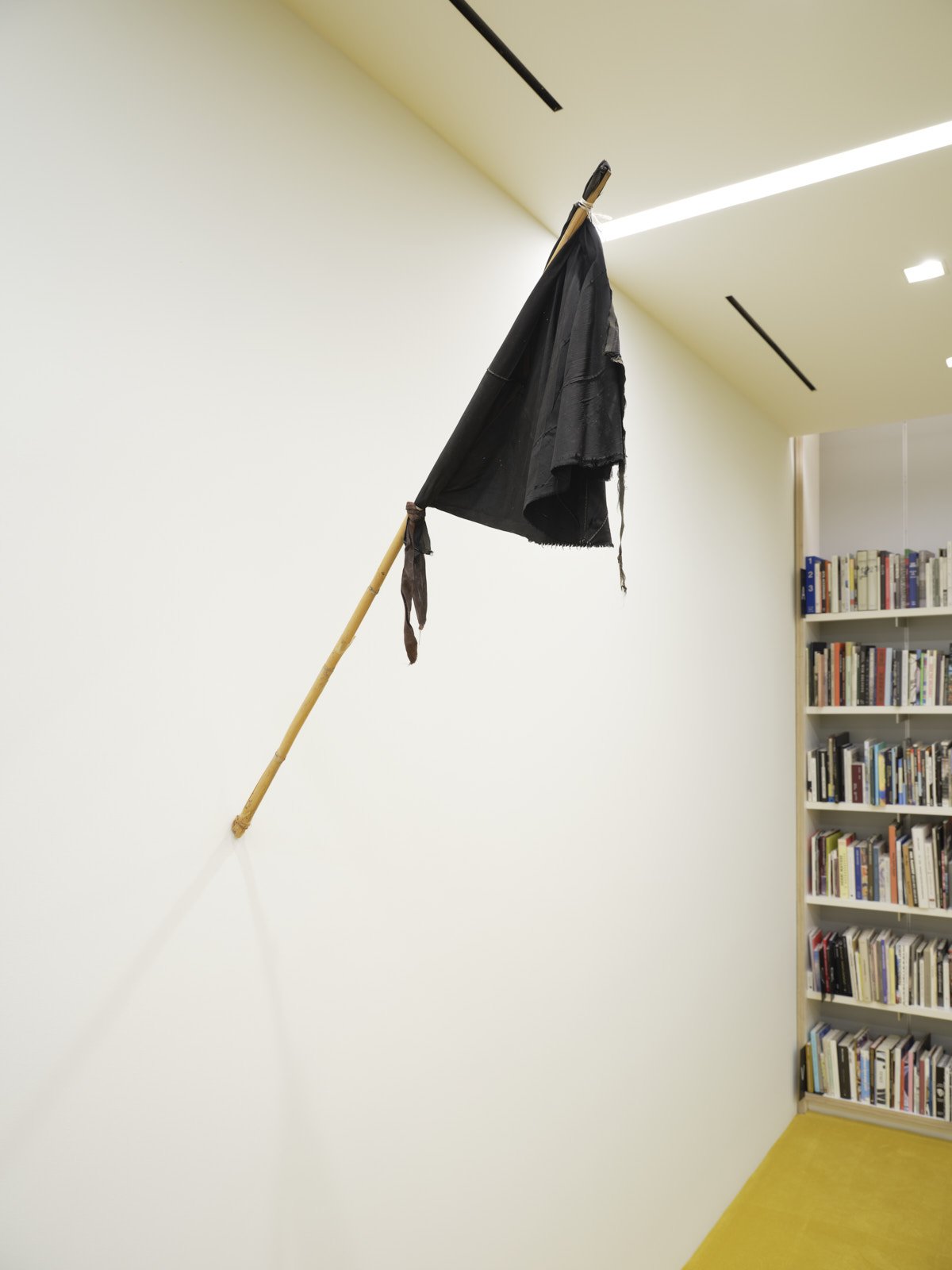
Installation view of Pretenzione Intenzione: Objects of Beauty and Bewilderment from the Archive of Harald Szeemann at Marciano Art Foundation, Los Angeles, February 21 to April 11, 2026. Photo by Heather Rasmussen, courtesy of Marciano Art Foundation.

Kazimir Malevich (1879–1935). Black Square (or Black Suprematic Square), 1915. Tretyakov Gallery, Moscow. Wikipedia Commons. Image in the Public Domain.
AMADOUR: That’s fascinating, especially in relation to the black flag itself. I kept thinking about its placement — isolated on the wall, facing the archive on the opposite side — and the way it seemed to hold the room in suspension. What were the greatest challenges in presenting the work within that space, especially knowing the archive is too vast ever to be shown in full?
UNA SZEEMAN: Every iteration of this exhibition has been completely different, because each space produces its own condition. And here the symbolism is especially important because the exhibition is installed in a former Freemason lodge.
AMADOUR: Right — a Freemason lodge.
HENRY VINCENT: Which is already such a charged context. You immediately think of ritual societies, the Golden Dawn, all of that.
UNA SZEEMAN: Exactly. To be in a building where rituals were performed, where every symbol carried a precise and powerful meaning, adds another layer altogether. It is not only an architectural frame; it is an atmosphere of encoded belief. And that matters, because the exhibition is also about how worlds are built — through symbols, through communities, through shared structures of imagination.
So the objects absorb something from the site itself. And the black flag becomes especially important in that regard. In those cultures, flags were dominant signs: stitched, marked, emblematic. But here there is no insignia. There is only a black flag. And that blackness carries a utopian charge, because it suggests that everything is still possible.
HENRY VINCENT: And there’s also the resonance with Kazimir Malevich’s Black Square (1923) — the black flag or black form as a kind of origin point for modern painting, even conceptual painting in a strange way. So the object operates on multiple levels at once. It belongs to mythology, but it also belongs to the history of abstraction. It feels timeless because it remains unfinished in meaning.
UNA SZEEMAN: Yes, exactly. For me, all of the objects are like parts of a ship arriving from an unknown land. We look at them and begin to imagine what stories they hold, which seas they crossed, which creatures they fought, and what weather they survived. And the flag is carrying that ship.
It also refuses definition. It has no emblem, and in a way, it has no color, because black absorbs everything. That is why it felt so right in that space: it watches over the exhibition without dictating a single reading. It remains open, and that openness is essential.
AMADOUR: As a final question, I wanted to ask something simpler, though perhaps it belongs at the beginning of the interview: where were you born, and what was the house of your childhood like? I’m interested in how you first encountered objects, atmospheres, and space — not only intellectually, but as a child.
UNA SZEEMAN: I was born in Locarno, in the Italian-speaking part of Switzerland. Until I was fourteen, I grew up in a very large apartment — five rooms — in the oldest house in the village. It was called Casa Montecastello, the house at the foot of the castle. Above it, on the hill, were the remains of a castle dating back to the Bronze Age. You could still see the foundation walls. So from the beginning, there was already this sense of living beneath a ghost, beneath the residue of ritual and of very old histories.
And from our balcony, we could see Monte Verità — that utopian hill. Inside, the house was full of art and books. It was an incredibly rich environment. Later, we moved into a Bauhaus-like house my parents built, with many windows and a great deal of light. Suddenly, there was too much sunlight for artworks, and the relation to space changed completely. I think I am still trying to reconcile those two formative interiors: the dense apartment filled with objects, and then this clearer, more open, more mental space, where the mind could travel and invent new objects for itself.
AMADOUR: And the second house was in the same village?
UNA SZEEMAN: Yes, in Tegna. It was a tiny village — perhaps six hundred inhabitants now, and only around three hundred when I was born. What was magical about the first apartment was that it seemed to keep unfolding. It began as three rooms. Then, when my father moved in after he and my mother fell in love, they discovered another space and broke down a wall so he could have an office. Later, when my mother was pregnant, they found yet another room at the far end of the apartment and opened another wall. The building had been transformed so many times over the years that it contained these hidden chambers.
So suddenly, there was a room for Harry, and later a room for me. That was very important: the idea that each person has an identity and a free space of their own. For artists, curators, children — for anyone becoming themselves — that kind of space is essential. It was like living in a house that could adapt to the lives unfolding inside it.
AMADOUR: That’s extraordinary — a house that keeps opening itself as the family changes. It feels strangely close to exhibition-making.
In a way, it mirrors Harald’s entire contribution to curatorial history: not only documenta as a model for the large-scale international exhibition, or When Attitudes Become Form as one of the decisive sponsored exhibitions of the twentieth century, but the very idea that space can think, that a room can be composed, opened, and reimagined until it becomes alive. Hearing you describe your childhood homes, I can’t help but feel that this domestic architecture became its own kind of proto-curatorial field — a place where history, intimacy, and spatial imagination were already being worked out in real time.
Thank you both for this conversation. I hope you have a lovely evening in Zurich, Una.
HENRY VINCENT: Send me your shipping address, and I will mail you the Kenneth Anger jacket, too, Una!
UNA SZEEMAN: Yes, and then let’s all go in search of the mysterious emerald.
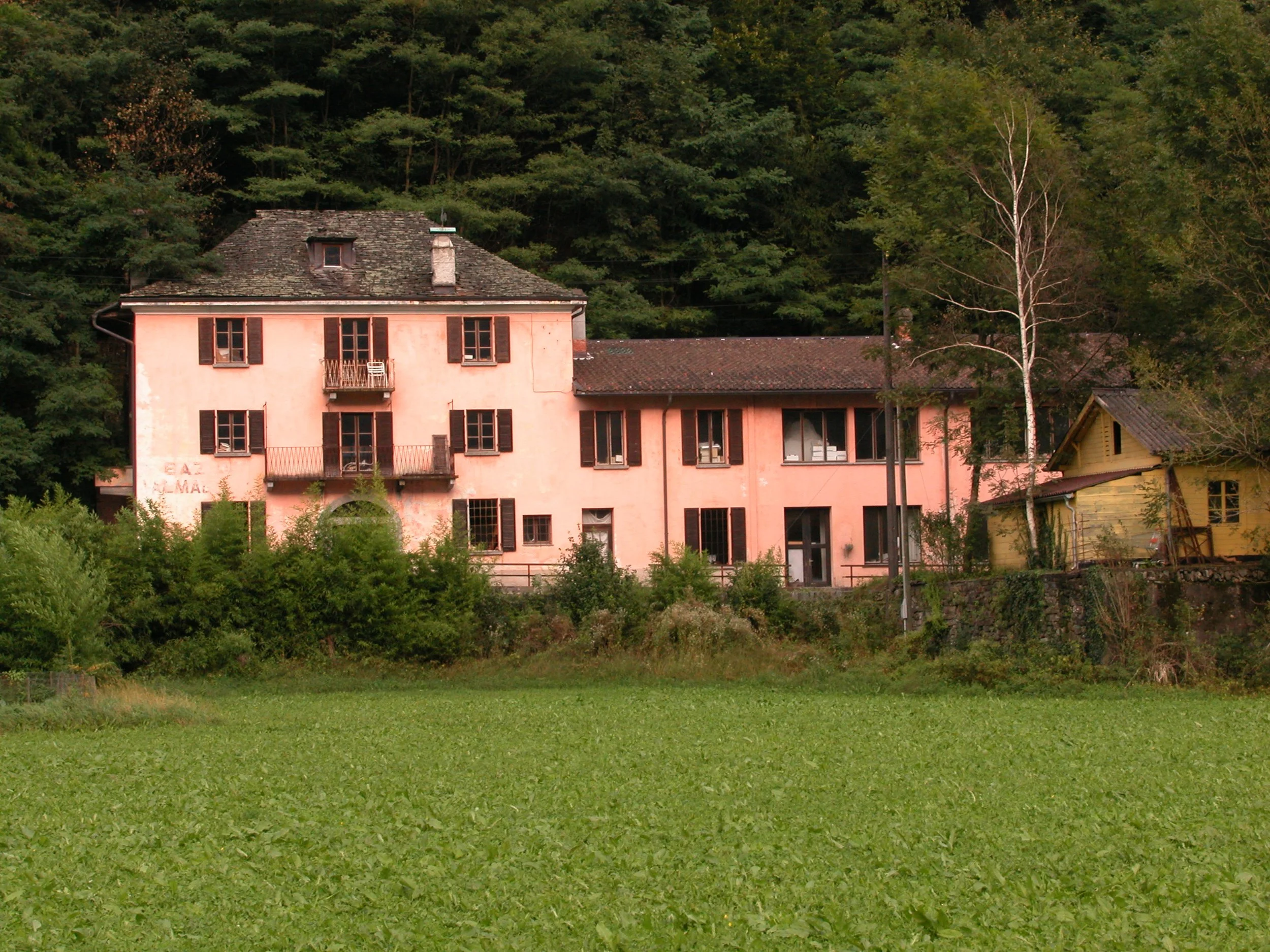
Fabbrica Rosa. Photography by Simon Chaput.