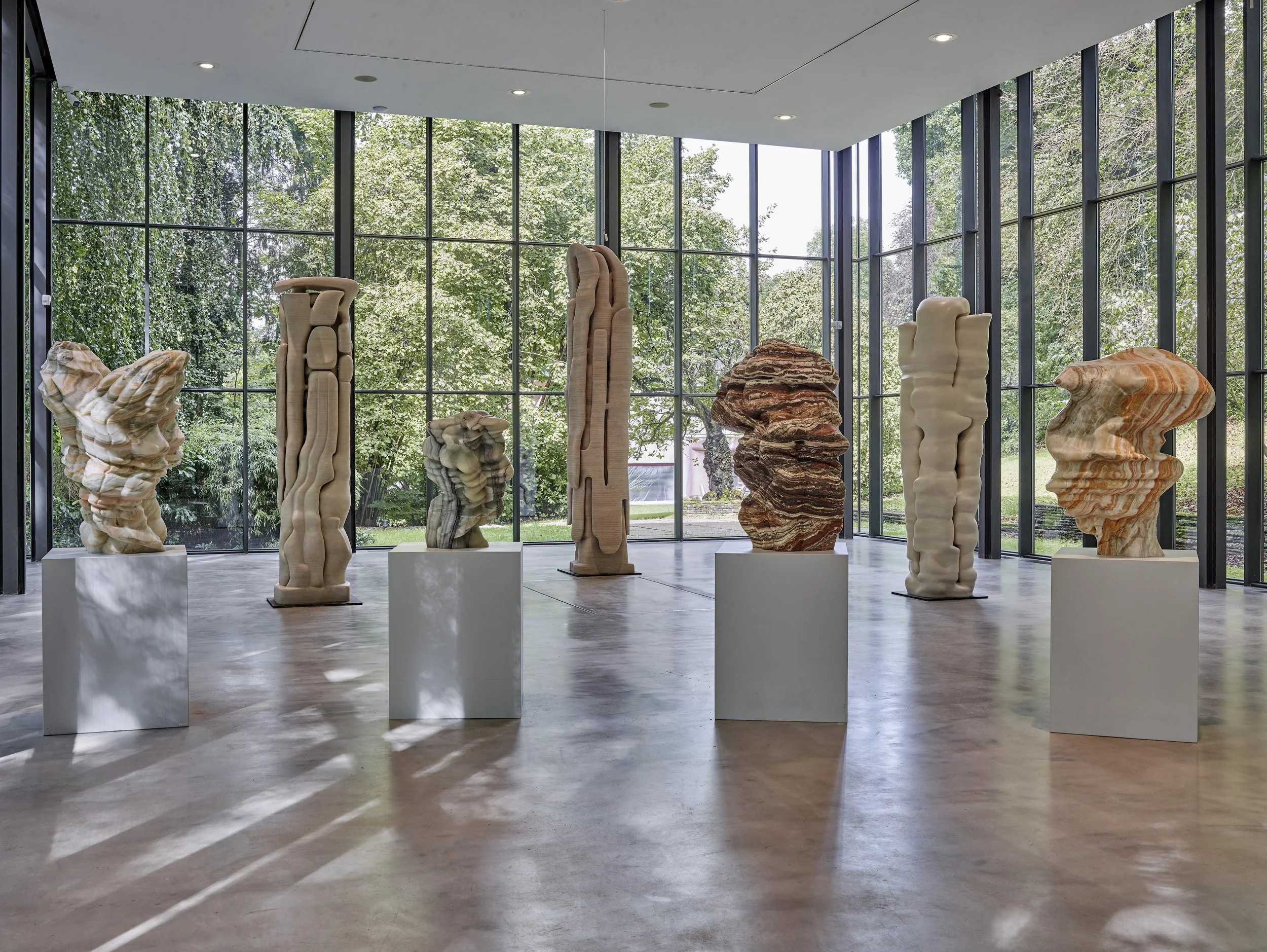
Exhibition view: “Tony Cragg. Recent Works”, 12 September 2026 to 3 January 2027, Skulpturenpark Waldfrieden (c) VG BildKunst Bonn 2026, Tony Cragg. Photo: Michael Richter.
On September 10, Tony Cragg opened a new exhibition at Marian Goodman Gallery in New York’s Tribeca. This is his first solo show at the 385 Broadway location and his seventeenth with Marian Goodman. The exhibition features new works in bronze, wood, stone, and steel, continuing Cragg’s long-standing exploration of material behavior, form development, and the possibilities within sculpture. Pieces from his Industrial Nature, Stacks, Early Forms, and Points of View series are presented alongside Symmetries, sculptures based on mirrored axial drawings. These works further Cragg’s investigation into the transformation of line, volume, and matter. The exhibition prompted my conversation with Cragg, which led me to reflect on my first encounter with his work and, unexpectedly, on geology.

Exhibition view: “Tony Cragg. Recent Works”, 12 September 2026 to 3 January 2027, Skulpturenpark Waldfrieden (c) VG BildKunst Bonn 2026, Tony Cragg. Photo: Michael Richter.
My first encounter with Cragg’s work brought to mind fault lines, specifically recalling the rugged California coastline and a field trip with my geography class at Santa Monica College to Rancho Palos Verdes. There, we studied the Palos Verdes Fault Zone, an active oblique-slip fault stretching about 70 miles from Santa Monica Bay, beneath the Palos Verdes Peninsula, and into the Pacific Ocean past Dana Point. Cragg’s sculptures evoked that landscape for me: their surfaces seem shaped by pressure, displacement, erosion, and accumulation, as if they reached their current form through a series of physical events rather than simple creation.
I later learned that Cragg sketches his works by hand before translating them into other materials, which deepened the geological association for me. I began to picture his hand moving across the page like a fault line through the earth, advancing without knowing exactly where it will break, turn, or create a new contour. A fault does not shape a landscape in a single gesture or toward a fixed image. Pressure builds, matter shifts, surfaces buckle and separate, and the result is a record of these forces over time. Cragg’s line behaves in much the same way. It wanders, doubles back, swells, and contracts before being realized in three dimensions, where it meets new forces: gravity, volume, and the resistance of wood, stone, bronze, or steel. The finished sculpture retains the memory of his hand, but like a coastline shaped by tectonic movement, its final form feels discovered rather than simply drawn.
This connection between landscape, material, and discovery became especially clear to me in Innsbruck, Austria, as I took the Nordkettenbahn toward the Hafelekar. Along the way, I passed through Zaha Hadid’s stations, whose fluid forms were inspired by ice and the Alpine landscape. At the summit, the Nordkette range rises above Innsbruck as part of the largest nature reserve in the Eastern Alps. This landscape also holds a history that changed modern physics. In 1912, Austrian physicist Victor Franz Hess ascended thousands of meters in a balloon to measure ionizing radiation. Contrary to expectations, he found radiation increased with altitude, providing key evidence for cosmic rays—high-energy particles from space. In 1931, Hess established a research station at the Hafelekar, over 2,200 meters above sea level, enabling continuous measurement of cosmic radiation. He received the Nobel Prize in Physics five years later. The mountain became more than a landscape; it became an instrument for detecting unseen forces. Cragg’s sculpture follows a similar impulse: he treats matter not as inert, but as a field of possibilities to be tested, disturbed, and revealed. His work asks what might already exist within a material before we recognize its form.
The experiments at Hafelekar continued to reveal what matter can otherwise conceal. There, physicists Marietta Blau and Hertha Wambacher exposed photographic plates to cosmic radiation and, in 1937, discovered “disintegration stars”: unique patterns of particle tracks radiating from points where high-energy cosmic rays collided with atomic nuclei and caused fragmentation. These images made previously invisible events visible. Here, the history of physics and Cragg’s sculpture converge most clearly for me. In both, matter is not static. It collides, fractures, transforms, and reveals possibilities that only become apparent when someone finds a way to bring them into view.
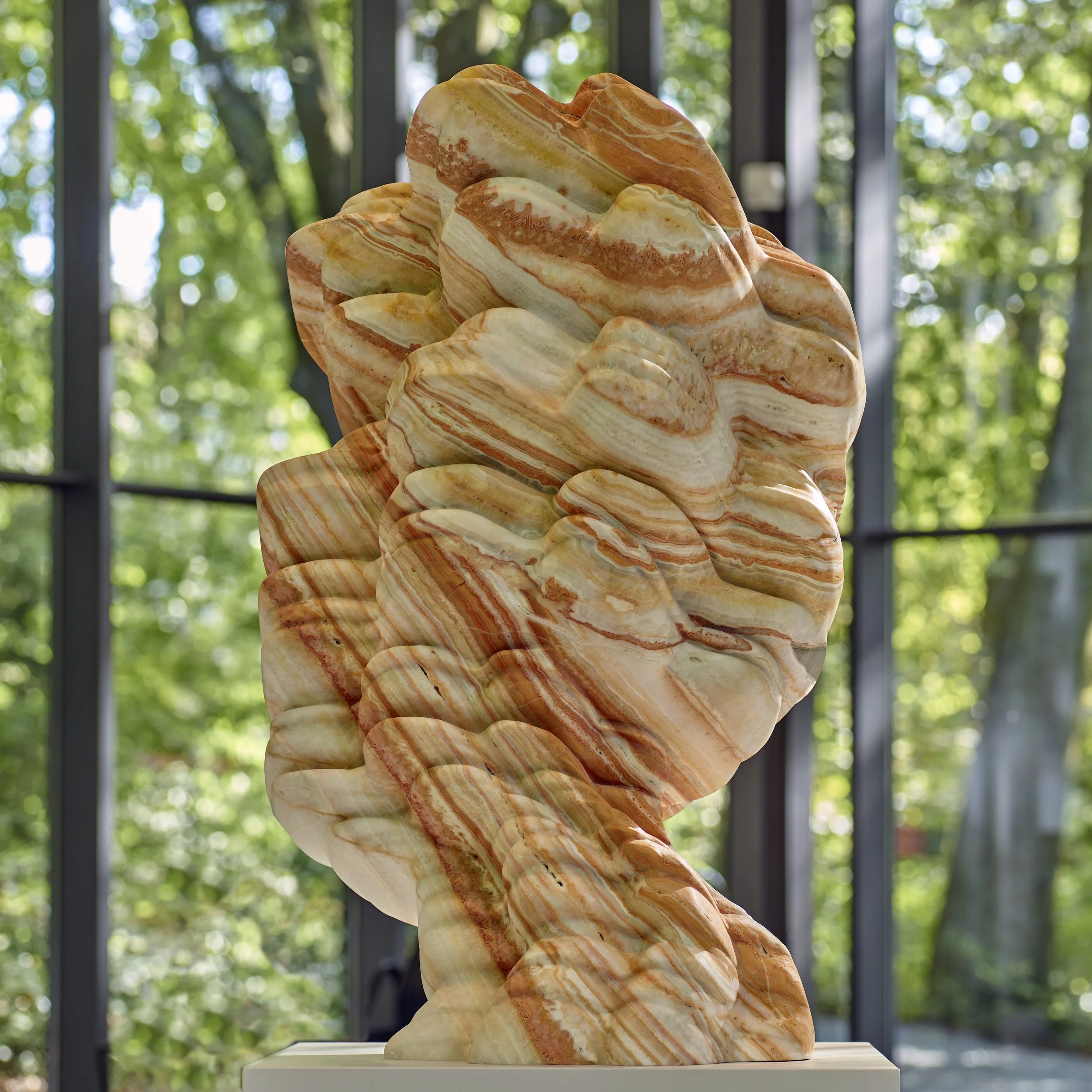
Exhibition view: “Tony Cragg. Recent Works”, 12 September 2026 to 3 January 2027, Skulpturenpark Waldfrieden (c) VG BildKunst Bonn 2026, Tony Cragg. Photo: Michael Richter.
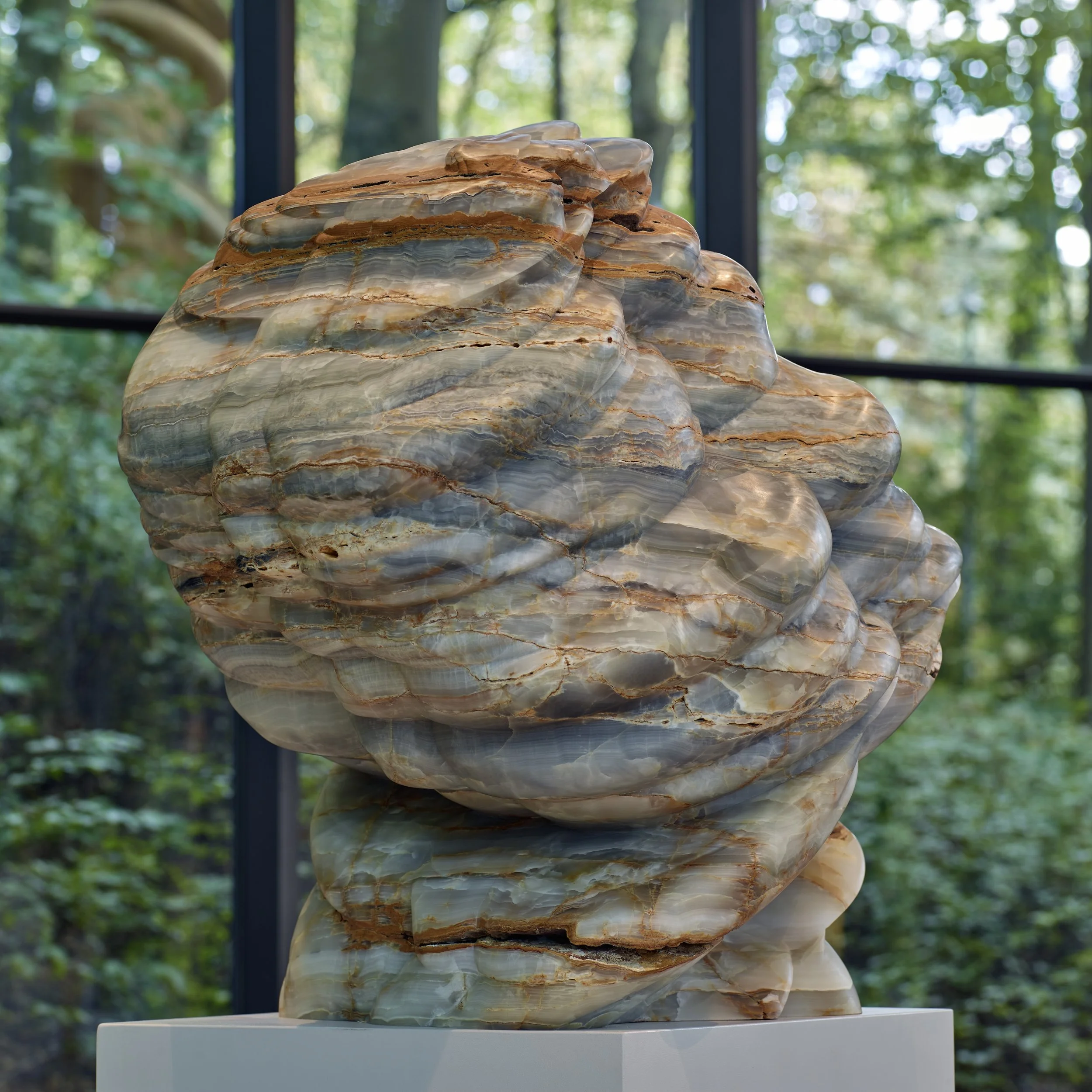
Exhibition view: “Tony Cragg. Recent Works”, 12 September 2026 to 3 January 2027, Skulpturenpark Waldfrieden (c) VG BildKunst Bonn 2026, Tony Cragg. Photo: Michael Richter.
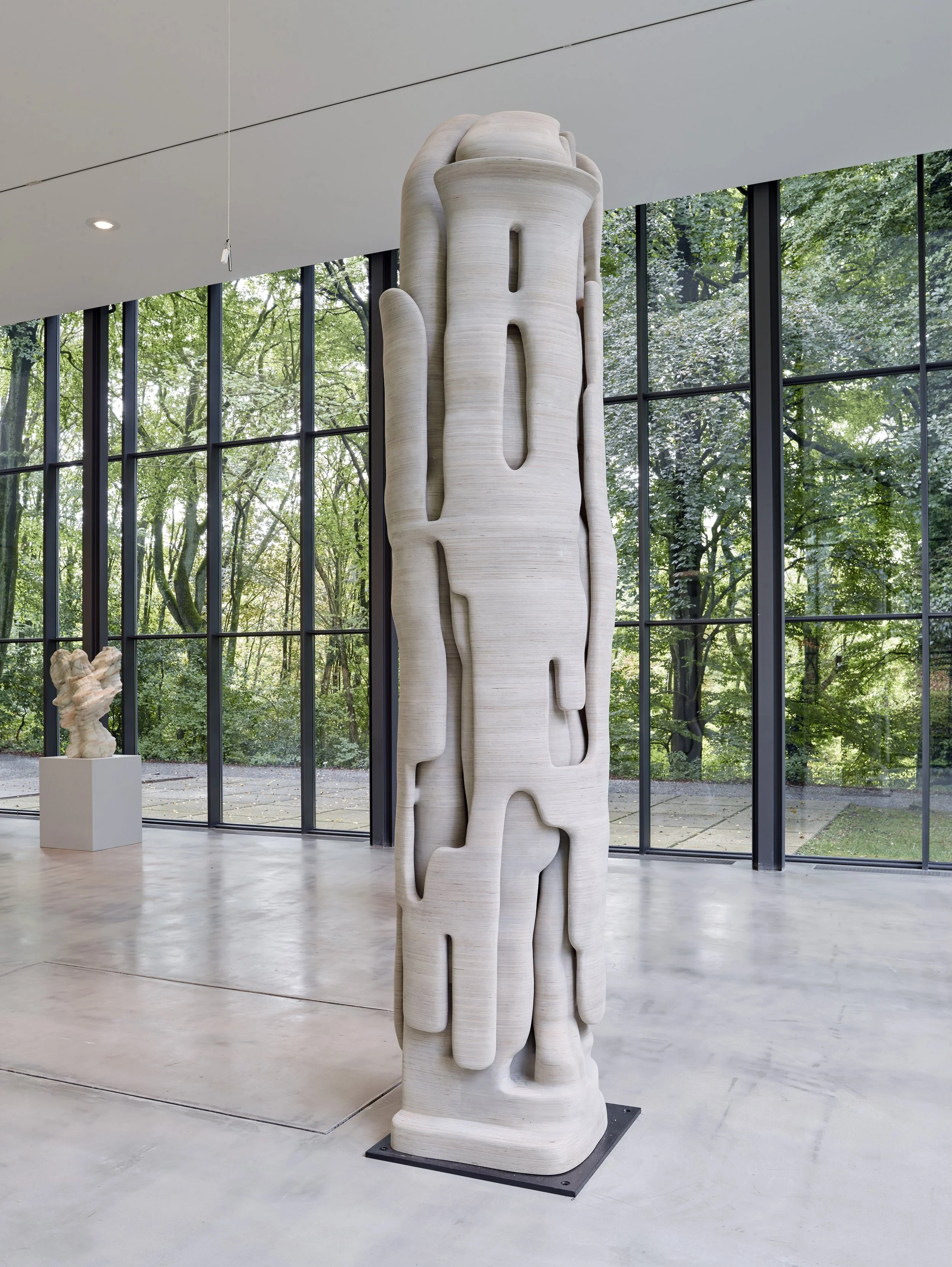
Exhibition view: “Tony Cragg. Recent Works”, 12 September 2026 to 3 January 2027, Skulpturenpark Waldfrieden (c) VG BildKunst Bonn 2026, Tony Cragg. Photo: Michael Richter.
Cragg’s approach to sculpture is experimental: he continually tests what materials can do, how they behave, what forms they allow, and where they resist. Wood responds differently than bronze; glass is unlike stone. His process is not about imposing a fixed image on matter, but about discovery through transformation. I spoke with Cragg from Reno before he left for Italy, while he was in New York for his exhibition opening. By the time I reflected further on our conversation, I was in Venice at the 2026 Venice Biennale, still thinking about his work. I returned to it while encountering artists such as Ranti Bam and Ayrson Heráclito, whose practices show that certain sculptural questions persist across generations and geographies. Ideas remain in form, reappearing through different materials, histories, and methods. What one artist discovers in sculpture does not remain fixed; it enters a broader visual language, where material, transformation, and meaning can be explored anew.
At the Arsenale, Nigerian artist Ranti Bam, born in Lagos and now working between Lagos and Paris, presents five monumental black clay vessels titled Ifa Ile Oja – Black Ifa (2026). Drawing from Ifa and Yoruba beliefs that matter is inhabited by spirit, Bam treats clay as a collaborator. The vessels serve as devotional objects and portals between the living and ancestral worlds. Their materiality also engages with the Arsenale, where black clay sits among pre-industrial bricks similarly shaped from earth by human hands. Nearby, Brazilian artist Ayrson Heráclito, born in Macaúbas, Bahia, and based in Salvador, presents Juntó (2026), a series of stainless-steel sculptures and 222 ink-and-watercolor drawings rooted in Candomblé and its Orixás. While these works differ greatly from Cragg’s in history, spirituality, and intent, they return to a central sculptural question: what knowledge can a material carry, and what happens to that knowledge when matter takes a new form?
This became clearer to me in Istanbul, where I was pleasantly surprised to encounter Cragg’s work at Dirimart, which had recently hosted his first solo exhibition with the gallery. As I explored the city and engaged with its contemporary art scene—especially through conversations with young artists and cultural workers in Kadıköy and at spaces like THE PILL in Balat, known for engaging diaspora, feminism, and queer aesthetics—I found that discussions about Cragg’s work often expanded to broader topics. These included censorship, participation in international cultural exchange, and the challenges of making contemporary art in Turkey while remaining connected globally. Similar questions arose in exhibitions at Arter. I was struck by how naturally Cragg’s work fit into these conversations. His art does not feel confined to its original context, but remains open to new interpretations within a cultural landscape negotiating its own relationship to material, freedom, and the possibilities of contemporary art.
This became especially apparent during our conversation about the Winged Victory of Samothrace. I tend to approach these topics academically and am fascinated that the sculpture at the Louvre is a reconstruction, assembled from fragments excavated on Samothrace and reconstituted over time into the figure we see today. We know this ancient object through the modern act of reassembly. Perhaps this challenge is central to understanding an artist. We can reconstruct a biography, establish chronologies, identify materials and influences, and even speak directly with the artist, yet the exact moment when one thought becomes another is almost impossible to pinpoint. After all this, I still wonder how Tony Cragg became Tony Cragg.
At one point, Cragg recalled being young, dressed in saffron chiffon and bells, and seeing Jim Morrison, Jimi Hendrix, and Pink Floyd perform live. I appreciated this detail. History often separates people into categories, yet for a moment, they were simply alive together, moving through the same cities, listening to one another, and becoming themselves without knowing what it would eventually mean.
I am writing this on my laptop in the café car of a train to Berlin, drinking Earl Grey tea with milk as we pass Südkreuz. Cragg is elsewhere, the Hafelekar is far behind me, and the Winged Victory remains at the top of its staircase in the Louvre. Perhaps timelines are less linear than we imagine. They cross, separate, and sometimes collide, leaving fragments from which we try to understand what happened. A fault moves. A cosmic particle strikes a nucleus. A hand moves across a page. A fragment becomes a sculpture. And somewhere within all of this, without ever knowing the exact moment, Tony Cragg became Tony Cragg.
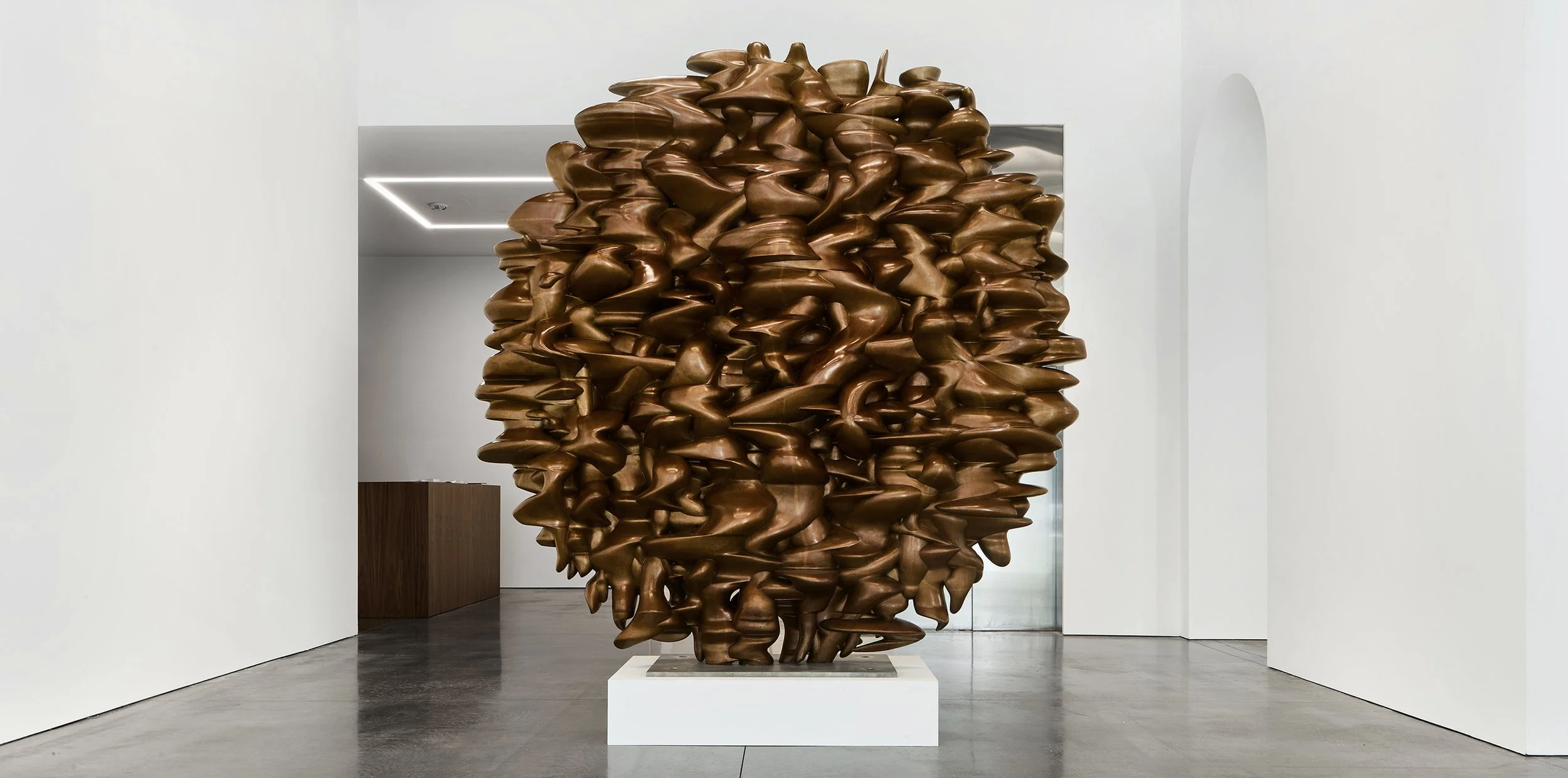
Tony Cragg, Versus, 2018. Bronze, 104¾ × 103⅛ × 30¼ in. (266 × 262 × 77 cm). Courtesy of the artist and Marian Goodman Gallery. Photo: Carlos Perez.
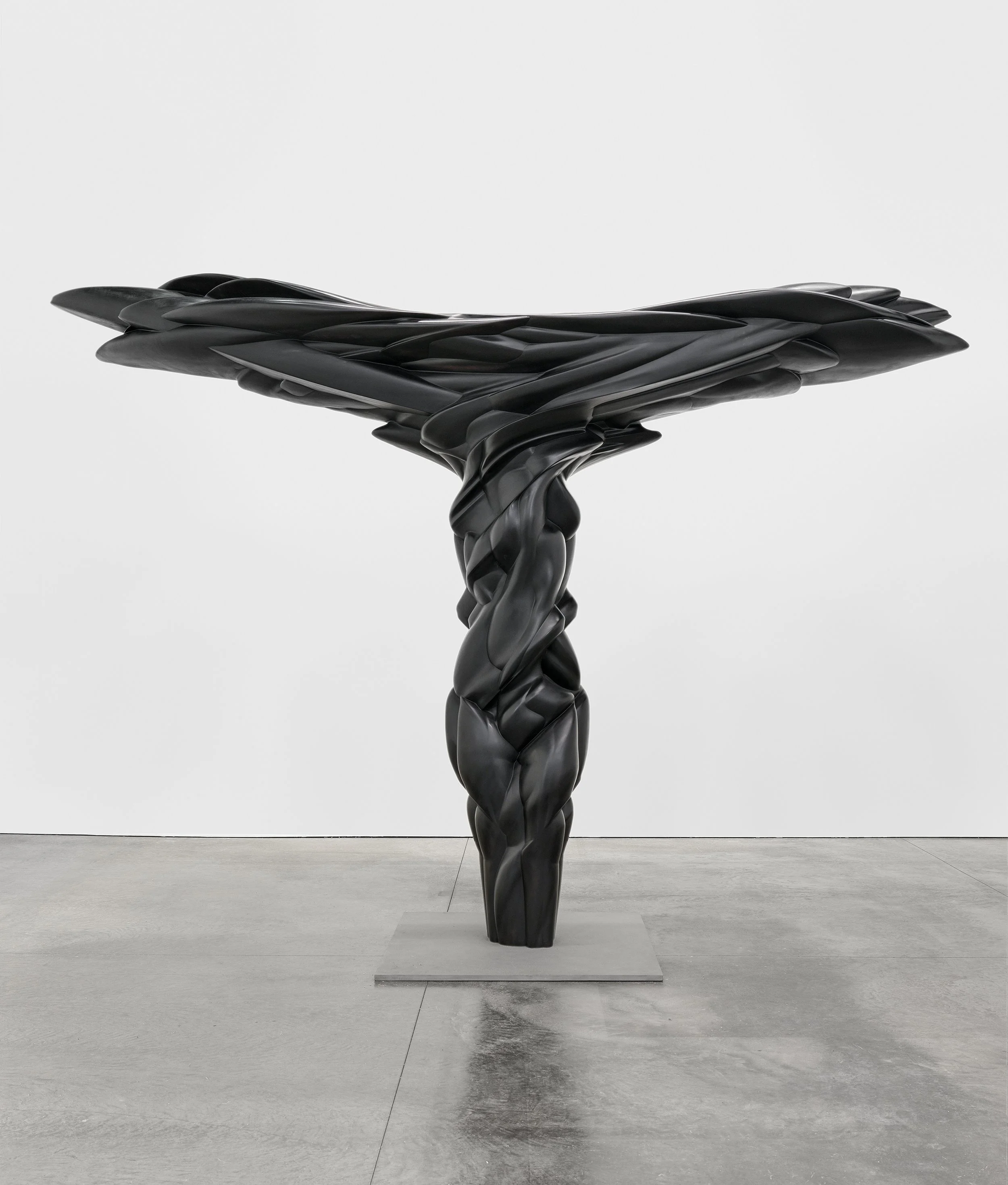
Tony Cragg, Over the Earth, 2026. Bronze, 102⅜ × 141⅜ × 39⅜ in. (260 × 359 × 100 cm). Courtesy of the artist and Marian Goodman Gallery. Photo: Alex Yudzon.
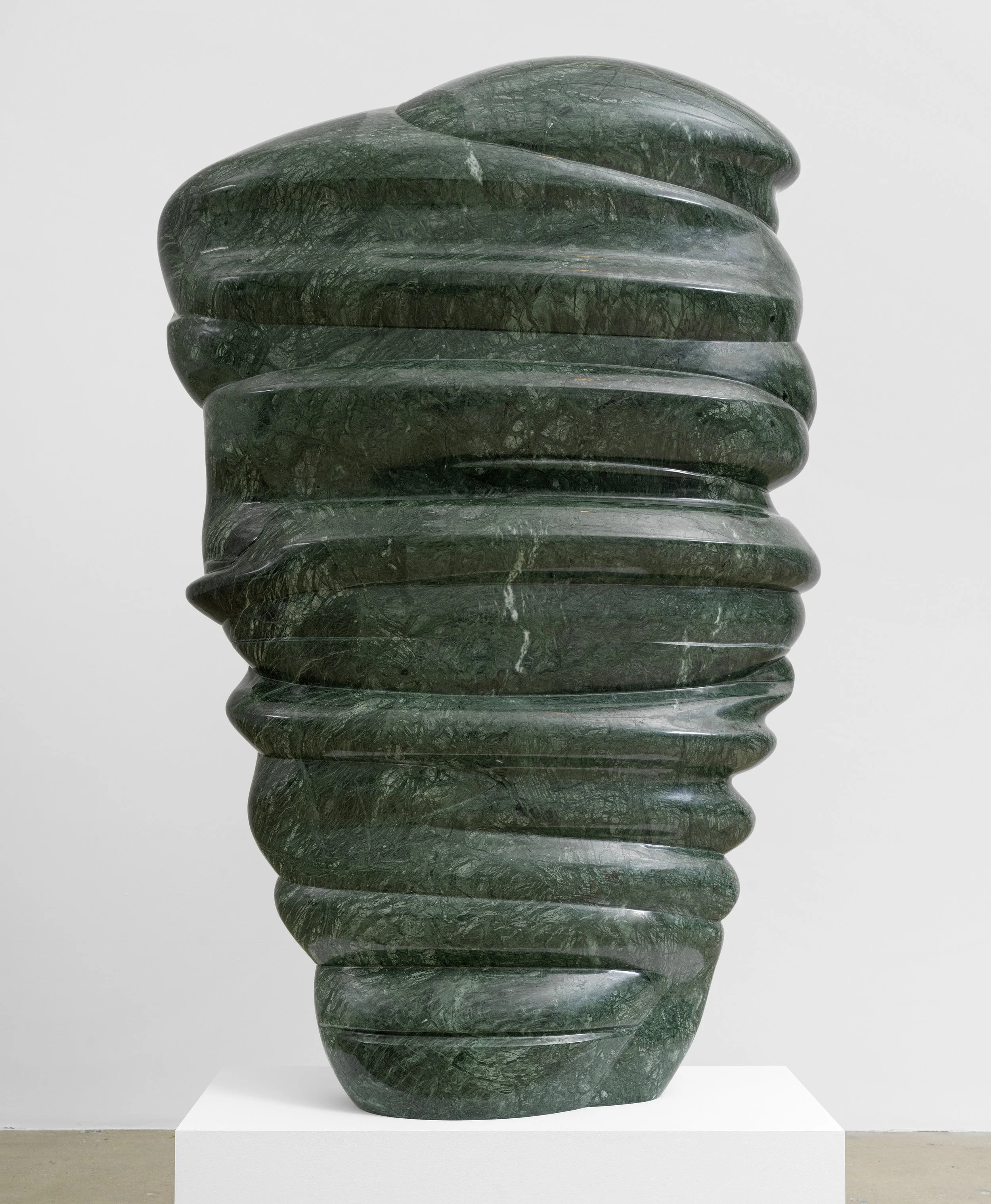
Tony Cragg, Masks, 2021. Guatemalan green stone, 63 × 41⅜ × 17¾ in. (160 × 105 × 45 cm). Courtesy of the artist and Marian Goodman Gallery. Photo: Alex Yudzon.
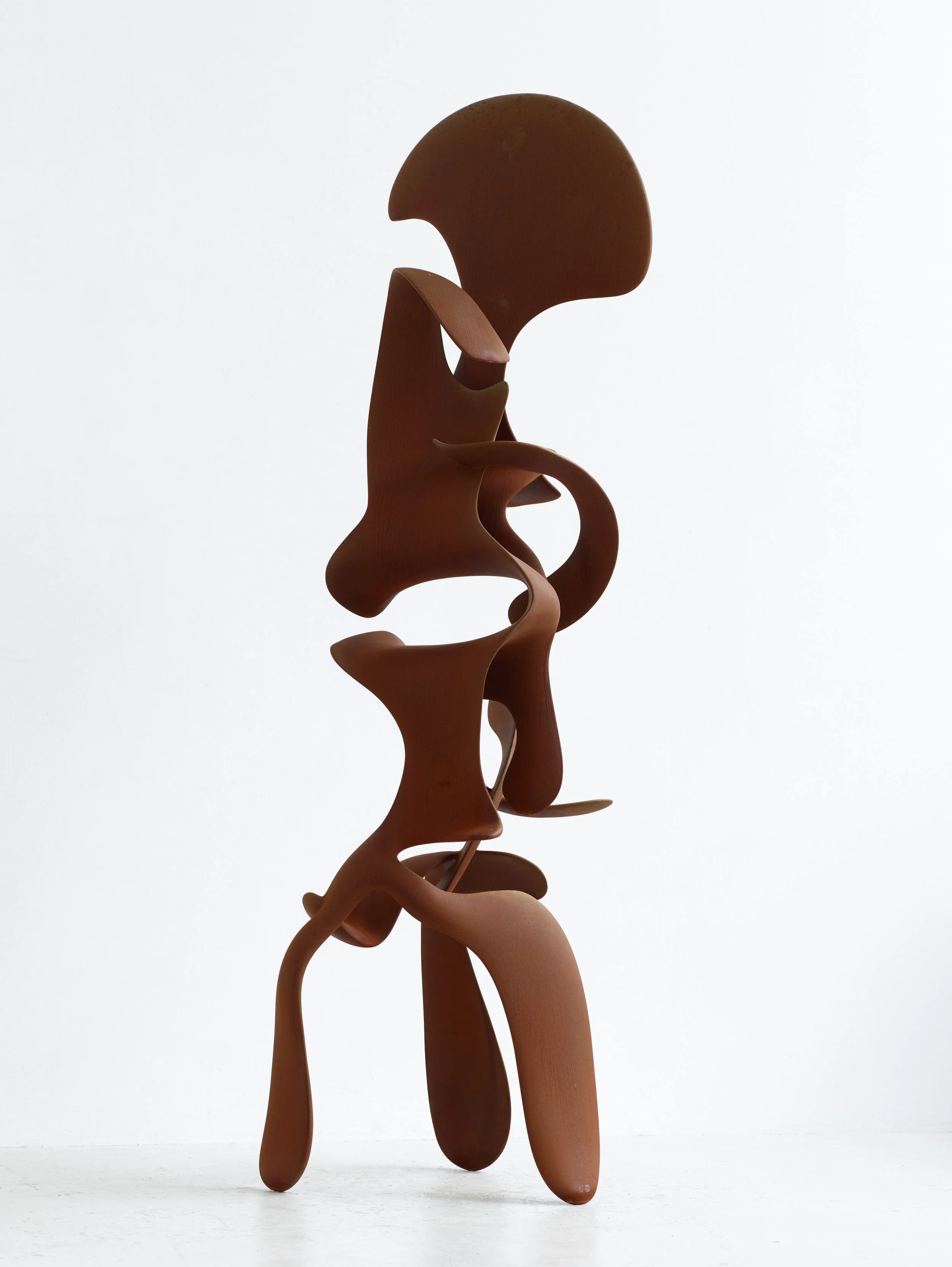
Tony Cragg, Incident Stance, 2021. Corten steel, 90½ × 29⅞ × 28¾ in. (230 × 76 × 73 cm). Courtesy of the artist and Marian Goodman Gallery. Photo: Michael Richter.
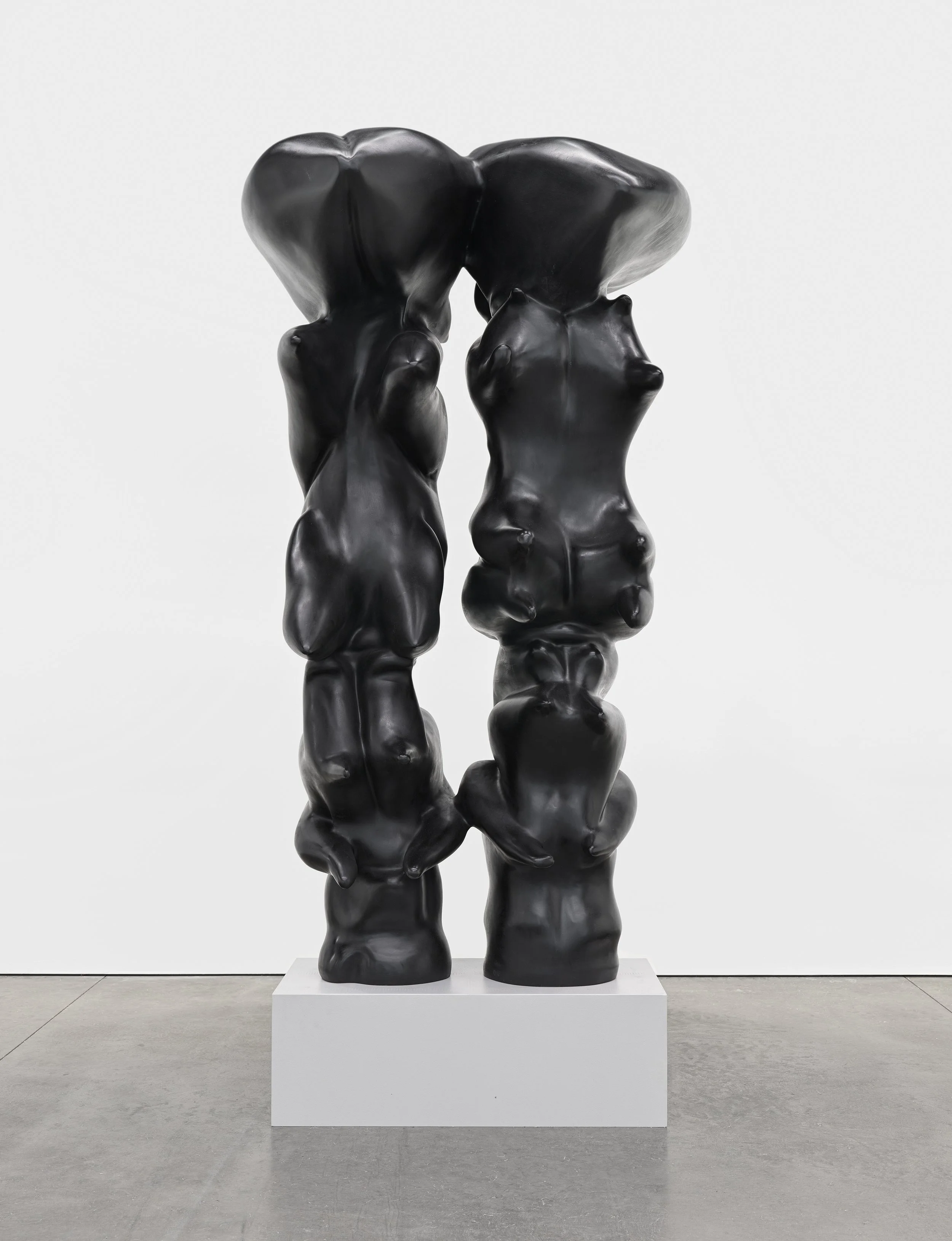
Tony Cragg, Untitled, 2025. Bronze, 78¾ × 47¼ × 43¼ in. (200 × 120 × 110 cm). Courtesy of the artist and Marian Goodman Gallery. Photo: Alex Yudzon.
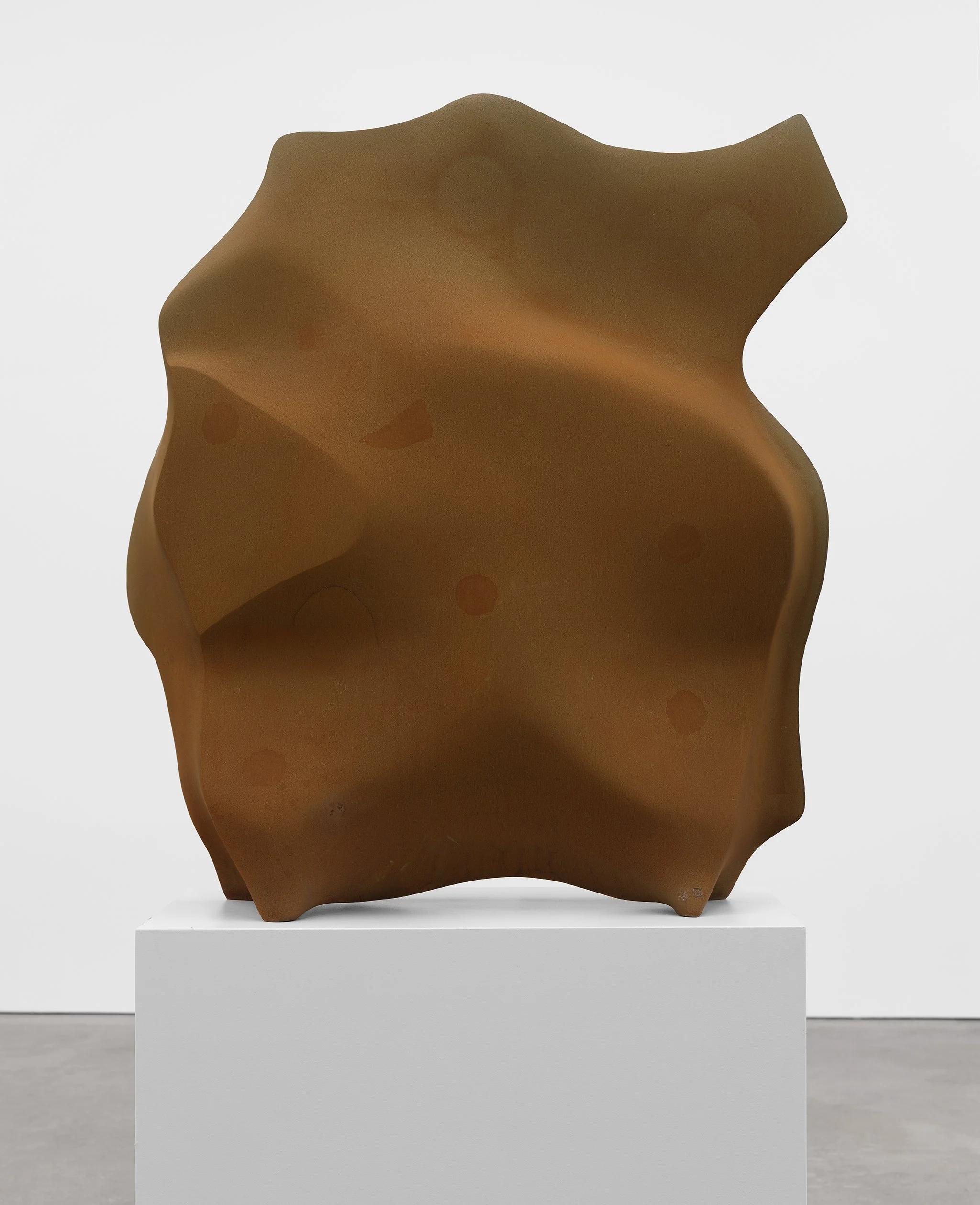
Tony Cragg, Stand, 2025. Corten steel, 45¼ × 14⅛ × 42½ in. (115 × 36 × 108 cm). Courtesy of the artist and Marian Goodman Gallery. Photo: Alex Yudzon.
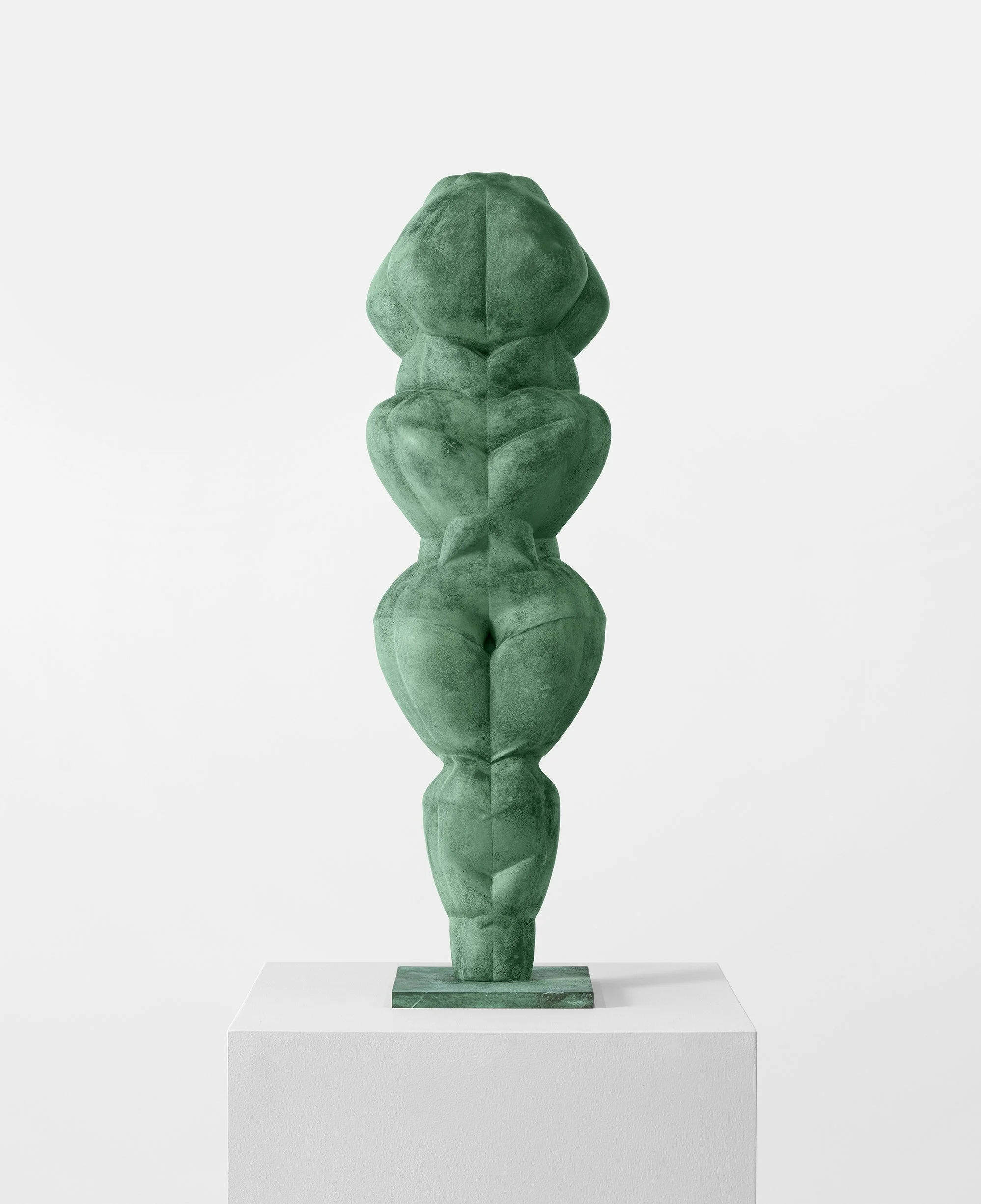
Tony Cragg, Symmetries, 2026. Bronze, 33½ × 10¼ × 7½ in. (85 × 26 × 19 cm). Courtesy of the artist and Marian Goodman Gallery. Photo: Alex Yudzon.
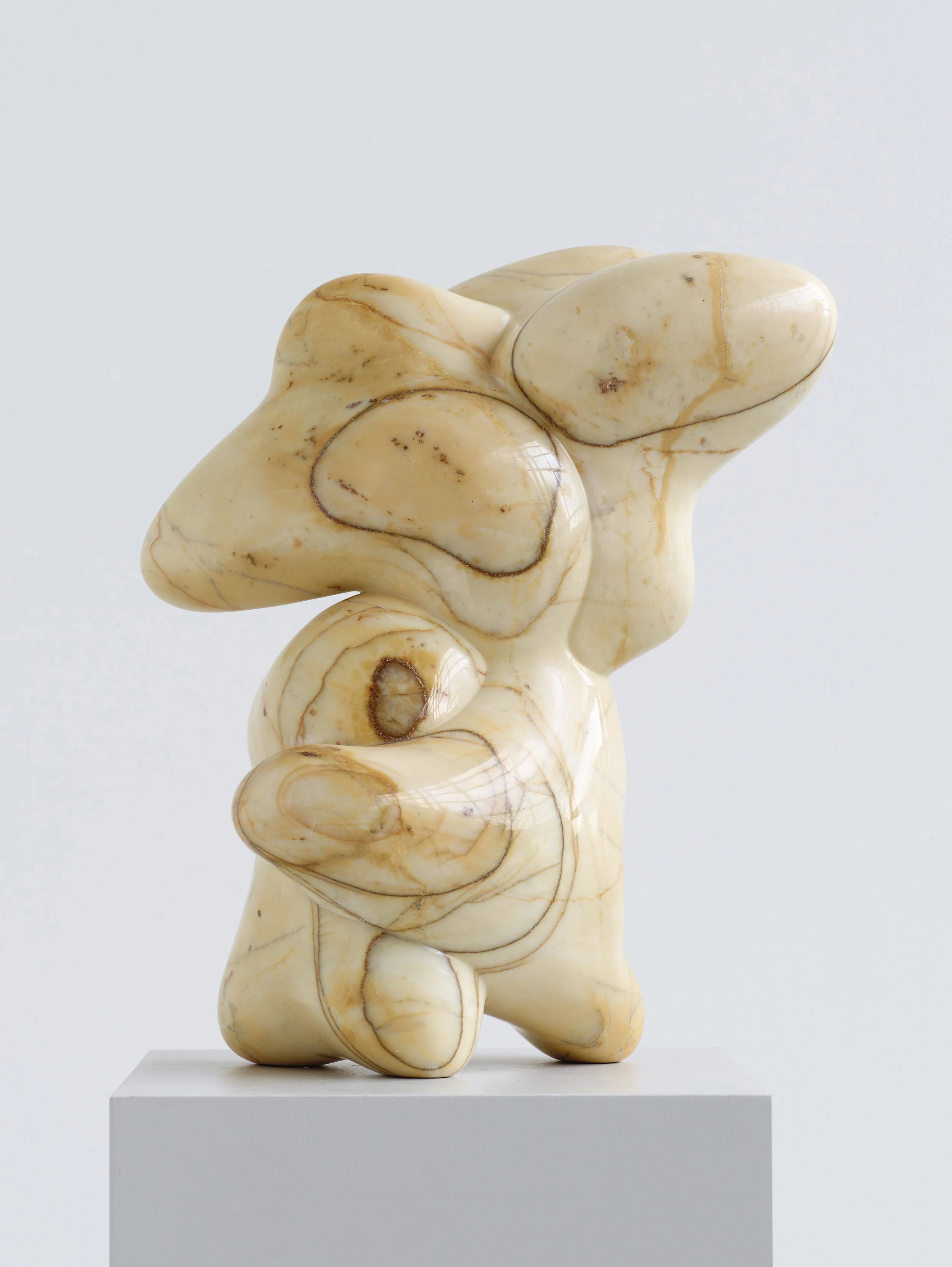
Tony Cragg, Integers, 2023. Giallo Siena stone, 27½ × 21⅝ × 14⅝ in. (70 × 55 × 37 cm). Courtesy of the artist and Marian Goodman Gallery. Photo: Michael Richter.
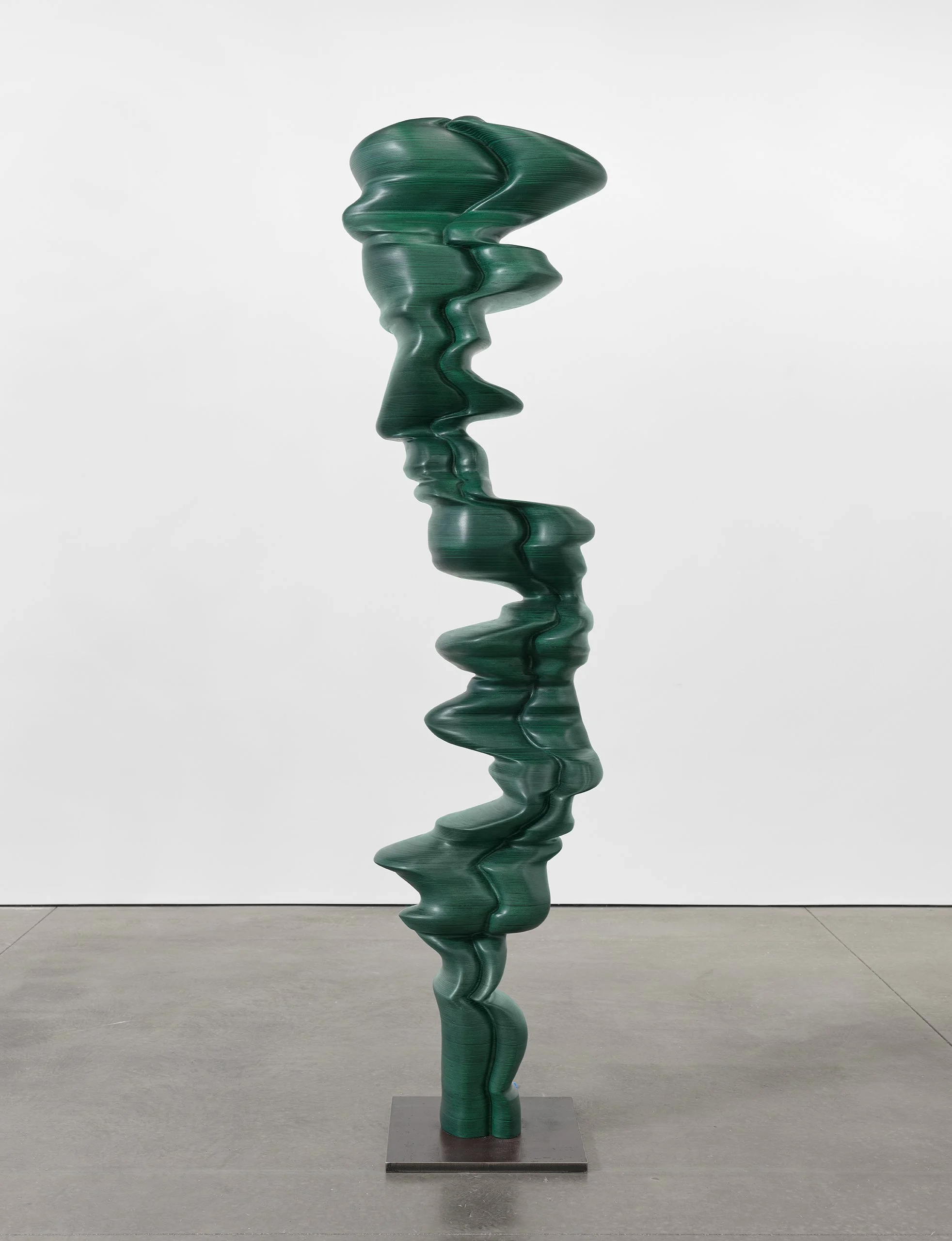
Tony Cragg, Eclipse, 2025. Wood, 78¾ × 15¾ × 15¾ in. (200 × 40 × 40 cm). Courtesy of the artist and Marian Goodman Gallery. Photo: Alex Yudzon.
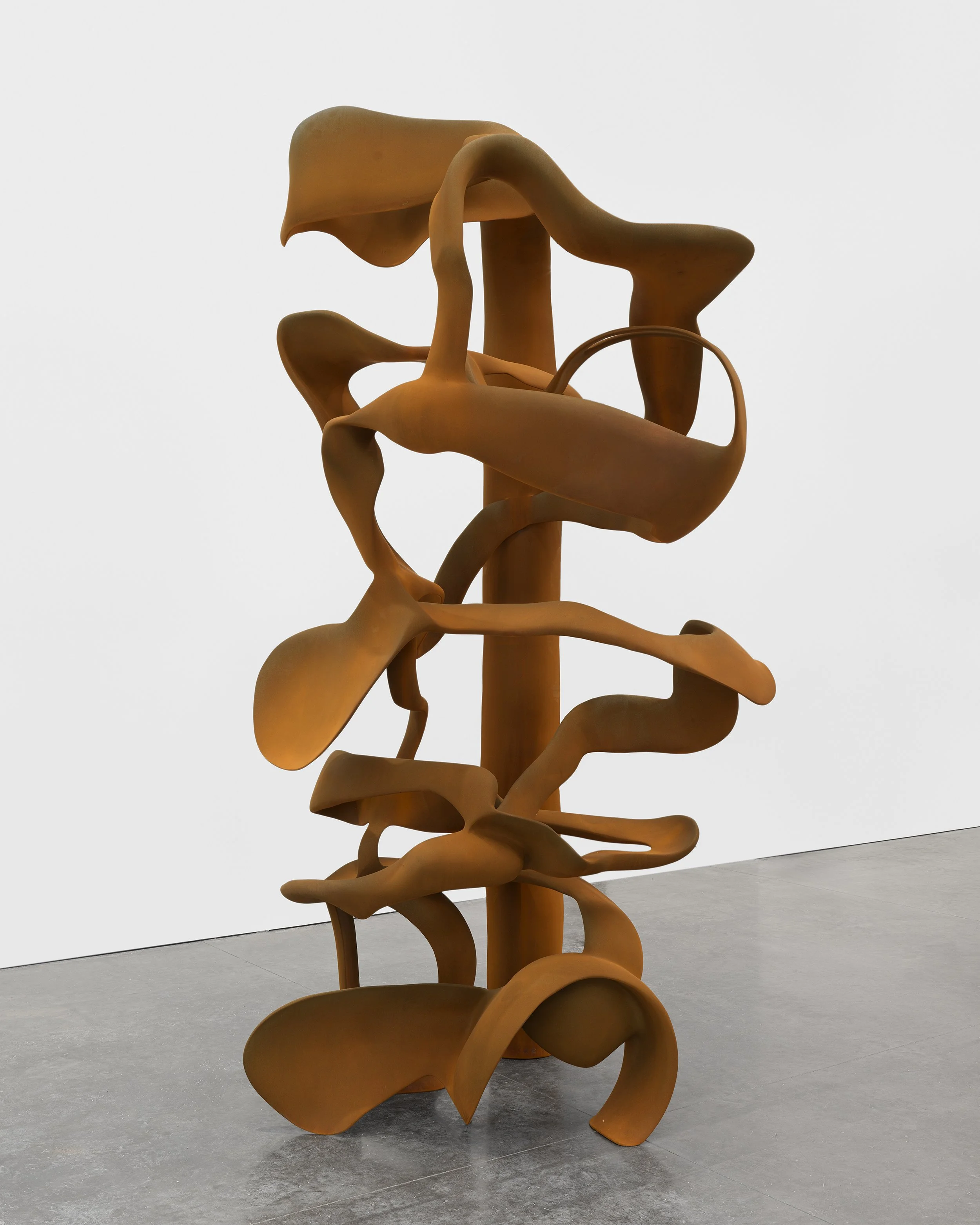
Tony Cragg, Recall, 2025. Corten steel, 101⅝ × 52 × 41¾ in. (258 × 132 × 106 cm). Courtesy of the artist and Marian Goodman Gallery. Photo: Alex Yudzon.
Two weeks later.
My train arrived in Wuppertal from Dortmund in the early morning. Before setting off, I sat in the plaza outside the station with a pumpkin spice latte from Starbucks, watching the city's extraordinary suspended railway, the Schwebebahn, pass overhead. Nearby, groups of schoolchildren gathered around their instructors, preparing for the day ahead. I enjoyed observing these ordinary morning rituals beneath a railway that seemed to defy the conventional relationship between architecture, movement, and gravity. The reason for my visit to Wuppertal was to experience Skulpturenpark Waldfrieden, Cragg's sculpture park and cultural institution nestled in the wooded hills above the city. The sky was blue and the air crisp. Signs throughout the streets directed visitors toward the park, and nearly everyone I encountered seemed to know of it. My taxi followed a winding, stony road up a forested hillside before arriving at Villa Waldfrieden, where the park's director, Christian Koch, welcomed me.
Wuppertal has an extraordinary industrial and cultural history. Once among Germany's wealthiest industrial centers, its prosperity supported an ambitious artistic community. In 1911, the city's municipal museum became the first in the world to acquire a work by Pablo Picasso, Acrobat and Young Harlequin (1905), which the Nazis later confiscated in 1937. Villa Waldfrieden belongs to another chapter of this history. The estate was acquired in 1940 by industrialist Kurt Herberts, whose lacquer company employed artists including Oskar Schlemmer and Willi Baumeister during the Nazi period, when their artistic careers were severely restricted. After wartime bombing destroyed the original house, Herberts commissioned Franz Krause to design a new residence, completed between 1947 and 1950. Its organic architecture responded to the movements of the human body, the surrounding landscape, and changing daylight. Cragg acquired the estate in 2006, restoring the villa and transforming its wooded grounds into a sculpture park that opened in 2008. I found it fascinating that a house conceived through such an experimental understanding of form would eventually become the center of Cragg's own sculptural world.
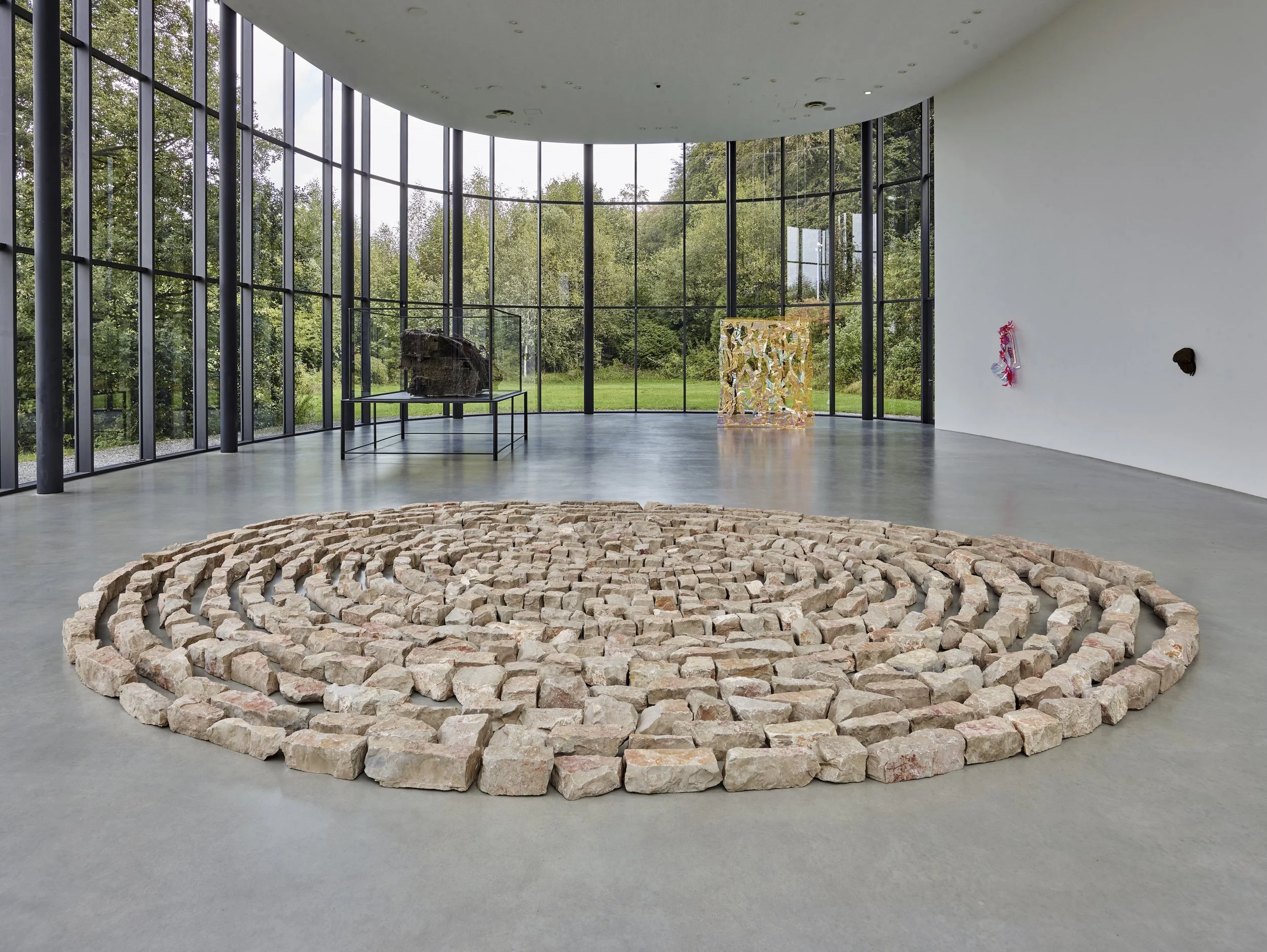
Contrasts: Pieter Buggenhout, Berta Fischer, Richard Long (2026). Exhibition views featuring works from the collection, Skulpturenpark Waldfrieden, Wuppertal, Germany. Photo: Michael Richter.
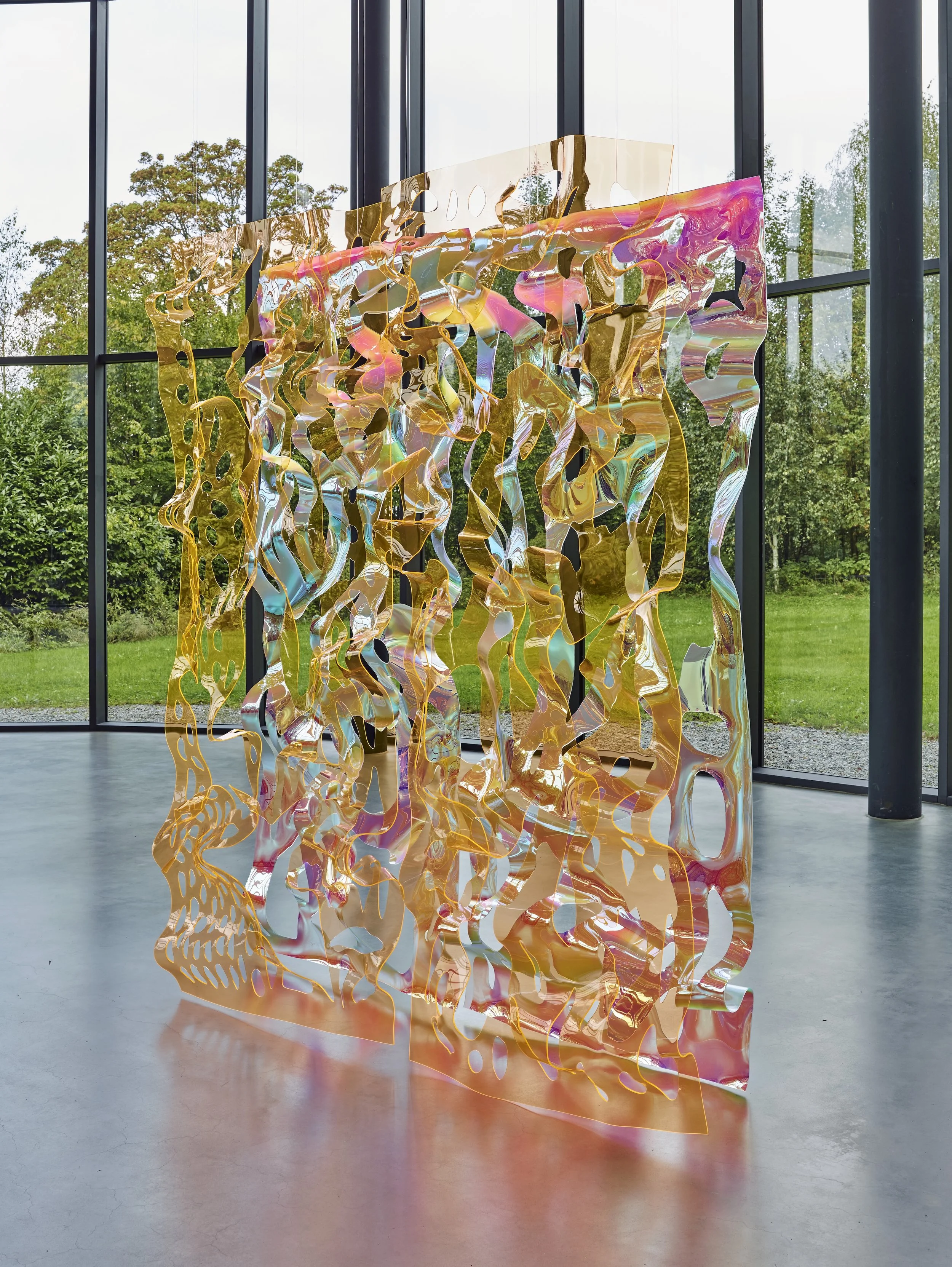
Contrasts: Pieter Buggenhout, Berta Fischer, Richard Long (2026). Exhibition views featuring works from the collection, Skulpturenpark Waldfrieden, Wuppertal, Germany. Photo: Michael Richter.
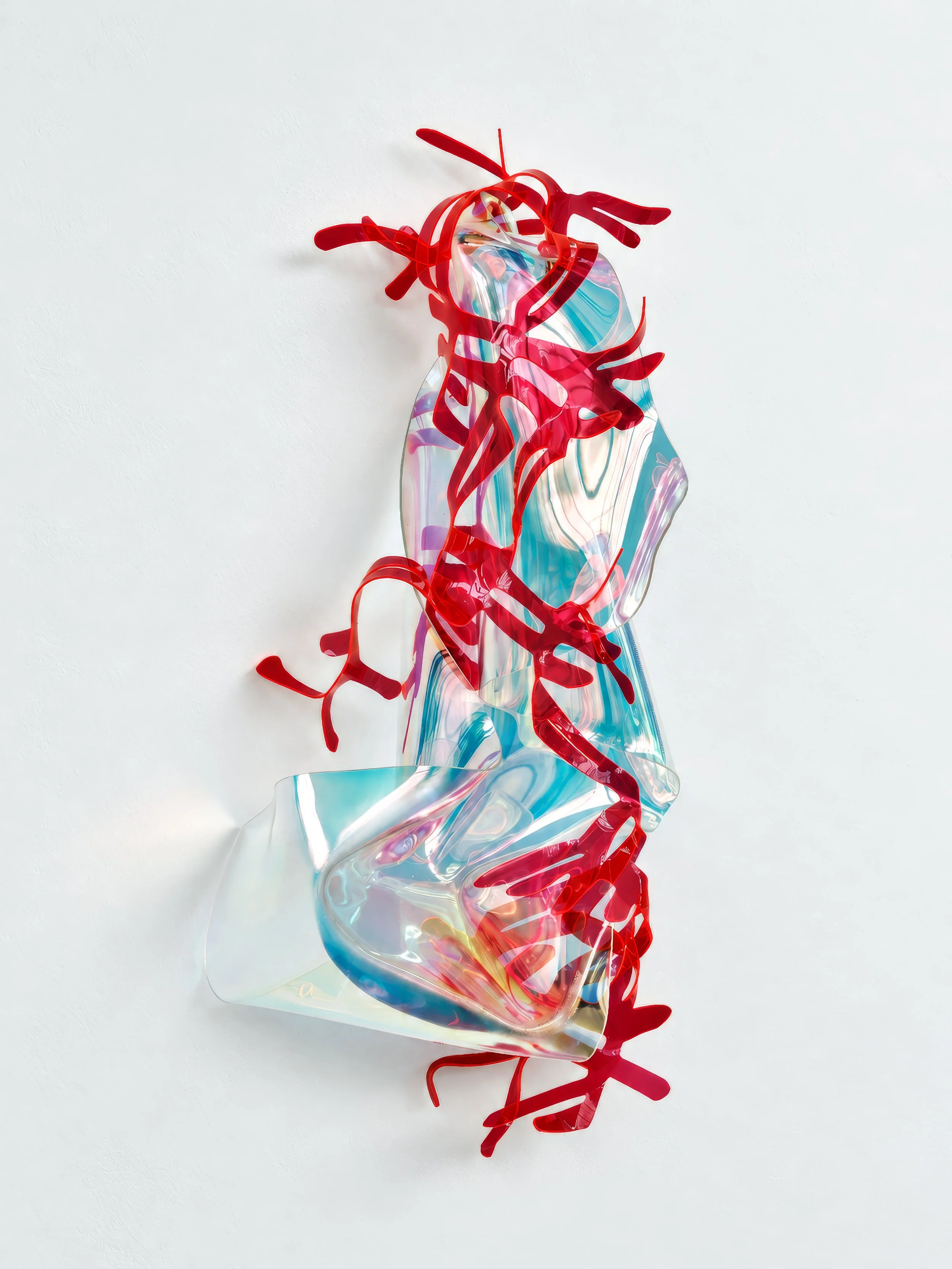
Contrasts: Pieter Buggenhout, Berta Fischer, Richard Long (2026). Exhibition views featuring works from the collection, Skulpturenpark Waldfrieden, Wuppertal, Germany. Photo: Michael Richter.
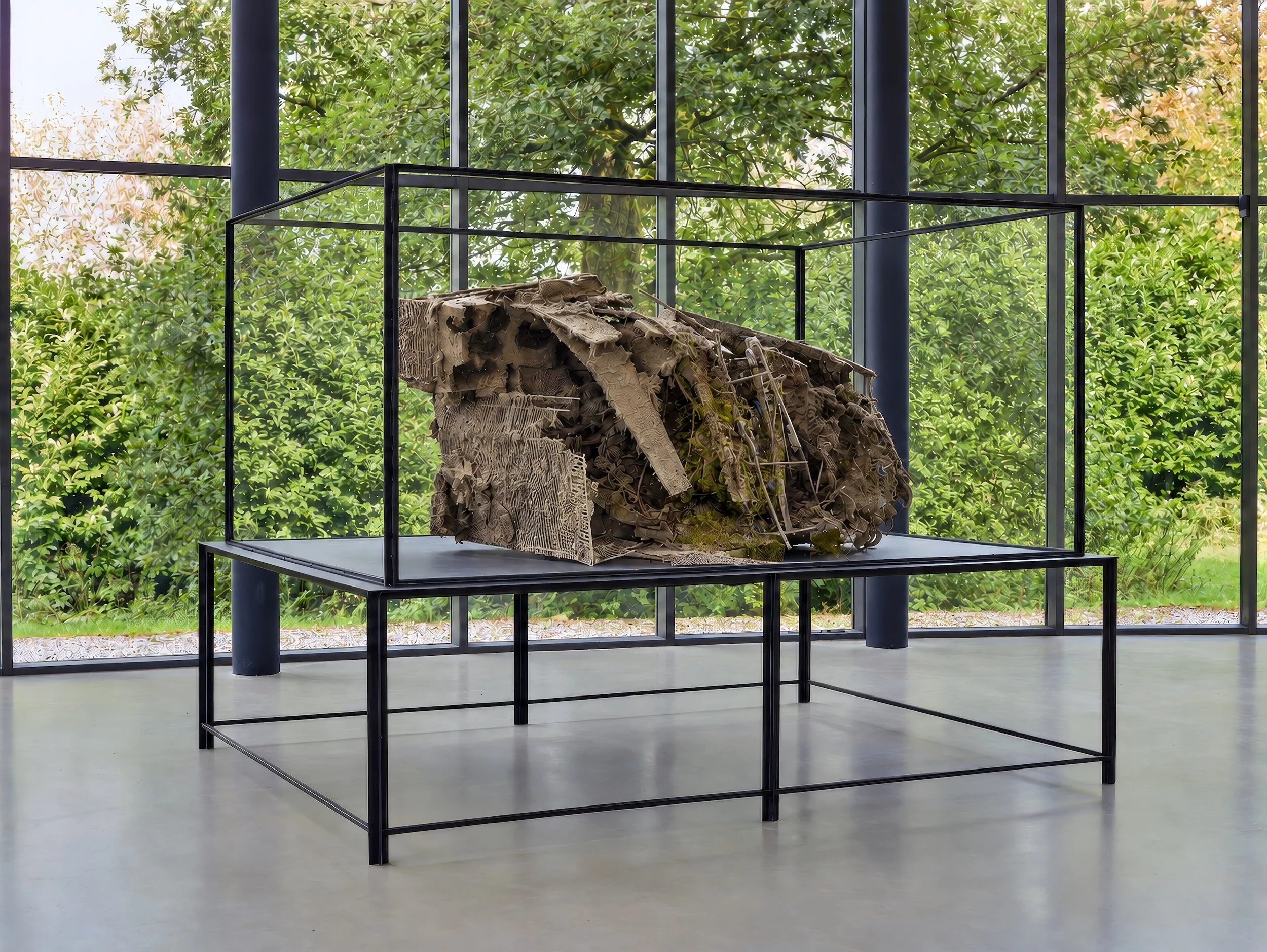
Contrasts: Pieter Buggenhout, Berta Fischer, Richard Long (2026). Exhibition views featuring works from the collection, Skulpturenpark Waldfrieden, Wuppertal, Germany. Photo: Michael Richter.
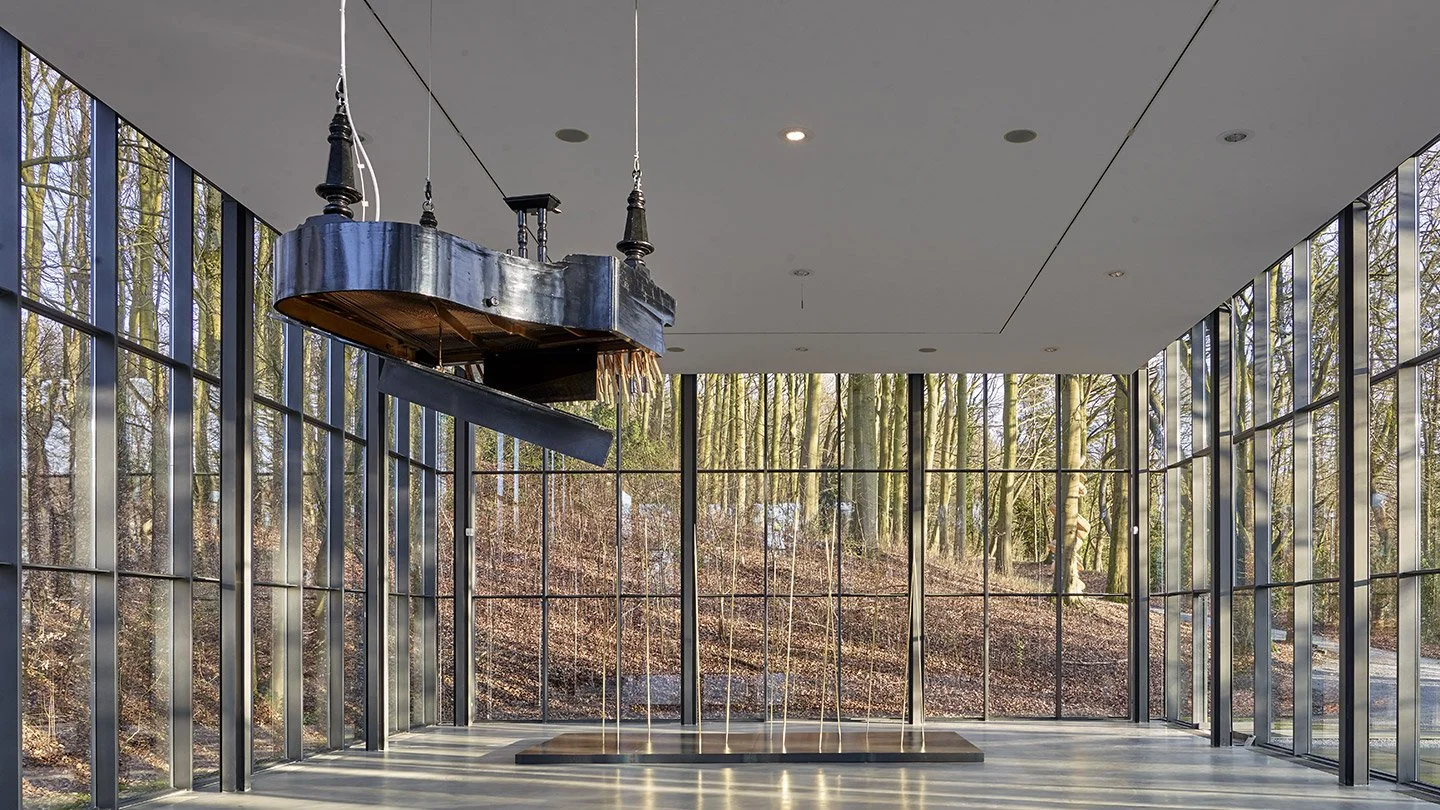
Rebecca Horn at the Waldfrieden Sculpture Park, 2026 (c) Rebecca Horn Estate, Photo: Michael Richter.
As Koch guided me through the grounds, I was struck by how naturally the sculptures inhabited the landscape. Some appeared unexpectedly among the trees, while others seemed to disappear and reemerge as we followed the winding paths, their forms shifting with the changing light and perspective. I was particularly taken by Richard Long's BasaltSlate(2015), positioned outside the dining room window of Villa Waldfrieden, where the architecture framed its arrangement of basalt and slate against the surrounding lawn. Elsewhere, we encountered a work associated with Joseph Beuys's 7000 Oaks (1982), consisting of a basalt column and a tree, which Christian explained had previously stood in a private garden before finding its way to Waldfrieden. I appreciated how these works acquired new relationships with their surroundings, as though the landscape itself participated in their transformation. What fascinated me most was Cragg's willingness to follow his instincts, allowing imagination, experimentation, and play to determine what might emerge. Nothing seemed obliged to become one thing or another. The sculptures, like the park itself, appeared to remain open to possibility.
What I particularly admire about Cragg is his eye for bringing other artistic practices into Waldfrieden, treating the exhibition program as an extension of his engagement with sculpture. If his individual works transform matter into unexpected forms, the exhibitions allow him to work with another material altogether: art history itself. Artists, objects, and ideas are brought into new relationships, revealing connections that might otherwise remain unseen.
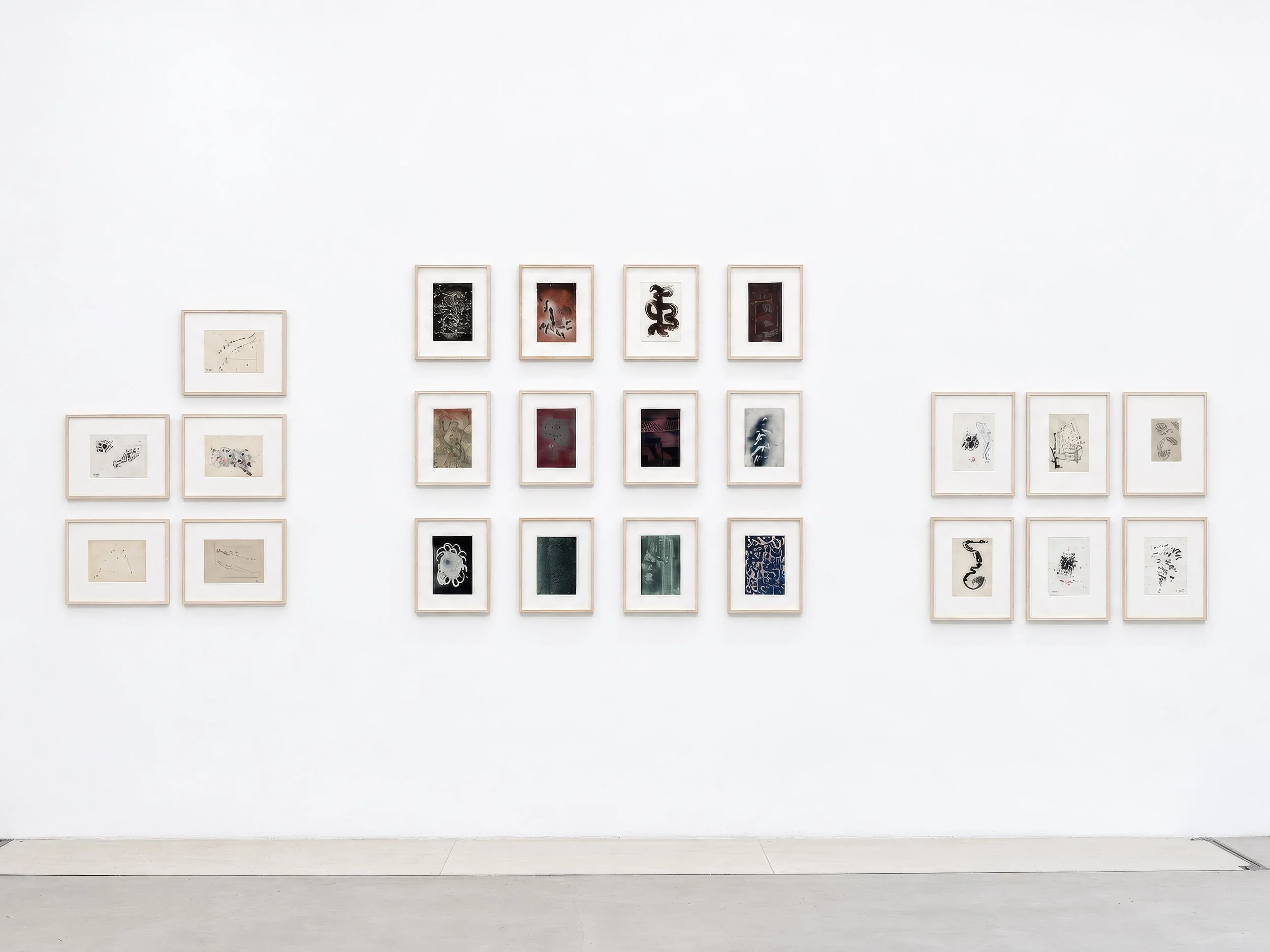
Farbe! Farbe! (2026–2027). Exhibition views featuring works by Willi Baumeister, Franz Krause, and Oskar Schlemmer, Skulpturenpark Waldfrieden, Wuppertal, Germany, September 12, 2026–January 3, 2027. Photo: Michael Richter.
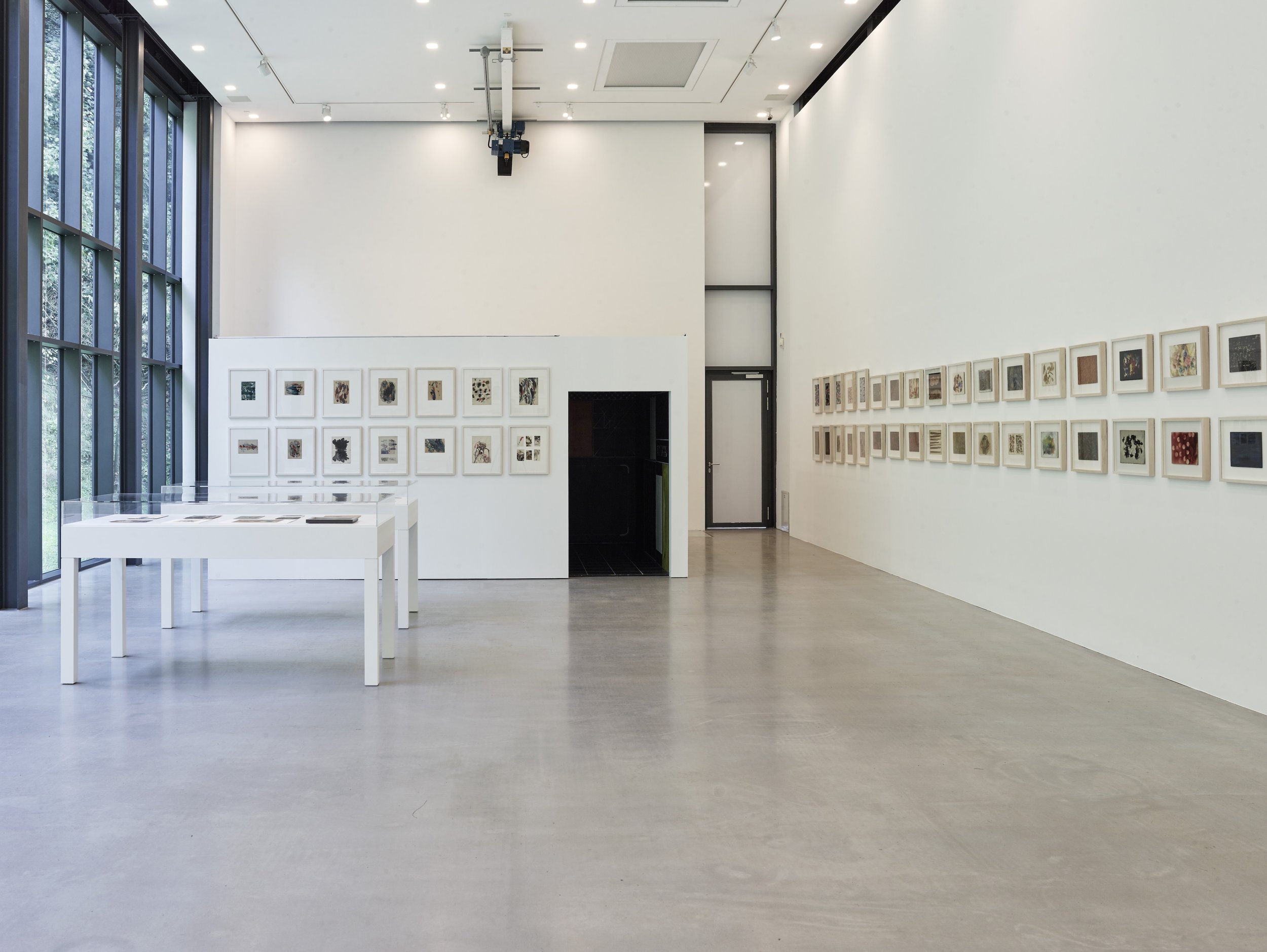
Farbe! Farbe! (2026–2027). Exhibition views featuring works by Willi Baumeister, Franz Krause, and Oskar Schlemmer, Skulpturenpark Waldfrieden, Wuppertal, Germany, September 12, 2026–January 3, 2027. Photo: Michael Richter.

Farbe! Farbe! (2026–2027). Exhibition views featuring works by Willi Baumeister, Franz Krause, and Oskar Schlemmer, Skulpturenpark Waldfrieden, Wuppertal, Germany, September 12, 2026–January 3, 2027. Photo: Michael Richter.
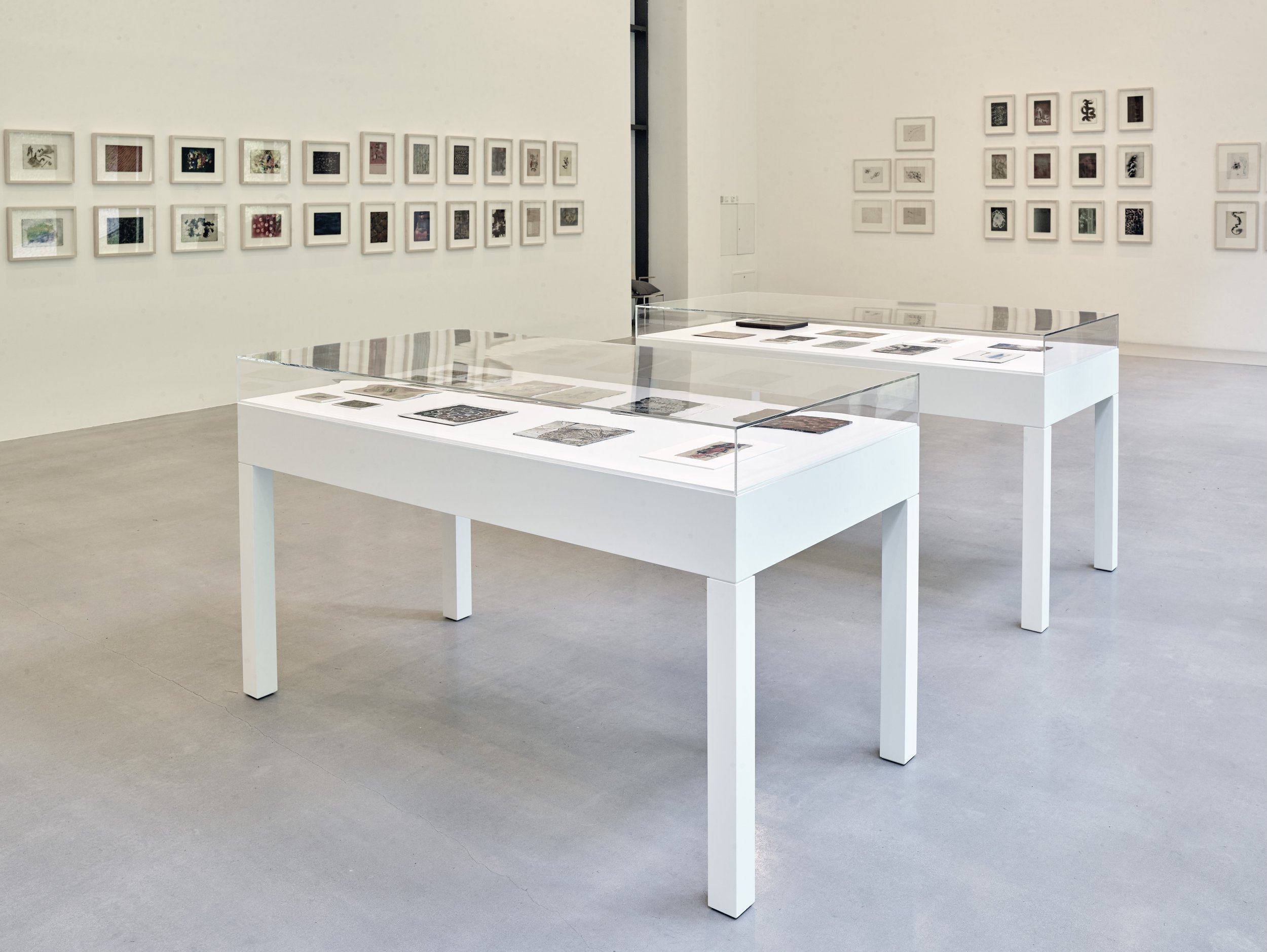
Farbe! Farbe! (2026–2027). Exhibition views featuring works by Willi Baumeister, Franz Krause, and Oskar Schlemmer, Skulpturenpark Waldfrieden, Wuppertal, Germany, September 12, 2026–January 3, 2027. Photo: Michael Richter.
During my visit, Koch guided me through a presentation of recent works by Cragg and a collection exhibition featuring Richard Long, Berta Fischer, and Pieter Buggenhout. The latter was presented in the Obere Ausstellungshalle (Upper Exhibition Hall), an oval-shaped exhibition space that Cragg conceived with particular attention to the relationship between architecture, sculpture, and natural light. As daylight entered the building, it illuminated the works in ways that shifted their appearance and relationship to the surrounding space. I was interested in how these artists approached sculpture through distinctly different relationships with material and form. Long's arrangements of natural materials, Fischer's explorations of transparency and spatial perception, and Buggenhout's dense accumulations of industrial matter presented contrasting ways of understanding what sculpture might become. Within this carefully considered architecture, the works seemed to participate in a continuing exchange between material, light, and perception.
Equally fascinating was Farbe! Farbe!, an exhibition examining experiments in color and lacquer undertaken by Oskar Schlemmer, Willi Baumeister, and Franz Krause. The exhibition had a particularly meaningful connection to Villa Waldfrieden's original owner, Kurt Herberts, whose paint factory gave these artists opportunities to experiment during the Nazi period, when their artistic careers had been severely restricted. Among the works was a reconstruction of Schlemmer's Lackkabinett (1941), an immersive architectural environment originally conceived through drawings and subsequently lost during the war. I was struck by the possibility of entering a space that had survived principally through its documentation, where an artistic idea could acquire physical form again decades after its original disappearance.
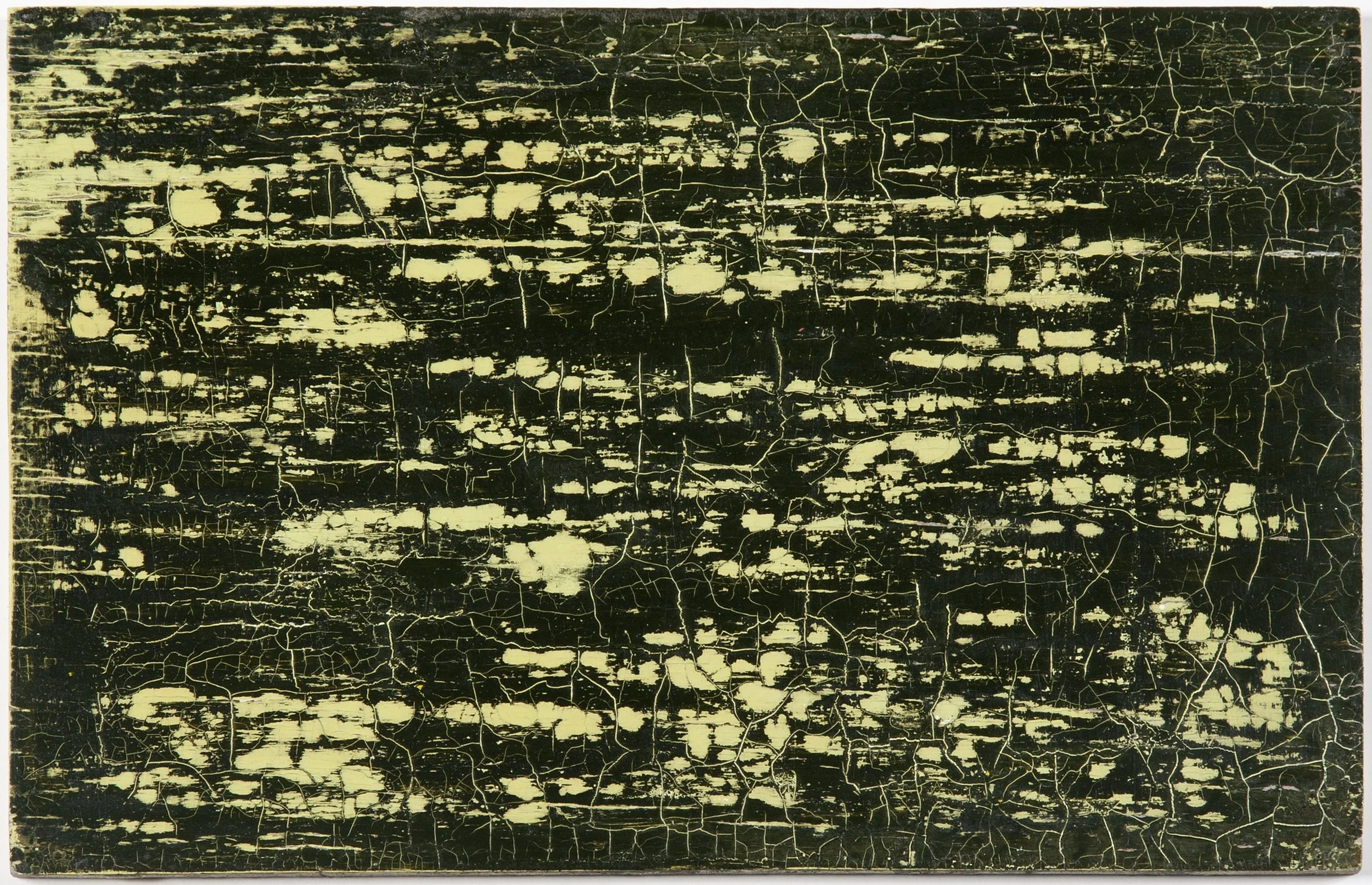
Oskar Schlemmer, Untitled, 1941. Cracked black lacquer over yellow underpainting on plywood, 19.9 × 29 cm. Kunstmuseum Stuttgart, permanent loan from the Friends of Kunstmuseum Stuttgart. Exhibited in Farbe! Farbe!, Skulpturenpark Waldfrieden, Wuppertal, September 12, 2026–January 3, 2027. Photo: Michael Richter.
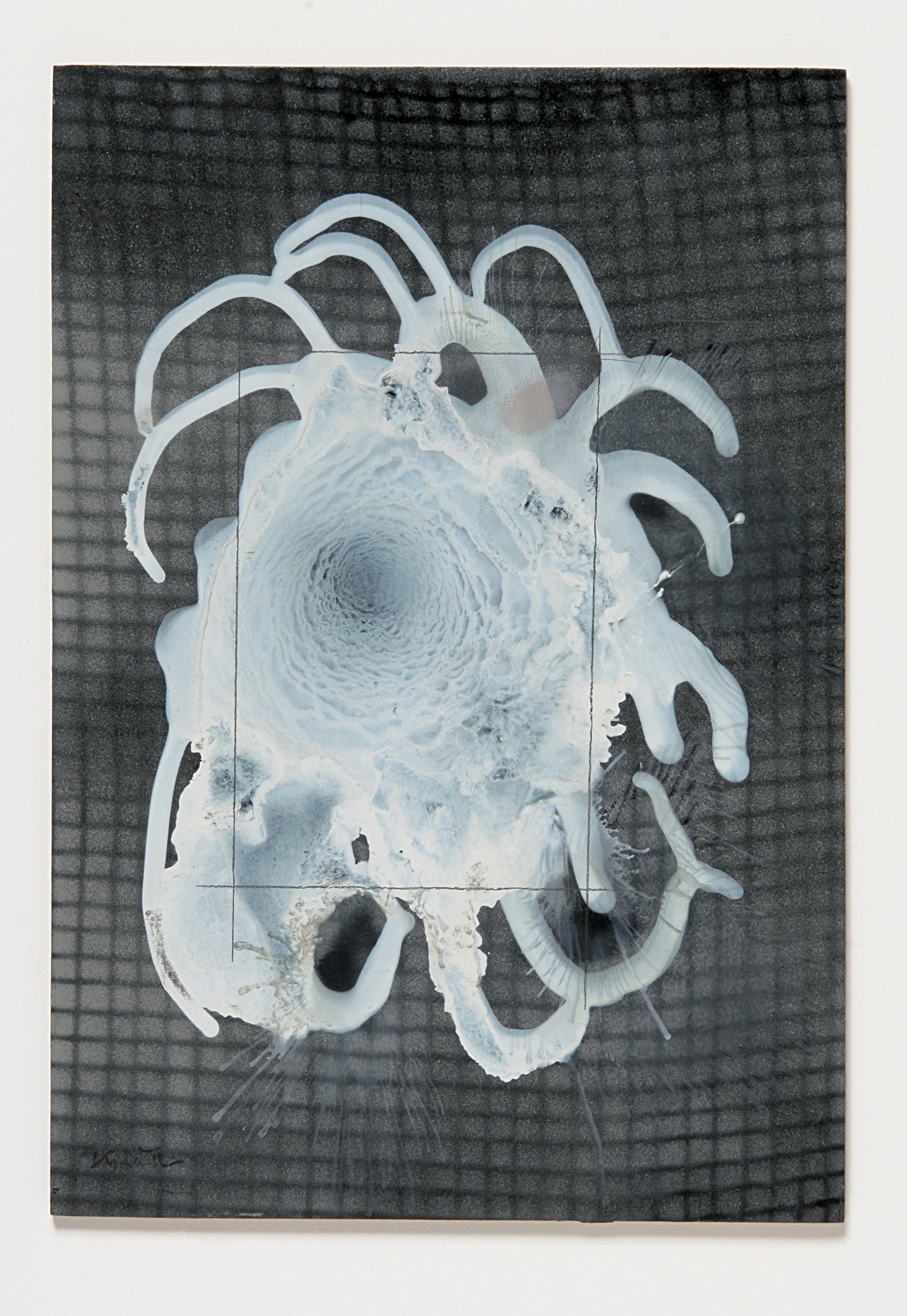
Franz Krause, Untitled, 1941. Lacquer on plywood, 29 × 20 × 0.5 cm. Kunstmuseum Stuttgart, permanent loan from the Friends of Kunstmuseum Stuttgart. Exhibited in Farbe! Farbe!, Skulpturenpark Waldfrieden, Wuppertal, September 12, 2026–January 3, 2027. Photo: Michael Richter.
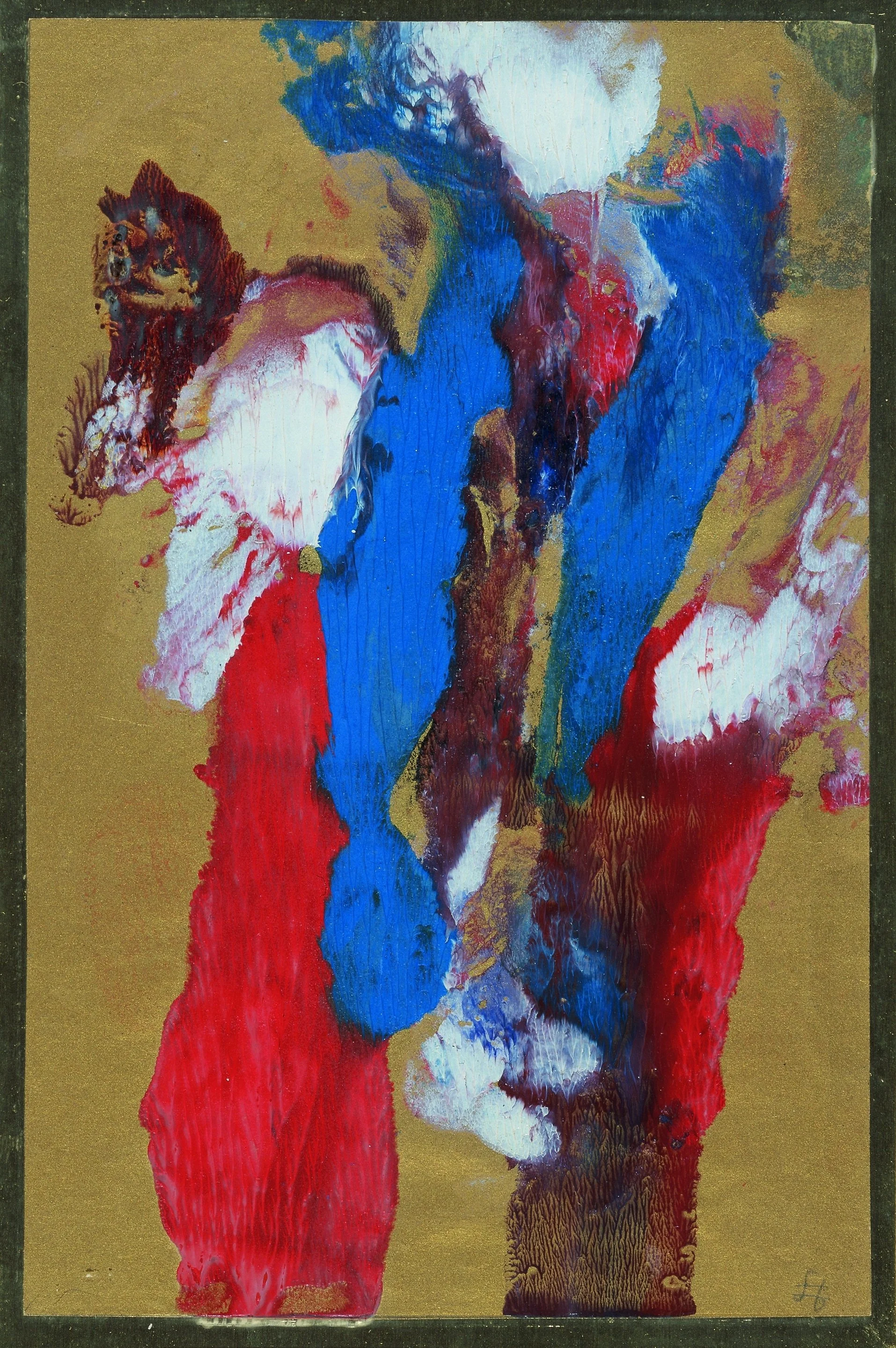
Oskar Schlemmer, Untitled, 1941. Lacquer on gold paper, 28.2 × 21.9 × 6.5 cm (historical framed dimensions). Kunstmuseum Stuttgart, permanent loan from the Friends of Kunstmuseum Stuttgart. Exhibited in Farbe! Farbe!, Skulpturenpark Waldfrieden, Wuppertal, September 12, 2026–January 3, 2027. Photo: Michael Richter.
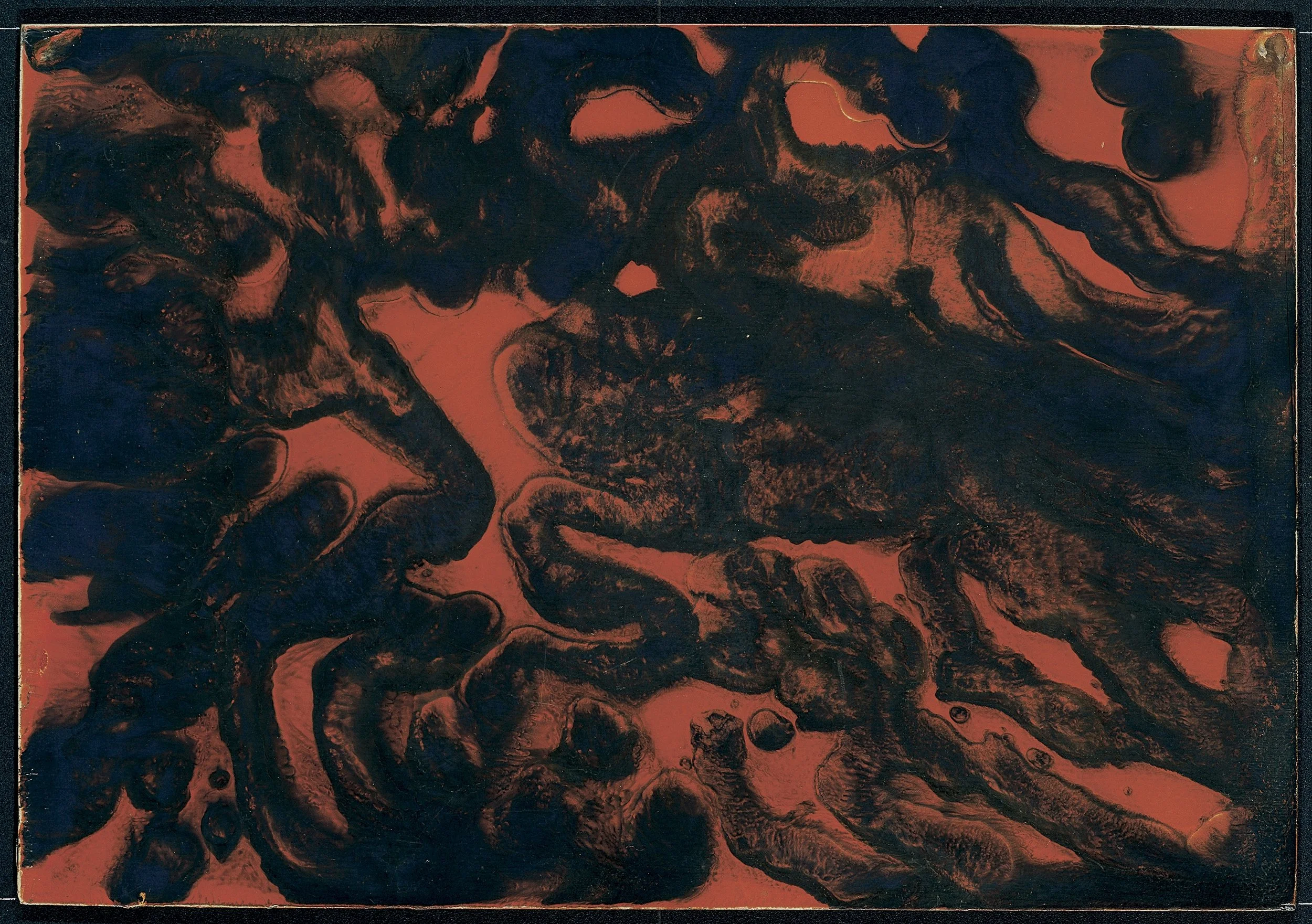
Willi Baumeister, Untitled, 1941–42. Nitrocellulose lacquer on plywood, 20 × 29.1 × 5 cm. Kunstmuseum Stuttgart, permanent loan from the Friends of Kunstmuseum Stuttgart. Exhibited in Farbe! Farbe!, Skulpturenpark Waldfrieden, Wuppertal, September 12, 2026–January 3, 2027. Photo: Michael Richter.
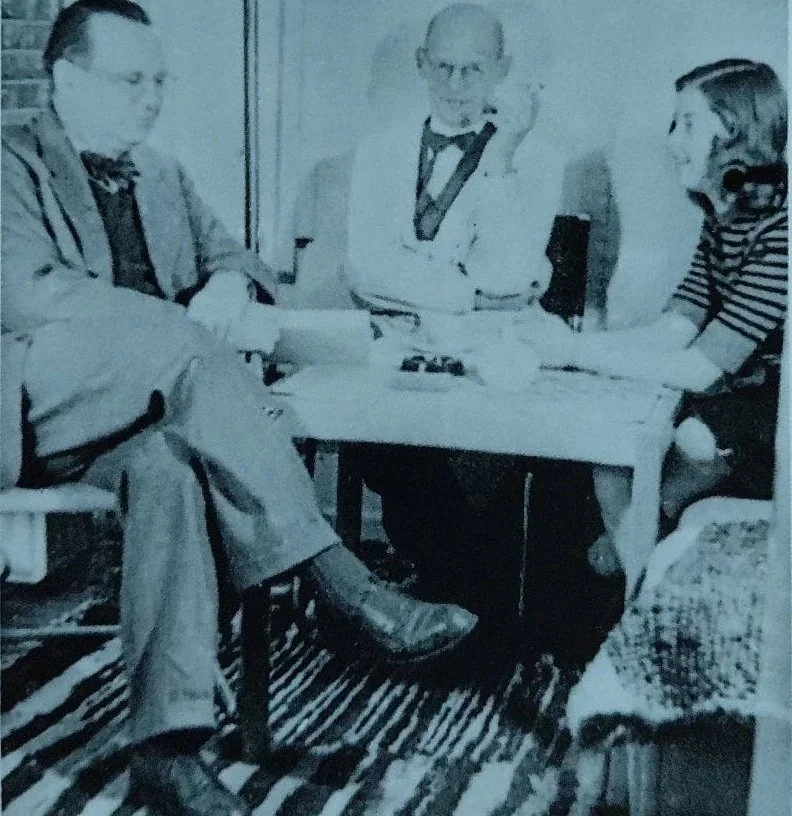
Willi Baumeister, Oskar Schlemmer, and Karin Schlemmer in Wuppertal, Germany, 1942. Archival photograph.
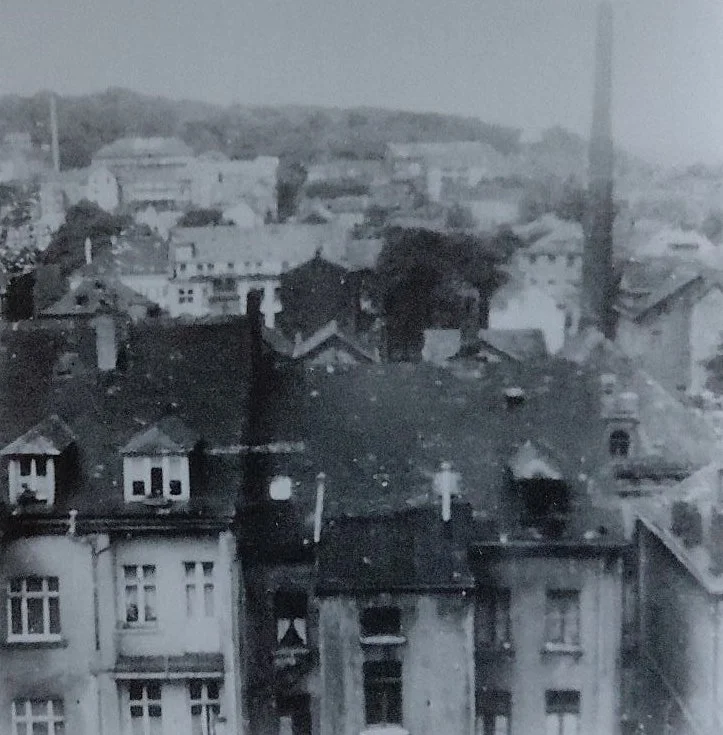
View from Oskar Schlemmer’s studio toward Schleusenstraße, Wuppertal, Germany. Archival photograph, date unknown.

Interior of Oskar Schlemmer’s studio at Döppersberg 24, Wuppertal, Germany, featuring a wall painting by Georg Muche, 1942. Archival photograph.
What stayed with me from these exhibitions was the extent to which artistic experimentation depends upon allowing materials to behave in ways that cannot always be anticipated. The lacquer studies undertaken by Schlemmer, Baumeister, and Krause involved dripping, spraying, layering, and manipulating pigment, producing surfaces that recorded the physical behavior of paint as much as the artist's intentions. I thought again of Cragg's drawings and the geological associations they had first suggested to me. Whether working with lacquer, arranging stones, or carving wood, the artist enters into a relationship with matter that is never entirely one-sided. A material possesses its own properties, limitations, and possibilities, and the resulting work emerges through the negotiation between those conditions and the imagination. Perhaps this is what I find most compelling about Cragg's practice: his understanding that sculpture is not simply the realization of an idea, but a means of discovering ideas that could not have existed before the process of making began.
After speaking with Cragg in New York, I wondered how an artist's imagination develops over a lifetime, and whether the origins of a particular way of thinking could ever be fully understood. Visiting Waldfrieden offered another perspective. Here, his imagination had extended beyond the studio into the creation of an institution, where the work of other artists, the history of a building, and the surrounding landscape could continually influence one another. I began to think of the park as a kind of self-portrait, not in the conventional sense of representing its maker, but as a record of his curiosities, decisions, and changing interests. Unlike a finished sculpture, however, this portrait remains unfinished, altered by each exhibition, each new acquisition, and even the changing seasons. Perhaps what makes Waldfrieden remarkable is that Cragg has created something that can continue to develop beyond the limits of his own artistic production, allowing other imaginations to enter and transform it.
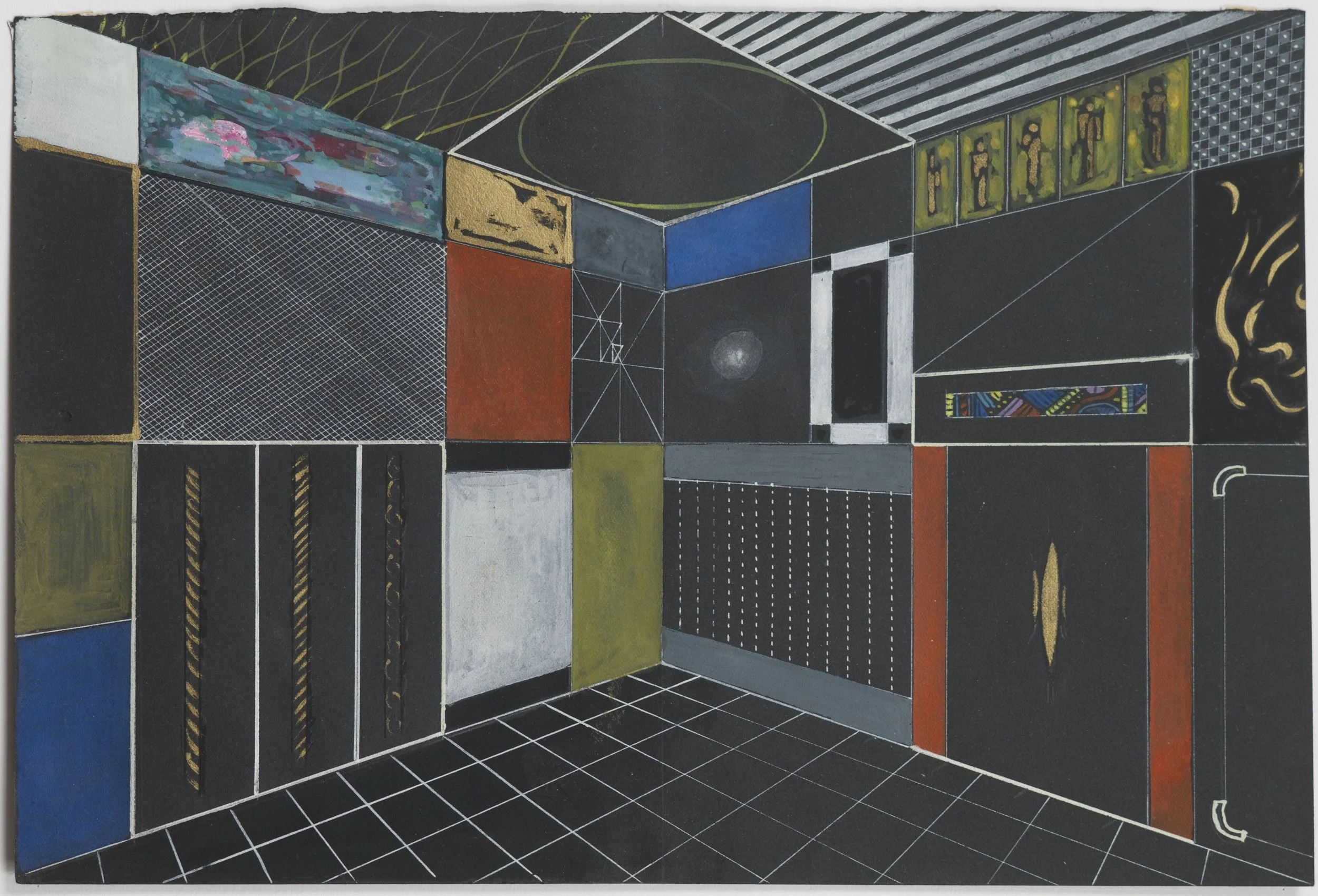
Oskar Schlemmer, Design for a Lacquer Cabinet (Entwurf für ein Lackkabinett), 1941. Courtesy of the Von der Heydt-Museum. Exhibited in Farbe! Farbe!, Skulpturenpark Waldfrieden, Wuppertal, September 12, 2026–January 3, 2027. Photo: Michael Richter.
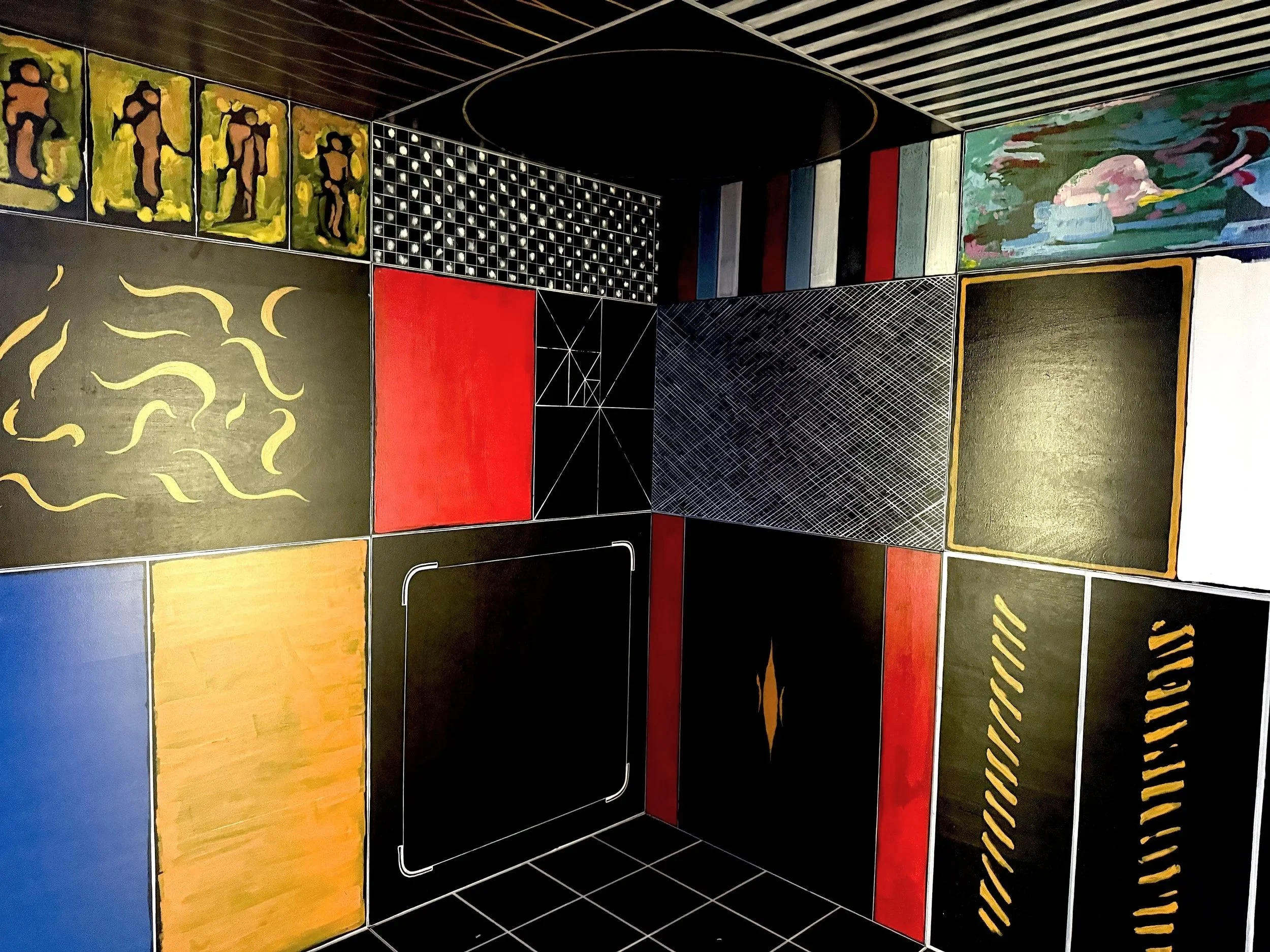
Reconstruction of Oskar Schlemmer’s Design for a Lacquer Cabinet (Entwurf für ein Lackkabinett), originally conceived in 1941 and realized as a walk-in installation for Farbe! Farbe! (2026–2027), Skulpturenpark Waldfrieden, Wuppertal, Germany, September 12, 2026–January 3, 2027. Photo: Amadour.
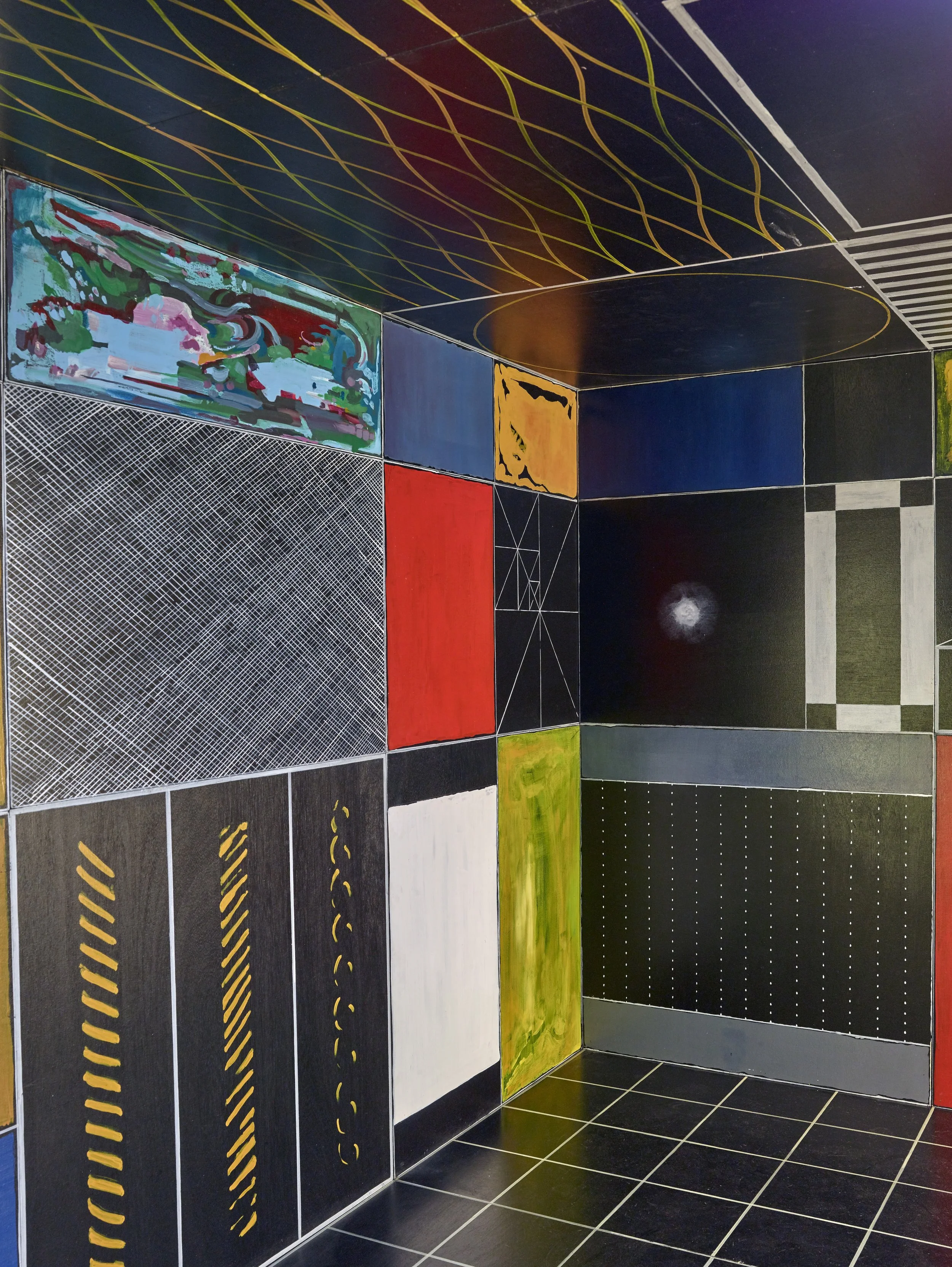
Reconstruction of Oskar Schlemmer’s Design for a Lacquer Cabinet (Entwurf für ein Lackkabinett), originally conceived in 1941 and realized as a walk-in installation for Farbe! Farbe! (2026–2027), Skulpturenpark Waldfrieden, Wuppertal, Germany, September 12, 2026–January 3, 2027. Photo: Michael Richter.
INTERVIEW:
TONY CRAGG: I apologize for the dark glasses; I look terrible. I was taken to a tennis game last night that went on until three o’clock in the morning.
AMADOUR: What? Where was your tennis game?
TONY CRAGG: Yeah, it was the US Open; it was a game with [Carlos] Alcaraz. It was an amazing game that started late, went over 5 sets, and we were exhausted.
AMADOUR: It sounds like you had quite a night. It’s so nice to meet you, Tony. I’ve seen many of your shows at Marian Goodman Gallery, including your exhibitions in Los Angeles and on West 57th Street in New York. Congratulations on your new show at the gallery’s new space in Tribeca. By coincidence, I was also in Istanbul last December and saw your show at Dirimart in Dolapdere, so I’ve been following your work for some time.
TONY CRAGG: Oh yeah, I apologize. [laughs]
AMADOUR: I wanted to start with your sculpture, Angel Cross. When I first saw the work, I thought about the Winged Victory of Samothrace (c. 200–190 BC) at the Musée du Louvre. Do historical sculptures ever enter your thinking when making a work like this?
TONY CRAGG: I don’t know if you believe me, but I don’t know that sculpture.
AMADOUR: You definitely do! It’s at the top of the staircase at the Louvre, with wings and no head.
TONY CRAGG: One of the fundamental aspects of my work is that it isn’t really culturally referential, other than the obvious. We live at a certain time, and we don’t all make figurative sculpture or whatever else. When I come to New York and go to a museum, I go to the Natural History Museum. It’s the only one I ever visit.
AMADOUR: What interests you about the Natural History Museum?
TONY CRAGG: I was there four months ago. It’s incredible and beautifully presented. There are animals, cultures, landscapes, dinosaurs, all sorts of things. There used to be a whale. You can get lost in it. It’s so big you could spend a week there. When I studied at the Royal College in London, the sculpture department shared a backyard with the Natural History Museum and the Geological Museum. I spent a lot of time in those museums looking at geology, minerals and landscape structures. I wasn’t thinking I would make art out of it, but it obviously affected me.
AMADOUR: Is there anything in the museum that has particularly stayed with you?
TONY CRAGG: There used to be an animal on the steps when you went up. It was quite big, four or five feet high, maybe the size of a donkey. It was absolutely in between a dog and a cat. They couldn’t say whether it was a dog or a cat because it was right in the middle of those two animals. It shows that in the past there was an amazing richness of species on the planet before we got into it. I still make work referring to what I call Early Forms. I once read in National Geographic about an enormous volcanic explosion on the North American continent where animals ran across the landscape until they came to a cliff and fell off. It created an enormous reservoir of prehistoric animal bones: enormous sloths and bears, tiny horses. Horses were only about two feet high with very thin legs. When we look at the species available now, there were definitely many, many more in the past. You get a sense that the reality we see now is only a tiny bit of the possibilities. [Cragg appears to be recalling Nebraska’s Ashfall Fossil Beds, the subject of a January 1981 National Geographic article. The site preserves prehistoric mammals killed by volcanic ash roughly 12 million years ago.]
AMADOUR: I think that’s so interesting. Natural history museums can also feel like whimsical spaces, especially with their dioramas. Did you gravitate toward anything like that as a child? Did you build things or make your own worlds?
TONY CRAGG: No, I don’t think so. I wasn’t interested in art at all. My father was an engineer designing electrical parts for airplanes. I went to seven different schools because he kept changing projects. When one project was finished, he would go to the next job, so we lived all over Britain: Scotland, the Southwest, London, everywhere. The only things I could really follow in school were physics, mathematics and chemistry. It was very difficult to follow subjects like geography, history or languages when I kept changing schools. When I was seventeen, my family moved again, and I refused to go. I said, “No, I’m staying here.” So I was more or less left on my own at seventeen. I worked as a laboratory assistant, building experiments for a professor, and started studying biochemistry. But this was 1968, ’69, which were really crazy years. There had been great rock music before, but suddenly in Britain there was an anti-authoritarian movement against militarization, colonialism, the administration, all sorts of things. Rock and pop music drove it, first of all. The energy, the words, and the violence of those things were directed toward a new generation. I was eighteen or nineteen, working in a laboratory making experiments, and I just wanted to get out. Out of boredom, I started to draw. The drawing became more important than anything else. I had a girlfriend who said, “The drawings are good. Why don’t you do something different for a while? Go to art school.” I thought, “Oh God, art school, what a crazy idea.” I’d never thought of that. I applied and got in. I thought a year in art school might be nice. Then I met art, and I met people who were interested in art, and that was it, really.
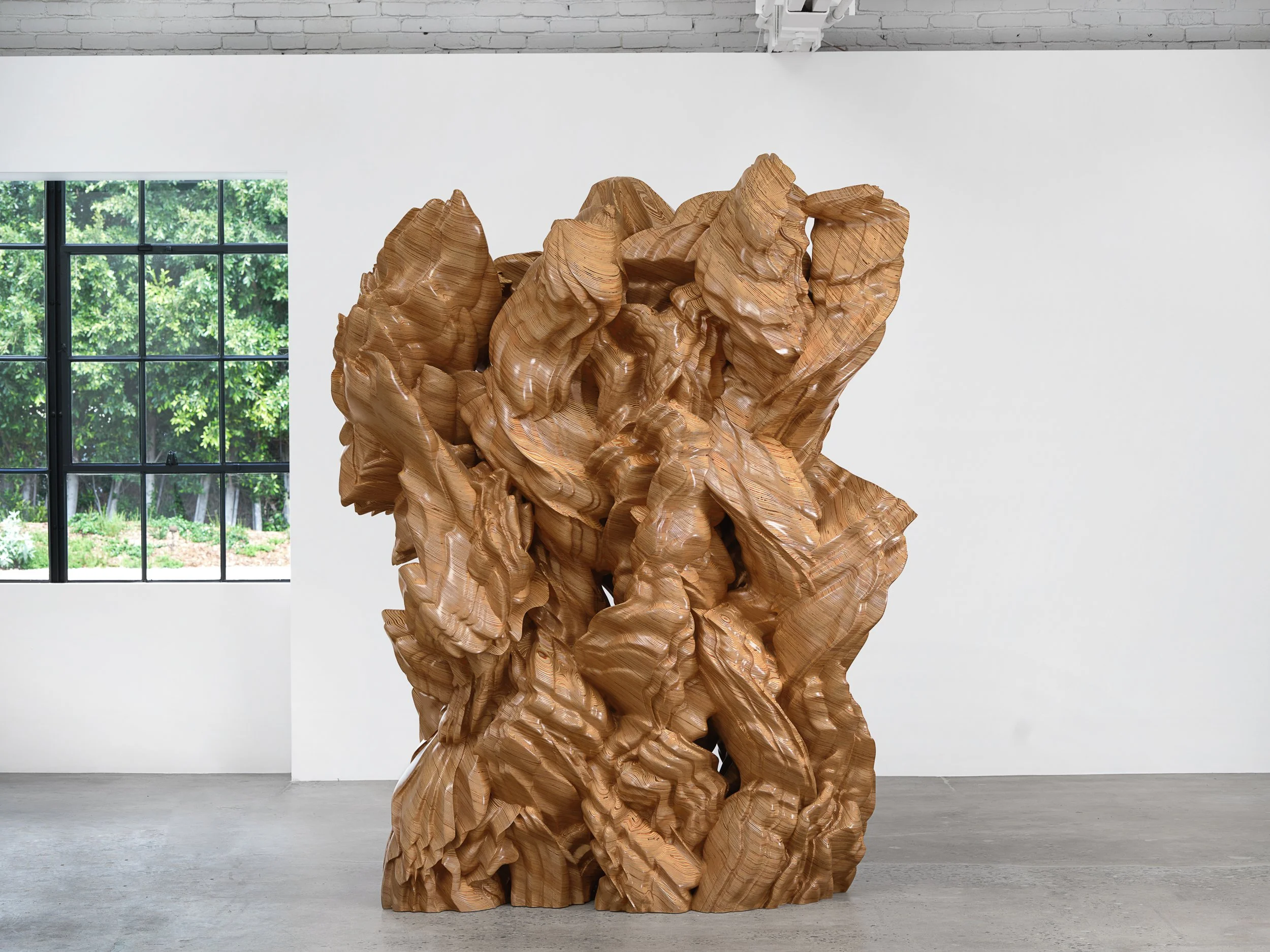
Tony Cragg, In No Time, 2018. Wood, 94½ × 73¼ × 37¾ in. (240 × 186 × 96 cm). Courtesy of the artist and Marian Goodman Gallery. Photo: Elon Schoenholz.

Tony Cragg, installation view, Marian Goodman Gallery, Los Angeles, 2024. Courtesy of the artist and Marian Goodman Gallery. Photo: Elon Schoenholz.
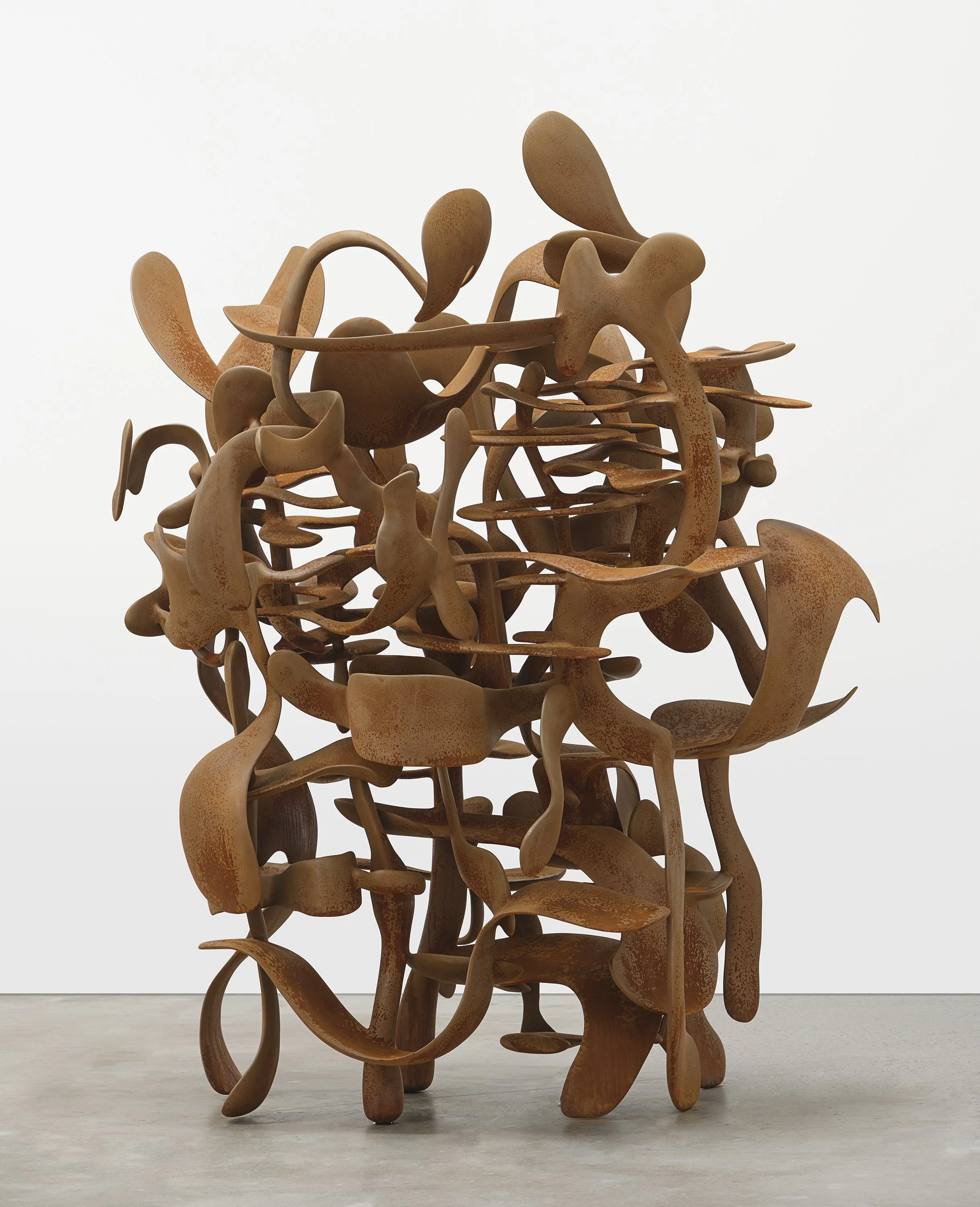
Tony Cragg, Hedge, 2023. Corten steel, 83⅞ × 69¼ × 51⅛ in. (213 × 176 × 130 cm). Courtesy of the artist and Marian Goodman Gallery. Photo: Elon Schoenholz.
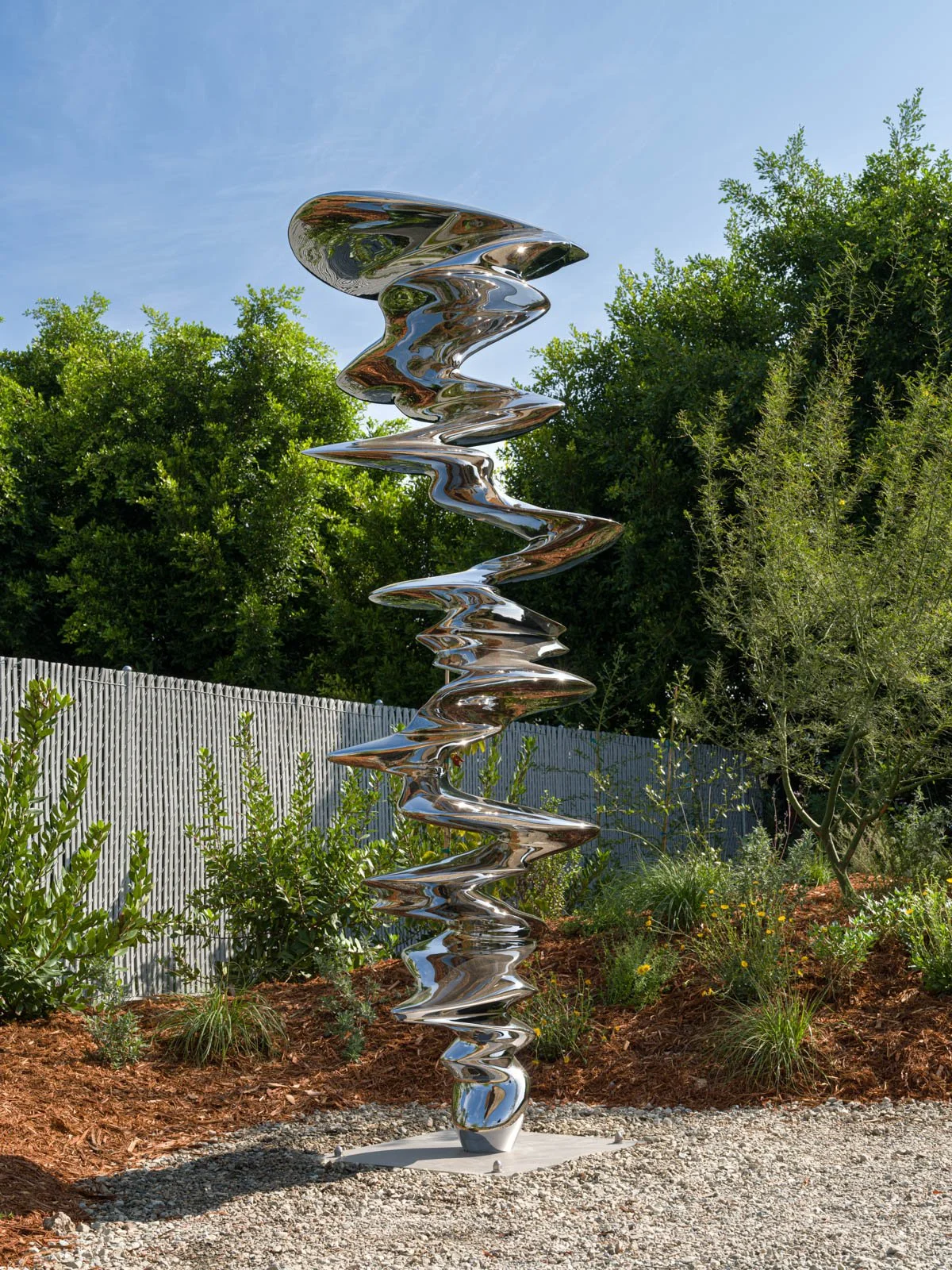
Tony Cragg, Stages, 2021. Stainless steel, 118⅛ × 43¾ × 49⅝ in. (300 × 111 × 126 cm). Courtesy of the artist and Marian Goodman Gallery. Photo: Fredrik Nilsen Studio.
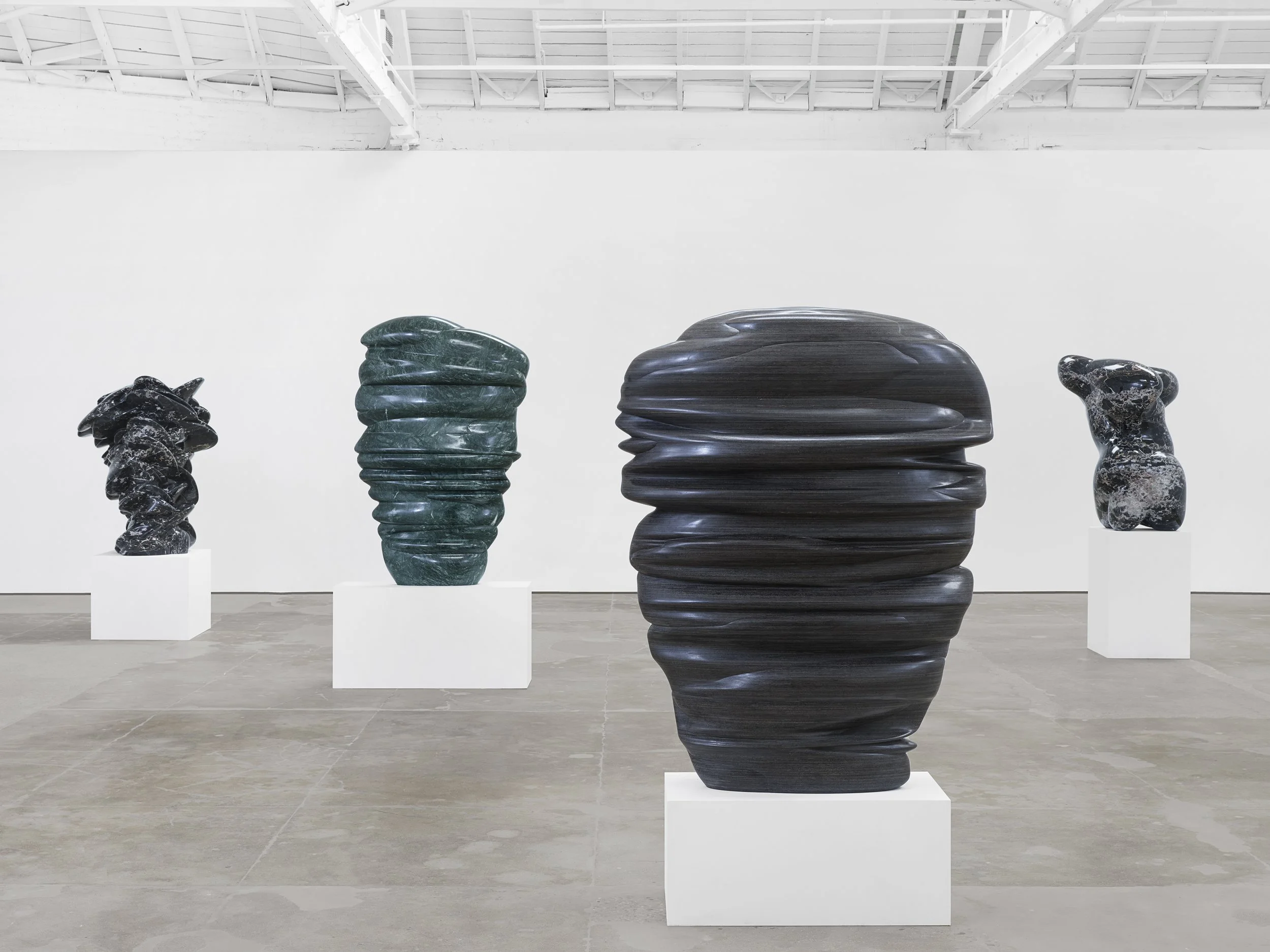
Tony Cragg, installation view, Marian Goodman Gallery, Los Angeles, 2024. Courtesy of the artist and Marian Goodman Gallery. Photo: Elon Schoenholz.
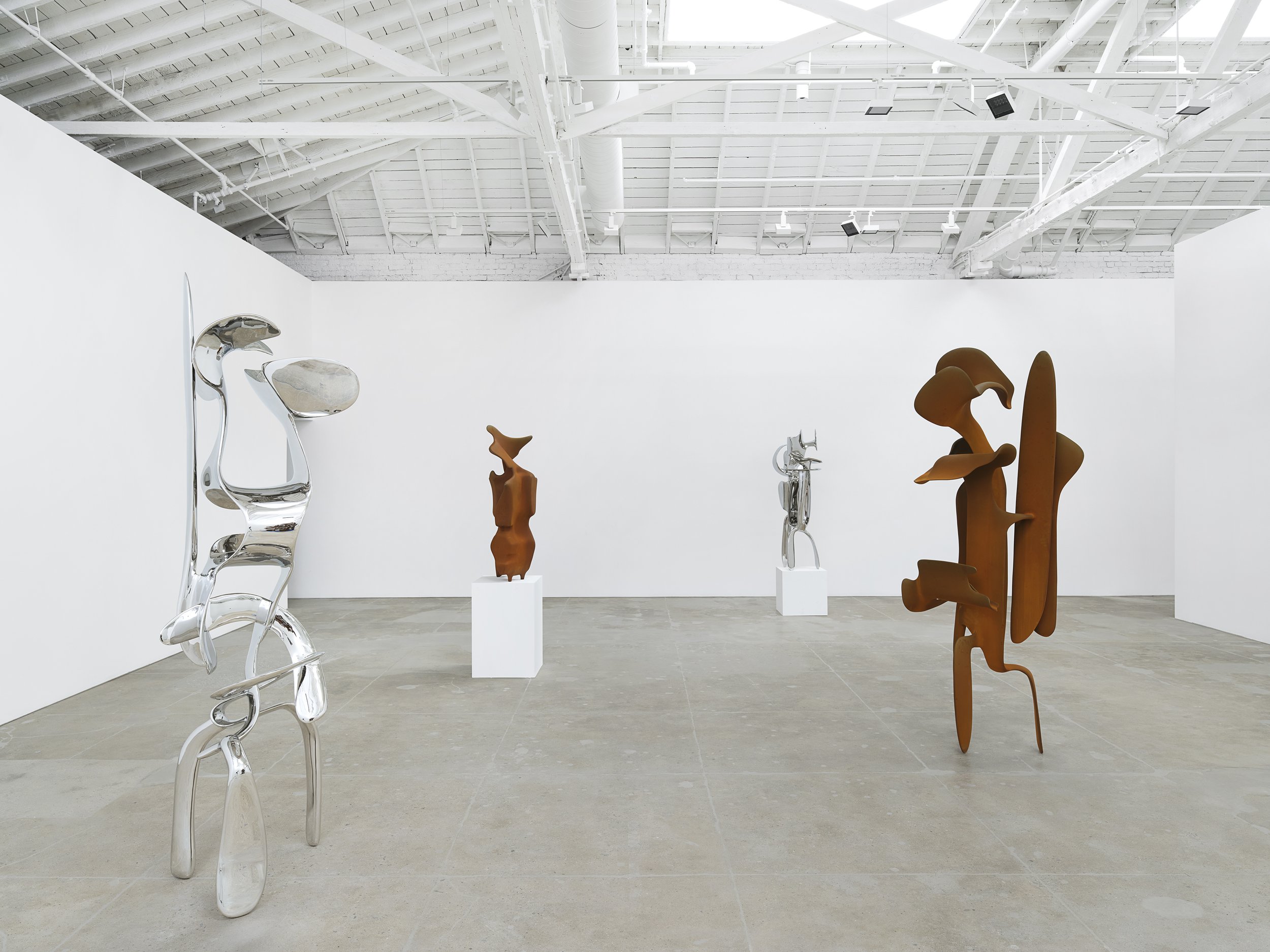
Tony Cragg, installation view, Marian Goodman Gallery, Los Angeles, 2024. Courtesy of the artist and Marian Goodman Gallery. Photo: Elon Schoenholz.
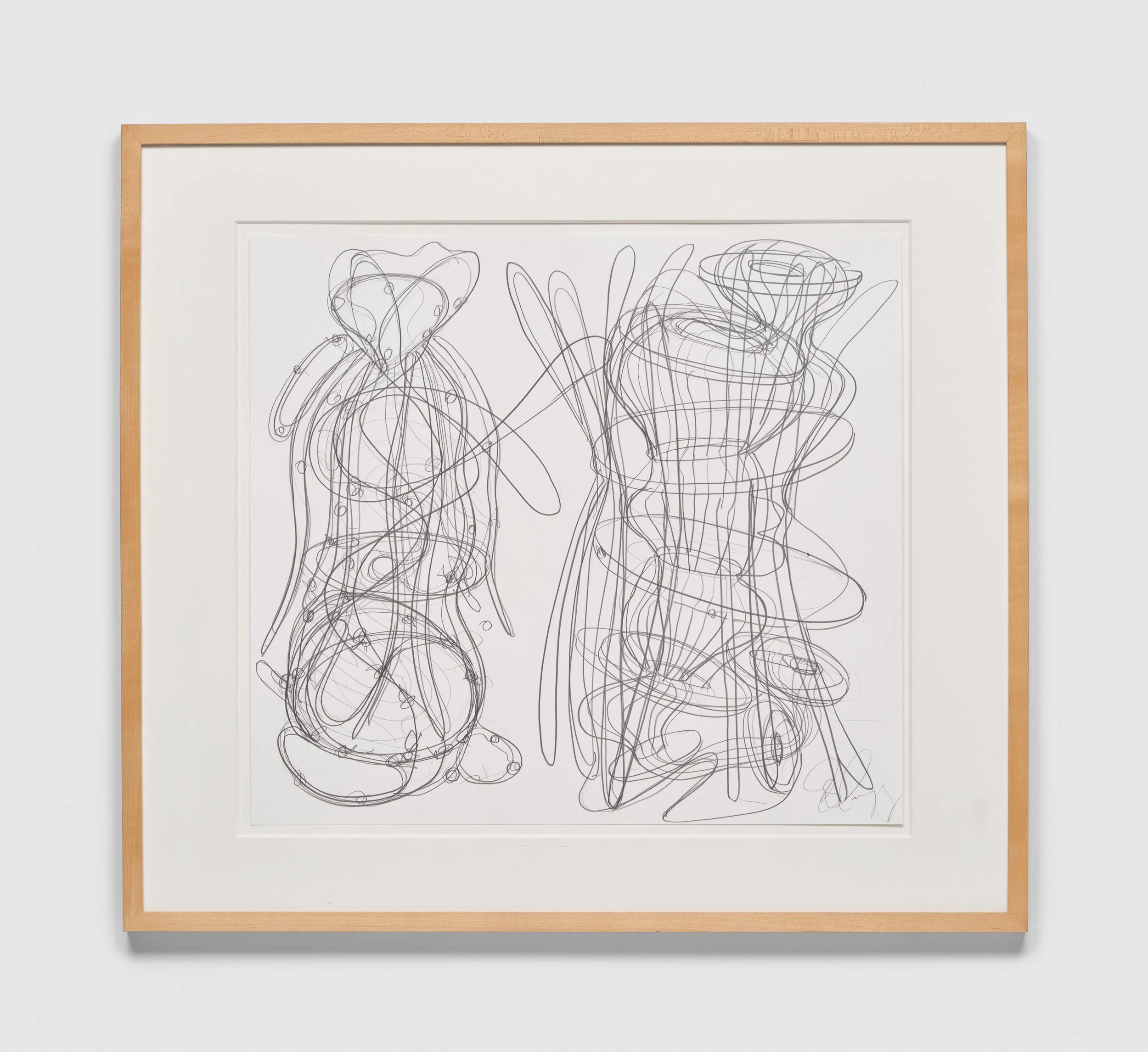
Tony Cragg, Untitled, 2009. Pencil on paper, 27⅛ × 30⅛ in. (69 × 76.5 cm). Courtesy of the artist and Marian Goodman Gallery. Photo: Elon Schoenholz.
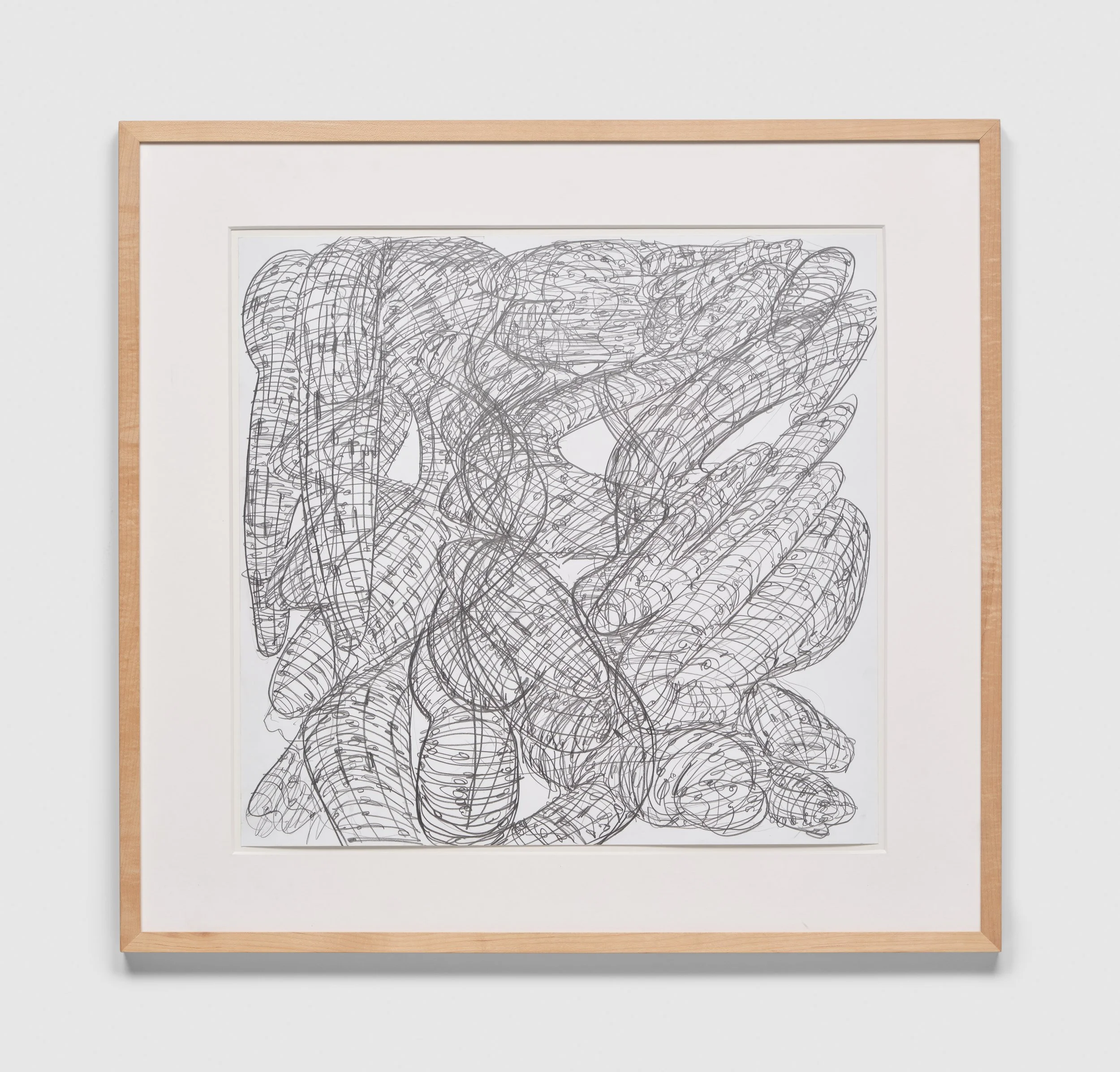
Tony Cragg, Untitled, 2010. Pencil on paper, 26¾ × 28⅜ in. (68 × 72 cm). Courtesy of the artist and Marian Goodman Gallery. Photo: Elon Schoenholz.
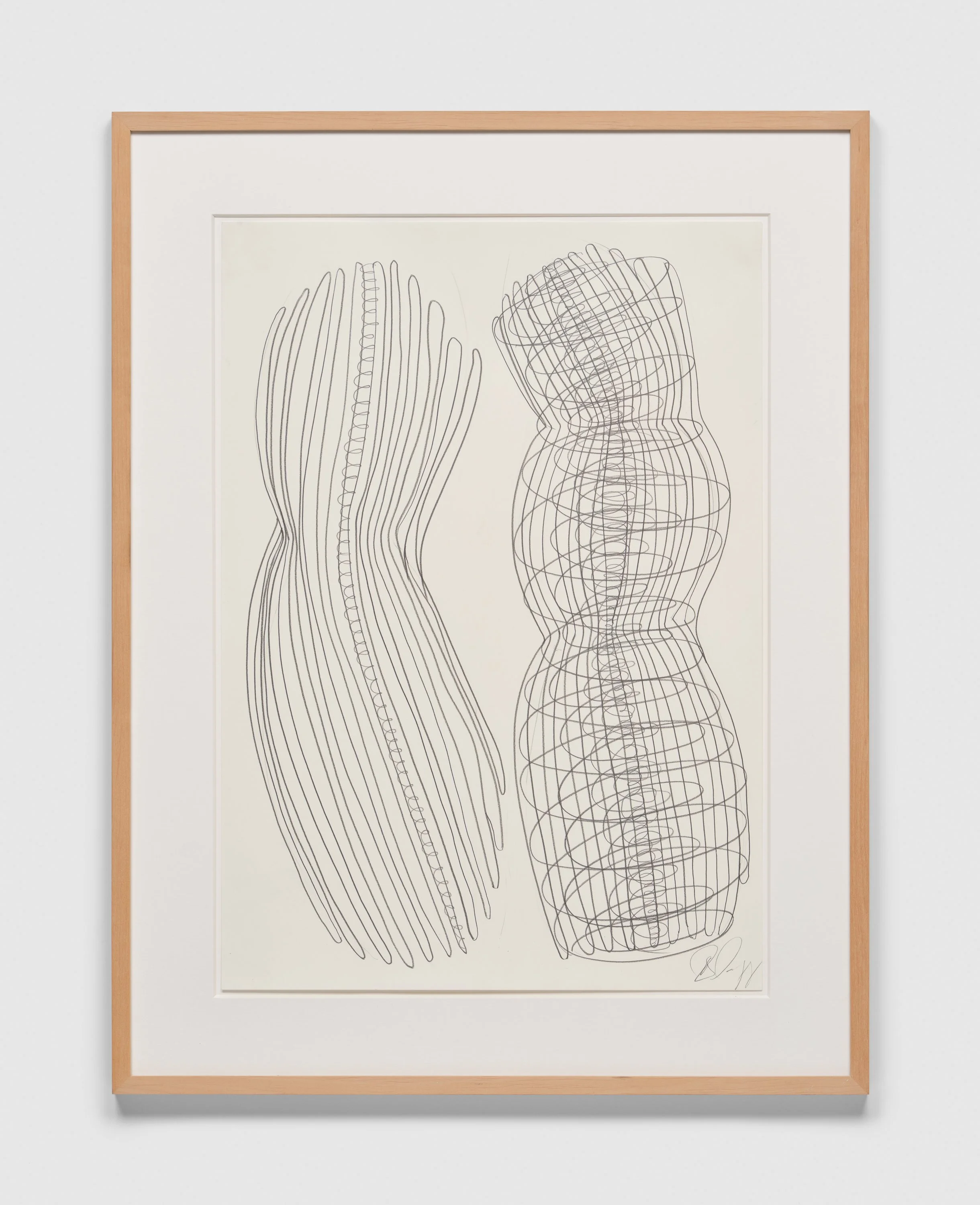
Tony Cragg, Untitled, 2019. Pencil on paper, 30¾ × 23⅝ in. (78 × 60 cm). Courtesy of the artist and Marian Goodman Gallery. Photo: Elon Schoenholz.
AMADOUR: Where was the laboratory?
TONY CRAGG: The laboratory was in Welwyn Garden City, about twenty miles north of London. It was looking for antioxidants for polyisoprene, which is natural rubber. At the time, natural rubber was a prime export of Malaysia. But polyisoprene has a fundamental weakness: it has a double bond that cracks. If you see rubber that cracks, it’s because it’s polyisoprene. You can also make rubber from petroleum. You can make polybutylene, which is a very tough rubber. American car tires were made from polybutylene for a long time. They didn’t crack and were much stronger. That was a real rival to the Malaysian economy, so they financed a research establishment to find ways of making natural rubber a better product.
AMADOUR: During that time, did you see any of those rock musicians live?
TONY CRAGG: I saw the Crazy World of Arthur Brown and everybody, really. Welwyn Garden City was surrounded by places like Stevenage, Luton and Letchworth, and every Friday and Saturday night we went to concerts. We saw Julie Driscoll, Chris Farlowe, the Kinks, the Pretty Things and the Rolling Stones. I saw Pink Floyd’s first concert at the Roundhouse. I was talking to the artist Richard Long a few months ago, and he told me that in 1968 or ’69, he went to the Roundhouse and saw Pink Floyd’s first concert. I thought, “Oh, I was there too.” It was strange because it was so bizarre. Jimi Hendrix was there. Nobody knew these people would become what they became. I saw the Doors. I saw Jim Morrison. I saw everybody.
AMADOUR: Was Jim Morrison beautiful? Because he just looks so beautiful.
TONY CRAGG: Oh, beautiful. He was a real character. He had an amazing, strong, powerful presence on stage. The places were so full, and they were free. You didn’t pay.
AMADOUR: What?
TONY CRAGG: The Roundhouse was free. You would just walk in. It was originally a place where steam trains came in, were turned around, and were driven out again. At some point, it became obsolete, and they turned it into this cultural space. It was really amazing. The Crazy World of Arthur Brown, Jethro Tull, all of these people performed there.
AMADOUR: How did people dress? What did you wear?
TONY CRAGG: Oh, we don’t want to get into that. We all had stupid white trousers with bell-bottoms and donkey jackets. I had no money. I don’t come from a family with money, and I definitely didn't have any then, so you just made it up. I’m not sure how this interview is going, but anyway.
AMADOUR: No, I love this.
TONY CRAGG: When I went to art school in Cheltenham, in the west of England, I was just a sort of straight kid. At least, I thought I was straight. I had a donkey jacket and desert boots. But when I arrived in 1968 or ’69, kids ran around in lilac tunics or saffron silk T-shirt things with little bells on, smoking dope and saying, “Hey, do you want a joint, man?” I thought, “Oh my God.” It was a totally new world for me.
AMADOUR: I think anybody who has even had a glimpse of that time through historical archives wishes they could have seen it in person. That’s why I asked.
TONY CRAGG: Van Morrison was very popular, too. No, he was a little later, actually. Probably ’71, ’72. A lot was happening then.
AMADOUR: Have any films or kinds of cinematography informed your thinking?
TONY CRAGG: No, I would definitely say no. I’m very material. Landscape, yes. I used to cycle a lot, and cycling informed me greatly because you see the landscape go by like a film, if you like. No, that’s too far-fetched. But I find the landscape fantastic. Walking, too. I used to do a lot of walking and hiking. I would walk alone for long distances on the west coast of Scotland, way up into the hills. Those were things that were really important to me at the time.
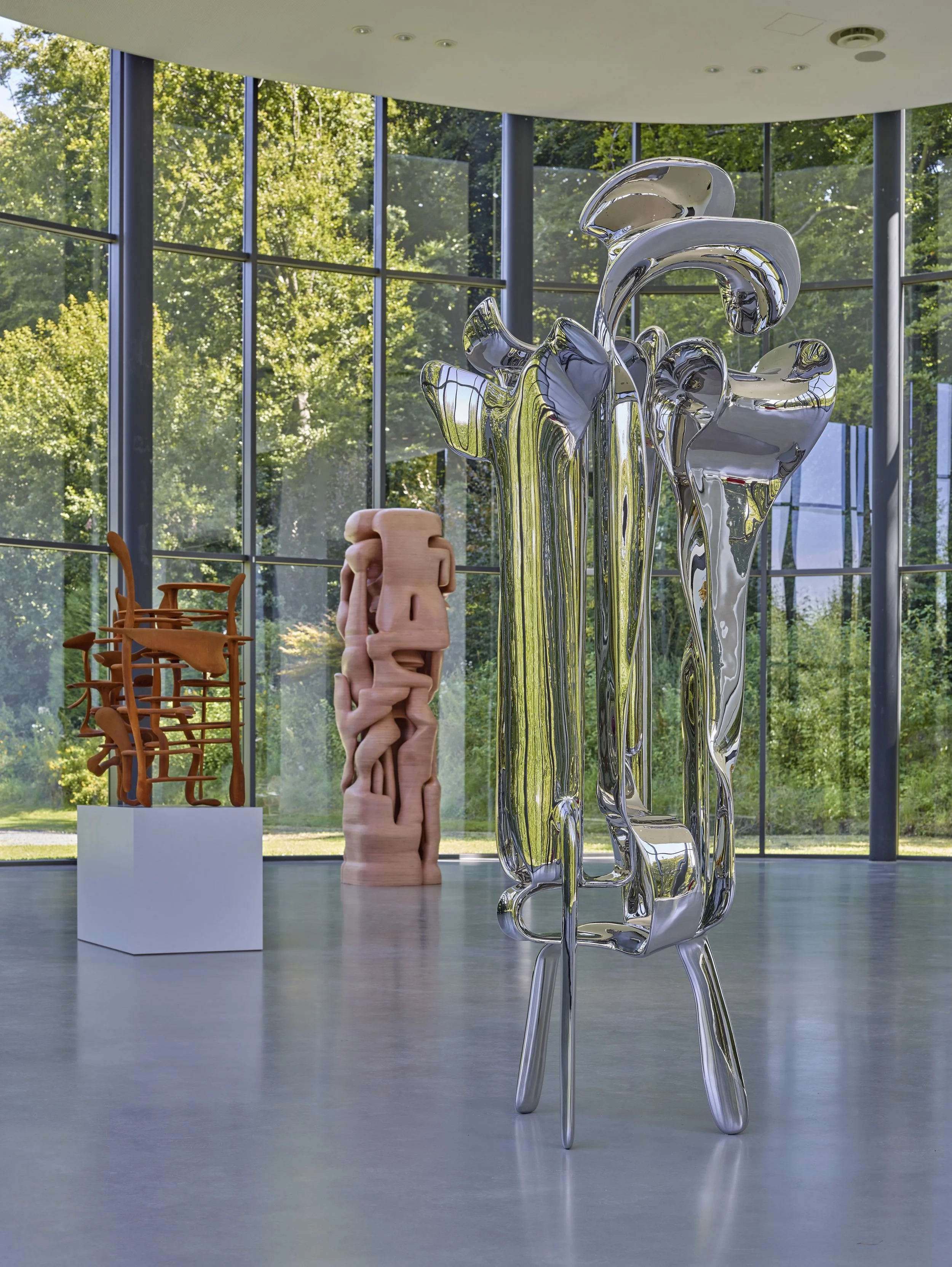
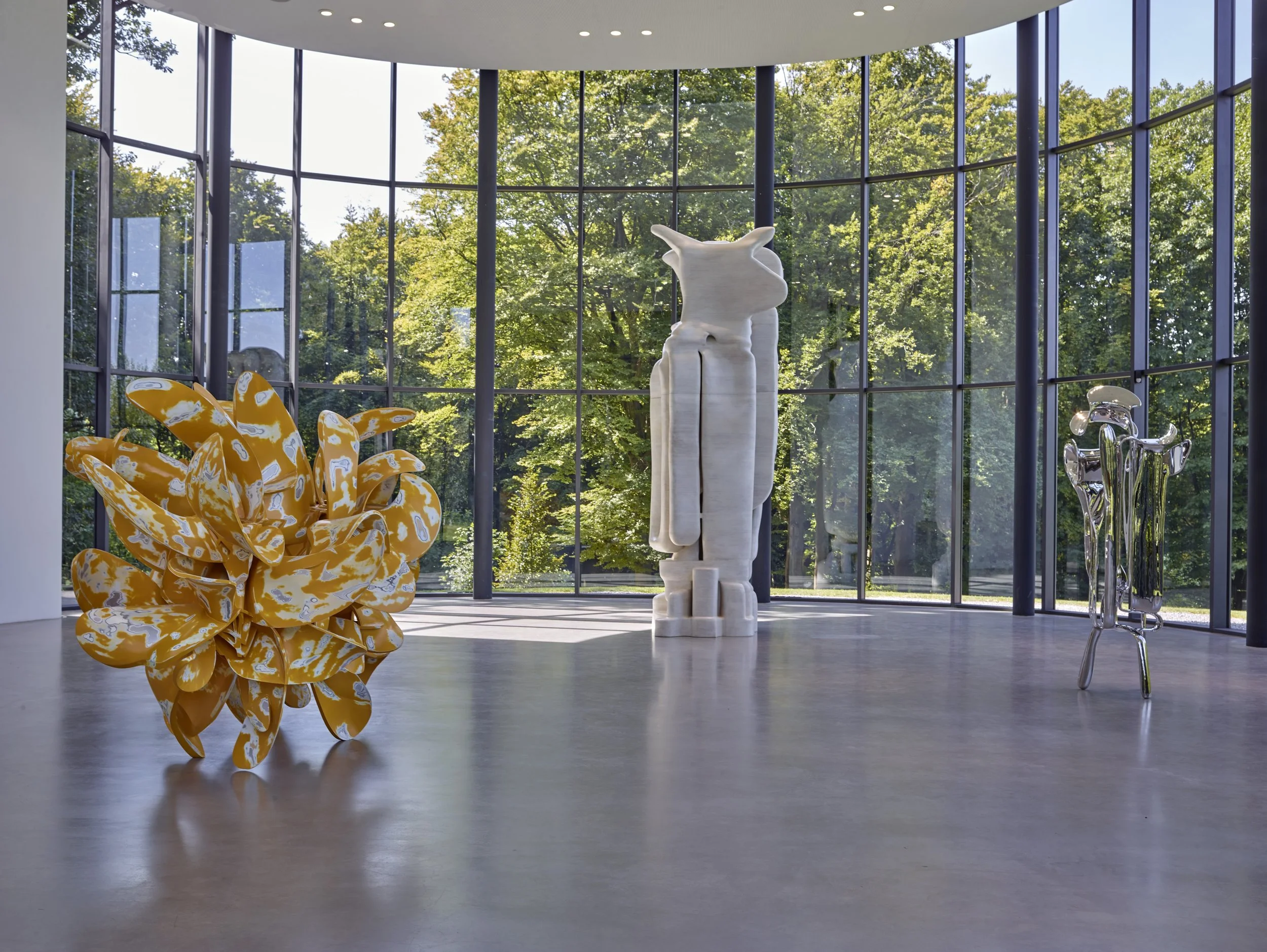
Tony Cragg, Line of Thought, 2025. Installation view, Skulpturenpark Waldfrieden. © VG Bild-Kunst, Bonn, 2026, Tony Cragg. Photo: Michael Richter.
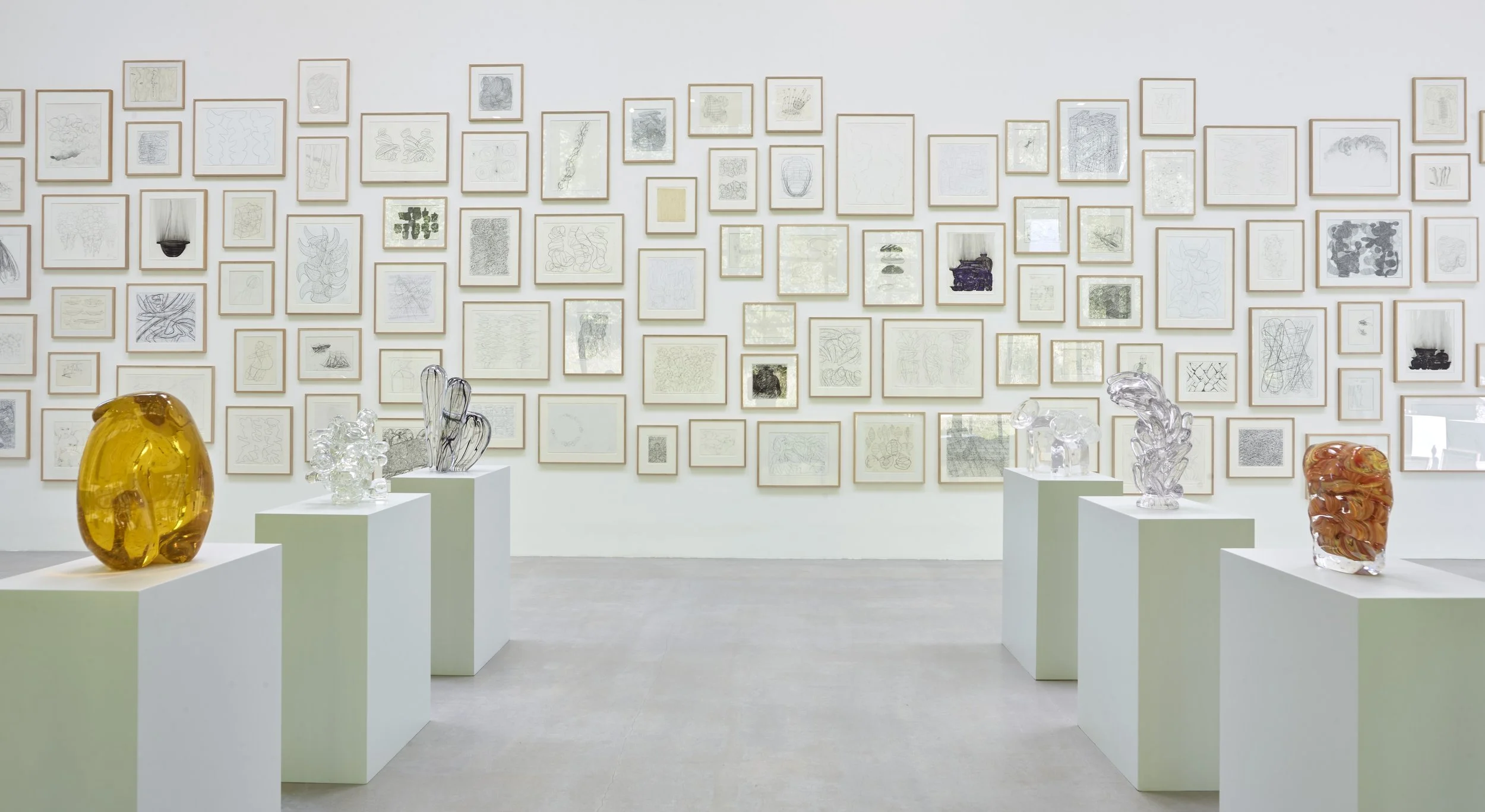
Tony Cragg, Line of Thought, 2025. Installation view, Skulpturenpark Waldfrieden. © VG Bild-Kunst, Bonn, 2026, Tony Cragg. Photo: Michael Richter.
AMADOUR: Where would you cycle?
TONY CRAGG: At the time, I lived in Wimbledon in London. I modified my bicycle so I could pick up materials. I had a tandem, so when I did my cycling tours, I wasn’t riding a racing bike. I was riding a tandem. I cycled from London to Bristol, to Stonehenge and beyond. I cycled to Folkestone on the east coast and many times to Brighton and the south coast. I didn’t cycle north as much, so I mainly cycled around southern England. Later, I did a big cycling tour through Yorkshire and the south of Scotland with my first wife. I still cycle a lot now.
AMADOUR: I wanted to go back to mythology, especially with your Janus sculptures. I know you’ve discussed the masks before, but are there any mythologies or ancient stories that have stayed with you? Even when you mentioned the animal somewhere between a cat and a dog, I thought about that idea of morphing, which also comes through in your sculpture.
TONY CRAGG: Mythologies depend on what you’re talking about. Greek mythology, for example. When I was in my early twenties, I went through a period when I really wanted to know a lot of things. It sounds pretentious, but I read a lot of philosophy, although I don’t think I understood it. I still read it when I can. Going back to that time, there was a tendency toward the occult, romantic stoicism, mythology, mystification and the mysterious. I don’t get suckered by those things. I’m not particularly interested in them. I’m not a religious person in terms of any classical religion. I’m not a believer. I like to see things for myself, learn things for myself and establish things for myself as far as I can.
AMADOUR: What philosophy were you reading, even if you didn’t understand all of it?
TONY CRAGG: Everything. The things I remember reading particularly well were Nietzsche and Heidegger. I obviously looked at the Greeks, Plato and Socrates. I went through the whole thing religiously and have come back to it at different times in my life. Even recently, I’ve had cause to look at some of those things again.
There’s a danger of sounding pretentious with this, but when people talk about art, it’s often very banal. It’s always the same stuff. They dig up the same references: “It’s about the environment.” Oh God, please don’t tell me it’s about the environment. It’s always very fashionable. But that’s not art; that’s journalism. There are things one establishes fundamentally for oneself, and that’s what I try to stick with.
AMADOUR: When I encountered your work in Turkey, I didn’t know you were showing there. I just happened to arrive at Dirimart and thought, “Whoa, I know this work.” I remember walking down this big hill from Beyoğlu through Dolapdere, with all this chaos happening around you and bakeries where you could stop for coffee. Then you cross this huge road and enter this almost academic or corporate-looking building, and suddenly the gallery is there. You enter, and it’s like a completely different world. I also loved how the exhibition moved between indoors and outdoors. What has your experience in Turkey been like?
TONY CRAGG: I’ve been working there for several years, and it’s fantastic. People are so enthusiastic about sculpture. We did a show, and so many people came to the opening that it was completely packed. They really appreciate it. I haven’t analyzed the origins of that, but as a culture, they have their own quite conservative constraints in many ways. Maybe young people, and people generally, are looking for side roads, diversions, something—a way out of the constraints and conservatism of their lives. Possibly. I don’t know. But it’s great being there. I like Turkey very much.
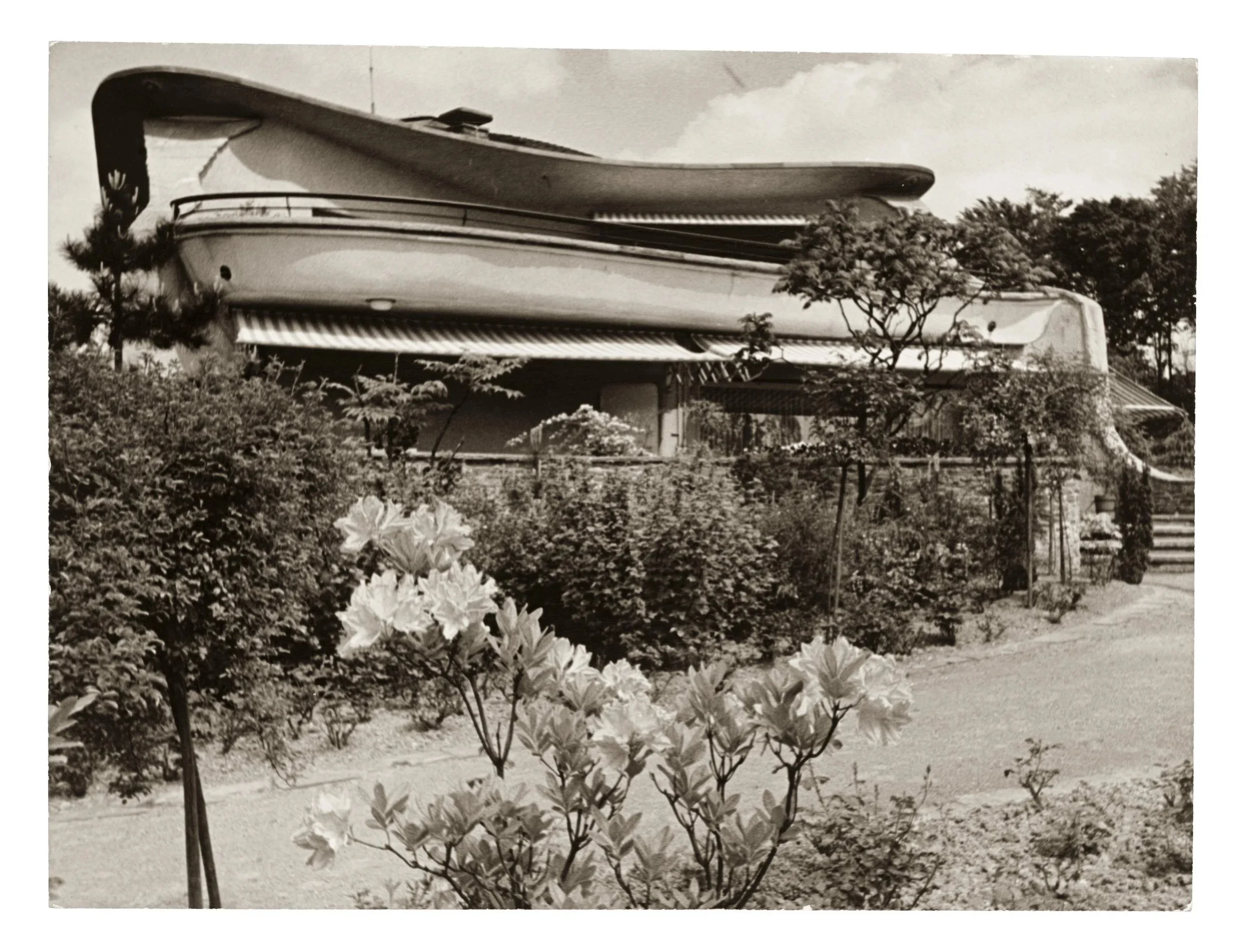
Franz Krause, Villa Waldfrieden (1947–1950). Historical photograph of the villa's terrace and gardens, Wuppertal, Germany. Courtesy of the Cragg Foundation.
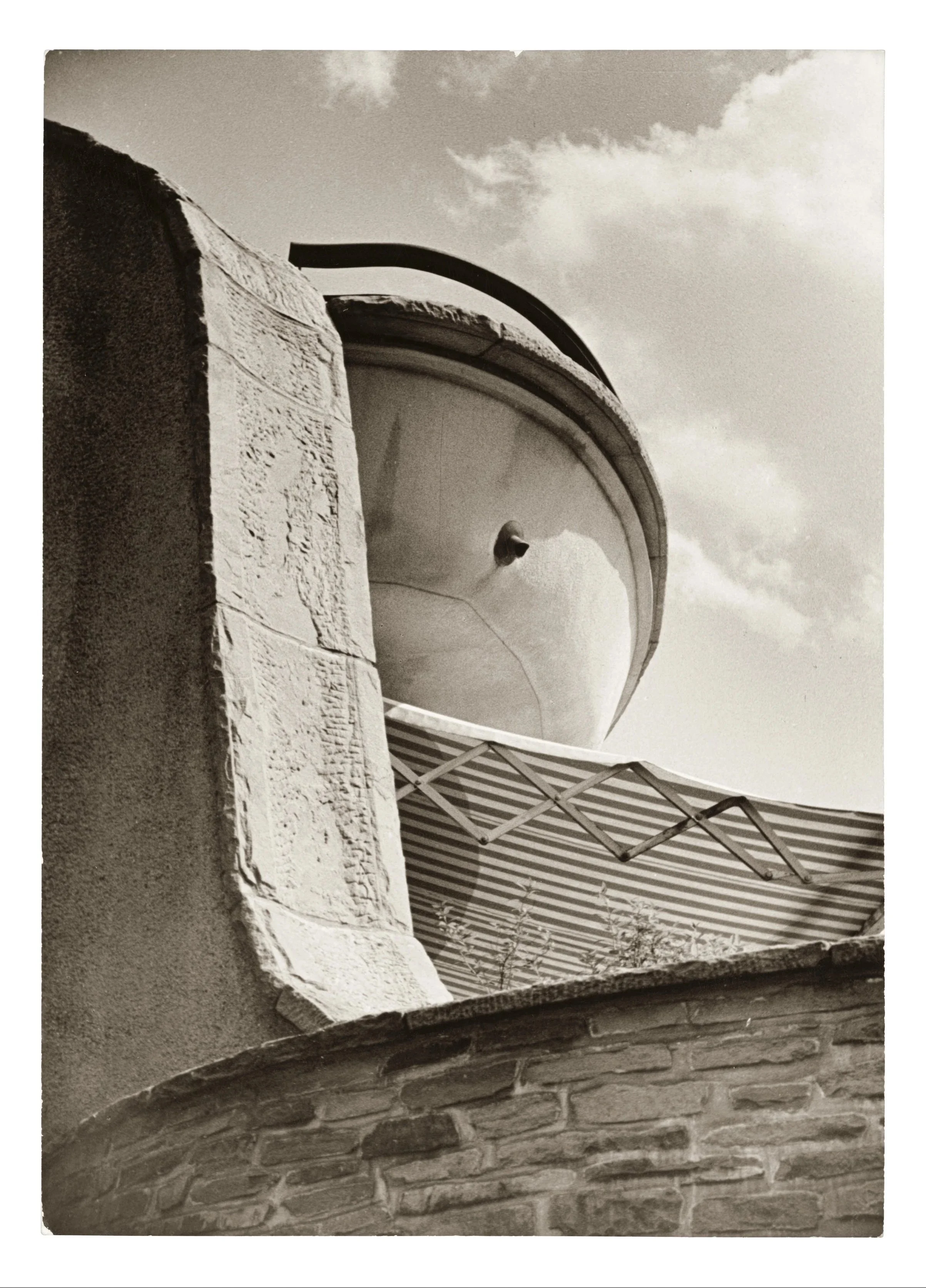
Franz Krause, Villa Waldfrieden (1947–1950). Historical photograph of the villa's terrace and gardens, Wuppertal, Germany. Courtesy of the Cragg Foundation.
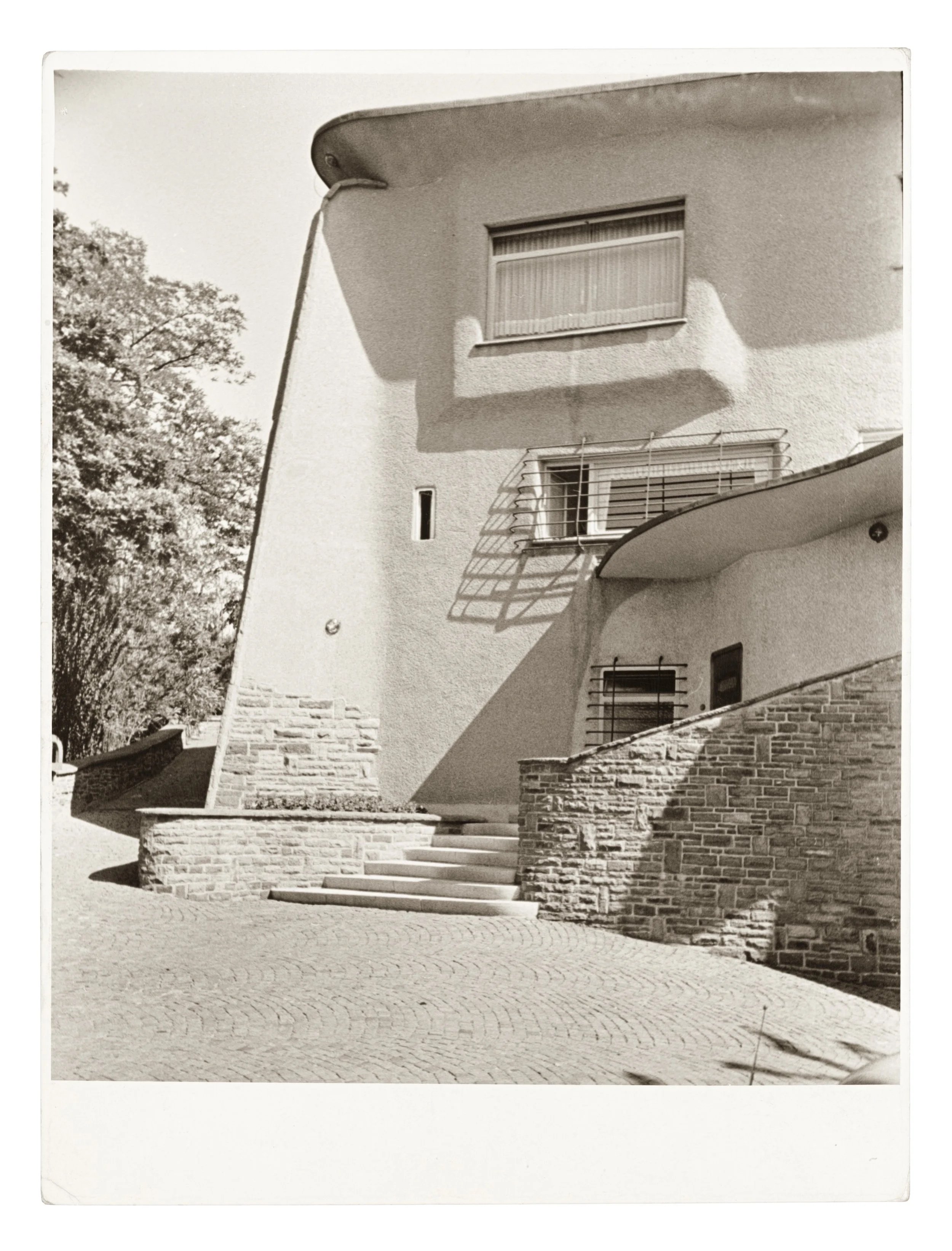
Franz Krause, Villa Waldfrieden (1947–1950). Historical photograph of the villa's terrace and gardens, Wuppertal, Germany. Courtesy of the Cragg Foundation.
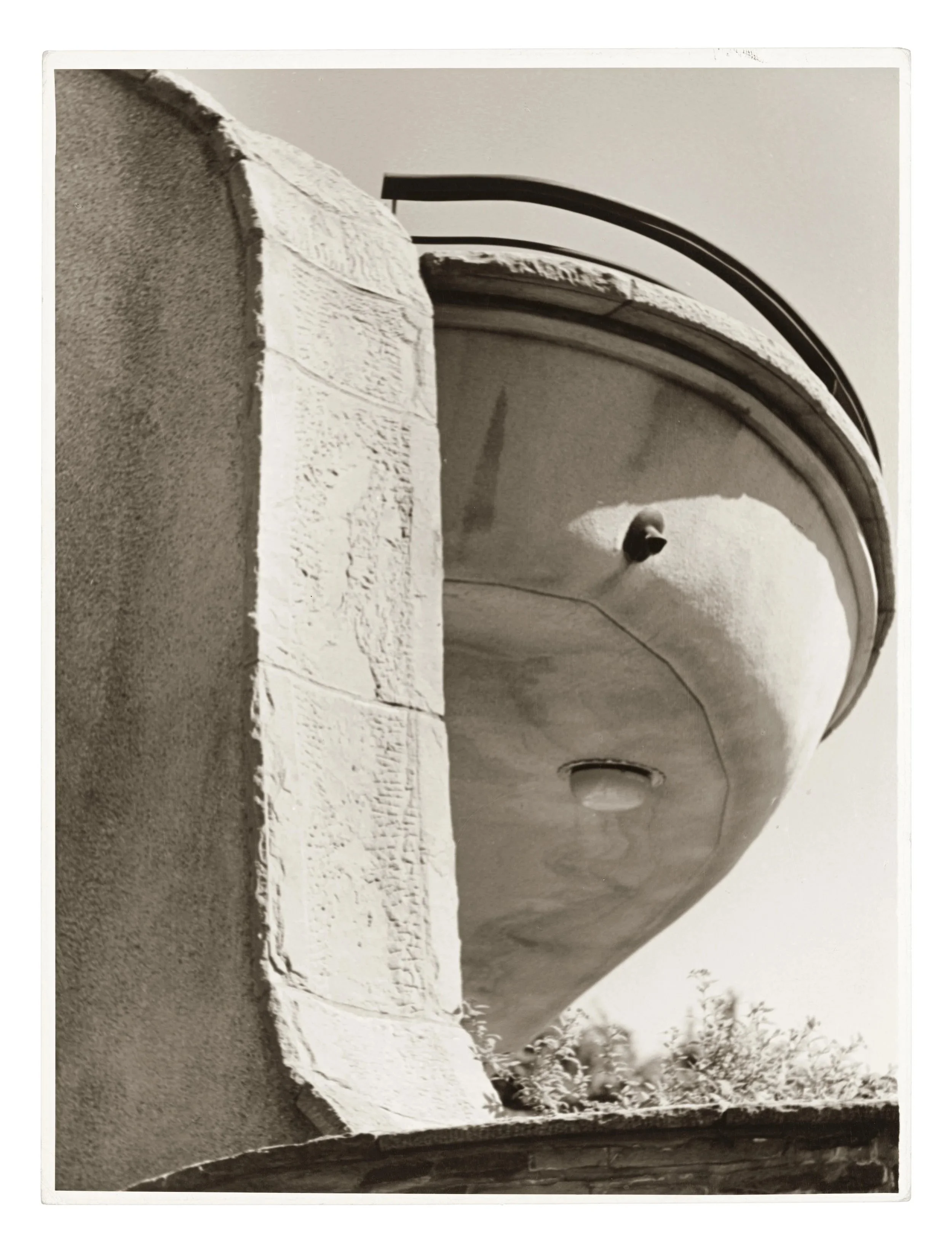
Franz Krause, Villa Waldfrieden (1947–1950). Historical photograph of the villa's terrace and gardens, Wuppertal, Germany. Courtesy of the Cragg Foundation.
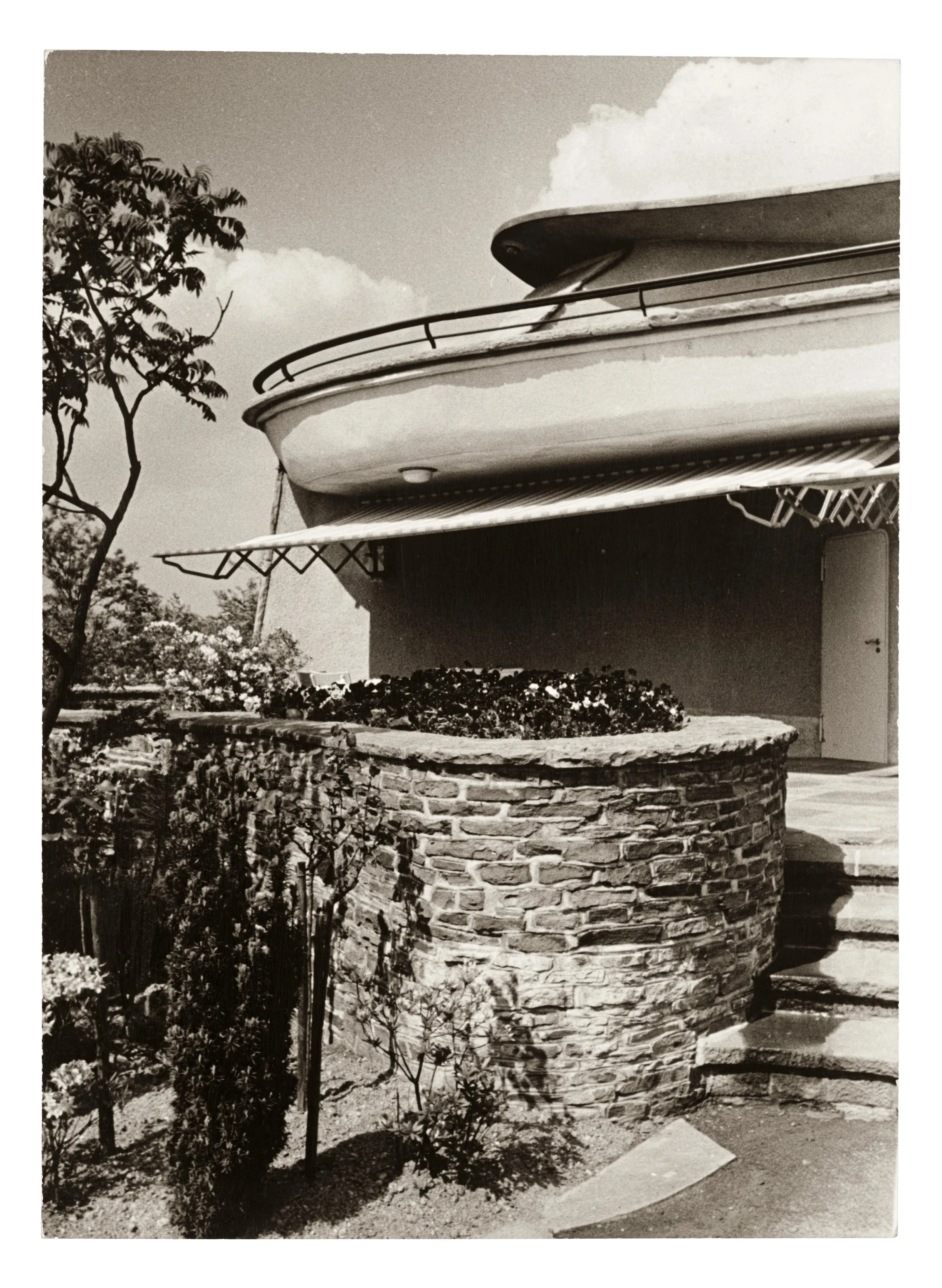
Franz Krause, Villa Waldfrieden (1947–1950). Historical photograph of the villa's terrace and gardens, Wuppertal, Germany. Courtesy of the Cragg Foundation.
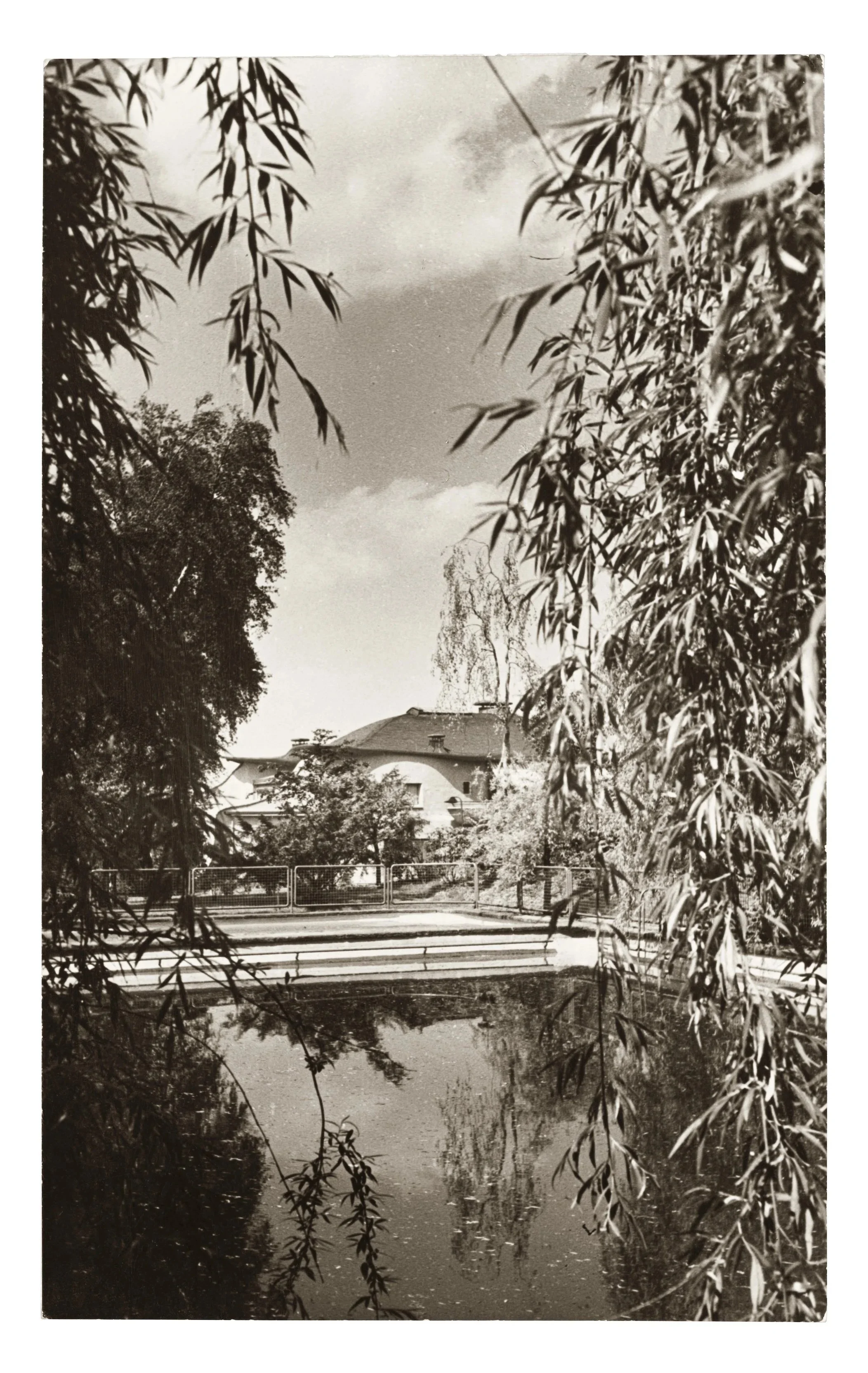
Franz Krause, Villa Waldfrieden (1947–1950). Historical photograph of the villa's terrace and gardens, Wuppertal, Germany. Courtesy of the Cragg Foundation.
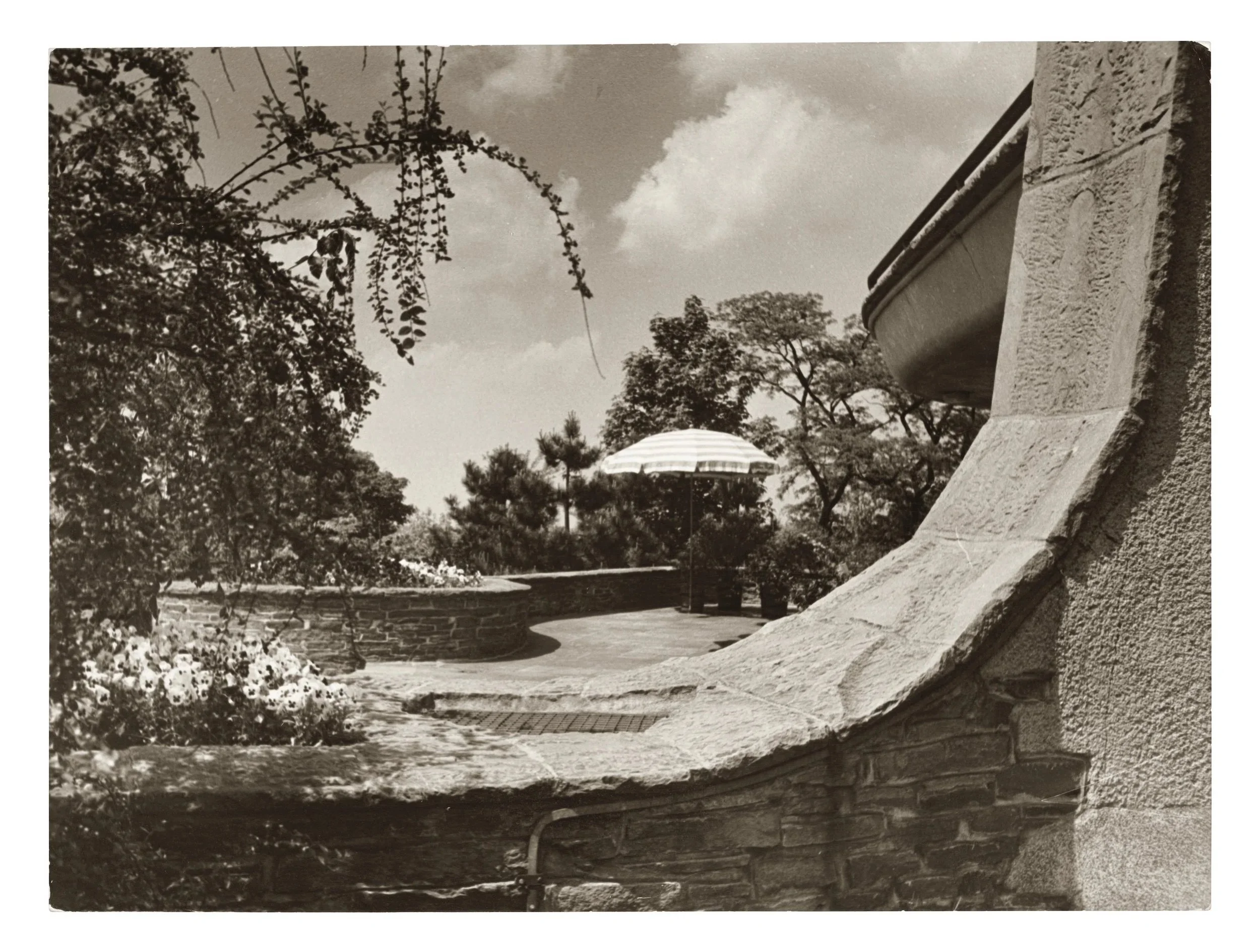
Franz Krause, Villa Waldfrieden (1947–1950). Historical photograph of the villa's terrace and gardens, Wuppertal, Germany. Courtesy of the Cragg Foundation.
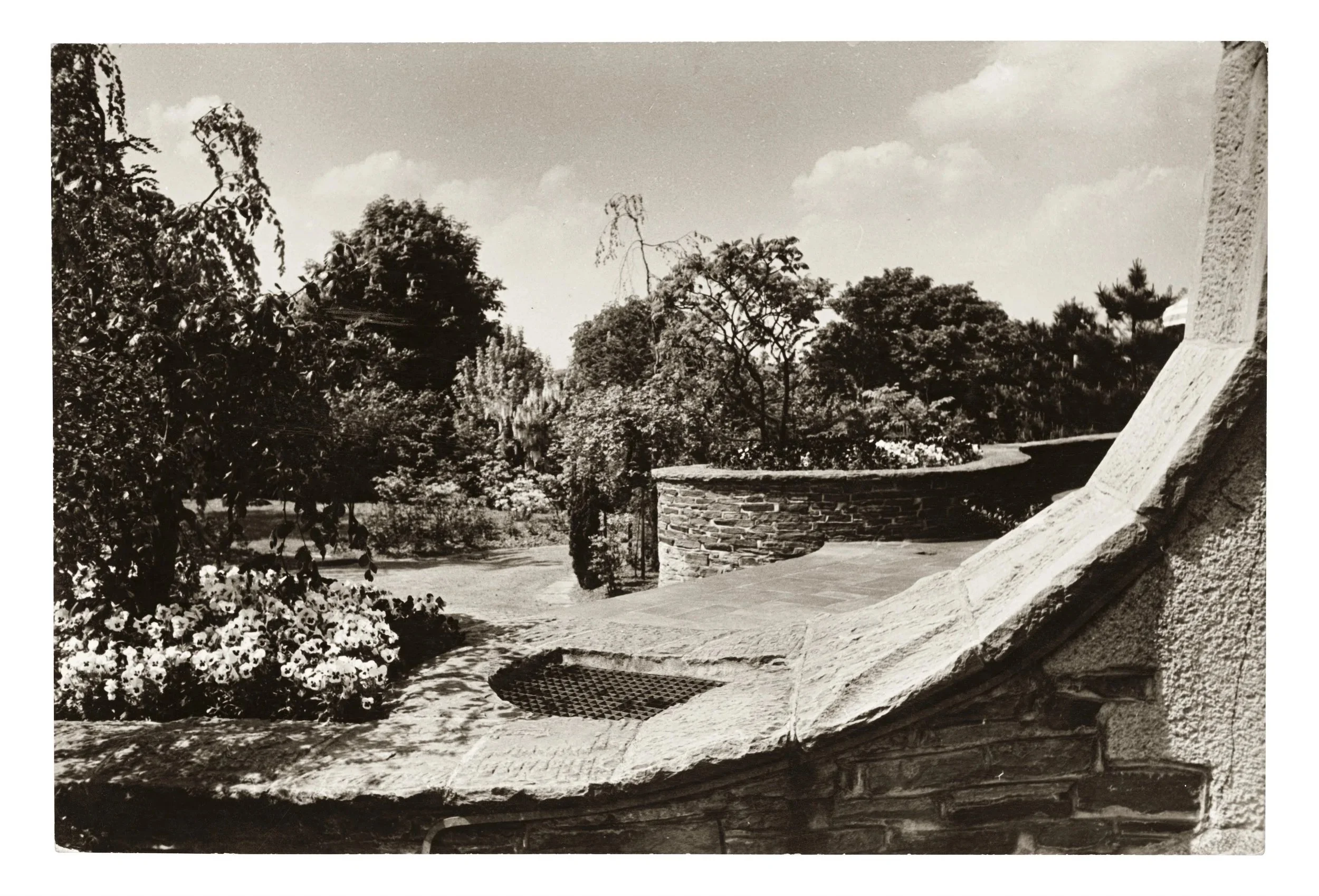
Franz Krause, Villa Waldfrieden (1947–1950). Historical photograph of the villa's terrace and gardens, Wuppertal, Germany. Courtesy of the Cragg Foundation.
AMADOUR: Did the architecture affect you at all? Did you visit places like Hagia Sophia?
TONY CRAGG: No. You keep asking me these questions about what I’m affected by or inspired by. I’m not. What really affects me is being in the studio. I’m past the point of being inspired. Maybe when I was younger, I developed certain interests and liked to spend my time in a certain way, but culture isn’t really what inspires me. It’s already done, and it belongs to somebody else. I don’t need to go over it. I know about art history. I’m not pretending that I live in a vacuum and everything emanates from myself. But whatever has influenced me is a minute fraction of it. The main thing is the material in front of me, being lost and helpless in front of the material and knowing there are billions of things inside it. How do I get them out? That’s what interests me.
AMADOUR: I have a question about material. When I’ve been around your sculptures, especially the ones in Los Angeles, I’m struck by the rippling of the forms. How do you process a sculpture as you’re making it? Do you sit with it, leave it alone and come back to it? What is your relationship to that process?
TONY CRAGG: We work every day, and I have a group of people helping me make the work, so I’m not just on my own. But what I actually do is draw. I’m always drawing things like this. What you see in the ripples is my hand because it’s there in the original drawing. A lot of it is taken across from that. You start to make three-dimensional things out of something very simple, and most of it doesn’t work. Most of it doesn’t have any meaning. Then every now and then, something starts to crystallize. Suddenly, you get an idea or an emotion out of the form. There are endless forms in a piece of clay. You ought to think about that. In one piece of clay, there are billions and billions, trillions of forms possible. But what forms mean anything? You don’t notice until you’ve made it, and suddenly, ding-a-ling-a-ling, there’s an emotional meaning or an intellectual meaning. You can short-circuit that process. You can just model a horse or a person, and then everything flows into that thing. But that’s not so interesting. It would be a waste of my time to copy something that already exists. That doesn’t interest me at all. I want new forms with new meanings and new emotions attached, with new terms and new freedoms.
AMADOUR: How do you get to naming your works?
TONY CRAGG: Luck and happenstance. Sometimes it’s obvious. Early Forms is one of the easiest examples. Sometimes it takes time, and sometimes somebody in the studio just says, “What’s that stupid thing there?” And I think, “Oh, that stupid thing? Okay, it’s called The Stupid Thing.” There are examples like that. I don’t think about it too much. You just need a label for something; otherwise, you can’t talk about it.
AMADOUR: You work with Corten steel, which I think is really interesting. When did you first start working with that material, and how did you approach it?
TONY CRAGG: Before Corten, when I was a student, I made a lot of things with found materials. I didn’t have any money, for one thing, and it was also the time of Arte Povera, Pop Art, and Duchamp. Artists found materials, brought them in, and worked with what they found. It was this process of changing their context. What mattered was showing that all materials and forms have meaning. They all affect our minds. If you see something, you can’t avoid the fact that it has changed your mind. The degree to which it changes your mind depends on its properties. Something serious might change your mind substantially, while a plastic cup might not change it very much. But everything does something. Everybody was rushing around finding new materials. It was my time. I wasn’t going to make work like Henry Moore, and I wasn’t going to make work like Anthony Caro. I made work by finding materials and looking at the reality around me. It was very simple. Eventually, I reached a point where I realized I couldn’t go any further unless I did something to these things. I had to change them. I couldn’t just present or arrange them. Once I started doing that, suddenly every material became available to me. I realized I had to start molding things and making things with my hands. The first thing I made was a disaster. It was a bunch of bottles standing in a room, but it wasn’t the bottles; it was their shadow. I made the shadow in black wax. It was a very bad sculpture, but it got me going. After that, the first thing I had cast was in cast iron. It was a rusting, very brittle material. That was before I discovered bronze. I discovered cast iron because I thought it was more earthy and industrial.
AMADOUR: Incredible.
TONY CRAGG: Then I started working with modern steels. If you put nickel and chrome into steel, the surface changes, but it doesn’t rust away. It has this permanence. I live in Germany, and the German word for steel is Stahl. It’s related to words like stack, stand, stop, star, establishment—things that are fixed and strong. Steel exists in space as strength. That’s its fundamental property. Bronze is completely different. Bronze has a low melting point, and when it’s molten, it’s like water. You can cast it very thinly. It’s polymorphic. You can make all kinds of crazy forms with it. Steel is much more turgid, thick and difficult. Every material has its own properties, and those properties allow you to make different forms. That’s why the material is so important. Sometimes what you can make with bronze, you can’t—or often you can’t—make in steel, and vice versa. One’s strong, one’s more liquid. So, my friend, do you have any more questions?
AMADOUR: Let’s do one last one for kicks. What are you exploring right now? What do you have coming up after New York?
TONY CRAGG: In New York, I just came here to do the exhibition, and I’ll go home tomorrow. After the show, I go straight back to the studio. I don’t really see much point in hanging around. When I get back, we’re opening three new exhibitions at the sculpture park: a small one of my own, and a group exhibition with Richard Long, Pieter Buggenhout, and Berta Fischer, along with some historically important paintings [Cragg founded the Skulpturenpark Waldfrieden in Wuppertal, Germany, in 2008.] I also have some projects I need to work on. But I’ve just started some new things that I haven’t exhibited yet, so I have to get on with those. It’s brand-new stuff. Maybe it’ll be rubbish, maybe it won’t work out, but I’ll do what I do.
AMADOUR: Thank you so much, Tony. Thank you for your time, and I hope you have an amazing opening.
TONY CRAGG: Thank you for your interest. If you’re ever around in Germany, come by.
AMADOUR: Thank you, Tony.
TONY CRAGG: My pleasure. All the best.
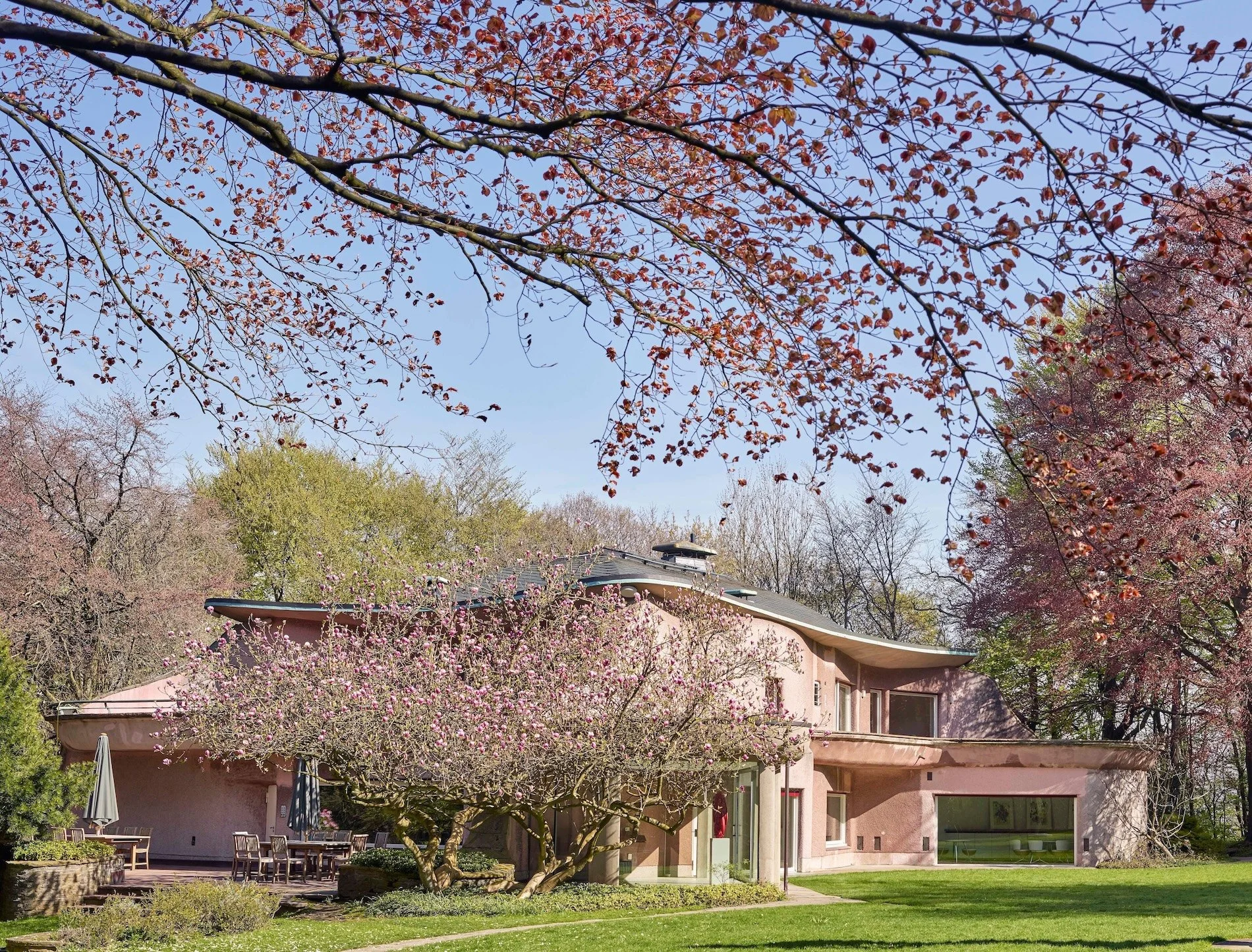
Villa Waldfrieden, exterior view, designed by Franz Krause (1946–1949), Skulpturenpark Waldfrieden, Wuppertal, Germany. © Cragg Foundation. Photo: Michael Richter.
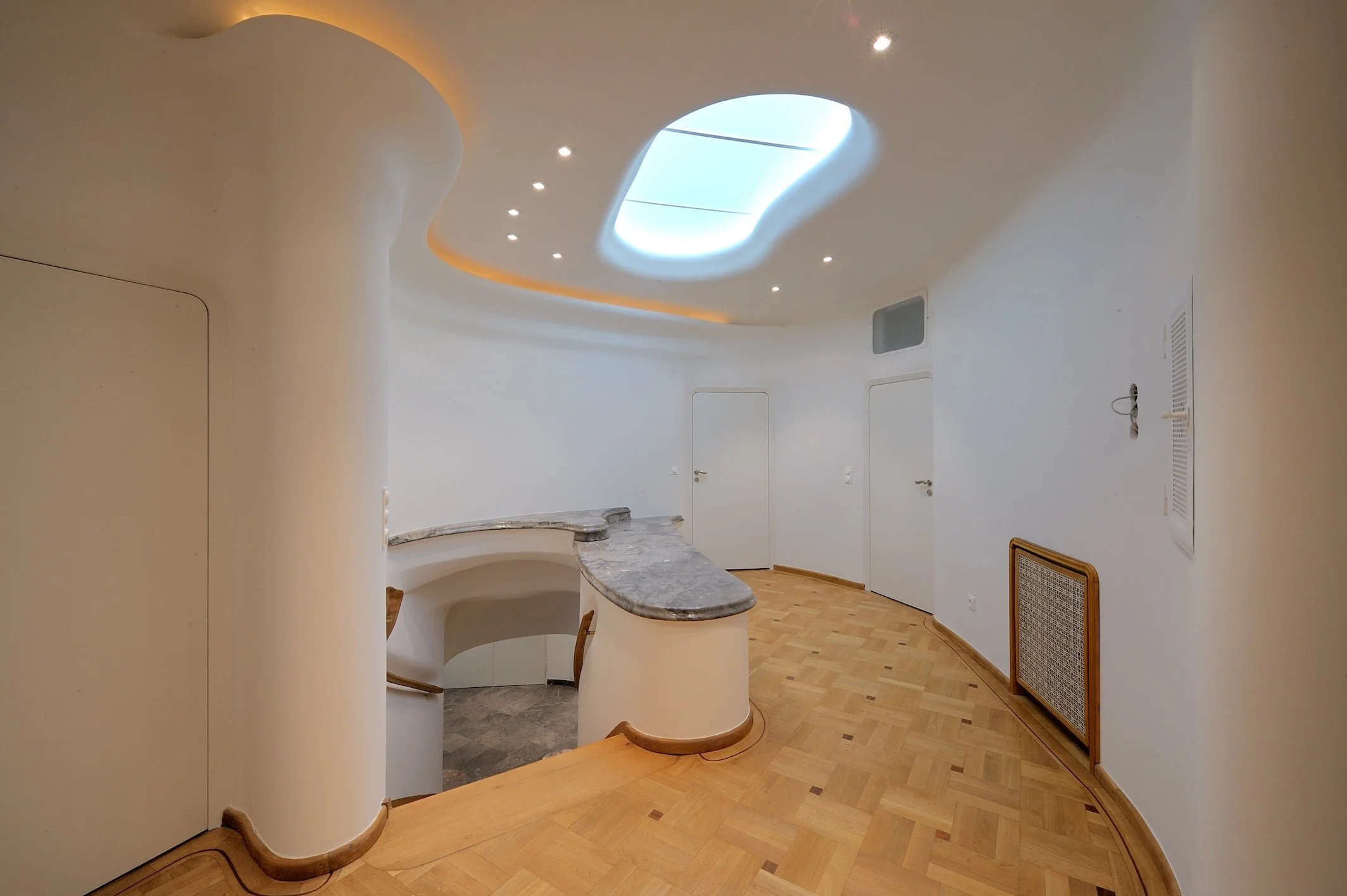
Villa Waldfrieden, staircase interior, designed by Franz Krause (1946–1949), Skulpturenpark Waldfrieden, Wuppertal, Germany. © Cragg Foundation. Photo: Charles Duprat.
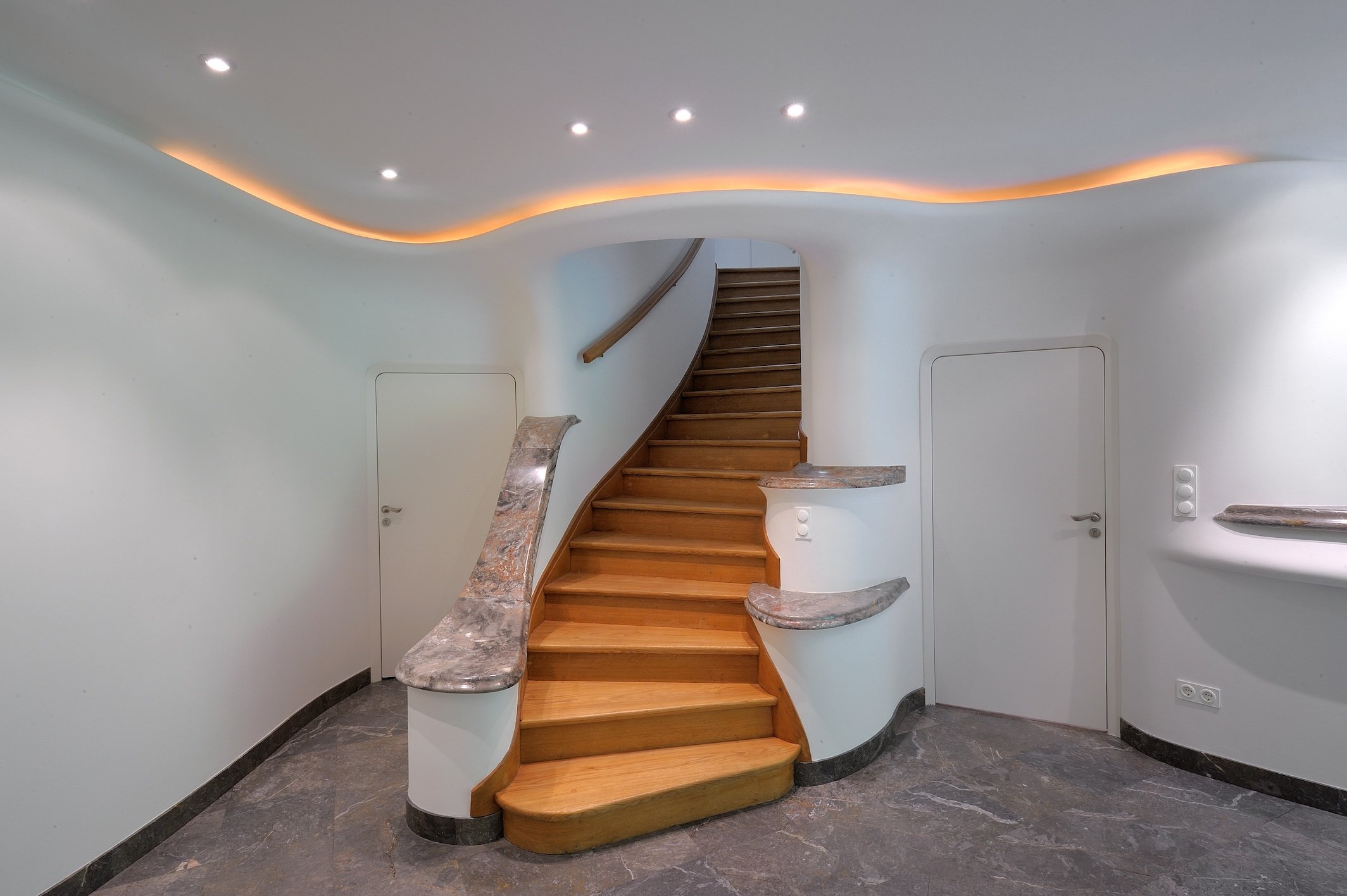
Villa Waldfrieden, staircase interior, designed by Franz Krause (1946–1949), Skulpturenpark Waldfrieden, Wuppertal, Germany. © Cragg Foundation. Photo: Charles Duprat.
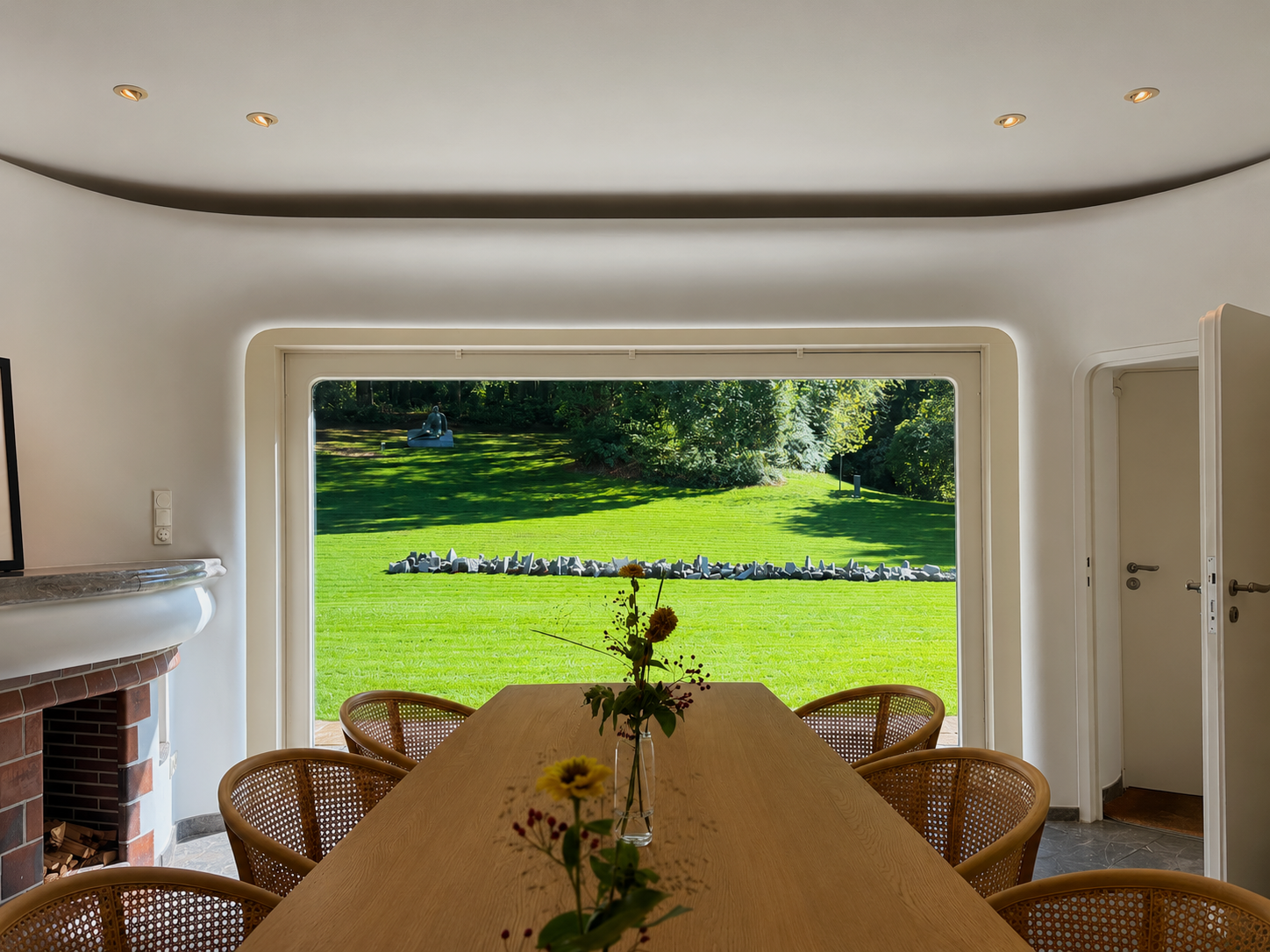
Villa Waldfrieden, dining room interior overlooking Skulpturenpark Waldfrieden, designed by Franz Krause (1946–1949), Wuppertal, Germany. Photo: Amadour, 2026.